


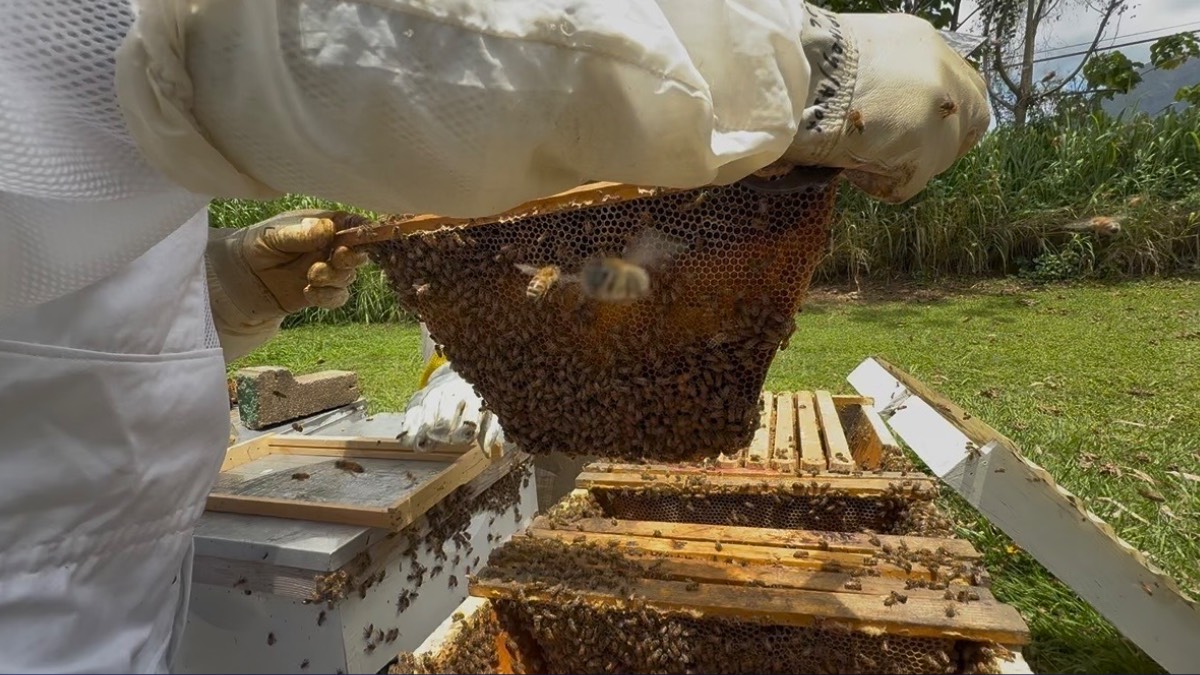
A zoning amendment that would allow beekeepers to operate apiaries in residential and other nonagricultural areas was deferred until next month after the Kauaʻi Planning Commission expressed the need for more safeguards for neighbors and the public.
The commission directed the county Planning Department and local beekeepers to work together on potential public-safety measures before the zone amendment ZA-2026-8 comes back for consideration next month.
The Planning Commission is considering the zoning change after the Kauaʻi County Council passed Bill 2997 in May that would allow apiaries in a wide range of zoning districts and establish rules for hive replacement maintenance and public safety.
The Planning Department gave the zoning amendment a preliminary recommendation for approval but said Tuesday it was also open to a deferral after commissioners raised concerns about public safety.
“I fully support bees,” Commissioner Glenda Nogami Streufert said during the hearing. “In fact, I would love to have more bees in our area so that we would have more food, but the fact of the matter is that there’s a safety concern.”
Streufert also shared that she once “was chased by bees from my friend’s apiary.”
“He was harvesting honey way down at the bottom of the hill, and I was standing at the top, and all of a sudden I saw this: not a swarm, but this group of bees coming after me. I had to retreat into my car and stay in the car until they went away.”
After the deferral, beekeeper Ariel Bishop, who also is an educator of bees, said: “I’m feeling disappointed that our island cannot be proactive, that we’re so fear-based. But here we are.”
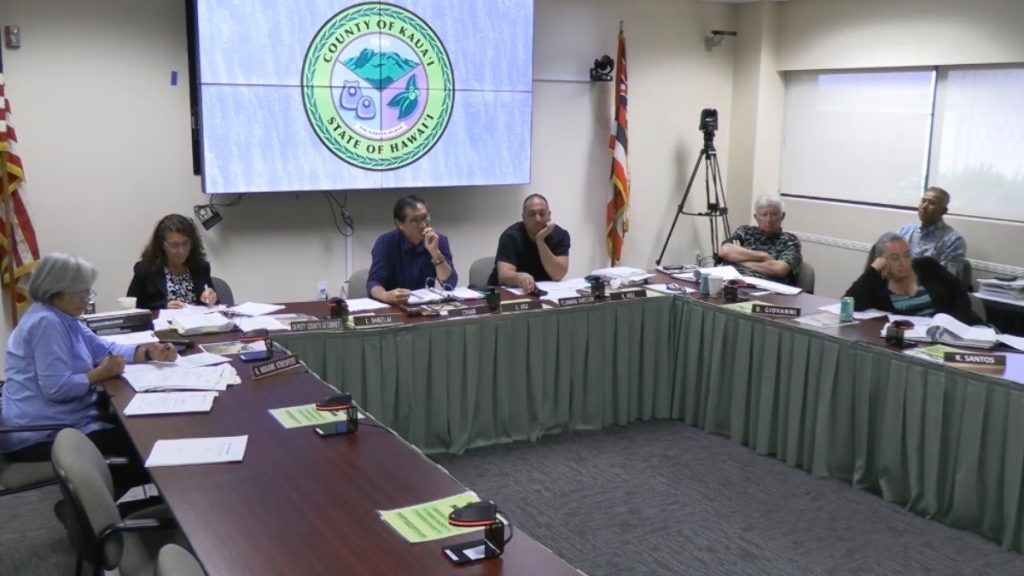
Most of the discussion centered on folks with severe allergies to bee stings and whether residents should be notified when an apiary is established nearby. Commissioners also discussed requiring signs at properties with apiaries or having available epinephrine auto-injectors, also known as EpiPens.
The proposed rules require that hives be set back 25 feet from property lines unless a flyover barrier is used. Such barriers are designed to force bees to fly upward when leaving a hive, keeping their flight path above the level of people, vechicles and neighboring properties.
Bishop, who advocates for the proposal through Bees on Kauaʻi, explained that bees generally leave their hives to forage rather than to interact with people.
“This is not just about honey,” Bishop told commissioners.
She said responsible beekeeping supports local agriculture and food security and helps protect an agricultural resource that Kauaʻi is fortunate to have.
Kauaʻi remains free of the varroa mite, a destructive honeybee parasite that has become established on Oʻahu and the Big Island. Beekeepers say protecting that status is particularly important because importing bees into Hawaiʻi is restricted and replacing a lost population would not be simple.
Other beekeepers who testified Tuesday also urged commissioners to approve the ordinance.
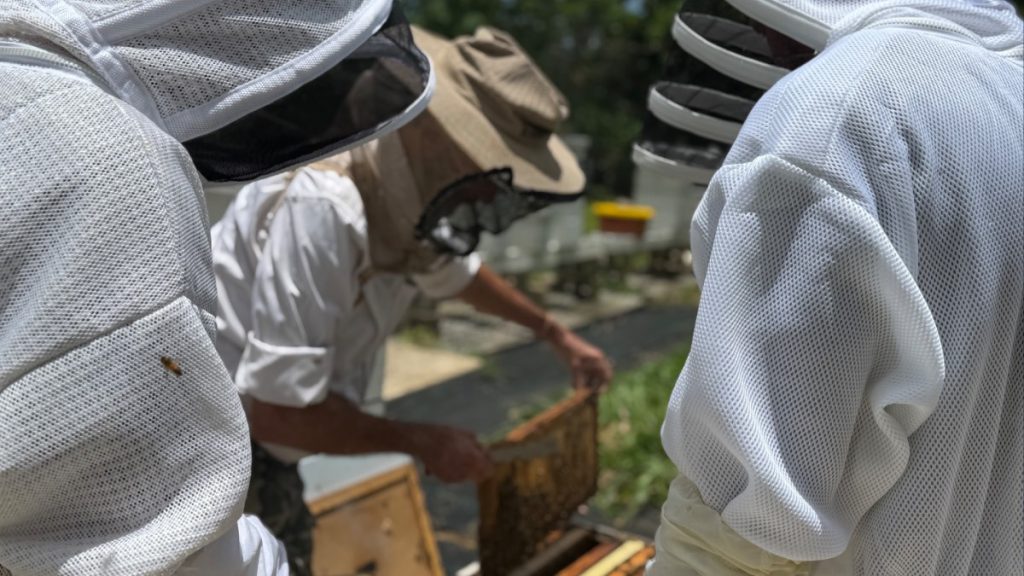
Robin Murayama and his son, Jason Murayama, testified in favor, describing themselves as beekeepers, bee farmers, pollinators, and bee rescuers. They stated that the proposal offers hobbyists and small businesses a practical way to comply with county regulations while safeguarding neighboring properties.
“In addition,” Murayama said. “My son has made a decision that beekeeping is going to be his life’s work, so we’re supporting bees so that they can support him as well.
“I just want to ask respectfully that the planning commission approve ZA 2026-8 proposed draft Bill Number 2997 without weakening or delaying its balance standards for responsible beekeeping and neighborhood protection.”
Max Richardson, a beekeeper from Wailua Homesteads, said the zoning change would not automatically mean that every residential property could support an apiary.
He said his own property is too small to responsibly keep bees even if the ordinance is adopted.
“What if I did have one acre, two acres, five acres, 10 acres of land, but it was zoned residential?” Richardson asked commissioners. “It seems kind of bananas to me that I would still technically not be allowed to keep bees on my property.”
The debate also highlighted the difference between allowing beekeeping and guaranteeing that a property is suitable for hives.
Bishop told commissioners that the proposed standards were modeled in part on regulations used in other communities, including Hawaiʻi County. She said the proposal was intended to recognize beekeeping as a low-intensity agricultural activity while establishing rules to reduce conflicts with neighbors.
She also said the setback reinforced the need for more public education about bees and their role in agriculture. Meanwhile, Kauaʻi’s beekeeping community is preparing a separate effort to showcase locally produced honey.
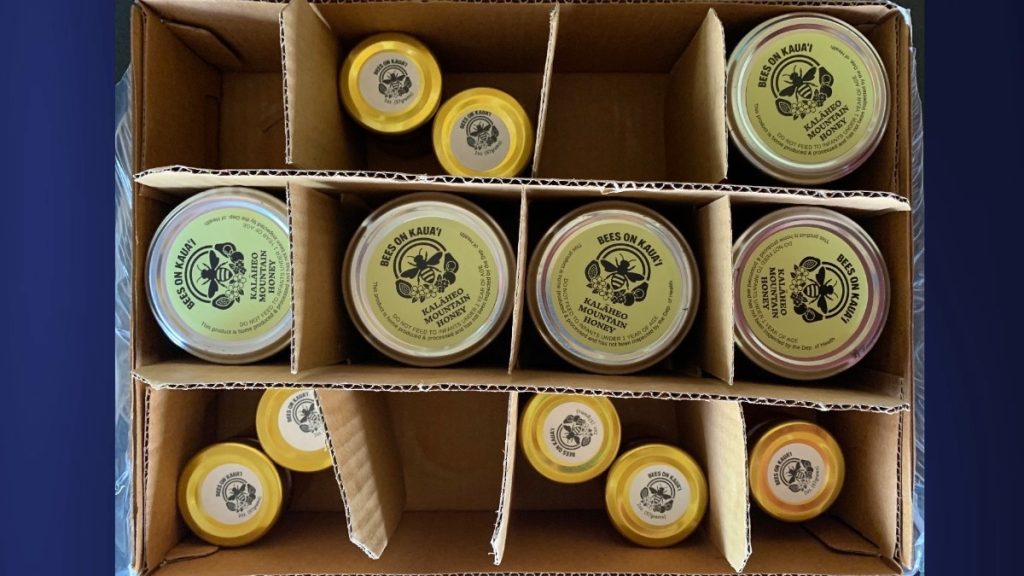
The Kauaʻi Beekeepers Association is planning the island’s first honey challenge, with submissions due Oct. 10 and a public tasting and People’s Choice event planned for Oct. 24 during the Rice Street Block Party.
The first Kauaʻi competition will focus on light, medium and dark liquid honey.
Beekeepers are encouraged to participate in the statewide honey contest on the Big Island, which has hosted its own honey challenge for the past 15 years and fully backs the Garden Island on the current zoning bill.
Kauaʻi’s bill reflects the Big Island’s Bee Ordinance Bill 144, which was approved and enacted in 2024.
Harry Holm from the Big Island Beekeepers Association also submitted written testimony to the commission in support of the Garden Island’s zone amendment.
His message to the commission was to “vote yes and approve it. Something is better than nothing,” he explained. “Bring people who are not in compliance into compliance.”
The effort, Bishop said, is intended not only to celebrate local honey but to help residents understand the diversity of honey produced across Kauaʻi and build greater awareness of beekeeping.
Beekeepers are encouraged to mail their honey to the Big Island and take part in this year’s challenge. Community members seeking more information about the Kauaʻi Honey Challenge, its rules, or interested in becoming honey judges are also invited to apply by clicking here.
Residents interested in expanding their knowledge of bees are encouraged to explore the Kauaʻi Community College Apiary Project. The program offers valuable insights into apiculture and its significance to the local ecosystem.
Residents with additional questions can email kccbees@hawaii.edu.