


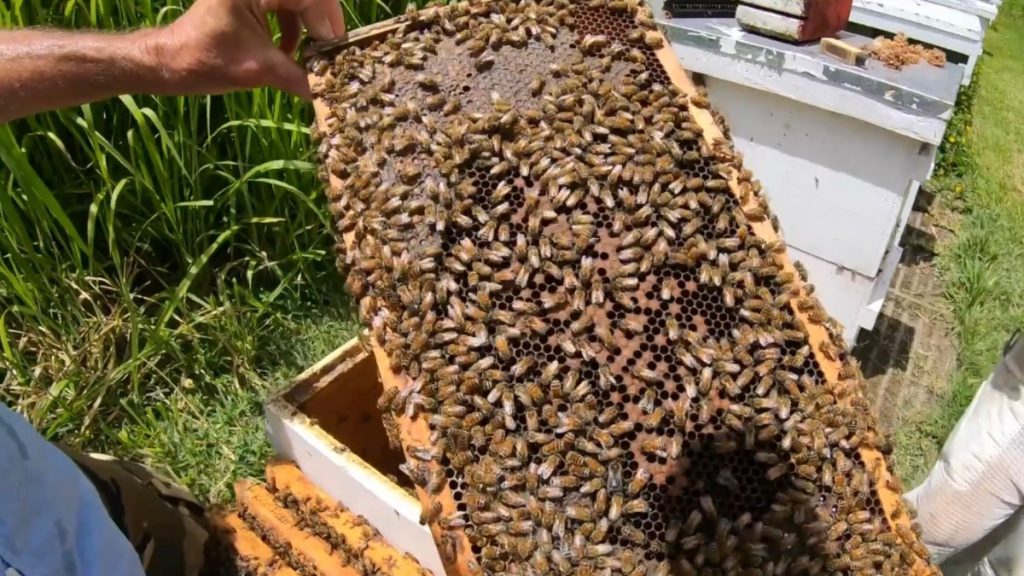
Beekeeping currently is only allowed in agricultural zones in Kauaʻi County, leaving most of the island off-limits. But that could change. On Wednesday, the County Council unanimously advanced a bill that would expand where honeybees can be legally kept, including in residential areas.
Bill 2997 would allow apiaries in a wide range of zoning districts and establish rules for hive replacement maintenance and public safety.
The bill passed first reading at the council chambers in Līhuʻe and was referred to the Planning Commission for further review and public testimony.
Supporters of the bill testified on Wednesday that bees are essential for food production, biodiversity and local economic development. Several speakers said the measure could help strengthen Kauaʻi’s food security while supporting local honey.
Ariel Bishop, a beekeeper and educator of bees, said the bill would allow responsible beekeeping in all zones.
“The current permitting process is expensive and unrealistic for everyday residents,” Bishop said.
She also explained why bees are so important to the island, saying “When the bees disappeared, our gardens and food production changed, too.”
But after adding two hives, she said “the results were practically immediate,” with larger fruit yields and increased abundance for her family and friends.
Bees are responsible for approximately 75% of the pollination of fruits, nuts and vegetables across the United States, according to the U.S. Department of Agriculture.
In the country, one out of every four bites of food people take is courtesy of bee pollination, which is also responsible for more than $15 billion in increased crop value each year, the USDA said on its website.
This includes Hawaiʻi’s specialized crops, such as avocado, citrus, coffee, cabbage, macadamia nuts, squash and passion fruit.
“Kauaʻi is also one of the last places in the world free of the devastating varroa mite, one of the primary causes of honeybee decline worldwide,” Bishop said. “That makes our bees incredibly valuable and worth protecting.”
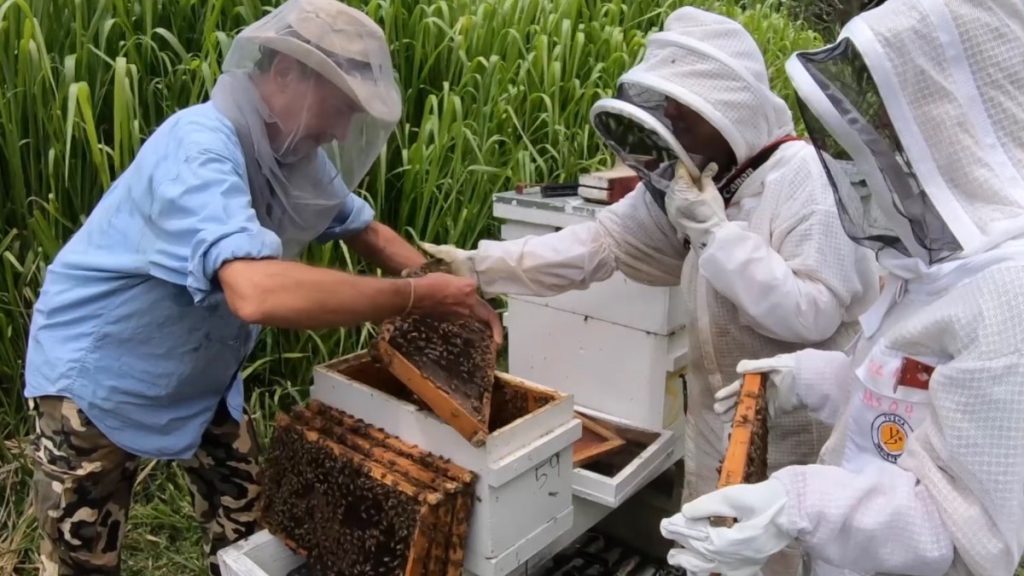
Much of the discussion centered on balancing support for beekeeping with concerns about dense residential neighborhoods and public safety.
The bill is not about putting bees everywhere or forcing beekeeping into communities, with some places not appropriate to keep bees, Bishop said. “It’s simply about giving the responsible people the ability to keep bees legally and respectfully, without criminalizing.”
Councilmember Felicia Cowden raised questions about whether the bill could unintentionally allow apiaries in apartment complexes or condominium developments zoned in high-density housing.
She wants to “avoid a circumstance where there’s something that turns it into a bummer,” including allowing hives near neighboring units and residents with severe allergies.
The proposed ordinance would limit lots under 20,000 square feet to 15 hives and require hives to be placed at least 25 feet from property lines unless separated by a “flyover barrier,” such as fencing or dense vegetation intended to direct bees upward.
Bishop described standards commonly used in beekeeping science and educational programs, including barriers at Kauaʻi Community College that are at least 6 feet tall and positioned within five feet of a hive entrance.
Kauaʻi resident and artist Lonnie Sykos said the ordinance’s definition of “flyover barrier” may need further clarification before final approval.
“I don’t want my neighbors losing their right of quiet enjoyment, because I decided to have bees,” Sykos said. “So this is a detail that I think really needs to be addressed.”
Despite minor concerns, no speakers testified against the measure.
Many speakers described beekeeping as part of a broader movement toward agroecological self-sufficiency and environmental stewardship on the Garden Island.
Doug Gates, a bee rescuer, noted that honeybees provide various medicines: “The bee venom is an amazing thing. If you are told you need to take cortisone shots, bee venom is 100 times more potent than cortisone. It works, and I’m a witness to it. I used it instead of surgery and got full movement back.”
Gates also said that for people with allergies, it is better to eat honey from as close to where a person lives as possible.
“By doing that, it will increase your immune system, and it will cut down your allergies because you are getting everything that you are allergic to,” he said.
Council members who visited Kauaʻi Community Collegeʻs apiary program said hands-on experience around managed hives helped ease fears about bees.
Councilmember Addison Buloson, who acknowledged being “deathly afraid of bees” when first approached about the proposal, said working with local beekeepers changed his perspective.
“When you hear bees, you really know youʻre in a healthy place,” he said.
The Planning Commission is expected to review the ordinance over the coming months before sending recommendations back to the County Council.
Residents interested in expanding their knowledge of bees are encouraged to explore the Kauaʻi Community College Apiary Project. The program offers valuable insights into apiculture and its significance to the local ecosystem.
Residents with additional questions can email kccbees@hawaii.edu.