


The feeling on the small island of Kauaʻi was mostly relief on June 8, after a two-day manhunt ended with the Kauaʻi Police Department and partner agencies capturing murder suspect William “Billy” Sinclair without incident as he floated in waters just offshore of the Kapaʻa Public Library with a loaded gun in his jacket.
Sinclair remains in custody without bail. He is facing 28 felony counts and possible life in prison for allegedly killing chef Sergio “Tito” Reyes Hernandez at Federico’s restaurant in Hanalei over a money dispute and, hours later, shooting Shey Ferguson, who was sitting in his car on a road in Kīlauea. Police said one of the fired bullets grazed Ferguson’s head.
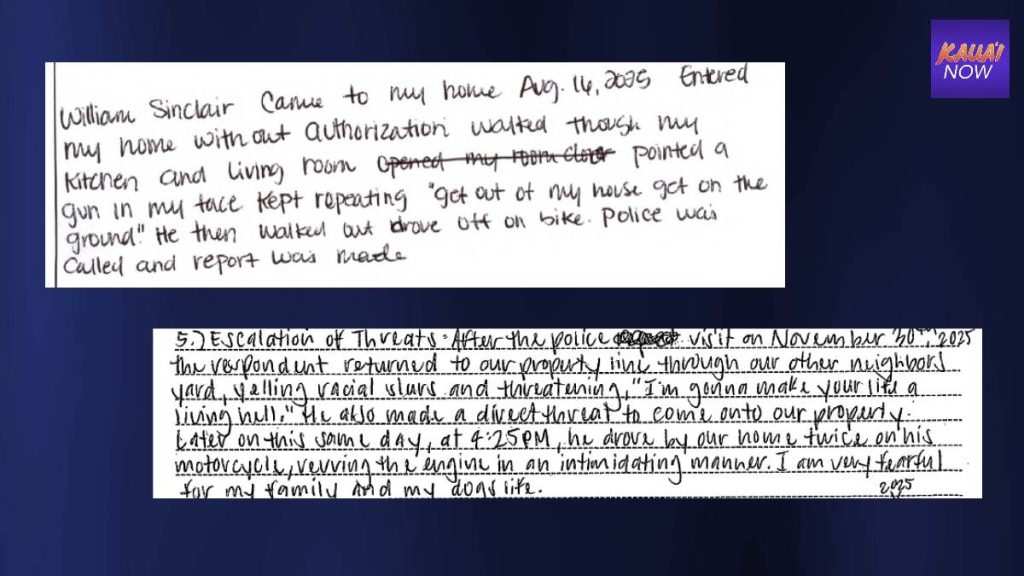
Now, a month later, many members of the community are still shaken by the terrorizing days Sinclair was on the loose with multiple weapons — and frustrated by what some say was inaction by the Kauaʻi Police Department to address repeated reports about Sinclair’s threats, gunfire and erratic behavior leading up to the shooting spree.
Three people felt so threatened by the 51-year-old Sinclair for alleged violent behavior that they obtained temporary restraining orders against him.
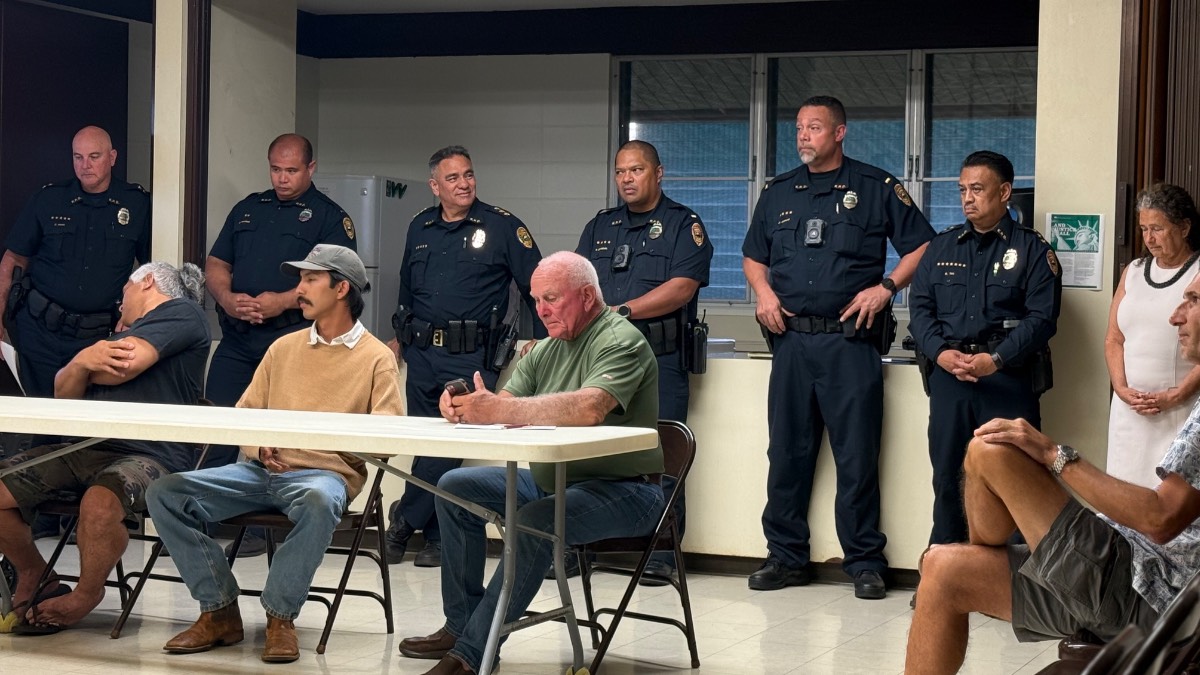
“We asked for help for months and months,” an emotional resident told new Kauaʻi Police Chief Rudy Tai and other top police brass on Tuesday evening during the Kīlauea Neighborhood Association meeting.
“The community lost trust,” the resident continued. “My kids are traumatized.”
Some members also were concerned about the lack of communication surrounding a nearly 10-hour closure of a portion of Kīlauea Road and surrounding area. Some also were unhappy it took police about three hours after determining that Sinclair had slipped past their perimeter to notify the public about the armed and dangerous murder suspect who was on the lam somewhere on the island.
Tai, who had only been at the head of the department for three months when the incidents occurred, apologized to residents for the trauma the community experienced and acknowledged communication shortcomings.
“We want to be very community-focused. We want to hear your concerns, ” Tai said during the 90-minute discussion that was partly organized by Kauaʻi County Councilmember Felicia Cowden.
Police leaders also repeatedly expressed condolences to the victim’s family while defending many of the department’s investigative decisions, citing constitutional limits on searches, staffing shortages and the complexity of the case.
Tai explained that his 166-officer department, which is short staffed with 32 officer vacancies, also was handling an earlier homicide in Waimea on the west side and multiple major incidents. They had only 11 officers available to work islandwide during portions of the Sinclair investigation.
Tai said two homicide incidents occurring at the same time on Kauaʻi “never really happens … so we were kind of surprised at the situation and trying to look at better ways about how we’ll respond.”
The second of the two homicides occurred after Reyes finished his shift on the evening of June 5. His girlfriend went to check on him at the restaurant after he didn’t come home and found him dead with multiple bullet wounds. Officers responded quickly, arriving at about 12:50 a.m. on June 6.
Less that four hours later, police were dispatched at about 4:45 a.m. to reports of gunshots in the Kīlauea area. Sinclair allegedly fired several shots at Ferguson, who was on a road outside Sinclair’s home in Kīlauea. One bullet grazed the left side of his head “like millimeters from going through” his skull, the criminal complaint said.
It was not until 8:30 a.m. that Kīlauea Road, between Kolo Road and Kaikala Street, was announced closed and nearby residents were evacuated as officers searched the neighborhood.
The roads were reopened and residents were allowed to return at about 6:15 p.m.
Tai said his officers believed Sinclair was in his house during that time of the road closure, and outlined the action they took to try to apprehend him there.
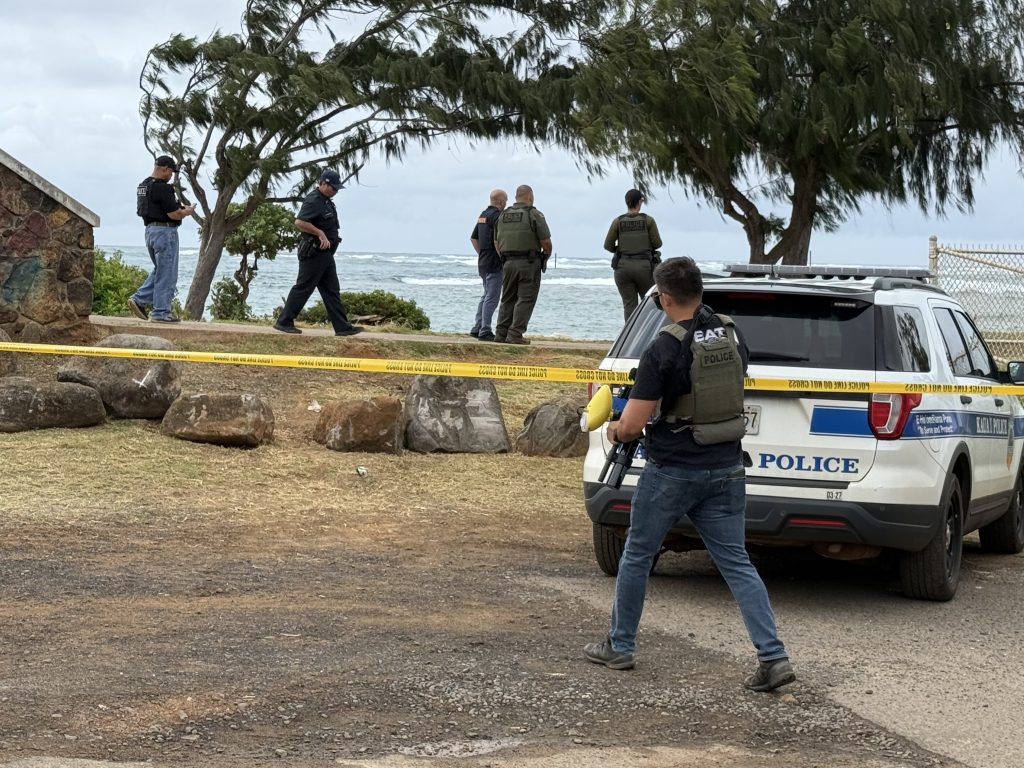
“We threw all our resources in there,” Tai said. This included a drone, crisis negotiation team, SWAT team, special response team, a patrol team and investigators.
After a methodical search, police said at an earlier press conference that they concluded Sinclair had at some point slipped out of the back of the house.
Assistant Chief of Police Darren D. Rose also explained that temporary restraining orders do not automatically give police the authority to seize firearms or search a residence.
“The burden is a lot higher,” Rose said, explaining that search warrants require probable cause supported by admissible evidence rather than allegations contained in protective order filings.
Residents challenged that explanation, arguing repeated complaints from multiple neighbors should have prompted additional investigative action.
“What more does it take?” Cowden asked. “If you’ve got multiple houses experiencing something similar… common sense says that is something.”
“We want to be heard,” another resident said.
Rose said police reviewed approximately 24 written reports by officers involving Sinclair dating to 2020, with only one documented report citing a firsthand statement that Sinclair was seen with a firearm.
Several audience members strongly disputed that conclusion, insisting they personally reported seeing weapons and questioned whether officers properly documented those complaints.
Rose invited anyone who believed their reports were inaccurately documented to meet with him after the meeting so police could review camera footage and department records.
“I need to know the officer you spoke to so we can go back to the body-worn footage and see if these guys did not factually complete the reports because I read through them all,” Rose said.
The 21-page criminal complaint against Sinclair outlined 20 counts dealing with illegal weapons in his possession. They included a Glock 9mm caliber pistol, a two-shot David Industries .22 caliber pistol, a Polymer 80 semiautomatic handgun, a multicolored 300 AAC Blackout 7.62 caliber short barrel rifle, black Radikal NK1 12-gauge shotgun, black unmarked rifle, Optima 50 caliber black powder rifle, unbranded AR 15, Black Palmetto State Armory PA15 rifle, Black Rossi RS22 rifle and a Black Palmetto State Armory AR rifle.
He also was charged for having illegal ammunition, a black suppressor (silencer) and a black Bulldog Case sock case containing a multicolored AR upper with suppressor.
Several speakers described living in fear for months, alleging they repeatedly reported gunshots, threats involving firearms, and intimidating behavior to police. Some said neighbors eventually stopped calling because they believed their complaints were not leading to meaningful action.
“We got treated like criminals,” another resident said. “We asked multiple times for help.”
The meeting became increasingly emotional as family members, friends and coworkers of the Reyes spoke about the lasting trauma caused by the shooting.
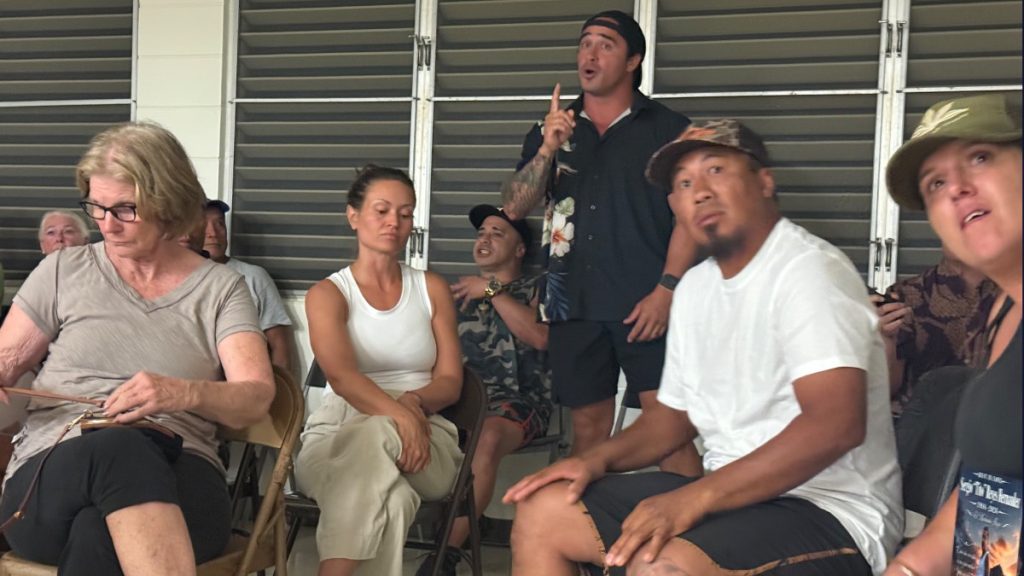
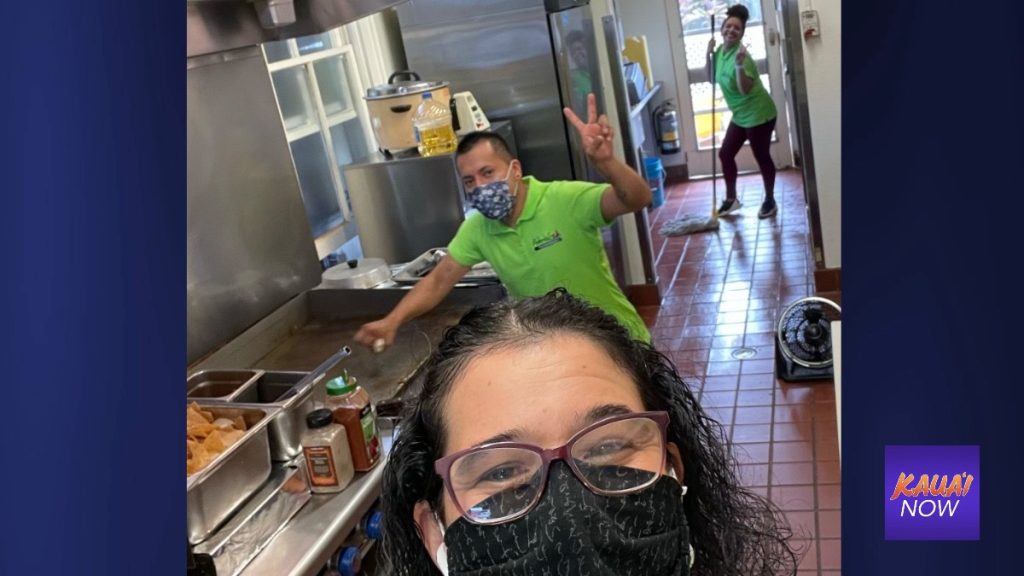
Maria Hernandez, owner of Federico’s restaurant in Hanalei where Reyes worked and was killed, said his death was “the worst night of my life, the worst.”
“He was a great employee,” she said through tears. “I don’t feel safe coming out of the restaurant anymore. I know he’s in jail, but I don’t know anymore what the North Shore is going to bring us.”
But she told the police: “I thank you guys from the bottom of my heart for getting that guy, for getting him, putting him away, and don’t you let him out ever, ever.”
Reyes’ friend and work colleague Pancha Cedillo said through tears that “Tito was like a brother. He was the most amazing man you’ve ever known. He was always there for my kids and me. There’s no bad bone in his body.”
She then asked the police: “They knew that Billy shot Tito at midnight, 12:30, whatever time. Why didn’t you guys go to Billy’s house at that time? Can you guys answer that for me?”
Throughout the discussion, residents repeatedly questioned why police did not respond more aggressively after learning Sinclair had allegedly threatened Reyes before the shooting.
Residents also raised questions about previous investigations involving the death of another neighbor, arguing police failed to properly secure the scene or investigate possible connections.
“That case was investigated thoroughly,” Rose said. “There is nothing there to support foul play. The family knows the cause of death, and I think it’s for them to share if they want to.”
Another frustrated resident asked: “What is not being addressed in your silence here, is why you allow a dangerous person that people were expressing serious fear for a period of time go unaddressed because of tough paperwork?”
Cedillo asked where was Kauaʻi Mayor Derek Kawakami, who did not attend the meeting. “Has he forgotten about this community?”
The mayor’s office sent a statement to Kauaʻi Now on Wednesday, saying Kawakami was not invited to the meeting.
“We know last month’s events brought real fear and uncertainty, and we haven’t forgotten that,” Kawakami said. “I respect that Chief Tai and his team led this investigation and were the right people to answer the community’s questions. We stand ready to meet with North Shore residents anytime, and my administration remains closely engaged with KPD leadership. … Our thoughts remain with the victim’s family and loved ones.”
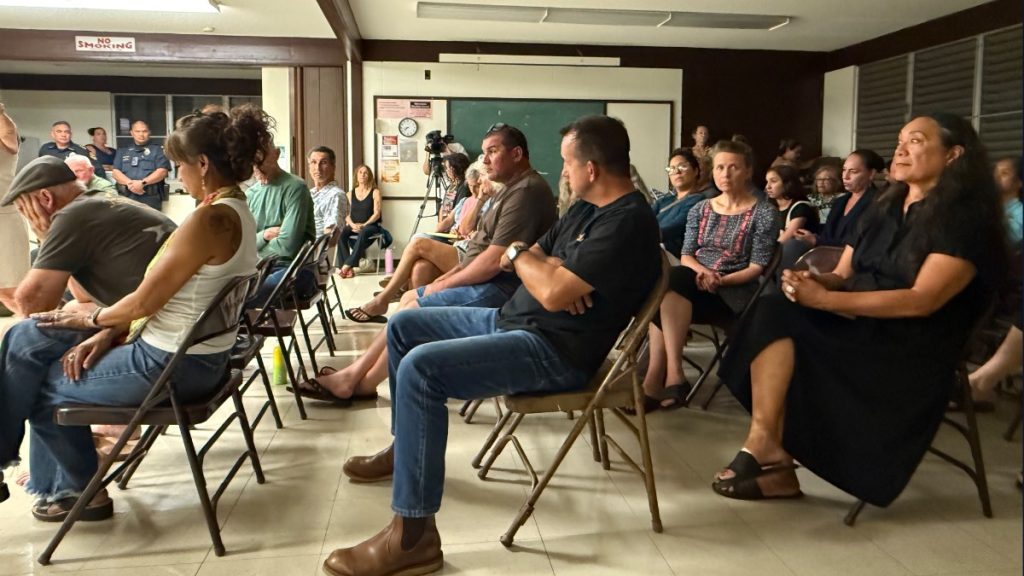
Police officials again acknowledged the frustration and announced several initiatives to improve communication, including more regular community meetings, expanded access to district commanders, improvements to the anonymous CrimeStoppers Kauaʻi reporting system, and efforts to establish Neighborhood Watch groups.
The department also encouraged residents to participate in their City Protect Program.
District Commander Christian Jenkins pledged to attend future community meetings and encouraged residents to contact him directly.
“We’re not going to be able to fix everything tonight,” Jenkins said. “But hopefully we can answer some questions and keep it moving forward.”
Residents also urged the department to improve officer training, increase patrol staffing on the North Shore, provide more consistent follow-up after complaints, and develop protocols that would elevate repeated reports involving the same individual before violence occurs.
As tensions rose between community members, many questions remained unanswered, including whether previous reports were handled appropriately and whether different police actions could have prevented the killing.
“We’re trying to build that trust again with everybody in the community,” Rose said. “We need to build that trust to make this place a better place for not just you guys. We live in this area, too.”
Cowden added that she appreciated that the seven officers attended to listen and engage with the community. She believes that this tragedy will prompt authorities to develop “better strategies for communication during a manhunt and to more proactively identify serious threats within a neighborhood.”
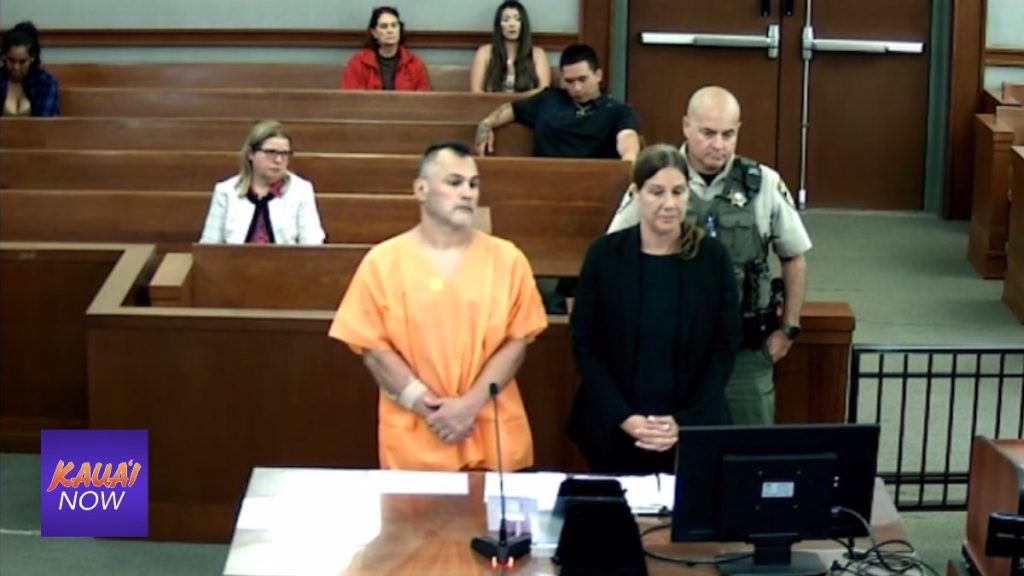
Sinclair has pleaded not guilty. His jury trial is scheduled to begin in late September.