


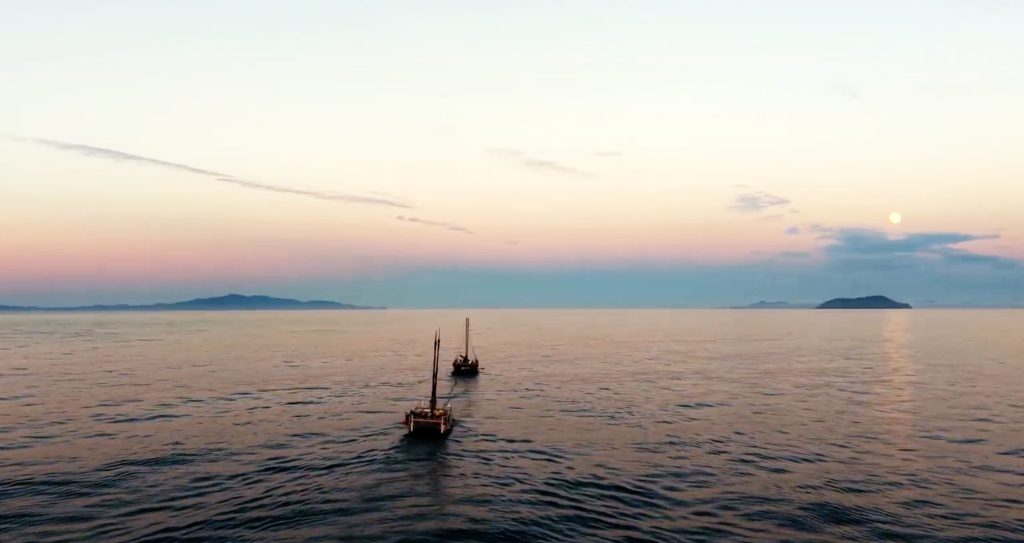
Polynesian Voyaging Society adds one year to the Moananuiākea Voyage Sail Plan
The Polynesian Voyaging Society is revising the Western Pacific portion of the Moananuiākea Voyage in response to confirmed elevated weather risks caused by El Niño and the changing climate.
The revision will add one year to the Moananuiākea Voyage.
According to a report issued in early July by National Oceanic and Atmospheric Administration’s National Weather Service Climate Prediction Center, there is a 97% probability that El Niño conditions will continue through Spring 2027, an 81% chance of a very strong El Niño in October – December 2026 and a very high probability that it would rank among the strongest El Niño events in 75 years.
The probabilities all increase the likelihood and risk of dangerous weather and sailing conditions across the Western North Pacific.
The Polynesian Voyaging Society CEO and Pwo Navigator Nainoa Thompson spoke with the Climate Prediction Center forecasters to get more clarity before revising the sail plan.
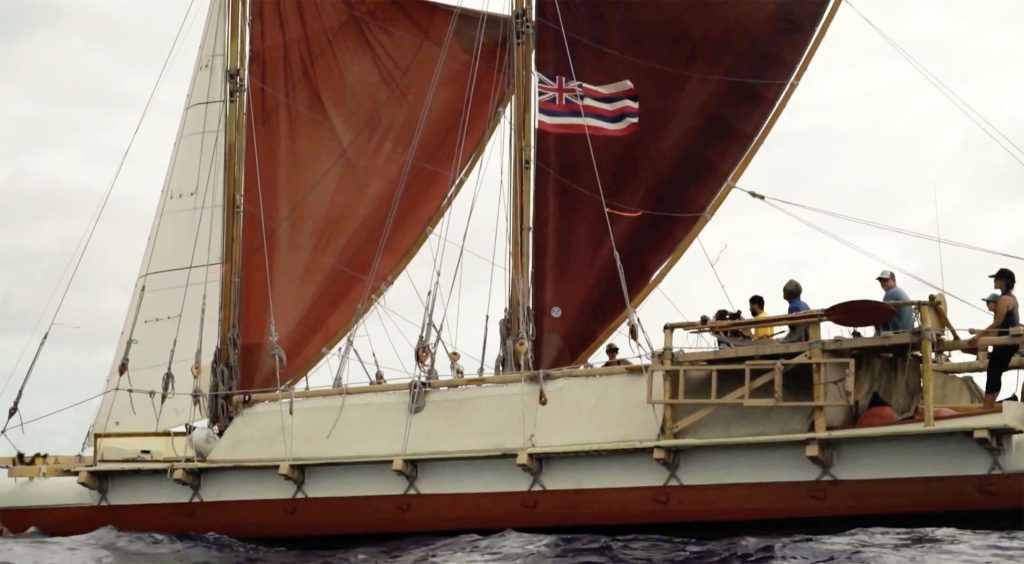
According to Polynesian Voyaging Society CEO and Pwo Navigator Nainoa Thompson, Climate Prediction Center forecasters stated that the winds will not be in their favor, the risk of typhoons is going to be very high and the heat that’s coming out of the ocean is going to create convection, convection creates thunderstorms, thunderstorms create lightning.
The sail plan was for the voyaging canoes Hōkūleʻa and Hikianalia to sail as far north as Hokkaido, Japan in 2027. But, to ensure the safety of its crew, Polynesian Voyaging Society leadership has decided to keep the canoes in the southern hemisphere of the Pacific Ocean, and then proceed to Northeast Asia in 2028. The canoes have been in Aotearoa (New Zealand) since November 2025.
“Nature is telling us what to do. We go when nature allows us to go, when nature gives us permission to go. And I do think our ability to be sailing for 50 years was being disciplined to that,” Thompson said. “So I don’t see it as postponement. I don’t see it as delay. I see it as being respectful, paying attention, being humble with nature, especially now when the weather is what I would characterize as extreme.”
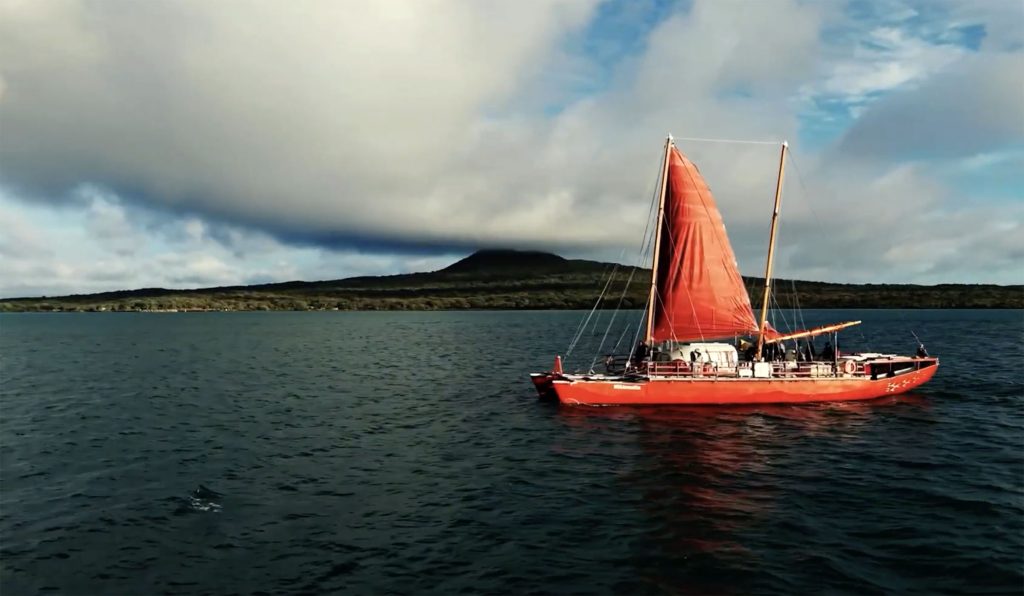
Over the next 17 months, the canoes will visit Fiji in Oct. 2026 to participate in the Pre-Climate Change Conference international ocean and climate meetings, which precede the annual UN Climate Change Conference.
They will then make return visits to Aotearoa, the Cook Islands and French Polynesia. Additional planned stops in 2027 will include American Sāmoa, Sāmoa, Tonga, the region of Melanesia and Micronesia.
This shift in timing is not a pause in the voyage. Rather, it provides meaningful opportunities for deeper cultural exchange, expanded education outreach, and collective climate action with communities and institutions across the Pacific that are preparing for Hōkūleʻa and Hikianaliaʻs arrival.
“Nothing is normal anymore,” Thompson said. “El Niño, coupled with climate change and oceans saturated with heat and carbon, is creating weather patterns that are increasingly unpredictable and more dangerous for traditional voyaging. For these reasons we must continue adjusting our sail plan based on what nature allows us to do.”
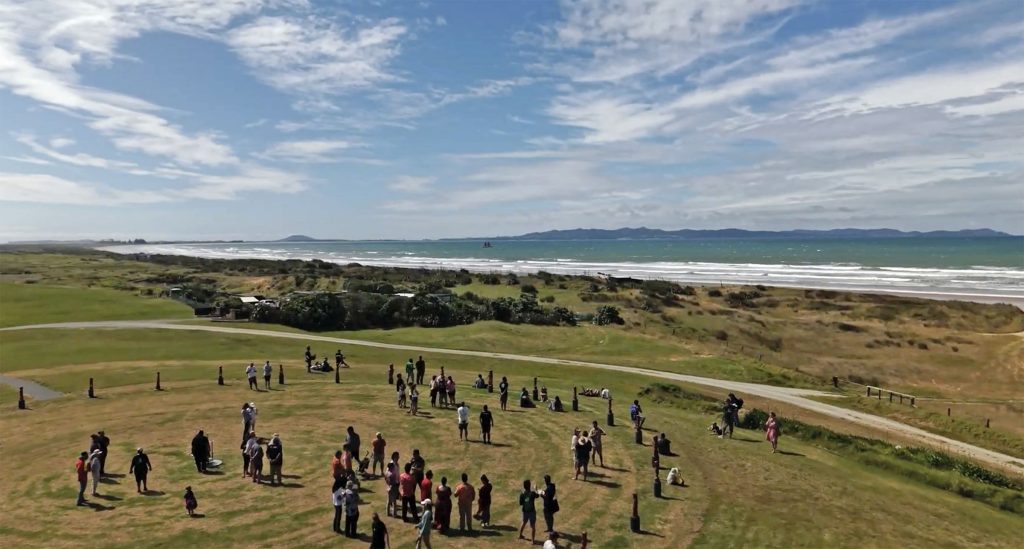
In early 2028, the canoes will depart Micronesia and head to the Philippines, Taiwan, Okinawa, mainland Japan, South Korea and Hokkaido.
The revised sail plan remains pending and will continue to be refined as climate outlooks, regional weather forecasts, and ocean conditions evolve. As navigators have done for generations, every major voyage decision will continue to be guided by careful observation of nature and the safety of the crews and canoes.
“We truly appreciate the understanding and flexibility of all of our host islands and communities. Our responsibility has always been to protect our crews and our canoes,” Thompson said. “Traditional voyaging teaches us to observe, to listen, and to remain humble before nature. We don’t force the schedule, we voyage when the ocean tells us it is safe.”
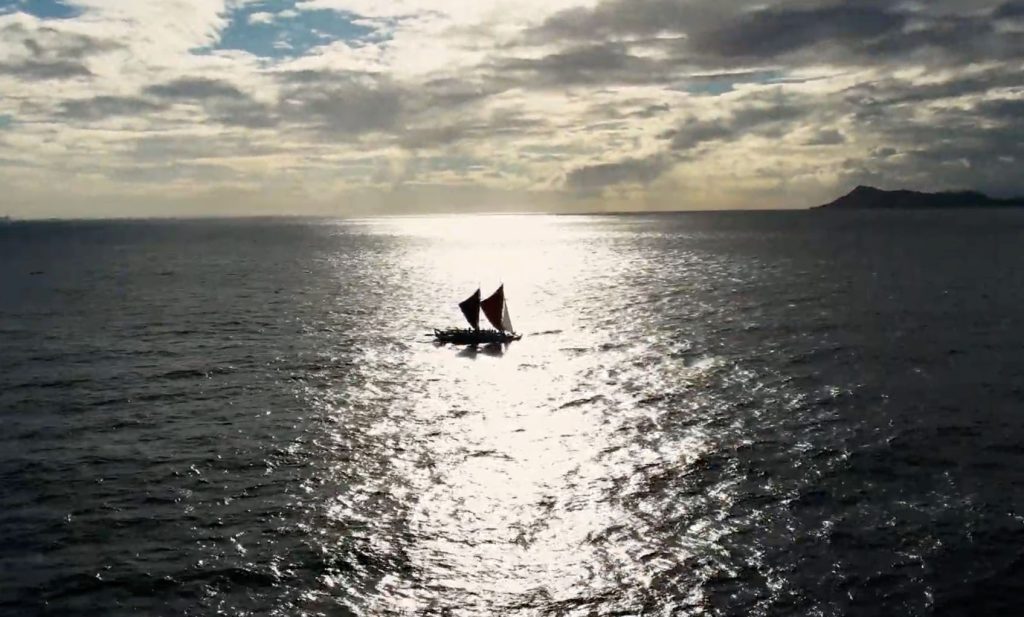
Revised Sail Plan as of July 2026
- Mid-September to early October 2026: Sail from Aotearoa to Fiji and other islands
- October 5 to 8, 2026: Pre-Climate Change Conference meeting in Fiji
- Mid-October to November 10, 2026: Fiji to Aotearoa
- December 2026 to February 2027: Circumnavigation of Aotearoa’s North and South islands
- February to April 2027: Drydock in Aotearoa
- Late April 2027: Sail from Aotearoa to Cook Islands
- May to September 2027: Sail through Polynesian region (Cook Islands, French Polynesia, American Sāmoa, Sāmoa, Tonga and other islands)
- October to early November 2027: Stops in Melanesia
- Early November 2027 to early January 2028: Stops in Micronesia
- January 2028: Palau, Micronesia
- February 2028: Philippines
- March 2028: Taiwan
- April to August 2028: Okinawa, Japan, South Korea, Hokkaido
Hōkūleʻa celebrates 50 years of voyaging
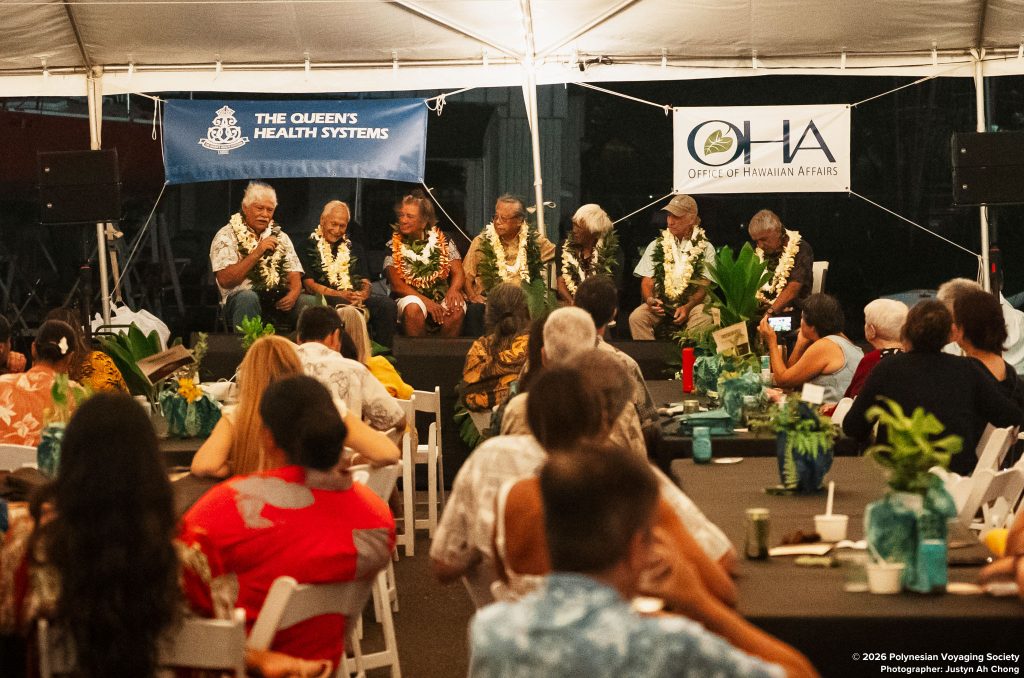
Fifty years after Hōkūleʻa completed her historic maiden voyage from Hawaiʻi to Tahiti and back, nearly 200 major supporters, partners and crew members gathered Saturday, July 25 to celebrate the legacy of the voyage that forever changed Hawaiʻi.
Since the first voyage in 1976, Hōkūleʻa has sailed more than 300,000 nautical miles, visited dozens of countries and territories, trained generations of navigators and crew, and inspired millions of people worldwide through her message of cultural resilience, environmental stewardship, and mālama honua, caring for Island Earth.
Held at the Marine Education Training Center waterfront at Mauli Ola on Oʻahu, “Kealaikahiki: Honoring the Past, Navigating the Future” commemorated the 50th anniversary of Hōkūleʻa’s triumphant return home in July 1976. The evening brought together generations of voyagers through music, storytelling, fellowship, and reflections on one of the most significant cultural achievements in modern Hawaiian history.
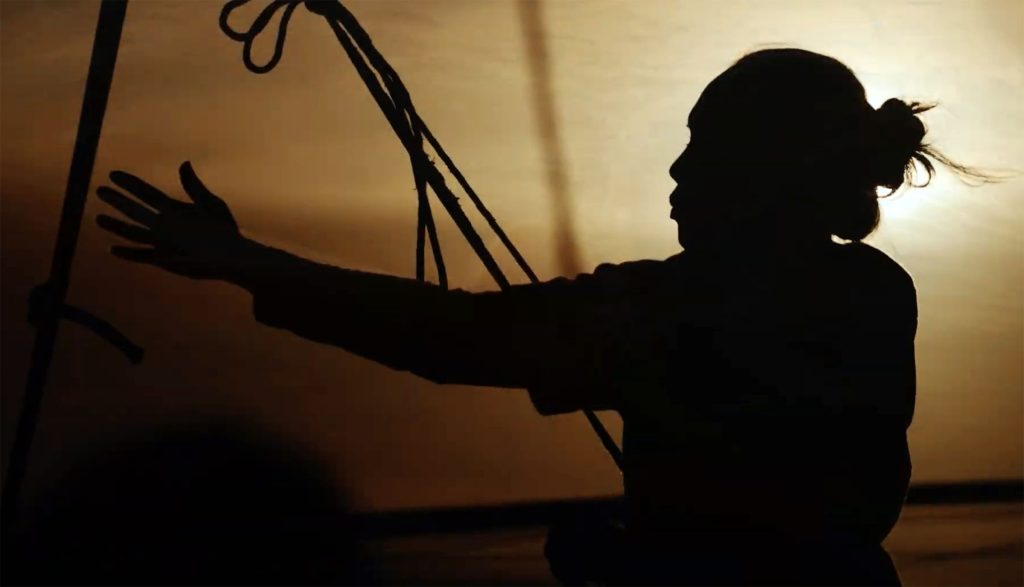
On July 25, 1976, Hōkūleʻa anchored off Kalaupapa, Molokaʻi after departing Tahiti 21 days earlier. The following day, July 26, thousands lined the shores of Magic Island to welcome the canoe and her crew home, marking the successful completion of the first traditional open-ocean voyage between Hawaiʻi and Tahiti in more than 600 years without modern navigational instruments.
Hōkūleʻa’s first voyage reignited pride in Native Hawaiian identity, language, culture and the values of caring for one another and for island Earth.
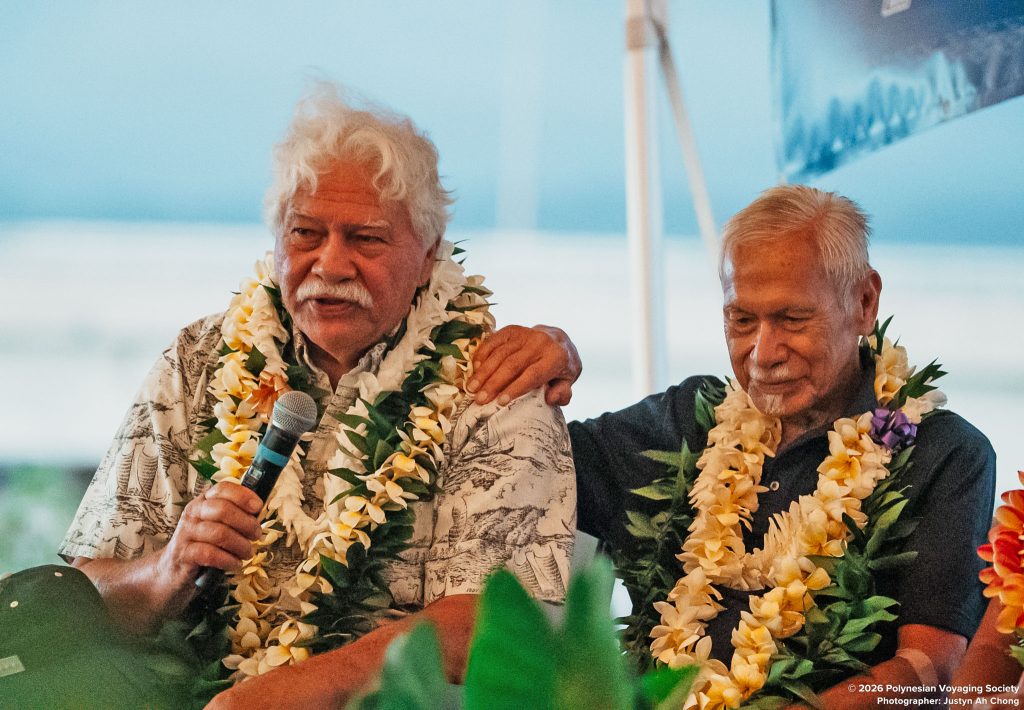
Most of the remaining living crew members who sailed aboard Hōkūleʻa during the historic 1976 voyage attended and participated in a special panel discussion at the event to reflect on memories of that voyage. Billy Richards and John Kruse represented the Hawaiʻi to Tahiti crew and Nainoa Thompson, Penny Martin, Kimo Lyman, Dr. Ben Young, Abraham “Snake” Ah Hee represented the Tahiti to Hawaiʻi crew. Crewmembers Buffalo Keaulana and Makaʻala Yates were unable to attend the event.
“Ever since I stepped on board, Iʻve been living with one foot in the past and one foot in the present,” said 1976 crewmember Billy Richards. “I’m into AI, but the AI I’m into is Ancestral Intelligence…we look to them (ancestors), and that’s how we learn what to do. We relearned what they did at one time.”
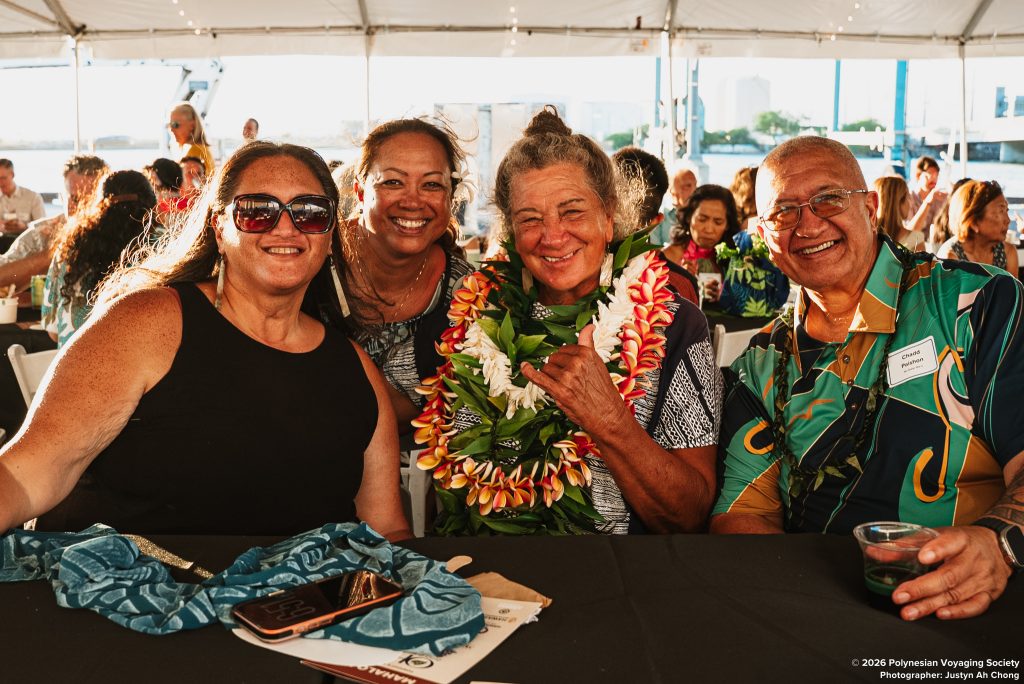
“I wanted to be a part of the project. I wanted to help the canoe, touch the canoe. I was even willing to scrub hulls just so I could be a part of it because you could feel the enormity of it and you knew that this is going to be something really special,” Penny Martin said. “The canoe, it just like calls to you and it called loud.”
Pwo Navigator and Polynesian Voyaging Society CEO Nainoa Thompson addressed the 1976 crew members and the audience of supporters to celebrate the past crews of Hōkūleʻa as well as the crews of the future.
“These individuals that are sitting up here, and to the others that are no longer here, names that we can never forget…essentially they lit the flame. The flame in the darkness of the storms that surrounded Native Hawaiians. They lit the flame of change,” Thompson said. “Fifty years later, we celebrate not only where we have been, but where future generations will lead us for the next 50 years.”
During the ceremony, Hawaiian Homes Commission Chair Kali Watson presented a declaration from Hawaiʻi Governor Josh Green recognizing the 50th anniversary of Hōkūleʻa’s maiden voyage and its lasting significance to Hawaiʻi.
Dr. Kealoha Fox, Executive Director and Chief Resilience Officer for the City and County of Honolulu’s Office of Climate Change, Sustainability and Resiliency, also presented a special message from Mayor Rick Blangiardi honoring the canoe, its crew, and the enduring legacy of Polynesian wayfinding.
The celebration began with music by the Drydock Band and Mike Kaʻawa, followed by an evening of fellowship, shared meals, and storytelling that reflected the spirit of Hōkūleʻa and the community that has sustained her mission for five decades.
As Hōkūleʻa begins the next 50 years, the Polynesian Voyaging Society remains committed to preparing future generations of navigators, educators, and leaders who will continue to navigate with the same courage, curiosity, and values that launched a movement a half a century ago.