


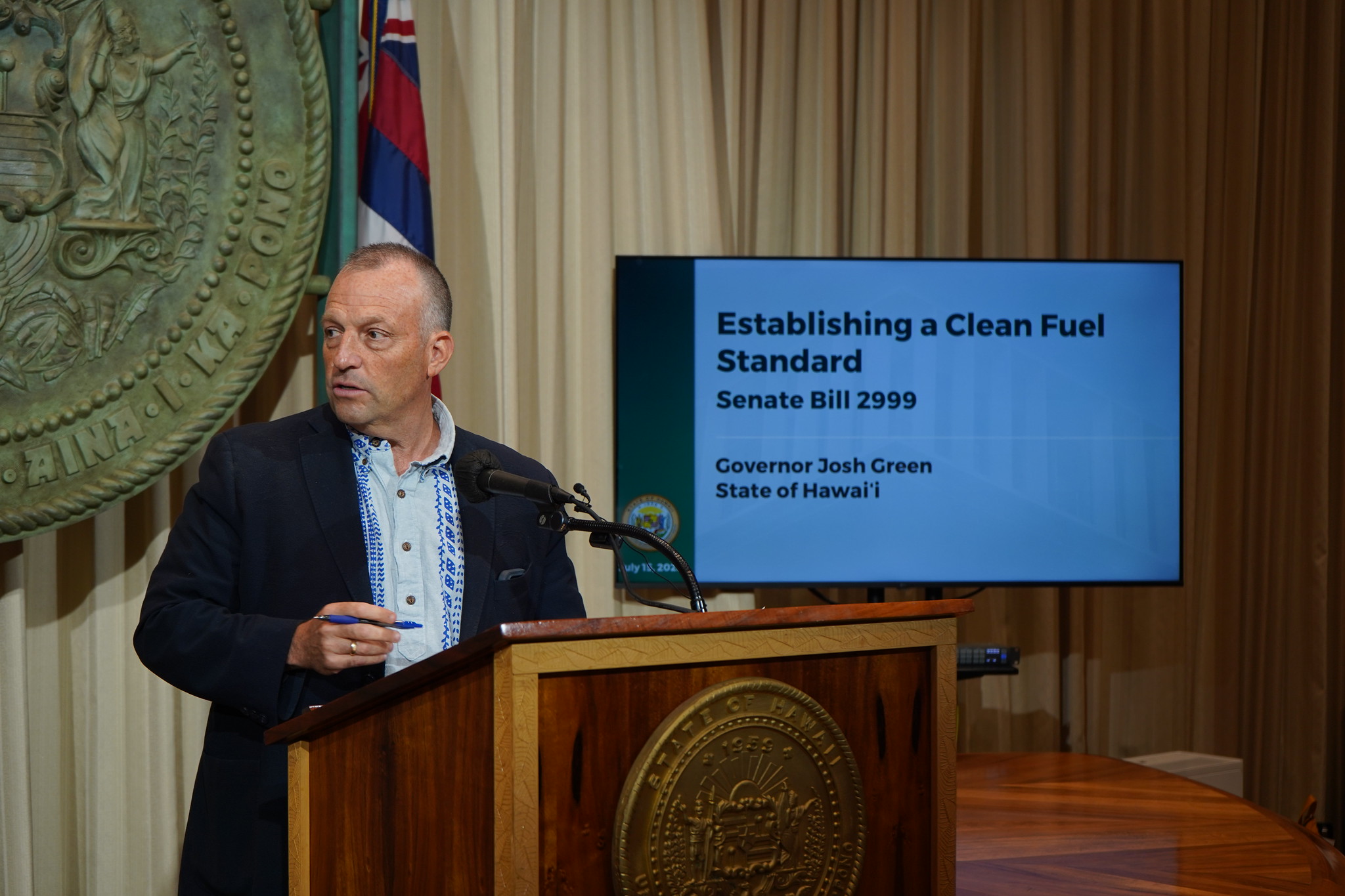
Gov. Josh Green signed four bills to enhance efforts in building a clean energy economy, ensuring that Hawaiʻi’s laws keep up with emerging technologies.
This action signals a shift toward cleaner, safer roads in Hawaiʻi that better serve the needs of residents, including youth.
Hawaiʻi’s transportation sector holds significant potential to reduce greenhouse gas emissions by encouraging the use of cleaner fuels for daily travel. Senate Bill 2999 establishes a statewide Clean Fuel Standard aimed at reducing the carbon intensity of Hawaiʻi’s transportation fuels while offering cleaner alternatives to lessen the cost of living impact on residents.
By creating a performance-based system rewarding cleaner fuels with credits and assigning deficits to more carbon-intensive fuels, SB 2999 fosters innovation without mandating any specific technology. It encourages public engagement, regular reporting, and stakeholder input to maintain accountability throughout the program’s development.
A clean fuel standard supports local agriculture, renewable energy industries, and broadens markets for homegrown renewable fuels and materials, including options that transform waste into energy sources. This transition is set to encourage investments, create jobs across various sectors, enhance public and environmental health, improve air quality, and boost energy security.
“A resilient Hawaiʻi is defined by sustainable systems,” Green said. “These investments reinforce a commitment to constructing co-beneficial models, paving the way for economic opportunities toward a cleaner, low-carbon future.”
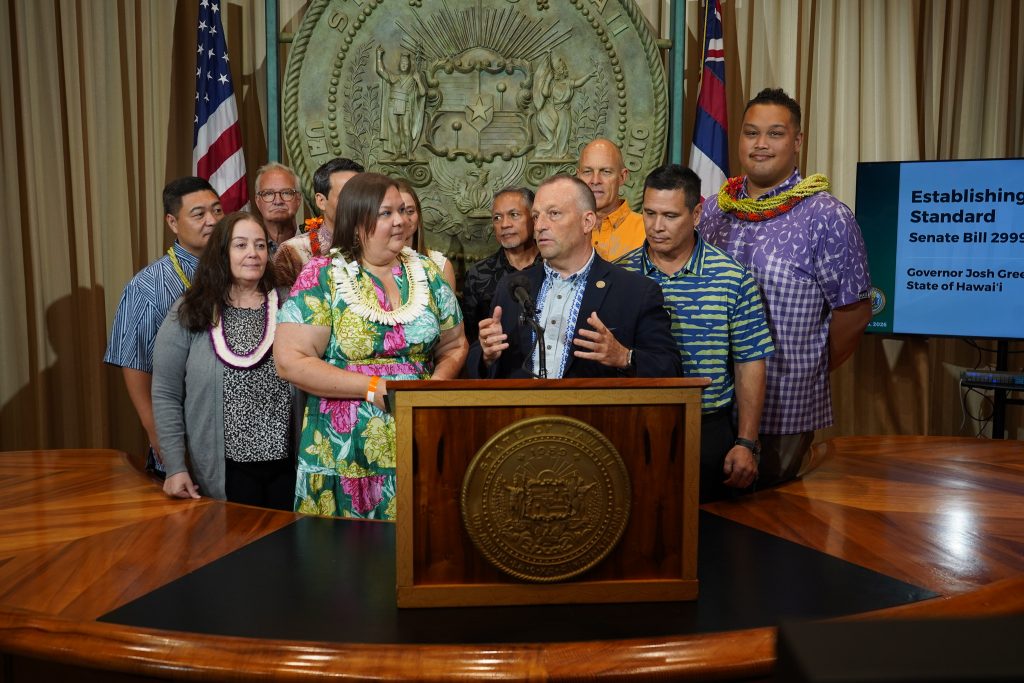
The Hawaiʻi State Department of Transportation will enforce this standard through a transparent, public rulemaking process, with full implementation required by Jan. 1, 2028. Under the program, the department must set lifecycle emissions-reduction benchmarks and develop a phased plan to steadily decrease transportation fuel carbon intensity. The goal is to achieve at least 10% below 2019 levels by 2035 and 50% below 2019 levels by 2045.
“Gov. Green’s signature on SB 2999 empowers the Hawaiʻi Department of Transportation to set a clear, actionable framework for clean fuels that considers all our state goals, including economy and affordability,” said Hawaiʻi Department of Transportation Director Ed Sniffen.
Public engagement, regular reporting, and stakeholder input will be shared through the Hawaiʻi Department of Transportation’s Energy Security, Community & Culture Portal throughout the framework’s development.
“Transportation remains Hawaiʻi’s largest source of greenhouse gas emissions and air pollution impacting public health,” said Rep. Nicole E. Lowen, chair of the House Committee on Energy and Environmental Protection. “Establishing a Clean Fuel Standard creates a pathway to transition to lower-carbon transportation fuels, improve air quality, and support innovative industries that create well-paying jobs here at home.”
The rapid growth of electric bicycles and other micro-mobility devices has led to gaps in safety standards, confusion over definitions, and uncertainty regarding their usage locations.
Following a significant increase in traffic fatalities in late 2025, the Executive Order on Traffic Safety underscored the need to protect vulnerable users. House Bill 2021 builds upon those efforts by establishing consistent statewide rules for electric bicycles and micro-mobility devices and strengthening enforcement protocols.
The measure creates a regulatory framework updating definitions, setting basic operational safety requirements, and establishing age-related standards like helmet rules for minors and operating restrictions for younger riders. It clarifies where e-bikes and scooters may operate and requires proper registration, with penalties for noncompliance.
It also mandates accurate labeling and disclosures from manufacturers and retailers to ensure riders understand how to use their devices legally and safely. To support enforcement, the measure provides clearer authority for addressing illegal or noncompliant devices and updates related laws for coherence.
“Biking offers opportunities for community engagement, emissions reductions, and cost-saving,” Green said. “This legislation ensures Hawaiʻi’s roadway laws evolve with transportation advances by promoting the safe and responsible use of e-bikes.”
“Families are using e-bikes as a transformative way to save on transportation costs — and this bill allows more residents to use them safely while keeping those misusing them off our streets,” said Sen. Chris Lee, chair of the Senate Committee on Water, Land, Culture and the Arts.
“If this law saves even one life or prevents one family from enduring tragedy, every effort to pass it was worth it,” added Rep. Darius K. Kila.
Gov. Green signed several other bills during the two signing ceremonies.
- SB 2999, Act 258, Relating to a Clean Fuel Standard
- HB 2021, Act 259, Relating to Transportation
- HB 2023, Act 260, Relating to Transportation
- SB 2851, Act 261, Relating to Deaf Individuals
- SB 3234, Act 262, Relating to Traffic Safety
- SB 2338, Act 263, Relating to Housing
- HB 2344,, Act 264, Relating to School Facilities