


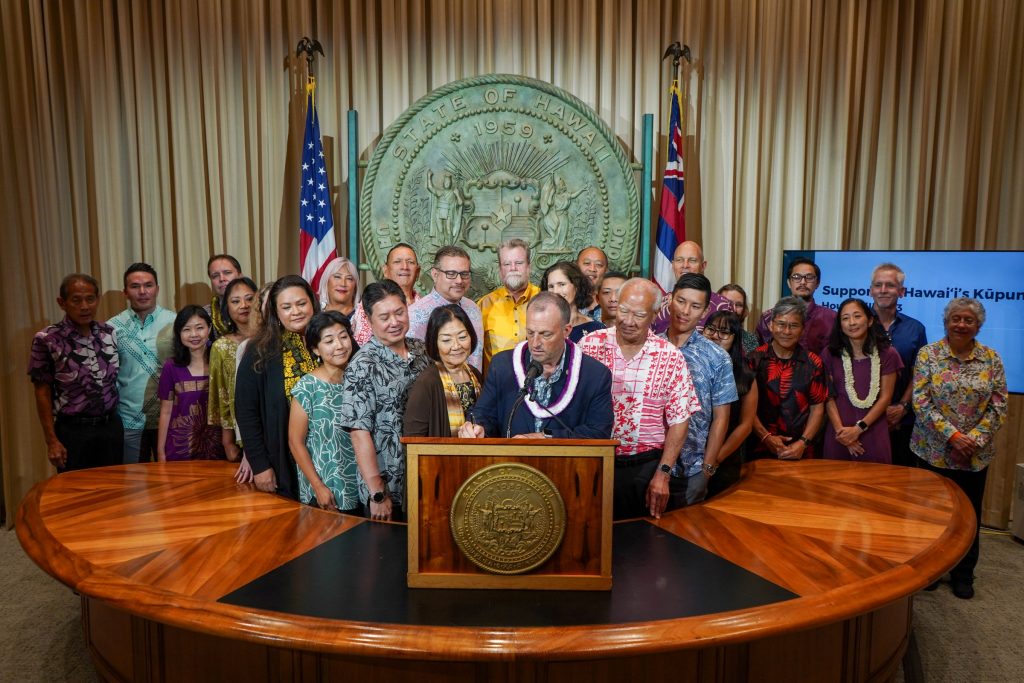
Hawai‘i Gov. Josh Green on July 14 signed one measure recognizing Hawaiʻiʻs commitment to supporting kūpuna and their caretakers and two others establishing safety measures and protections for use of artificial intelligence.
They were signed during two separate ceremonies.
Kūpuna support
Dementia and Alzheimer’s disease can create significant costs for patients and their caregivers, adding financial stress to the emotional toll of memory loss.
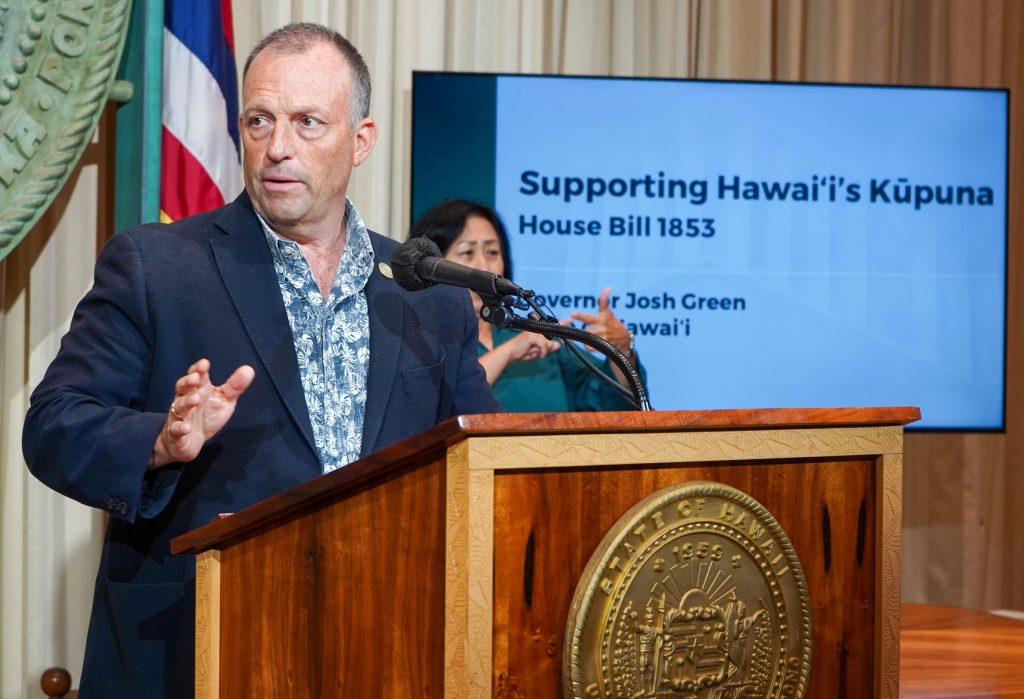
“Support for our aging kūpuna and their caregivers is very personal to me,” said Green in a state release. “The needs are great and anything we can do through thoughtful, supportive and compassionate legislation that will help lighten the load has my heartfelt support.”
HOUSE BILL 1853 (NOW ACT 245): RELATING TO DEMENTIA
With 31,000-plus Hawaiʻi residents living with Alzheimer’s — a figure expected to double by 2050 — the need for a coordinated statewide approach is urgent.
Dementia-related Medicaid costs are rising, now about $309 million annually, placing increasing pressure on household budgets. Some families face memory care costs as high as $15,000 per month.
House Bill 1853, signed by the governor into law as Act 245, establishes the Hānai Memory Network Program — Hawaiʻi’s Assistance for the Navigation of Alzheimer’s Intervention — within the Executive Office of Aging and appropriates $3 million to support its implementation.
This landmark measure will build a statewide network of dementia care specialists and community support services, making it easier for people to access early screening, timely diagnosis and coordinated care.
The program aims to close critical care gaps, provide meaningful support for caregivers and strengthen stability for families throughout Hawaiʻi by placing dedicated dementia care experts in every county and establishing community-based memory clinics on the neighbor islands.
O‘ahu state Sen. Sharon Moriwaki and O‘ahu state Rep. Cory Chun are co-conveners of the Legislative Kūpuna Caucus. Both applauded the governor’s signing of House Bill 1853.
“For too long, those with Alzheimer’s and dementia have received fragmented, reactive and crisis‑driven care or none at all,” said Moriwaki in the state release. “This bill is a major step toward providing early detection, coordinated care, access to treatment and stronger support for caregivers. It’s a significant commitment to our kūpuna, their caregivers and our collective future. By investing now, we can build a network that cares for and supports our kūpuna and families facing what has been a hidden and dreaded disease.”
Chun added that the new program will build a stronger support system that improves quality of life and helps families navigate the challenges of these diseases.
“We all have been touched by dementia, whether in our own families or in our communities,” said Alzheimer’s Association of Hawaiʻi board member and The Queen’s Health Systems Division of Geriatrics Chief Dr. Gina Fujikami in the state release. “Through the creation of this interconnected system, we will be able to better stabilize the disease, maintain and extend independence — and help people plan for the future.”
Artificial intelligence
It is imperative state develops safeguards to ensure people are protected and provided tools to use artificial intelligence with caution as the software becomes increasingly advanced.
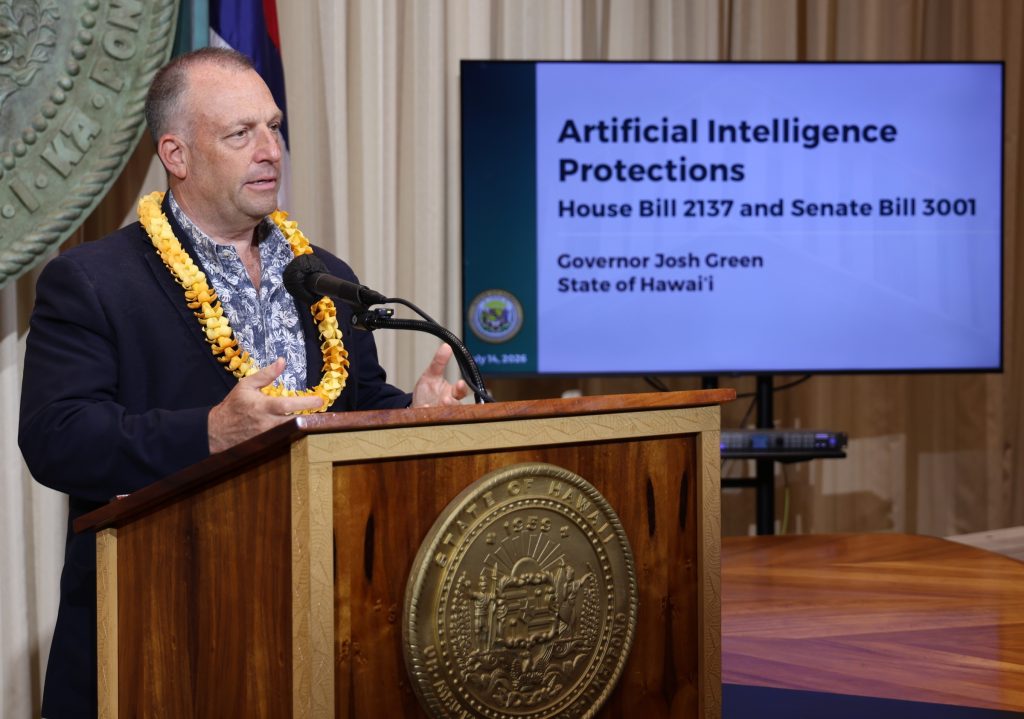
“[Artificial intelligence] presents fascinating opportunities for technological breakthroughs and has become a daily tool for many here in Hawaiʻi,” Green said. “By being intentional with our approach and recognizing potential dangers, we will be better suited to use [artificial intelligence] to our advantage.”
He added that House Bill 2137 and Senate Bill 3001 build upon significant findings that will allow the state to protect its people during times of rapid development.
HOUSE BILL 2137 (NOW ACT 247): RELATING TO ARTIFICIAL INTELLIGENCE
A function of artificial intelligence referred to as “deepfake” technology enables realistic digital imitation of an individual’s voice, face, likeness and performance.
Deepfake technology was linked to identity theft, fraud, election interference, cyberbullying and non-consensual pornography, causing irreparable damage and lasting harm. These fabricated images are increasingly realistic, making it difficult or even impossible to distinguish between authentic media and generated content.
House Bill 2137, signed by Green into law as Act 247, establishes consumer protection standards for deepfake technology and other similar artificial intelligence functions, defining harmful use and providing civil remedies for people injured by unauthorized artificial intelligence-generated realistic digital imitations.
The measure expands on federal statutes that already outlaw deepfake scenarios and clarifies malicious deepfake use, enabling victims to bring civil action for injunctive relief, punitive damages and monetary damages up to $25,000 per piece of content.
SENATE BILL 3001 (NOW ACT 248): RELATING TO ARTIFICIAL INTELLIGENCE
Conversational artificial intelligence systems are increasingly accessible to consumers, particularly children and minors. These systems are capable of outputting text, images, audio, video and interactive dialogue and now are embedded into nearly every corner of the internet.
Reliance on this so-called generative artificial intelligence for emotional and psychological support is dangerous, especially when in the hands of keiki.
Senate Bill 3001, signed by Green into law as Act 248, requires operators of artificial intelligence companions to issue certain disclosures, develop comprehensive response protocols for user prompts regarding suicidal ideation or self-harm and provide annual reports to the Behavioral Health Administration of Hawaiʻi Department of Health.
This measure also establishes guidelines to prevent addictive software patterns targeted at minors and misrepresentations that a chatbot is of human likeness.
“Our keiki and young people carrying trauma, including those with histories of abuse, neglect or instability, are probably among those most likely to seek connection from [artificial intelligence] companions, but may be the least equipped to recognize when technology-mediated interactions are unhealthy,” said Office of Wellness and Resilience Director Tia Roberts Hartsock in the state release. “The bill takes an evidence-based, trauma-informed approach to emerging technology by preventing harm before it occurs.”
O‘ahu state Sen. Jarrett Keohokālole, a co-introducer of Senate Bill 3001, said every person’s control over their voice is sacrosanct. This measure makes sure people in the islands do not fall victim to technology that could take control and put it in the hands of bad actors.
“[Artificial intelligence] is not coming, it is here,” said Keohokālole in the state release. “[Senate Bill] 3001 sets guardrails on [artificial intelligence] platforms to protect children from harm while we all learn to adjust to life with [artificial intelligence].”
Hawai‘i House Committee on Education Vice Chairperson O‘ahu state Rep. Trish La Chica said the state’s keiki are growing up in a world where artificial intelligence is becoming part of everyday life, and it is the state Legislature’s kuleana to put the right protections in place.
“Together, these laws reflect our commitment to ensuring artificial intelligence is used responsibly and never comes at the expense of a person’s identity, privacy or safety,” said La Chica in the state release.
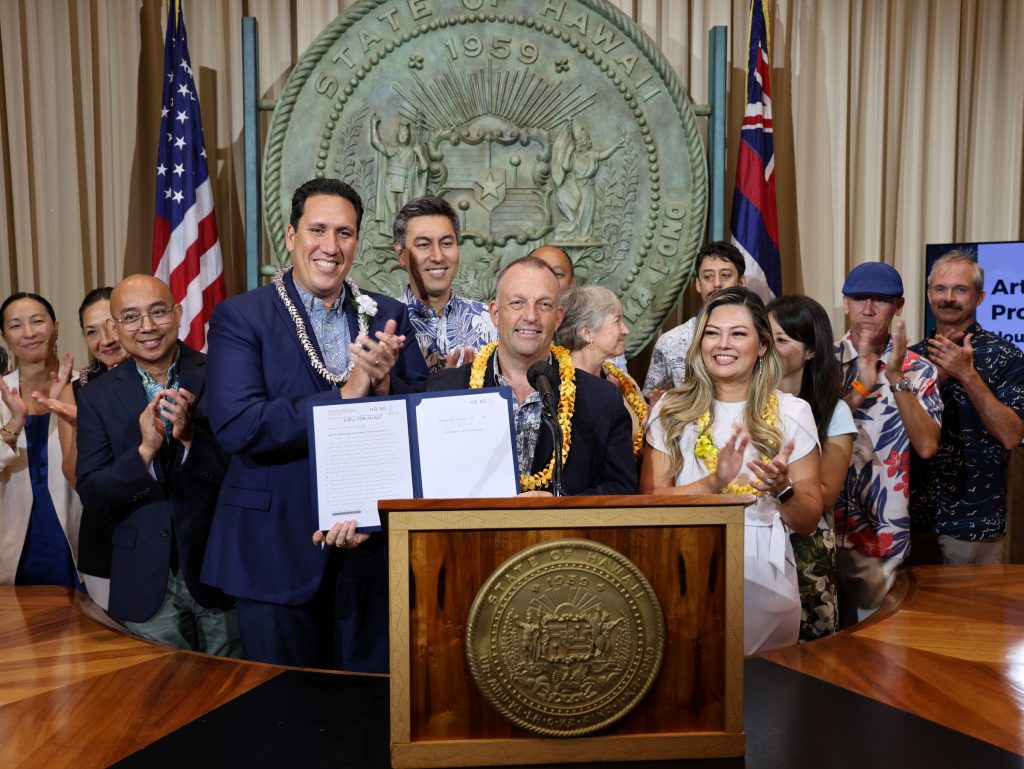
 Courtesy Photo: Office of Hawai‘i Gov. Josh Green
- Courtesy Photo: Office of Hawai‘i Gov. Josh Green
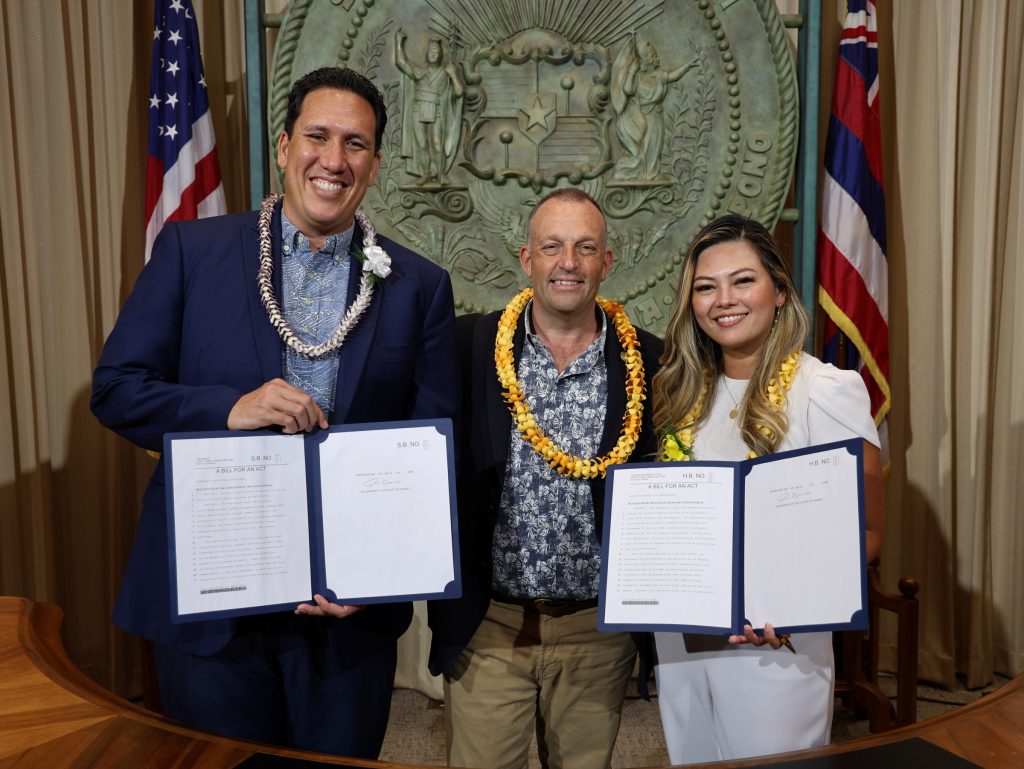
Other bills signed by Green during the two signing ceremonies
- House Bill 1973 (now Act 246): Relating to health
- House Bill 1804 (now Act 249): Relating to long-term care financing
- Senate Bill 2866 (now Act 250): Relating to kūpuna housing
- Senate Bill 2259 (now Act 251): Relating to development
- House Bill 1753 (now Act 252): Relating to social media
- Senate Bill 888 (now Act 253) and Senate Bill 2031 (now Act 254): Relating to consumer protection
- Senate Bill 2043 (now Act 255): Relating to insurance
- Senate Bill 2964 (now Act 256): Relating to property insurance
- Senate Bill 2852 (now Act 257): Relating to civil rights