


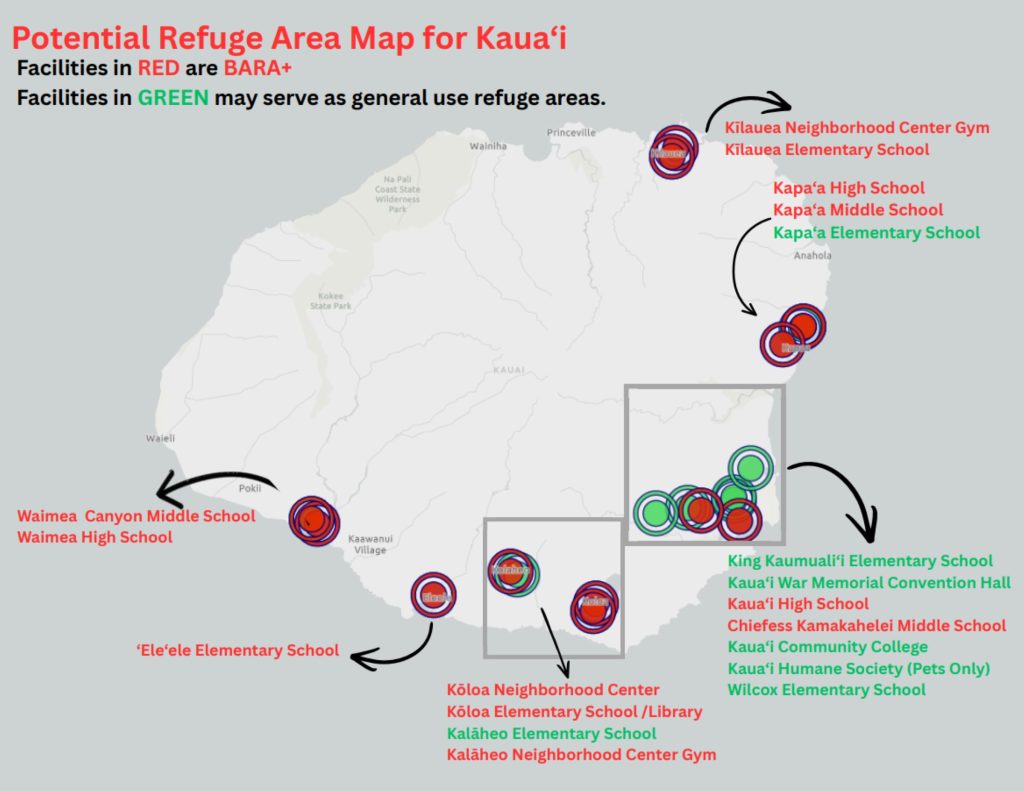
Kauaʻi Emergency Management Agency released an updated list of potential refuge areas for Kauaʻi that is available online as of Thursday, May 28.
The list is being released as a personal preparedness and planning tool to help residents and visitors identify potential refuge locations around the island ahead of the 2026 Central Pacific hurricane season, which begins at the beginning of next week on June 1.
This year’s hurricane season could be a very active one, too, with forecasters predicting as many as 5 to 13 tropical cyclones — which include tropical depressions, tropical storms and hurricanes — moving through the Central Pacific basin.
“Knowing your options before an emergency and making appropriate plans for either sheltering in place or evacuating are important steps a family can take before disaster threatens,” said Kauaʻi Emergency Management Agency Administrator Elton Ushio in an announcement about the new updated list. “This list is meant to be a planning tool, and we want residents to look at the facilities in their area, talk through the plan with their ʻohana and be ready to act when the time comes.”
While refuge areas should always be considered a last resort, Ushio added having the information on hand makes all the difference when minutes matter.
The list of potential refuge areas identifies facilities around the island that can be considered for use as refuge during emergencies. Not every facility on the list will be opened during every emergency.
Facilities marked with an asterisk are identified as BARA+ locations.
“BARA” — or best available refuge area — assessments are used to help identify locations that can provide increased protection during high wind events. The “+” designation is used for locations that include buildings, rooms or areas thought to provide enhanced protective characteristics beyond baseline refuge area considerations.
These locations were identified through engineering and emergency management review.
The public is reminded that while these areas can offer increased protection from hurricanes, most were not originally designed to meet hurricane “shelter” standards and are intended as last resort evacuation options.
Additional public or private facilities might also be activated as refuge areas depending on the incident and operational needs, including for hurricanes, tsunamis, flash flooding, wildfires, hazardous materials incidents and other emergencies.
Kauaʻi Emergency Management Agency will issue media releases and update the Kauaʻi County website when refuge areas are activated, including the Refuge Area Status page.
Notifications, as appropriate, might also be sent through the county’s Everbridge emergency notification system.
The public is reminded that in many cases, sheltering in place could be a good option to consider, particularly if a home or structure is of newer or hardened construction and located outside hazardous flood and storm surge areas.
Additional facilities might qualify as BARA+ locations following future assessments, renovations or retrofits.

Emergency Management reminds the public about these refuge area emergency preparation basics:
- Refuge areas are last resort evacuation options. Residents and visitors should first consider sheltering with family or friends in safer locations when possible.
- Bring your own supplies. Refuge areas do not provide food, water, bedding, medications or other personal items. Take your disaster supply “go kit” with you.
- Pets are welcome. All designated facilities will accept household pets; however, owners must bring their own pet food, water and crates/cages. Pets can be housed in separate areas for safety and sanitation reasons.
- Plan ahead for medical or access needs. Refuge areas do not provide personal caregivers, medical staff or specialized support. Only basic accommodations will be available. People with medical, functional or access needs should plan accordingly.
- Stay informed. During emergencies, monitor news media, the Kauaʻi County website and sign up for emergency notifications through Everbridge.
Information about planning and preparation for hurricane season is available at the Kauaʻi Emergency Management Agency website, Hawaiʻi Emergency Management Agency website and Central Pacific Hurricane Center website.
Visit the Kauaʻi Emergency Management Agency website and click on “Notification Services” to sign up for free county emergency notifications via Everbridge.
Those without internet access can have their phone number and other pertinent information added to Kauaʻi County’s Everbridge database by contacting Kauaʻi Emergency Management Agency at 808-241-1800 or emailing to KEMA@kauai.gov.