


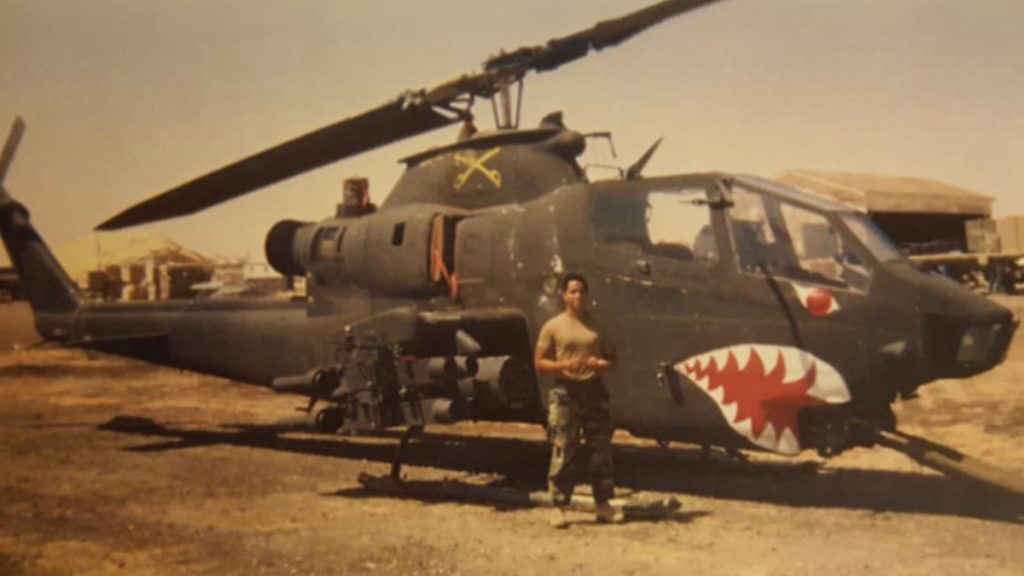
As Asian American, Native Hawaiian and Pacific Island Heritage Month is observed alongside Memorial Day, Waimea resident and Army veteran Glenn H. Victa quietly reflects on his military journey that spans the front lines of the Gulf War to humanitarian missions in Hawaiʻi and years spent supporting U.S. operations overseas.
The now 59-year-old Victa, a second-generation Filipino American who was born in San Diego, said his military career was “shaped by his father’s service in the U.S. Navy, pride in his heritage, and love for his country.”
This Memorial Day, Victa plans to quietly attend the ceremony at the Kauaʻi Veterans Cemetery in Hanapēpē. It begins at 10 a.m., but it is good to arrive early.
Victa will be reflecting on veterans who died during wars and deployments throughout his life.
“I know the feeling of respect for veterans who passed away,” he said. “Now that my mind is more at peace, Memorial Day means even more to me.”
Victa enlisted in the Army at age 20 after attending vocational electronics school in California.
“Iʻve always had pride serving knowing my ethnicity was not the primary race in our country,” he said. “But I decided to serve because I love my country.”
He spent seven years in military service, including time with the Hawaiʻi Army National Guard, before later working more than a decade overseas as a military contractor specializing in satellite communications. But some of the moments that continue to stay with him occurred early in his career.
In 1991, Victa volunteered to join an Alabama-based Army Reserve unit preparing for deployment during the Gulf War. At the time, he was stationed in Hawaiʻi with the Army.
Many of the soldiers in the unit had families or fiancées, while he was single and already trained as a sergeant. So he decided to step up, becoming the only Asian member of a small Army advance team tasked with helping allied forces regain Kuwait International Airport during the Gulf War.
“I felt I was qualified and trained already,” Victa said. “I felt it was the right thing to do especally because I wasn’t married or had a family at the time.”
The operation turned into a dangerous three-day battle involving coalition troops and Iraqi forces.
This January marked the 35th anniversary of the Gulf War, a milestone that stirred memories for Victor that never fully left him.
Victa remembered during one convoy operation near the airport, his sergeant became stuck in deep sand while enemy fighters surrounded the area. That is when he signaled for the convoy to stop and return.
“I was near the end of a 20-vehicle convoy, and then I spotted him in the corner of my eye that he was stuck, he recalled. “I did some hand signs, and he saw my hand sign, and I just continued and asked to get a person on the radio, and stopped the whole convoy to backtrack to help Sgt. Reese because we were surrounded by the enemy.
“Due to our return, we were able to save him.”
Years later, he still thinks about that moment and the uncertainty soldiers faced during the war.
“You never forget things like that.”

Although he was never recognized, he is proud to have saved Sgt. Reese.
After returning from the Gulf War, Victa transitioned into the Hawaiʻi Army National Guard at Wheeler Air Force Base on Oʻahu. About a year later, Hurricane Iniki slammed into Kauaʻi as a Category 4 storm, devastating the island in September of 1992.
Victa was among four National Guard soldiers who volunteered to remain overnight during the storm to maintain emergency communications between Oʻahu and Kauaʻi.
The soldiers monitored a specially installed radio antenna along a ridge near Schofield Barracks while Oʻahu itself was battered by heavy rain and strong winds from the hurricane.
“We volunteered because communications was the key,” Victa said. “We were there to help.”
Victa served with the 193rd Aviation Regiment, whose helicopters were being prepared for deployment to Kauaʻi for search-and-rescue and humanitarian missions once conditions allowed.
When the crews eventually arrived on Kauaʻi, Victa said the destruction was overwhelming.
“All I saw was flattened houses,” he said. “People were helping each other. Everybody was just trying to support the community.”
As an avionics specialist, Victa’s role focused on maintaining the helicopters supporting relief operations. Though he was not directly involved in rescue flights, he said he felt pride knowing he was helping residents recover after one of Hawaiʻi’s worst natural disasters.
Victa particularly remembers Staff Sgt. Jay Higa, a mentor he met during his transition into the National Guard. Higa taught him technical skills and introduced him to Hawaiʻi’s “local way of life.”
Years later, after returning to Hawaiʻi for work on Kauaʻi, Victa searched online for Higa and learned through an obituary that his former mentor had died in 2017.
The discovery hit him hard ahead of this year’s Memorial Day observances.
“It shocked me,” Victa said through tears. “He was one of the guys who volunteered with us during Hurricane Iniki.”
Following his military service, Victa said he spent more than 10 years overseas as a satellite communications contractor supporting U.S. military operations in Iraq, Syria, Jordan, Greenland and Africa.
He described years living in isolated bases in harsh conditions, where rocket attacks in the Middle East became routine.
“When I first arrived there, I couldn’t sleep,” he said. “You never knew if you’re going to wake up the next day.”
Eventually, Victa returned to Hawaiʻi and accepted a position supporting operations and maintenance at the NASA-related site on Kauaʻi, which is connected to geodesy research projects.
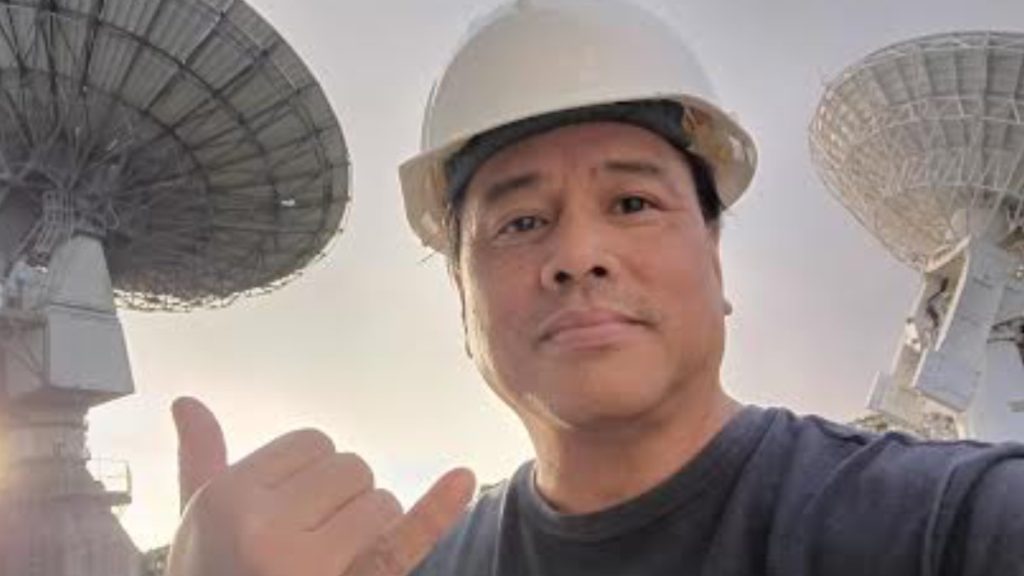
Now, after years spent in war zones and remote environments, he said Kauaʻi has finally brought him peace.
“I finally feel relaxed,” Victa said. “I wanted to leave those harsh environments behind.”
Having time to focus on himself, Victa recently discovered through research and confirmation from a University of the Philippines professor that he has a family connection to Emilio Aguinaldo, the first president of the Philippines and a former military general.
Victa said discovering he was a collateral descendant of Aguinaldo deepened his appreciation for both his Filipino heritage and military service.
“I’m proud now knowing my family had that history,” he said.
To continue his family’s legacy, Victa hopes to donate his military uniform to the Kauaʻi Veterans Museum in Līhuʻe.