


Public Utilities Commission seek public input for future wildfire recovery policy
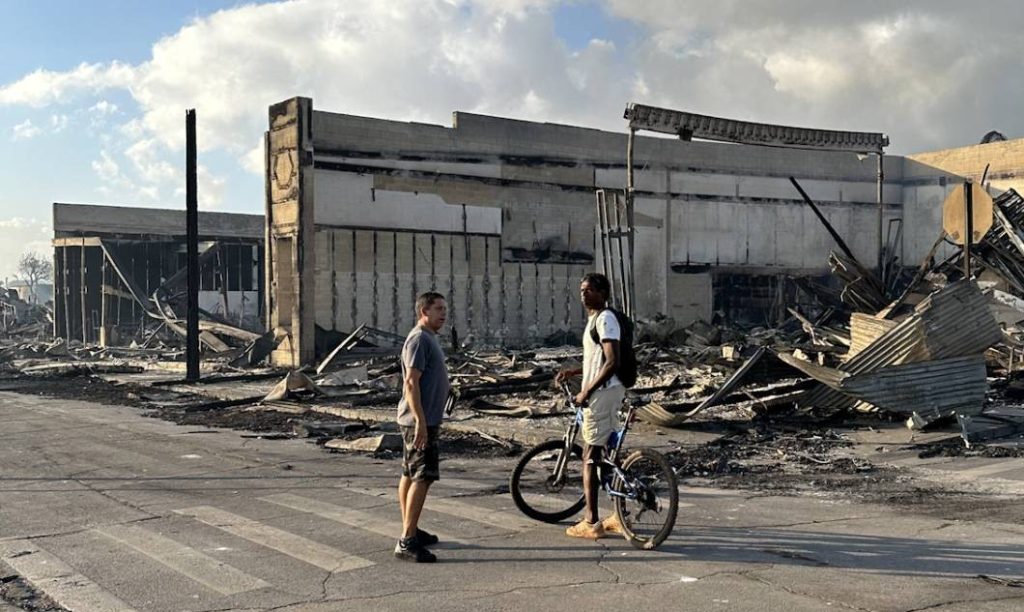
The Hawai‘i Public Utilities Commission is working to develop administrative rules to help the state can ensure future wildfire victims are compensated while maintaining the financial stability of utilities responsible for delivering essential public services.
The Public Utilities Commission has launched a statewide stakeholder engagement process tied to ongoing wildfire policy effort to develop administrative rules that establish a liability cap framework for electric utilities under Act 258.
Input from community members, advocates, industry representatives, local organizations, and impacted residents across the state will help inform the development of rules related to utility liability caps and their potential interaction with broader wildfire recovery and resilience efforts.
The initiative builds on the Commission’s recently completed Wildfire Recovery Fund Study, which found that liability cap decisions are deeply interconnected with any future wildfire recovery fund structure. Potential areas of interest for coverage include:
- How Hawai‘i is approaching utility accountability and wildfire risk
- The balance between victim compensation, grid resilience, and utility financial stability
- The role public input will play in shaping future wildfire-related policy
- How Hawai‘i’s approach compares to wildfire liability frameworks emerging in other Western states
The Commission’s announcement on the engagement process can be found on its website. Submit written input through the following intake process here.
Additional resources, engagement materials, and participation information are all available on the Public Utilities Commission Liability Cap Rulemaking webpage.
Director of Communications earns national recognition
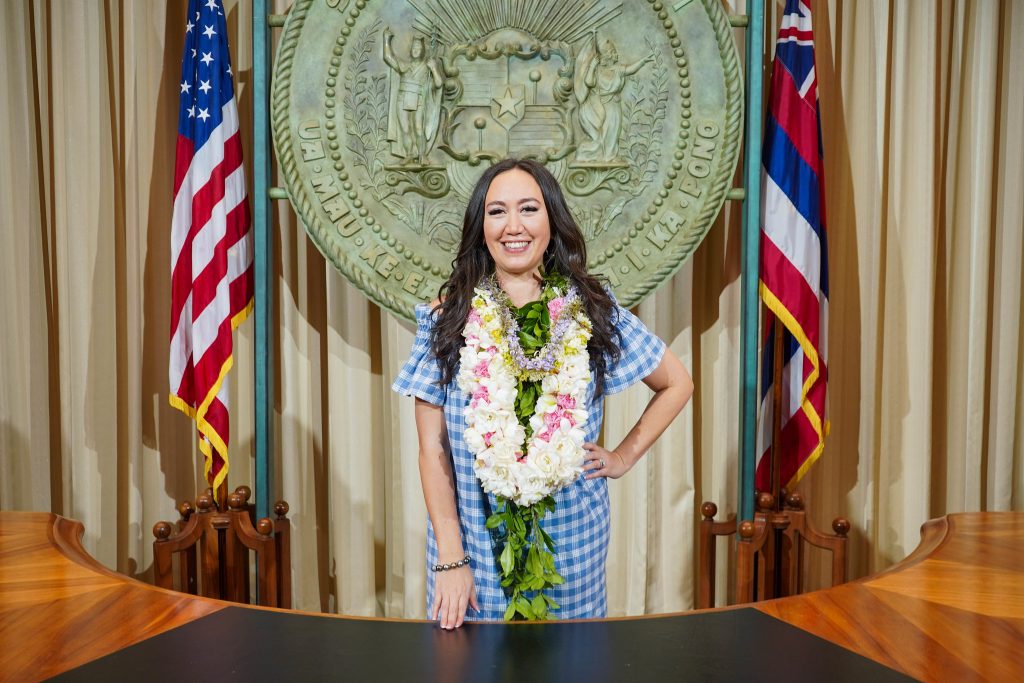
Gov. Josh Green congratulated his Director of Communications, Makana McClellan, on being named the 2026 Communicator of the Year by the National Association of Government Communicators.
National Association of Government Communicators is dedicated to advancing excellence in government communications across federal, state, county, local, military and tribal governments.
The Communicator of the Year Award honors individuals who inspire excellence while serving the public good and McClellan is the first person from Hawaiʻi to receive the national honor.
“Makana has transformed how Hawaiʻi communicates during both emergencies and everyday governance,” Green said. “She helped build a communications operation rooted in urgency, transparency, collaboration and aloha. During some of the most difficult moments our state has faced — from the 2023 Maui wildfires to recent flooding events and tsunami warnings — Makana led with calm, compassion and professionalism, ensuring our communities received accurate information they could trust.”
As Director of Communications, McClellan leads external communications for the Office of the Governor and coordinates with public information officers across every department in the executive branch. Under her leadership, state communicators were brought together into a more unified statewide communications network, improving coordination and consistency across agencies.
McClellan also established mandatory crisis communications training for state public information officers, ensuring agencies were prepared before emergencies occurred. That effort strengthened Hawaiʻi’s ability to communicate during major disasters and fast-moving events requiring real-time public information.
“This recognition belongs to the incredible communications professionals and public servants across Hawaiʻi who show up every day to serve our communities with integrity, compassion and aloha,” McClellan said. “In Hawaiʻi, communication is not just about delivering information — it is about our shared kuleana to care for people, especially during moments of uncertainty, fear and loss. We’ve worked tirelessly to build a culture across government rooted in collaboration instead of silos, because our communities deserve timely, clear and honest communication they can trust.”
“I’m deeply proud to represent Hawaiʻi, our values and our people on the national stage. It matters so much to me that Hawai‘i has finally been recognized with this award — and as a Native Hawaiian woman, I hope this inspires the next generation to continue to teach the world how aloha is the solution to many of our challenges,” McClellan continued.
The award was presented during the National Association of Government Communicators 2026 Communications School in Greater Palm Springs, California.
Care for ʻĀina Now Coalition celebrates Green Fee momentum
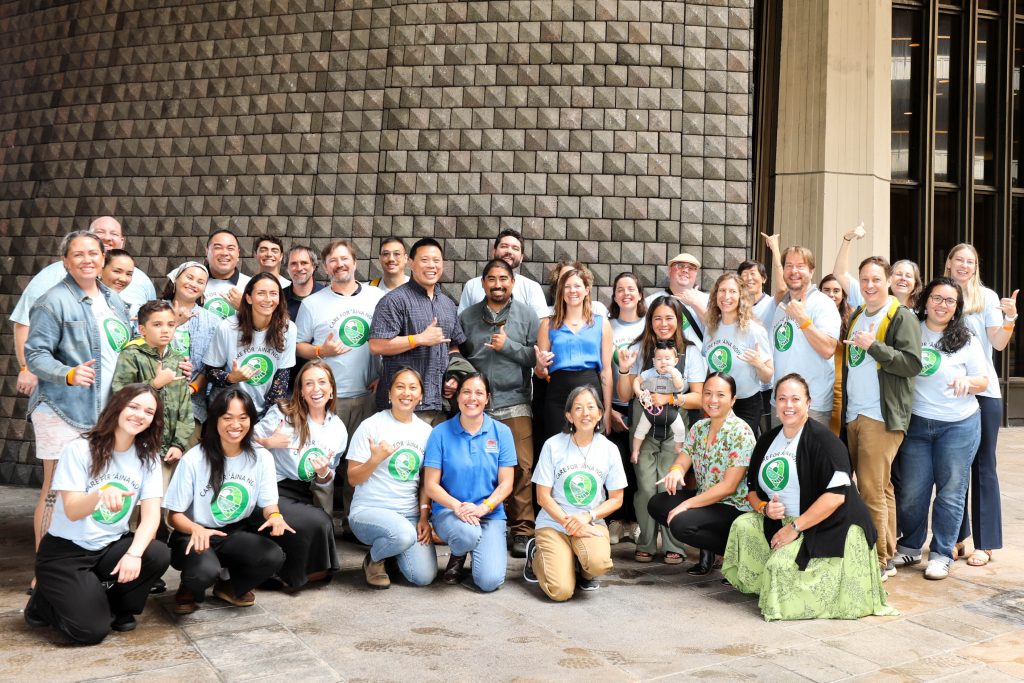
State leaders made meaningful progress through the first major round of Green Fee-related investments aimed at strengthening Hawaiʻi’s environmental resilience and long-term stewardship efforts, according to the Care for ʻĀina Now Coalition.
The historic Green Fee began collection on Jan. 1 and is expected to generate more than $100 million annually. The Hawaiʻi State Legislature has also made significant investments throughout the legislative session, reflected in the state’s supplemental budget.
Among the investments included in the final package are more than $15.7 million for wildfire risk reduction and Firewise initiatives, $6.64 million for community-based ahupuaʻa restoration, $5.75 million for nearshore marine stewardship, $3 million for climate resilience crews, and $1.5 million for community-supported coral restoration projects statewide.
Additional funding is allocated to support watershed restoration, drought planning, invasive species control, reef resilience, flood mitigation, and climate adaptation planning statewide.
“This legislative session demonstrated that Hawaiʻi is beginning to recognize that protecting our natural resources is directly tied to protecting our people, economy, infrastructure, and future,” said Care for ʻĀina Now Coalition member Carmela Resuma. “The Green Fee represents a historic opportunity to invest in resilience and stewardship at a scale Hawaiʻi has never seen before. While there is still much more work ahead, this funding package represents meaningful progress.”
A major priority for the Coalition throughout the legislative session was ensuring transparency and accountability surrounding Green Fee funding implementation. The Care for ʻĀina Now Coalition advocated for House Bill 1949, which sought to create a public-facing system that allows residents to track how much Green Fee revenue is collected, where funding is allocated, what projects are being supported, and what outcomes are being achieved statewide.
While the full dashboard proposal was not enacted this year, Coalition leaders noted the inclusion of dedicated funding for Green Fee project tracking and status monitoring through the Department of Budget and Finance as a meaningful and important step forward.
“For this model to be successful, communities need to know where Green Fee dollars are going, understand how decisions are being made, and feel how these investments are producing measurable impacts across the state,” said Care for ʻĀina Now Coalition member Keone Nakoa. “Transparency builds public trust, and that trust is essential to the long-term success of Hawaiʻi’s resilience and stewardship efforts. Hawaiʻi needs to be able to tell our story, to be the example of what’s still possible.”
As projects advance, there is an opportunity to strengthen community engagement, improve access for grassroots organizations, refine how projects are evaluated and prioritized, and ensure communities remain central partners in shaping future investments.
Coalition leaders stated that this year’s investments represent important progress but acknowledge the need for continued work to address the scale of environmental and climate-related challenges facing the state. They emphasized that accountability must continue beyond the legislative session and into implementation.
As projects continue, the Care for ʻĀina Now Coalition is working collaboratively to help ensure funding produces meaningful and measurable impact.
“The work of caring for Hawaiʻi will take a collective effort beyond one agency, organization, or administration,” Resuma said. “It will take collaboration, transparency, and long-term partnership, and we are committed to helping build those bridges so that we continue to center our community and ʻāina in the work ahead.”