


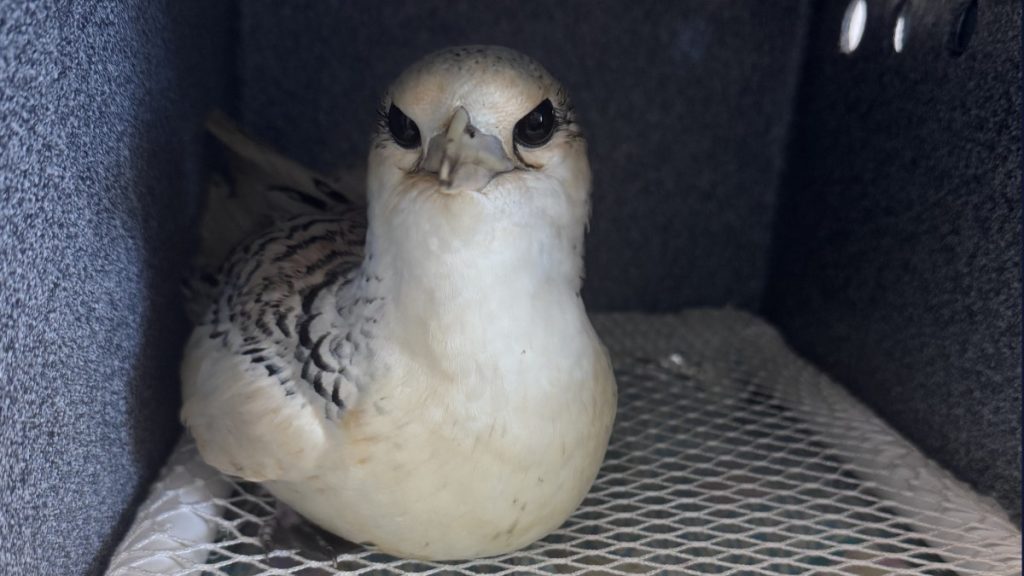
What began as a Motherʻs Day fishing trip tuned into a wildlife rescue after a Kauaʻi teenager spotted a struggling seabird drifting offshore at Kawailoa Bay Beach and swam out to save it.
Xavier Prentice was spending the holiday with family and friends when he noticed what first appeared to be a dead bird floating below a rocky cliff.
“My son was fishing on the cliff for several hours when we spotted the bird floating,” said his mother Melissa Tremblay.
At first, the family believed the bird had died. But after watching closely, they noticed movement.
“We saw the head shaking,” Tremblay said. “And Xavier said if the bird’s wings were waterlogged, it wouldn’t be able to fly.”
Prentice, a student at Hawaiʻi Technology Academy and sailor with the Kauaʻi Sailing Association, said he immediately knew the bird needed help.
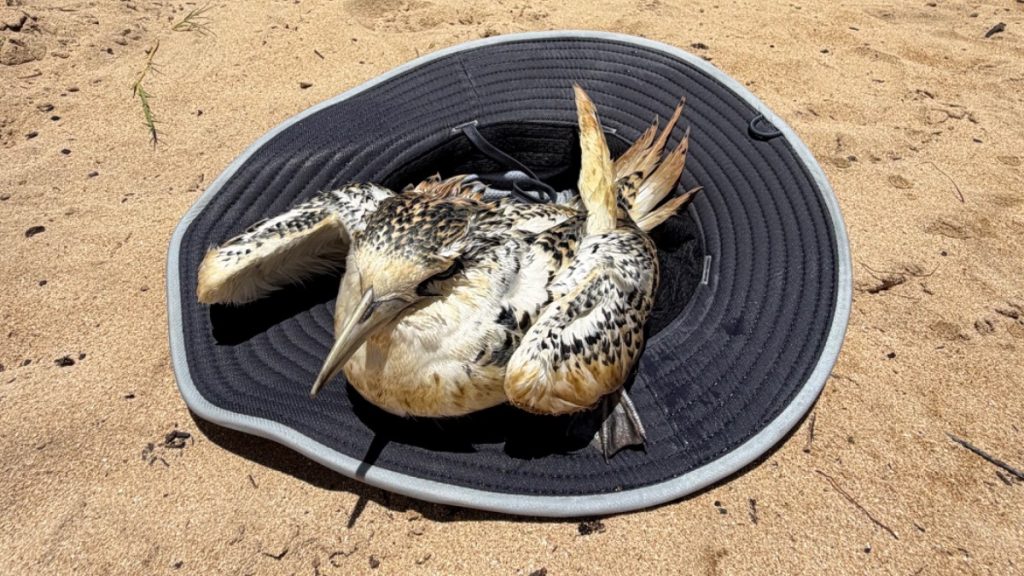
Without hesitation, the teenager jumped from the rocky shoreline into the ocean and swam about 60 feet to reach the struggling bird. He carefully carried it back to shore inside his hat.
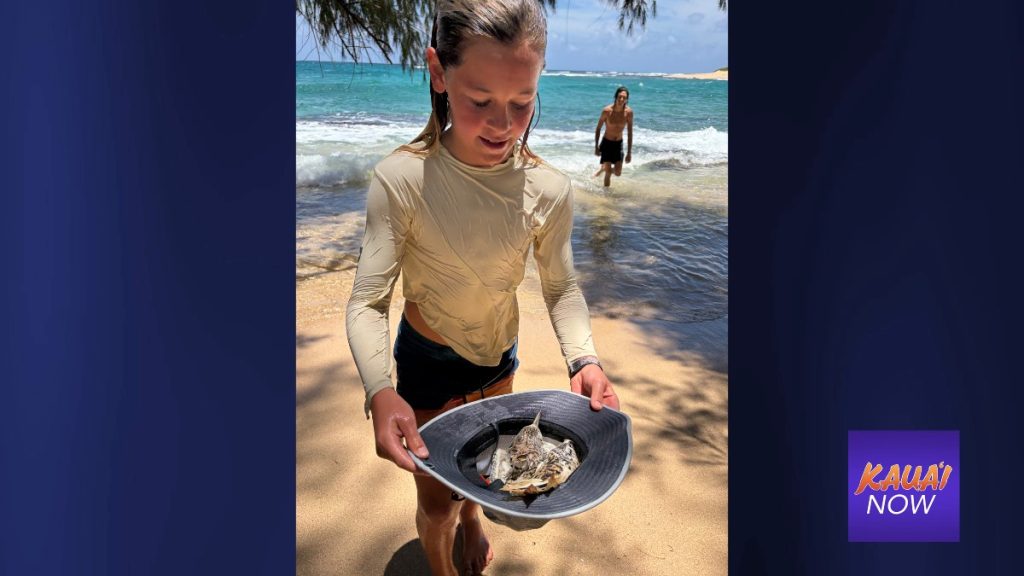
The family initially believed the animal was a shearwater, but after sending a photo to a biologist friend, they learned it was actually a juvenile koa’e kea, or a white-tailed tropic bird, a native Hawaiian seabird known for its white feathers and long tail steamers.
The friend connected the family with Save Our Sherwaters, a nonprofit for rehabilitating native Hawaiian birds and the Hawaiian Hoary Bat on Kaua‘i. Following guidance from rescue staff, the family transported the bird to the Kōloa Fire Station, one of several off-season aid stations where volunteers coordinated emergency pickups for injured seabirds.
While waiting for transport, Prentice, his brother, and friends kept the bird shaded and calm in hopes it would recover.
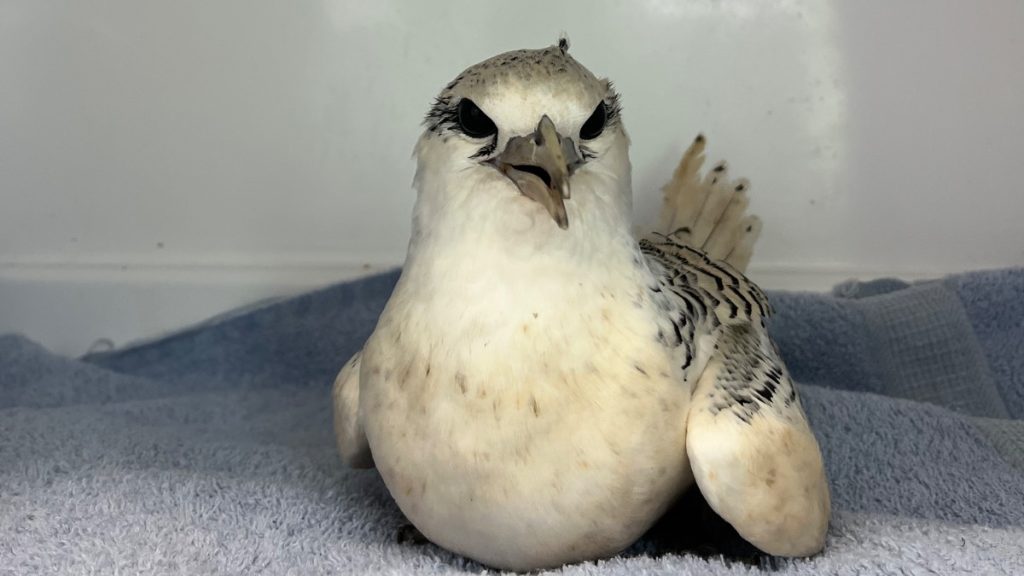
Jacqueline Nelson, senior program manager at Save Our Shearwaters, told Kaua’i Now on Wednesday that the bird continues to improve in their care.
“This patient is doing well,” Nelson said. “The bird is gaining good weight and is feisty as ever.”
She added that the young bird has grown strong enough to begin supervised pool sessions, which help seabirds bathe, preen and restore waterproofing of their feathers before it is released back into the wild.
Nelson said the rescue has also helped raise awareness across the community about how to respond when native seabirds are founnd injured or grounded.
Tremblay added that the experience has helped Prentice shape his instincts to protect wildlife.
“If you teach your kids to be outdoors and learn about the land and what surrounds them,” she said, “you create little people who can take care of these birds and everything around us.”
Nelson and the organization are “ecstatic to see people rallying behind our native birds as conservation work is inherently a collective community effort.
“Every single patient we treat at SOS starts with just one person in our community caring enough to help when they see a native bird in distress.”
Staff also praised Prentice and his family for their actions, calling the rescue “a highlight of our year.”
“Make sure you have the Save Our Shearwaters number saved in your contacts,” added Tremblay. “I already have the monk seal hotline, but did not have their number.
“The organization has an emergency line, and they answer anytime, even on Mother’s Day.”