


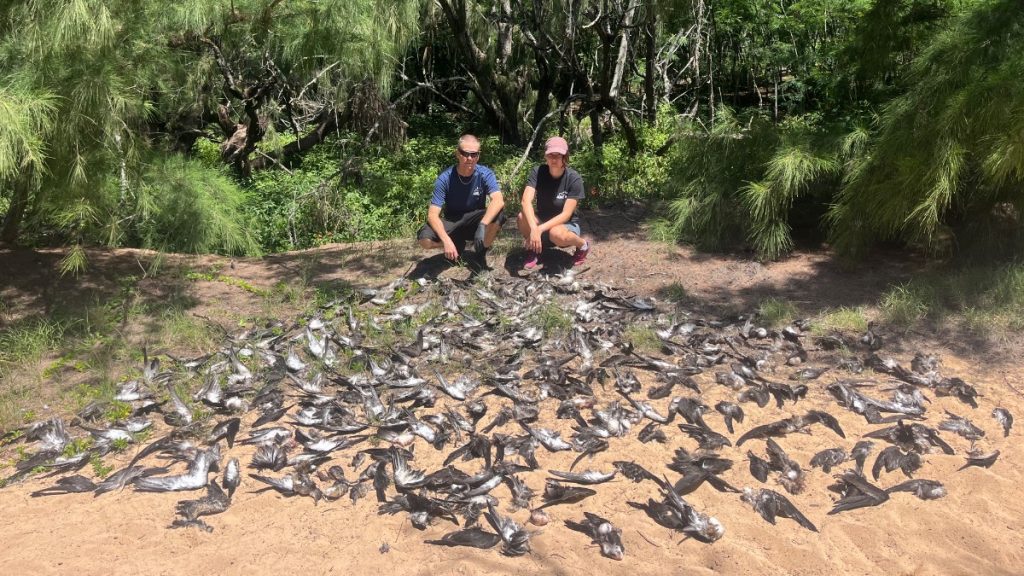
A mass killing of at least 168 native seabirds on Kaua’i has left conservationists and some residents outraged, renewing urgent calls for action to be taken to deal with the believed culprits: feral cats.
A visitor from Colombia and his friend, who works for Archipelago Research and Conservation in Kalaheo, were walking near Shipwreck Beach in Poʻipū on Tuesday when they encountered a grim scene of carcasses of wedge-tailed shearwaters scattered across burrows. There were also partially eaten bodies, with a handful of surviving birds hiding among the remains.
They called Dr. Andre Raine, science director of the organization, who went to the site of the bird kill on Wednesday to assess the damage of the coastal colony.
“It was like walking through snowdrifts of feathers and bodies,” Raine told Kaua’i Now. “We counted 168 dead adults, and we likely didn’t find them all.”
The discovery was prompted by a member of the public who reported the scene to the organization. The follow-up inspection confirmed the scale of the destruction, which Raine said unfolded rapidly.
The pictures quickly went viral online, prompting outrage from many residents. One comment read: “Feeding feral cats needs to be criminalized.” Another resident commented: “Kill all feral cats.”
Another read: “It’s outrageous that these native birds are not being protected.”
Raine added, “This shows how quickly predators can wipe out an entire colony. A month ago, there were six dead birds. Now it’s a massacre.”
This was not an isolated incident.
Raine explained that similar mass predation events occur regularly on Kaua’i, where native seabirds face mounting pressure from invasive species. Feral cats are considered the primary threat, though dogs, pigs and introduced barn owls also contribute to declining populations.
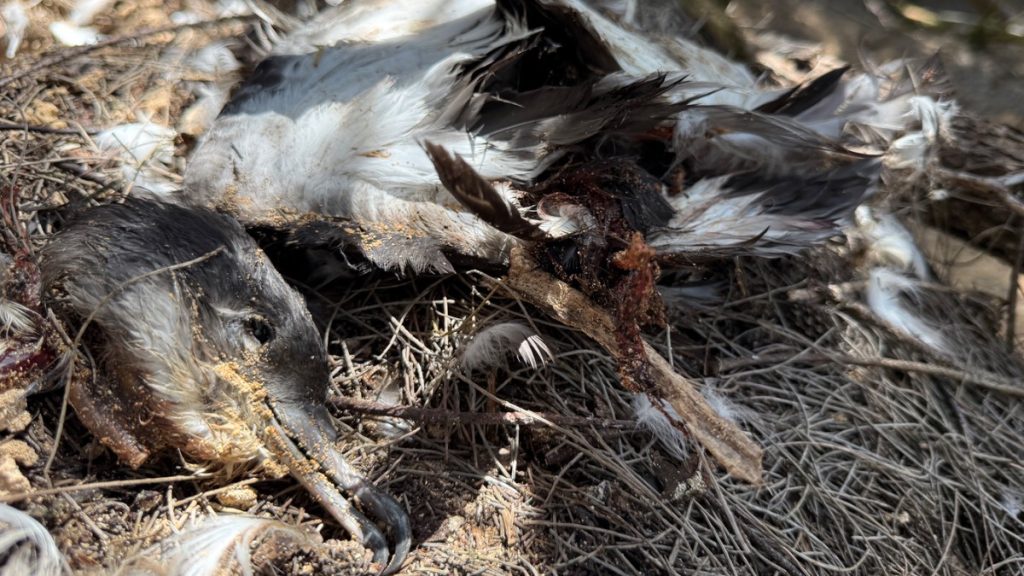
“We have a database of more than 3,000 recorded shearwater deaths,” Raine said. “It’s happening every year. At some point, you have to ask — when is enough?”
In September 2025, 125 dead birds — 106 adults and 19 chicks — were found at a ʻuaʻu kani colony at Ninini Point in Līhuʻe.
The findings of that kill were particularly concerning, since these birds have life history traits similar to those of endangered seabirds — including producing only one egg
The birds found on April 29 were mostly adults returning to breed, making the loss particularly damaging to the colony’s future.
“Unless predator control happens immediately, every bird that comes back will be at risk,” Raine said. “This colony could be wiped out entirely.”
Molly Bache, program director with the nonprofit Save Our Shearwaters, ageed the recent kill was not an isolated incident.
“At Save Our Shearwaters, we see native birds injured or killed by cats every year, including a week-old ʻuaʻu kani chick found in a cat’s mouth, left with a lacerated throat and exposed trachea,” she said in a email to Kauaʻi Now. “Native species deserve to be protected from free-roaming cats, but the resources to do so remain critically limited.”
Bache added: “Hawaiʻi’s native species are up against a modern-day Goliath, and they need help at every level to survive.”
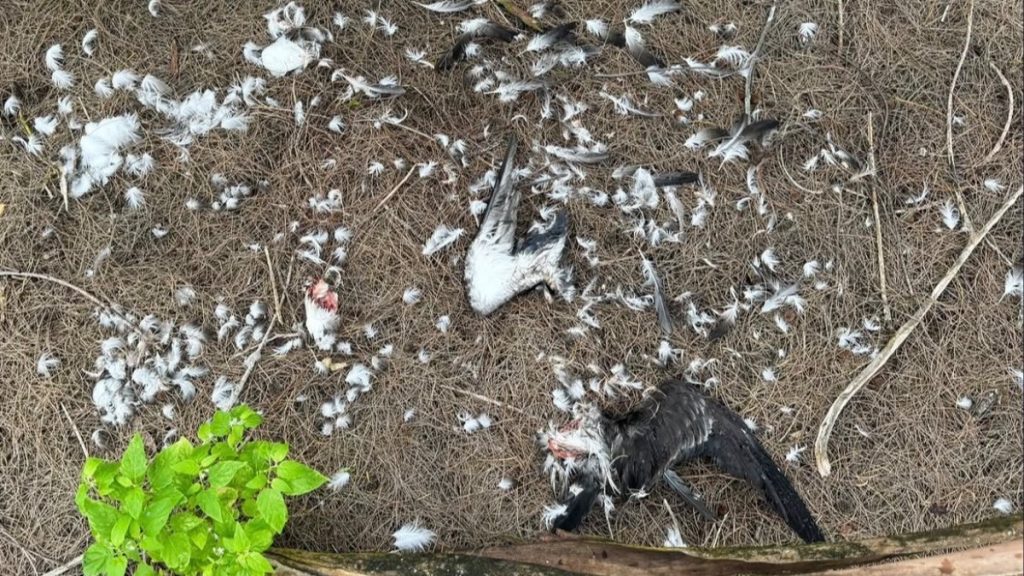
Raine said the issue is exacerbated by human behavior, including feeding feral cat colonies and allowing pets to roam freely.
“The community loves these birds, but we need responsible action,” he said. “Keep cats indoors. Keep dogs on leashes. Stop feeding cats in wild areas.”
However, a long-term solution will require regulation and or stronger laws, increased funding and political will, Raine said.
“This is about protecting native wildlife,” he added. “We need legislation, resources, and community involvement. We are considering forming a volunteer ‘friends group’ to monitor colonies and assist with conservation efforts.
“These birds are a vital part of our ecosystem,” Raine said. “Watching them be torn apart year after year, it’s not acceptable. And it doesn’t have to keep happening.”
Editor’s Note: Comments from Save Our Shearwaters has been added to this story.