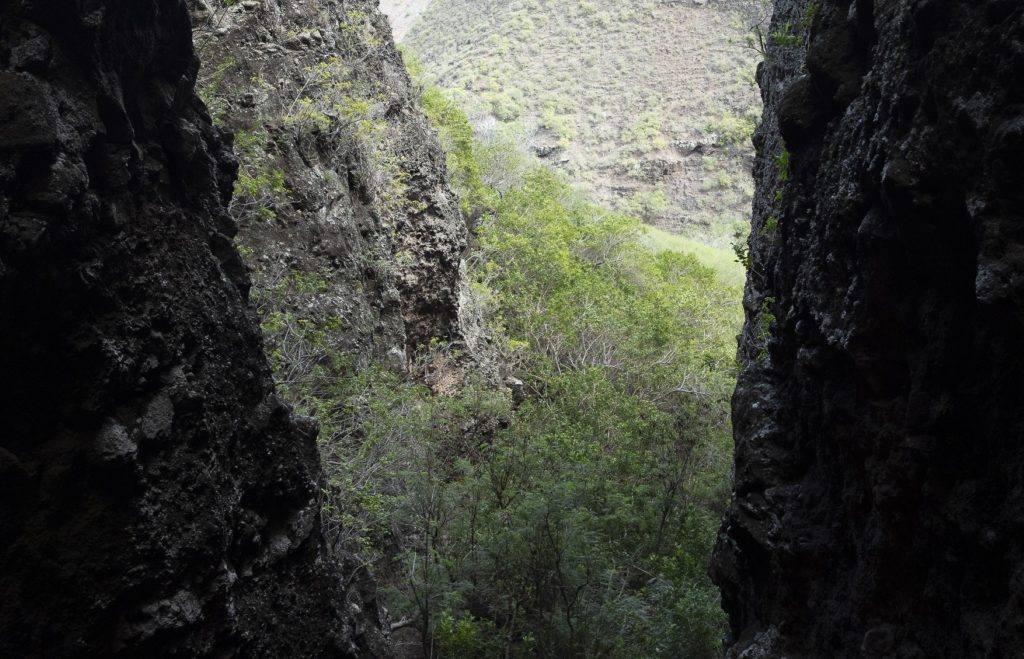


Pūlama Lāna‘i’s conservation team, in close partnership with Lāna‘i community members and conservation organizations, documented several rare native species not seen on island for decades.
That includes several rare native plants to note as the state observes Native Hawaiian Plant Month. They were documented in October 2025 during surveys of Maunalei Valley and surrounding gulches.
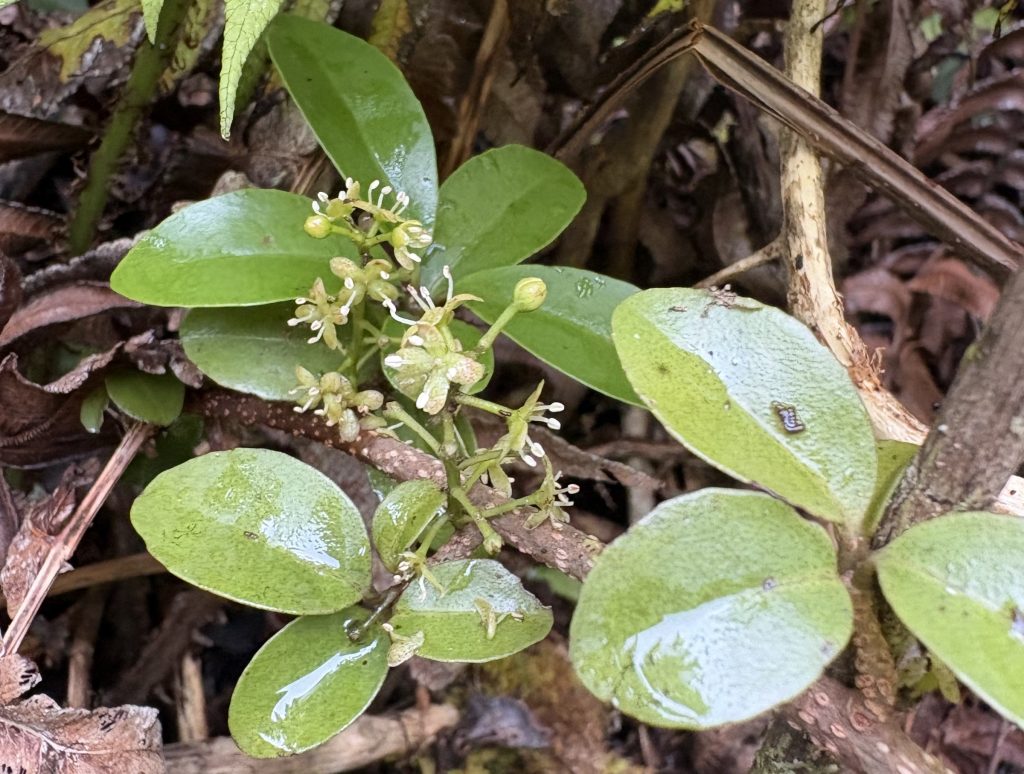
Rare species identified, some that had not been recorded as far back as the 1930s on Lāna‘i, include:
- Embelia pacifica, also known as kiliʻoe.
- Peperomia tetraphylla, also known as acorn peperomia or four-leaved peperomia.
- Schiedea menziesii, also known as Menzies’ schiedea.
- Cyperus phleiodes, also known as Molokaʻi flatsedge.
The surveys were led by Maui Nui Plant Extinction Prevention Program in partnership with Pūlama Lāna‘i, using on-the-ground exploration and drone technology to access steep cliffs and remote terrain.
“With the addition of drones to our toolkit, [Maui Nui Plant Extinction Prevention Program] has been able to rediscover lost species, find new populations of rare taxa and even make collections from these remote plants using specialized drones,” said Maui Nui Plant Extinction Prevention Program Coordinator Zach Pezzillo in a release about the discoveries. “On Lāna‘i, while it is one of the smaller islands, there is still lots of habitat to explore and hopefully more rare species to find.”
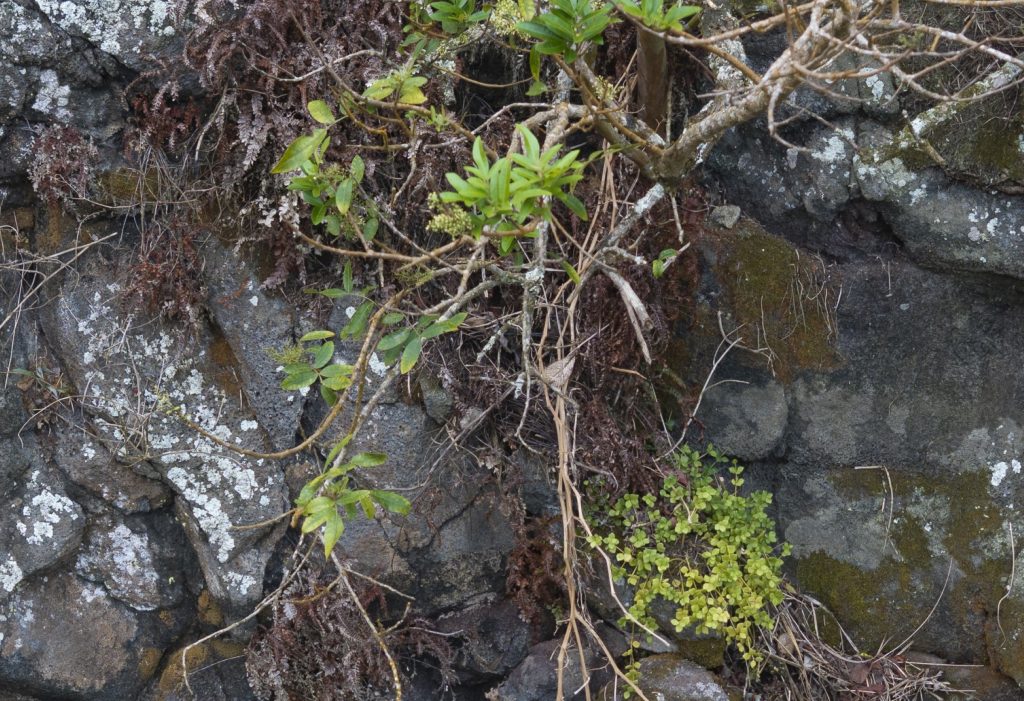
Some species were found clinging to vertical rock faces and narrow shelves, areas that remained relatively protected from grazing pressure and human disturbance.
Of particular significance was the rediscovery of Schiedea menziesii, one of Hawai‘i’s rarest native plants, previously known only from West Maui and a single valley on Lāna‘i.
Follow-up surveys in neighboring ravines revealed dozens of additional plants, suggesting the species has persisted quietly for decades in the landscape.
“[Hawai‘i Department of Land and Natural Resources] is grateful for our partnership with Pūlama Lāna‘i that is helping our Plant Extinction Prevention Program preserve Hawai‘i’s rarest plants through teamwork,” said State Botanist Matthew Keir in the release.
Among the most notable findings was the Blackburn’s sphinx moth, one of Hawai‘i’s largest native insects and a federally endangered species once thought to be extinct statewide.
A Lāna‘i resident discovered the caterpillar, prompting coordination between the community, Pūlama Lāna‘i’s conservation team and U.S. Fish and Wildlife Service to support its development through pupation. The adult moth was later released into suitable habitat on the windward side of the island.
The sighting marks only the second documented record of the Blackburn’s sphinx moth on Lāna‘i, with the previous record dating back to 2009.
The discoveries highlight the ecological importance of Lāna‘i’s landscapes and role of collaborative stewardship in protecting the island’s natural resources.
Pūlama Lāna‘i’s conservation work reflects a broader approach to stewarding the island that includes investments in education, housing, health care and economic opportunity.
The organization works with residents and community partners to support a sustainable future for the island’s ecosystems and its people.
“These discoveries are a reminder that Lāna‘i still holds incredible natural resources, even in places that are difficult to reach, and that careful stewardship, community engagement and strong partnerships can make a meaningful difference,” said Pūlama Lāna‘i Director of Conservation Rachel Sprague in the release. “Protecting these species is part of our overall commitment to caring for the island in a way that supports both ecological health and a thriving community.”