


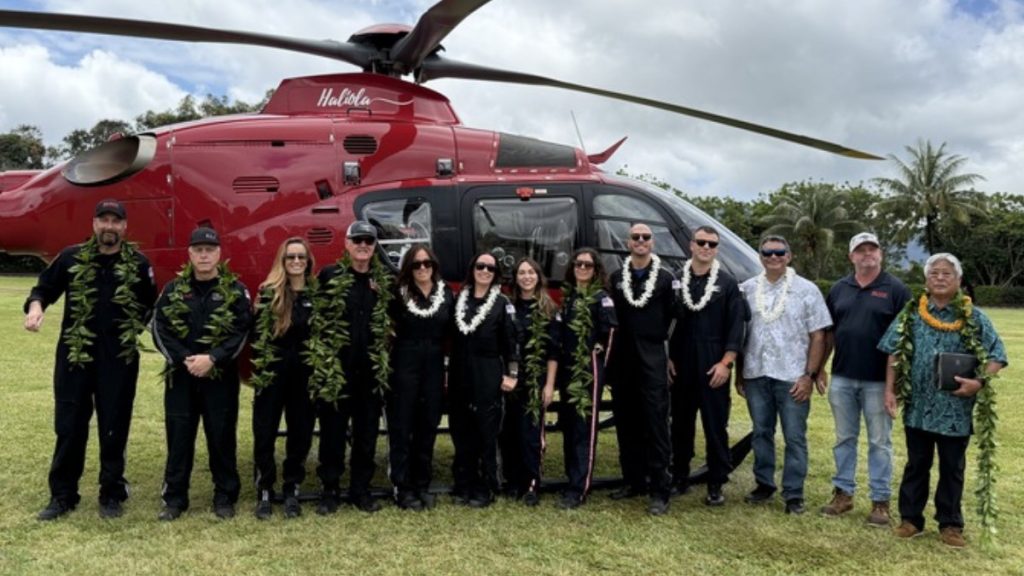
A new helicopter dedicated to emergencies and medical transport on Kauaʻi was formally blessed Tuesday in a ceremony blending Native Hawaiian tradition with modern aviation.
The blessing, held at the Kilohana Plantation lawn in Līhuʻe, drew aviation leaders, first responders and government officials, including Hawaiʻi Lt. Gov. Sylvia Luke.
The new air medical service through Hawai’i Life Flight began official operations on Wednesday.
“Everybody can feel assured they’re going to get treatment faster than they ever could before,” Kauaʻi Fire Department Chief Michael Gibson said.
Because the H-135 twin-engine helicopter is equipped with a mobile intensive care unit, unlike the Kauaʻi County fire rescue helicopter whose personnel can provide only the most basic life-saving care, it can fly patients longer distances, either directly to Kauaʻi or Oʻahu hospitals.
The new service on Kauaʻi also will support inter-facility transfers to Līhuʻe’s trauma center, cardiac catheterization laboratories and specialty care facilities on Oʻahu.
The pilots are highly trained and well acquainted with Hawaiʻi’s challenging terrain and weather conditions. The flight nurses and paramedics deliver comprehensive onboard care, serving patients with medical, surgical, cardiac, trauma, pediatric, neurological, high‑risk obstetrical and burn needs, according to the company.
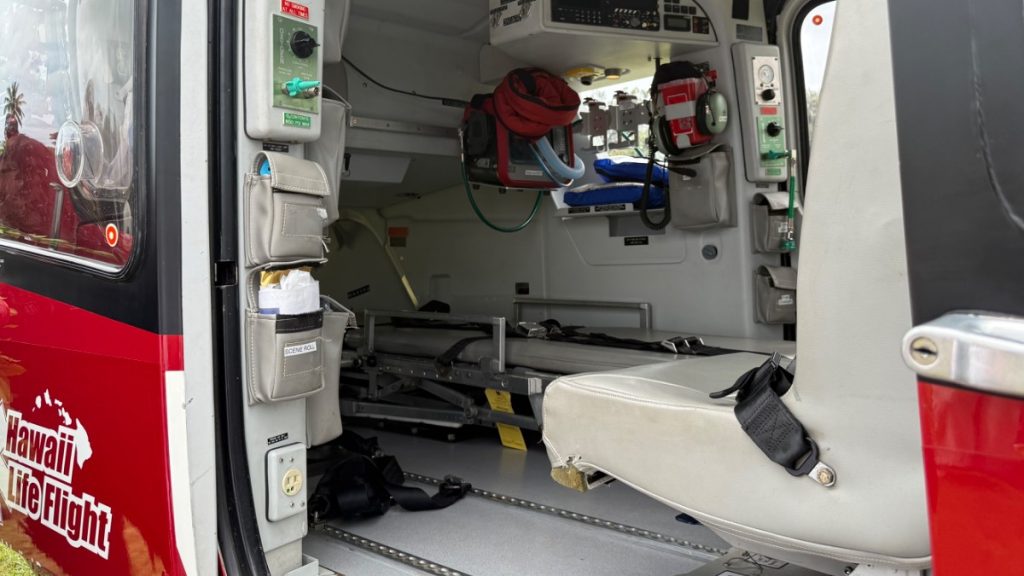
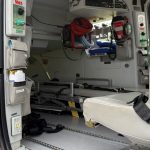
“It’s a complete mobile ICU,” said certified flight nurse Noel Kuehner, who has been flying on air ambulances around the islands for more than 10 years. “All the same life-saving equipment that we use in the emergency room and in the ICUs, we have available on board this aircraft right now.”
She said it has a top-of-the-line Hamilton T1 ventilator, cardiac defibrillation capabilities, all the fluid access, IV access equipment and a pharmacy of medications.
During nighttime emergencies, pilots rely on night-vision goggles to ensure the highest level of safety.
This helicopter was previously stationed in Hilo from 2013 to 2019, and most recently on Maui. It flew to Kauaʻi on Monday.
According to Hawai’i Life Flight’s pamphlet, shifting long-distance transports to the air medical team will increase the availability of local emergency medical service crews, connecting patients to definitive care faster and more reliably, particularly in remote or hard-to-access areas.
“Itʻs honestly an honor,” said Chris Shrader, vice president of Hawaiʻi Life Flight, a private company. “I’m very proud to see us be able to be a part of this community and be able to help out with the medical needs.
“There are many very talented people here, and I think we look at this as something that’s complementary to an already well-established system, so it’s very, very much an honor for us to be here.”
On Kauaʻi, Hawaiʻi Life Flight, part of Global Medical Response, already operates a King Air C90B (a twin-engine turbo crop aircraft) that is fully staffed with a critical care medical crew that is available 24/7, according to its website.
The company said in an earlier press release that it views this service expansion as part of its ongoing commitment to investing in the island’s healthcare system.
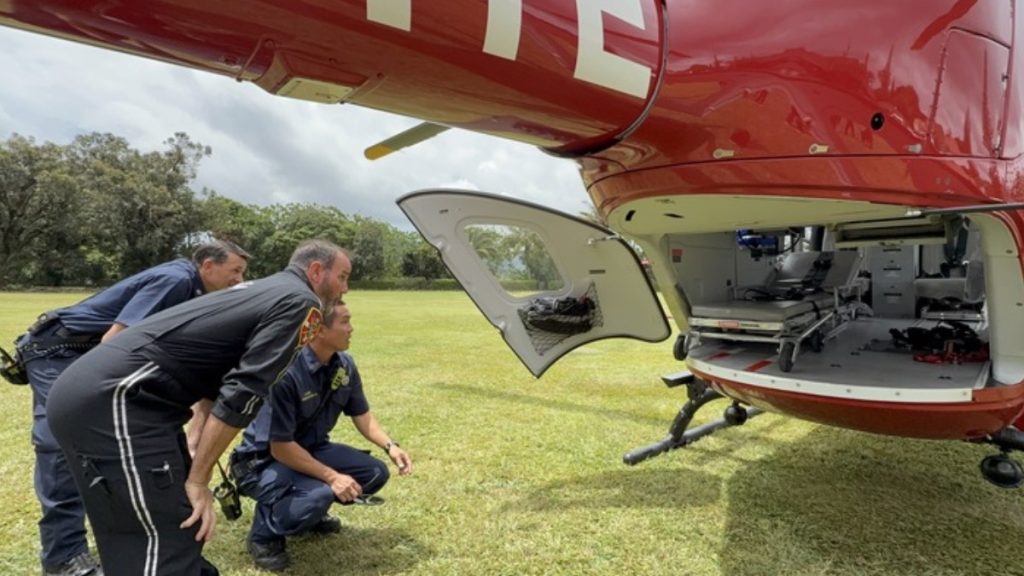
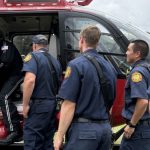
 On April 7, 2026, Kaua‘i firefighters and first responders were pleasantly surprised by the spaciousness and comprehensive equipment of the new motor‑winged helicopter. (Photo Credit: Xiomara Yamileth/ Kauaʻi Now)
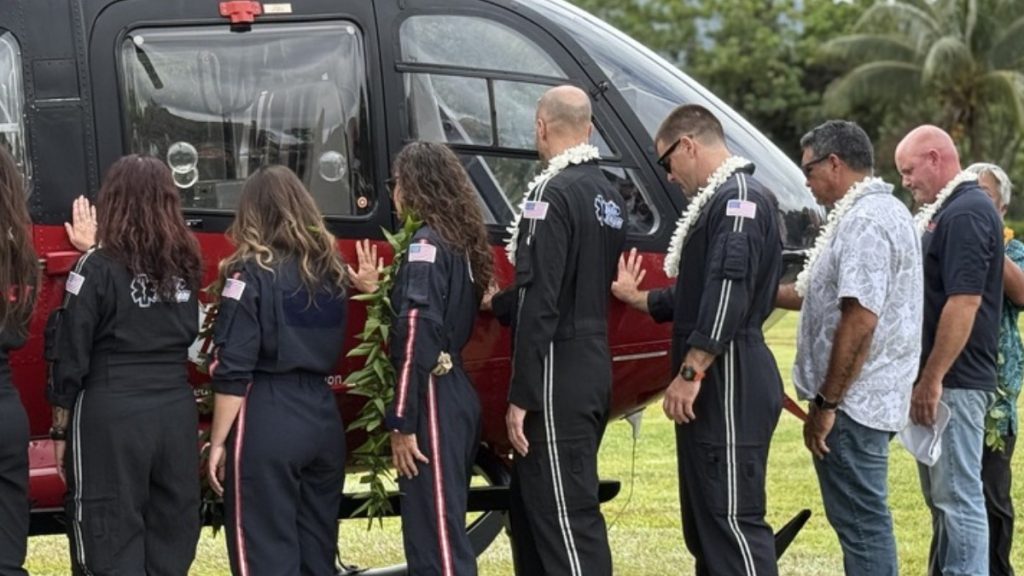
- On Tuesday, April 7, 2026, first responders participated in the blessing of Hawai‘i Life Flight’s new rotor‑wing medical helicopter by placing their hands on the aircraft.(Photo Credit: Xiomara Yamileth/ Kauaʻi Now)
- During the blessing of Hawaiʻi Life Flight’s new rotor‑wing medical helicopter on Tuesday, April 7, 2026, first responders placed their hands on the aircraft. (Photo Credit: Xiomara Yamileth/ Kauaʻi Now)


“I can’t believe that it’s finally here, and we can’t wait to continue serving our island, our people in the community,” Kuehner said.
The veteran medic of the 101st Airborne said the aircraft eliminates the need for patient transfers — for example, from Princeville Airport to an ambulance — and, if necessary, can fly directly to any hospital on Oʻahu.
It could improve survival outcomes within the critical first hour, known as the “golden hour.”
AirMedCare Network also provides residents with an opportunity to enroll in their “emergent membership,” in which members do not pay any out-of-pocket costs not covered by their insurance company if they are flown by an AirMedCare Network provider. Membership is also valid at 320 locations across 38 states.
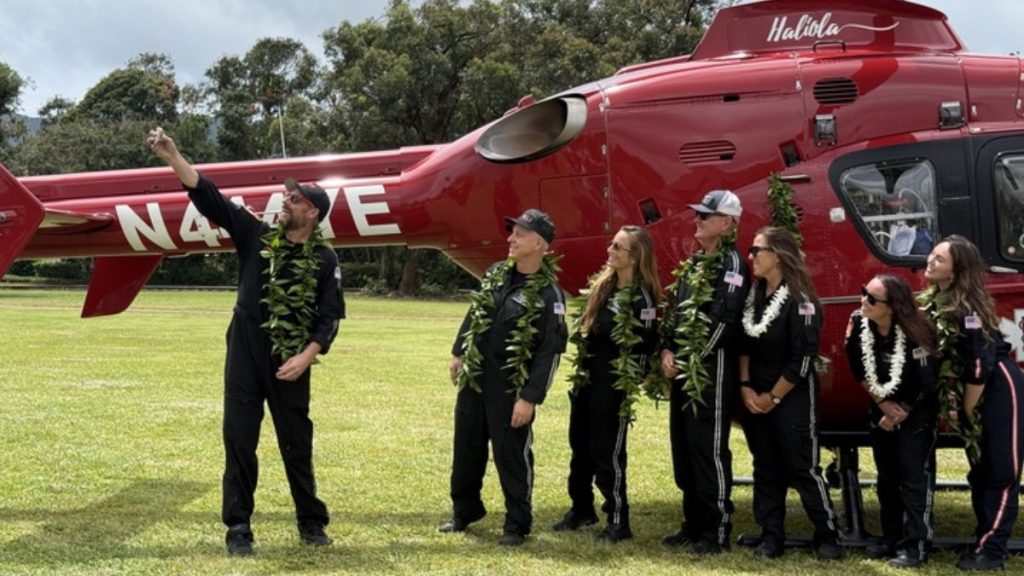
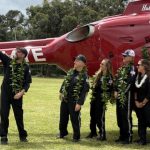
- Hawaiʻi Life Flight crew members were perfectly uniformed and all smiles during the April 7, 2026, blessing of the medical helicopter that will begin islandwide operations on Wednesday. (Photo Credit: Xiomara Yamileth/ Kauaʻi Now)
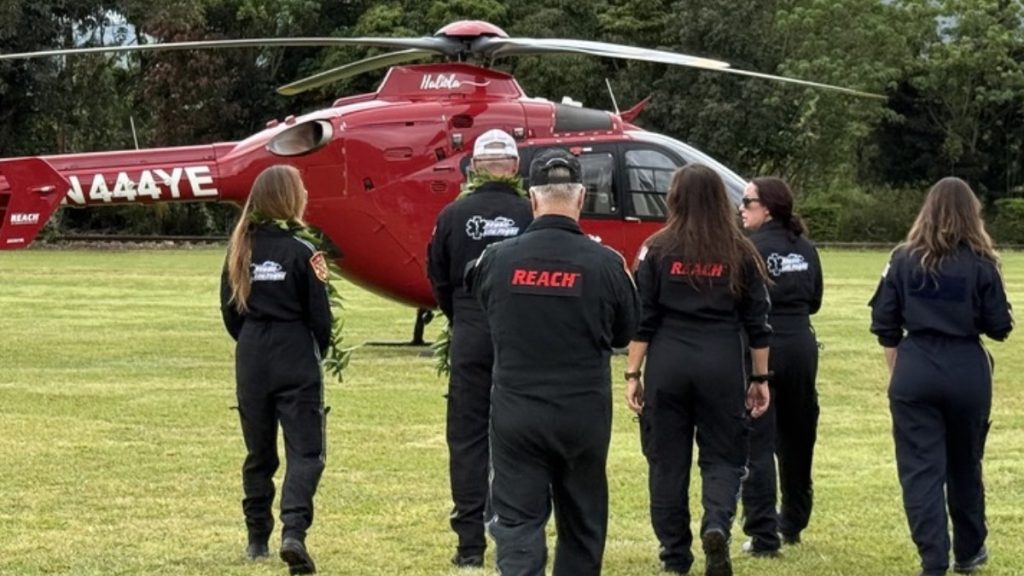
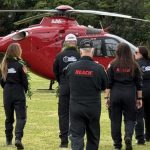
- On Tuesday, April 7, 2026, the Hawai‘i Life Flight and REACH crew expressed their excitement as they approached their newly fully equipped medical helicopter.(Photo Credit: Xiomara Yamileth/ Kauaʻi Now)
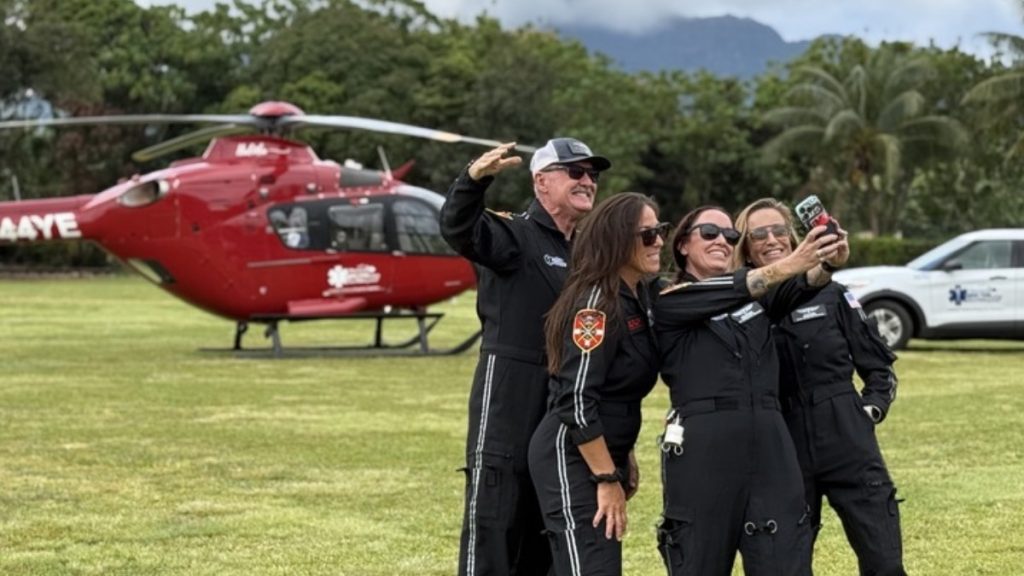
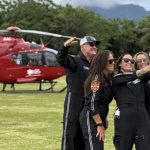
- There were too many selfies to count on Tuesday, April 7, 2026, as the proud and excited medical crew gathered for the blessing of their new medical helicopter. (Photo Credit: Xiomara Yamileth/ Kauaʻi Now)
Kapaʻa resident Misha Smiley, who was at the plantation to pick up a friend from her new job, became emotional as she described seeing the helicopter on her way onto the property.
“My son Forrest was airlifted to Oʻahu twice last year after an accident left him with a serious brain injury; he has had seven brain surgeries, and it’s been a really big challenge,” she said.
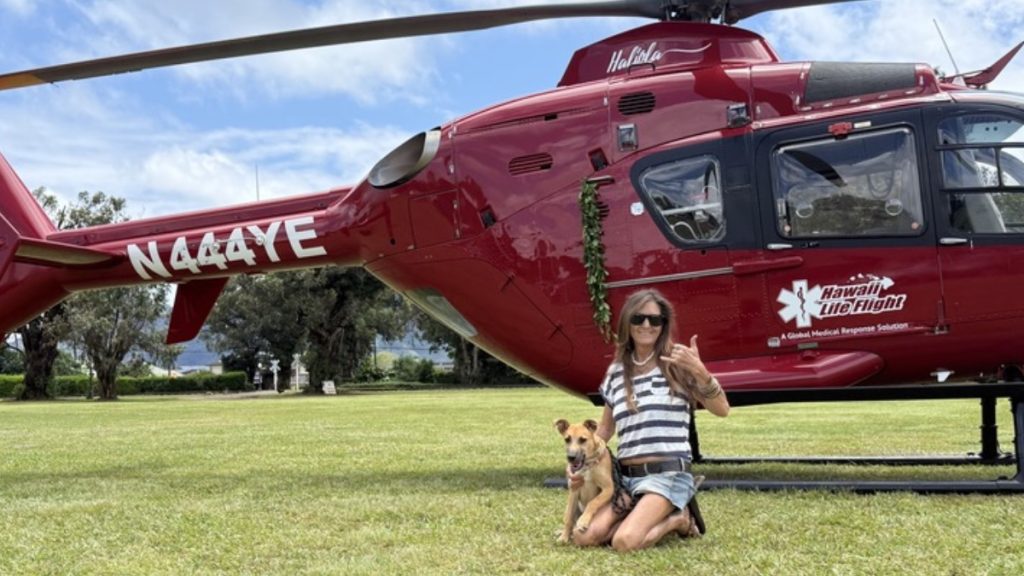
Smiley stared at the helicopter and said, “Oh my God, it says 444.” The instant she saw the angelic number painted along its side, she began to cry.
“I am so grateful to see this helicopter and for all the medics because we need help,” Smiley said. “This island needs more resources, not more Walmarts and not more FedExs. We need resources to help the kūpuna and the keiki and all of us in between.”
- On Tuesday, April 7, 2026, while heading into Kilohana Plantation, Misha Smiley and her pup, Kea Boy, spotted the helicopter and hurried over to pose for a photo in front of it. (Photo Credit: Xiomara Yamileth/ Kauaʻi Now)
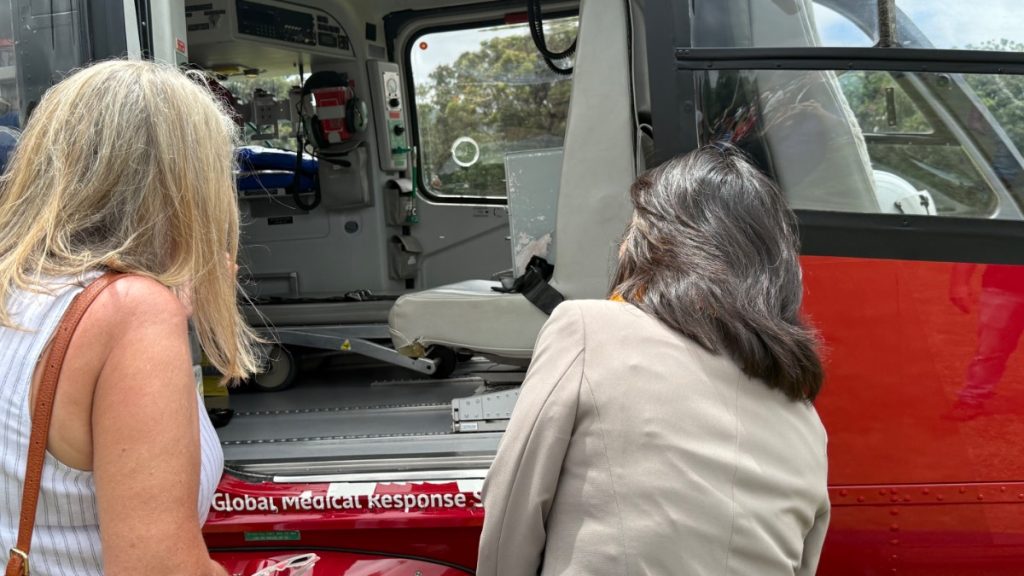
- On Tuesday, April 7, 2026, Lt. Gov. Sylvia Luke flew in from Oʻahu and took a quick look at the emergency equipment inside the medical helicopter. (Photo Credit: Xiomara Yamileth/ Kaua’i Now)
- “This helicopter changes what’s possible for emergency care on Kauaʻi,” said Brent Lopez, regional director for Hawaii Life Flight, as guests got a chance to tour Kaua’i’s new medical helicopter. (Photo Credit: Xiomara Yamileth/ Kaua’i Now)
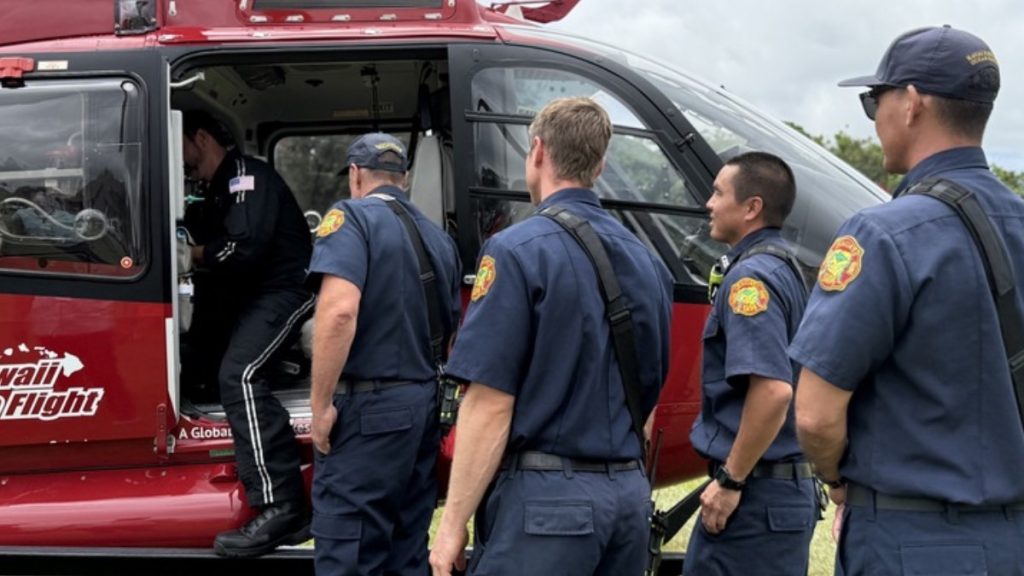
- On April 7, 2026, Kaua‘i Fire Department firefighters were in attendance and were clearly intrigued by the capabilities of the new medical helicopter and the support it will offer during emergencies. (Photo Credit: Xiomara Yamileth/ Kaua’i Now)

Luke said it was “terrific to have this life-saving operation, something the people have been asking for. It’s not just enough to have critical access care in our hospitals or facilities; we need to have the ability to have people be transported to the facilities. Every second counts.”