


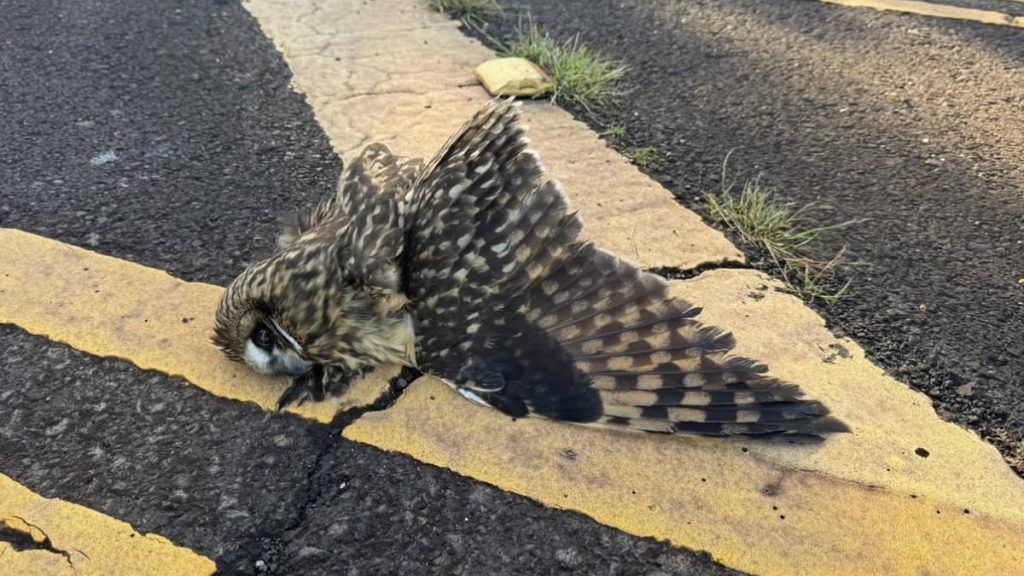
A pueo, a Hawaiian short-eared owl revered in local culture as an ancestor spirit/guardian, was found dead on a road outside of ‘Ele’ele early Monday morning, underscoring ongoing concerns about vehicle collisions involving Kauaʻi’s native birds.
The pueo was discovered with both wings broken.
“It was a very sad find this morning,” said Dr. Andre Raine, science director at the Archipelago Research and Conservation in Hanapēpē. “I found it on the way to work, and it must have been hit early this morning, as the body was very fresh.”
Pueo is the only native owl, and the only native bird of prey on Kauaʻi. It is also an endemic subspecies of the short-eared owl, found only in the Hawaiian Islands. The bird is not a common species and is vulnerable to a number of threats, including being killed by cats and other introduced predators, as well as collisions with cars.
“The place I found the owl this morning is an area where I have found several other dead pueo in recent years,” Raine said. “They probably glide in low from the coffee fields, which then puts them in the path of cars.”
The owl’s wing injuries appear consistent with a vehicle strike.
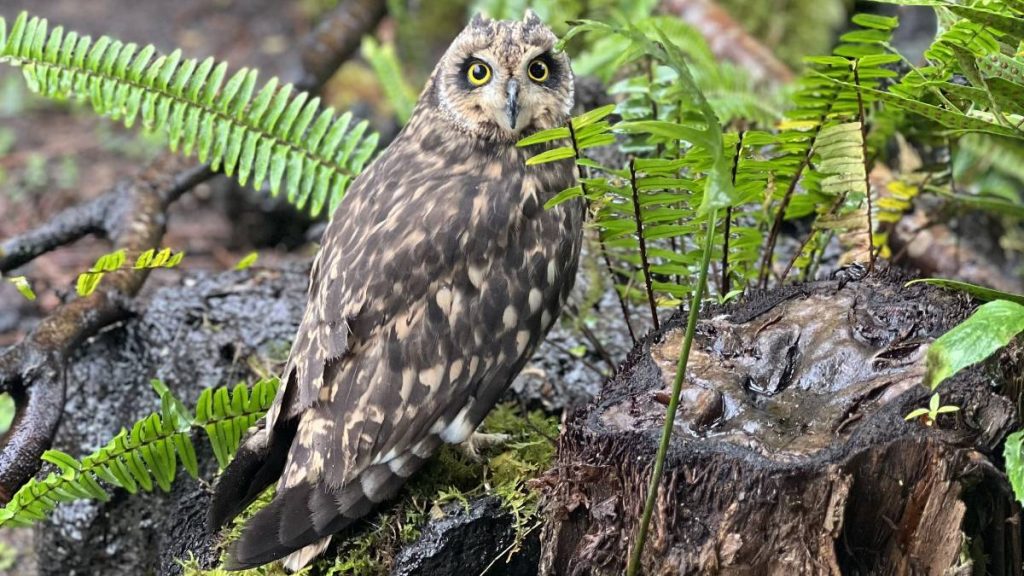
Raine explains that in a similar incident in the same general area, an injured owl struck by a vehicle was transferred to the Save the Shearwaters program for rehabilitation. After weeks of care, the bird was released, only to be found dead from another vehicle collision a few weeks later.
Raine urges motorists to remain vigilant, particularly at dawn and dusk when native species are most active.
“Pueo are not the only native species that are killed on our roads; we have found many different native species killed on our roads over the years,” he said. “One species that we have been finding dead on the road a lot in the last few months has been our state bird — the nēnē.”
He added: “We have a project ongoing at the moment to try to reduce road collisions of this species in the Mana Plains area, where we have found over 55 dead nene since October, which is an astounding number considering how rare the species is.”