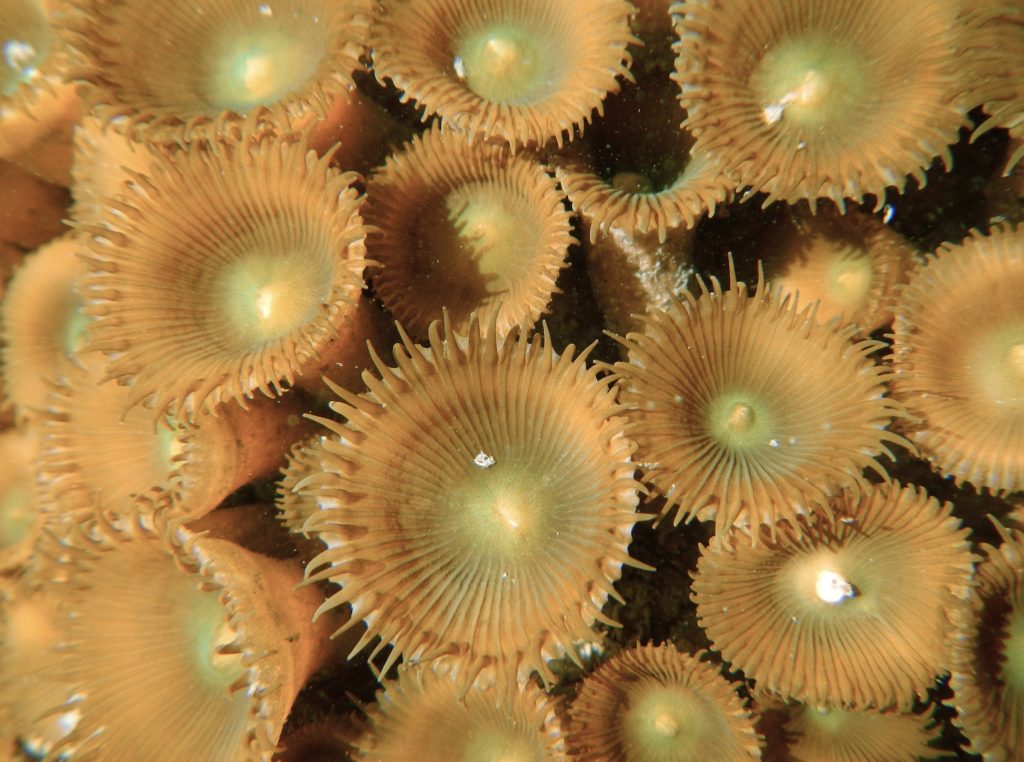


There is a group of colorful hexacorals — aquatic organisms in the group of stony corals and anemones — known as “zoantharians” is defying traditional laws of evolution.
A new study led by researchers at University of Hawaiʻi at Mānoa found the marine creatures remain virtually identical throughout the Atlantic and Indo-Pacific oceans.
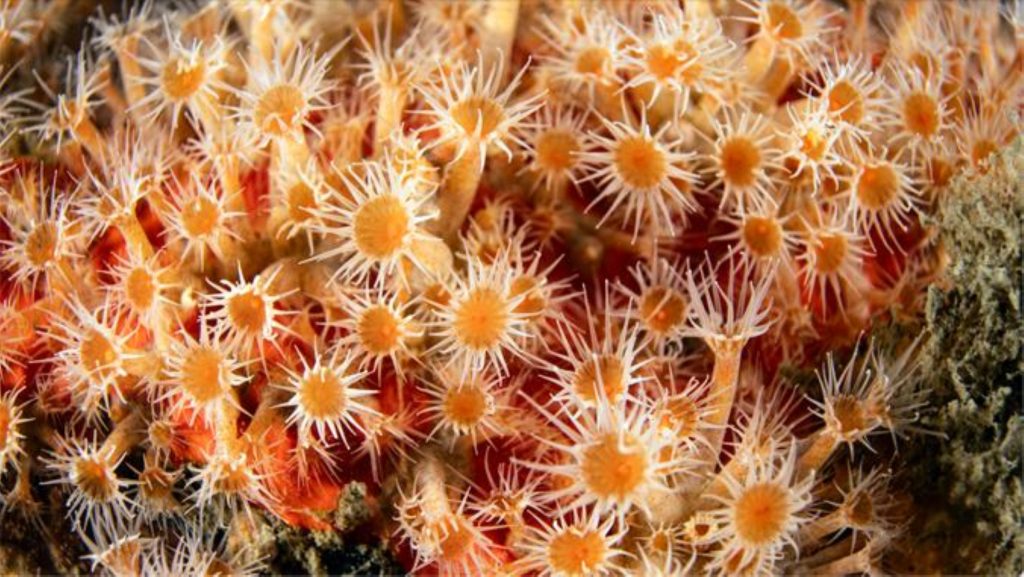
Research for the study — with Maria “Duda” Santos at University of Hawaiʻi at Mānoa Hawaiʻi Institute of Marine Biology ToBo Lab and University of the Ryukyus at the helm — began with a moment of underwater “déjà vu.”
“During my first dive in Okinawa [Japan], I was surrounded by a multitude of species I had never seen in my homeland of Brazil,” said Santos in a release about the new study. “But then I saw the zoantharians. They looked exactly like the ones back home — the same colors, shapes and sizes. It was striking.”
The Indo-Pacific typically hosts 10 times the species diversity of the Atlantic for most reef animals; however, this research surprisingly found the genetic and morphological divergence between oceans for these creatures is narrow.
Researchers combined DNA data and records from Mexico to the Philippines, creating the first global “atlas” for a group of animals that remained in the shadows for decades. The map of the past and present provides a vital baseline for monitoring how marine life will navigate climate change.
Secrets of the ultimate travelers
The new study suggests zoantharians could be the ultimate oceanic travelers.
Their secret likely lies in high dispersal via an “epic” larval phase — where young zoantharians can survive in open water for more than 100 days — paired with an ability to “raft” across ocean basins by hitchhiking on floating objects.
An unusually slow evolutionary rate also appears to keep distant populations looking and acting like siblings, even after a long time of separation.
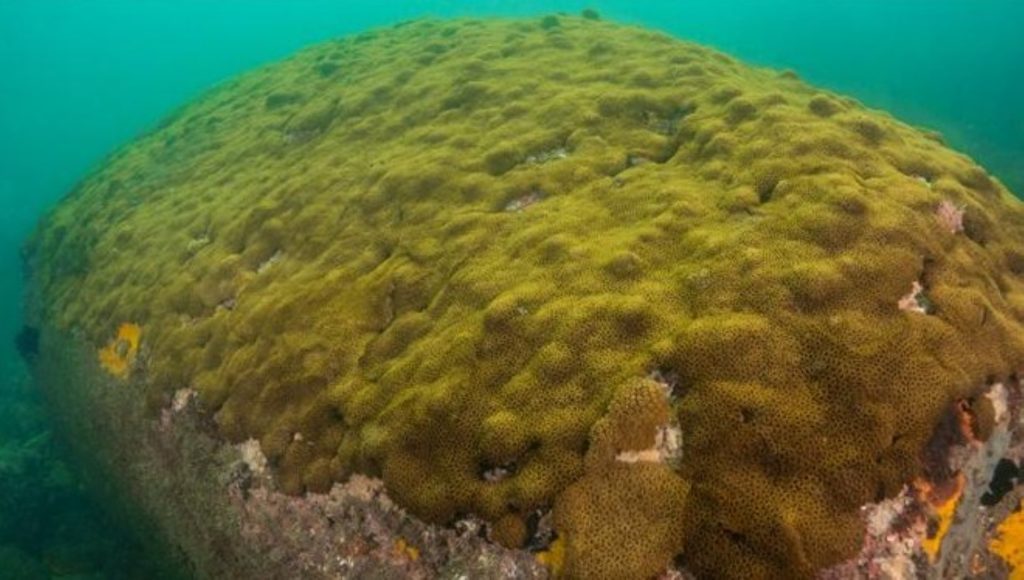
As climate change stresses traditional stony corals, zoantharians are increasingly moving in to fill the void.
“In some habitats impacted by stress, some zoantharian species can outcompete stony corals,” said Santos. “We are seeing ‘phase shifts,’ where reefs once dominated by corals are being taken over by zoantharians. Understanding how they spread helps us forecast what the reefs of the future will look like.”
The new research and study were an international effort, uniting a team from Hawaiʻi, Okinawa, Russia, Brazil, Hong Kong, Taiwan and Indonesia.