


University of Hawaiʻi Economic Research Organization’s Hawaiʻi reports that its fourth-quarter forecast for 2025 shows the state’s economy continues to edge into a mild recession, a tourism downturn is underway and job losses are anticipated in a number of sectors in 2026.
The economic research organization released its forecast today (Dec. 12).
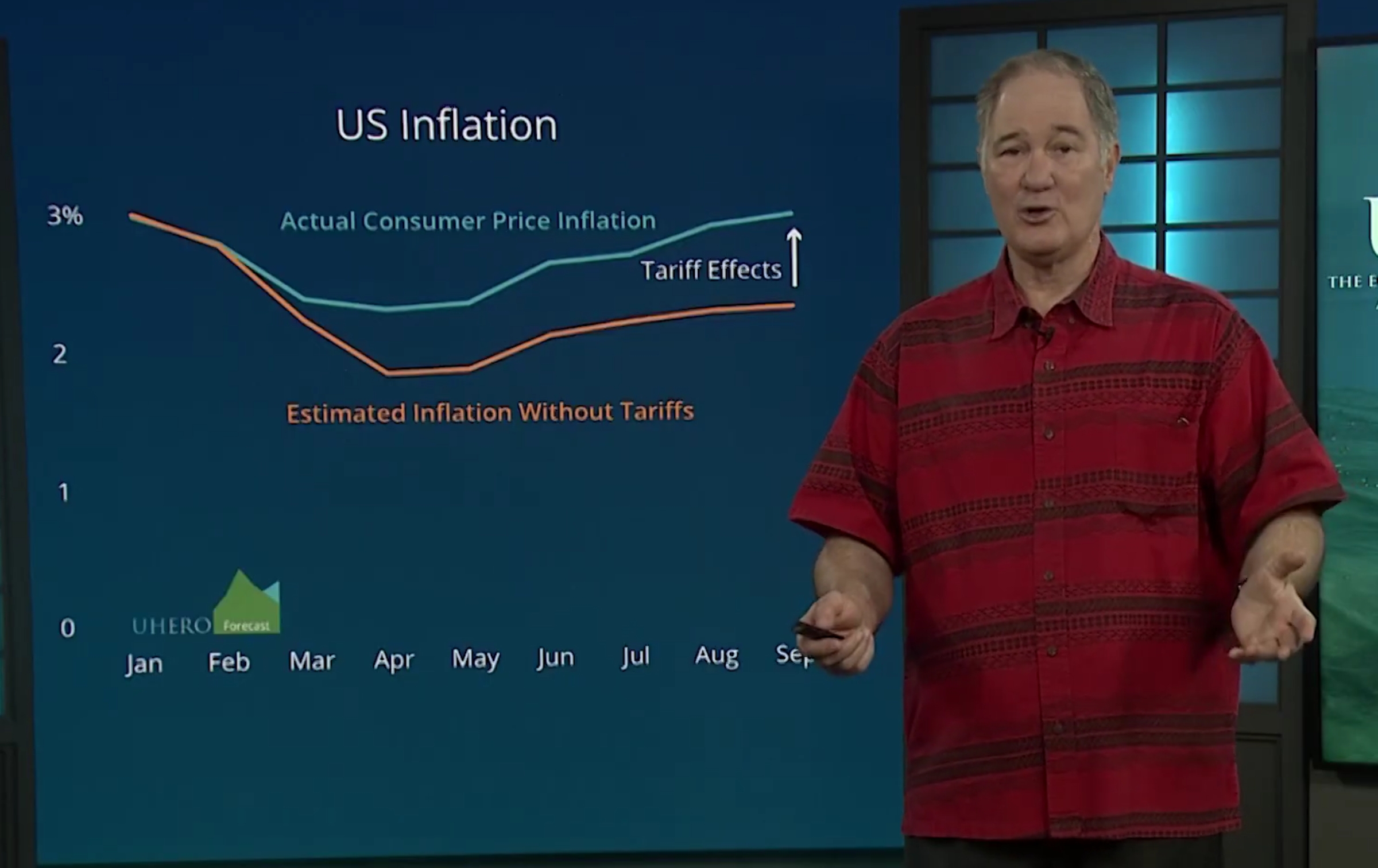
Inflation, while currently low, will rise next year as tariffs continue to pass through to consumer prices.
Construction remains the one consistently strong sector, supported by major new federal contracts and ongoing housing and infrastructure needs.
University of Hawaiʻi Economic Research Organization, overall, expects a mild recession in Hawaiʻi followed by a weak recovery starting in 2026.
Major takeaways from today’s fourth-quarter 2025 report:
- Tourism in Hawaiʻi has softened this year. Oʻahu has seen notable declines, while Maui continues its gradual recovery from the 2023 wildfires. International markets remain weak, with Canadian visitors down sharply. There has been a welcome recent uptick in the number of Japanese visitors, which nevertheless remains well below its pre-COVID-19 pandemic level. Visitor arrivals and average daily census are expected to decline in 2026 before recovering in 2027–28.
- Hawaiʻi’s labor market shows clear signs of slowing. Job postings decreased, opportunities narrowed and federal layoffs will continue into 2026. Still, unemployment remains low, and the overall cooling has been gradual. The upcoming minimum wage increase to $16 in 2026 will boost incomes for many lower-wage workers, but could create cost challenges for some employers.
- Inflation will build over the next year as tariffs continue to flow through to consumer prices, peaking at about 3.5% in late 2026 before gradually easing. By 2027, Honolulu consumer prices will be about 1.5% higher than they would have been without recent tariff hikes, increasing annual costs for a typical Hawaiʻi household by about $1,400.
- The federal shutdown disrupted pay for many of Hawaiʻi’s roughly 34,000 federal employees and caused SNAP and other federal programs to lapse as funds ran out. The state provided limited emergency assistance to cushion the gap, but the shutdown still reduced household spending and likely weakened visitor demand temporarily, adding short-term drag to the local economy. Some, but not all, of the shutdown-related spending hit will be reversed as federal workers receive back pay.
- Construction remains a rare bright spot. New federal projects, including an $8 billion U.S. Navy contract and progress on Aloha Stadium redevelopment, will keep construction employment near record levels through the decade’s end. This will help cushion the downturn but cannot fully offset weakness elsewhere in the economy.
- The U.S. economy strengthened in the third quarter as consumer spending rebounded, supported in part by strong stock market gains.
- But underlying conditions remain mixed: Household budgets are stretched, long-term interest rates remain high, and the record-long federal government shutdown reduced income and delayed critical economic data. Job creation nationally slowed sharply, and unemployment has risen. U.S. and global economic prospects remain relatively poor.

“Job and income losses will be real but limited in scale, with the greatest burdens falling on lower-income households and sectors tied to tourism and federal spending,” says the University of Hawaiʻi Economic Research Organization forecast. “Significant uncertainties remain — from trade policy and deportations to the ability of the Federal Reserve to steer the national economy — but prospects look somewhat better than they did earlier this year.”
See the entire forecast on the University of Hawaiʻi Economic Research Organization website.
University of Hawaiʻi Economic Research Organization Executive Director Carl Bonham provides a summary of the 2025 fourth-quarter forecast report in the latest episode of “UHERO Focus.”