

A bench-clearing incident during the Oct. 24 homecoming football game between Kapaʻa and Waimea high schools drew widespread attention and raised concerns throughout the Kauaʻi community.
But the story didn’t end on the football field.
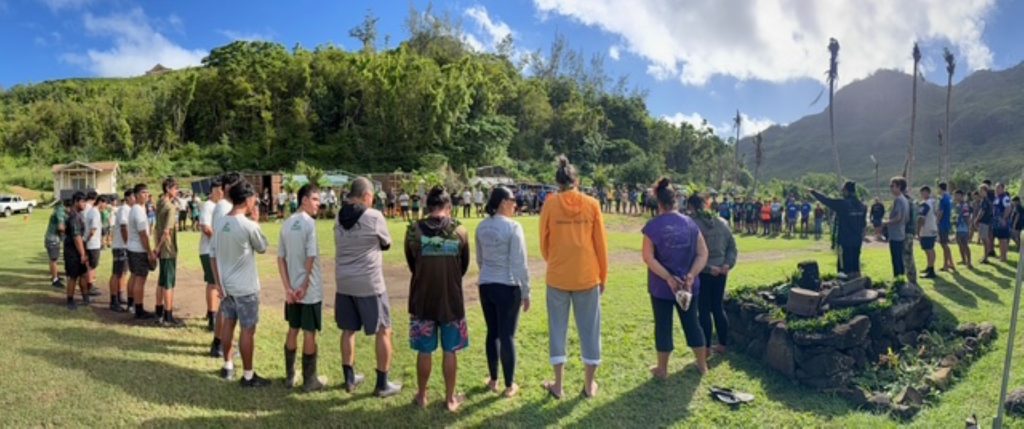
Football players from Waimea and Kapaʻa came together Nov. 3 at Alakoko loko iʻa for a different kind of team activity.
Coaches and school leadership reached out to Mālama Hulēʻia looking for an opportunity to bring the students together. While coaches connected with Peleke Flores, our director of ʻĀina & Community Engagement, Kauaʻi Complex Area Superintendent Leila Kobayashi reached out to see if Mālama Hulēʻia could accommodate the gathering at Alakoko.
We were honored to be called upon to provide a place where these young athletes could reconnect, reflect and begin moving forward together.
When Hawaiʻi Department of Education leadership reached out, their hope was to bring the athletes together through hoʻoponopono, a Hawaiian practice often associated with reconciliation, understanding and forgiveness. Their desire to approach the situation in this way was admirable and it was appreciated that they looked to Mālama Hulēʻia for help.
While hoʻoponopono has become commonly used to describe coming to an understanding or resolving conflict, the traditional practice involves a much deeper process that requires time, commitment and the willingness to work through difficult issues together. It isn’t something that can simply be accomplished in a single gathering.
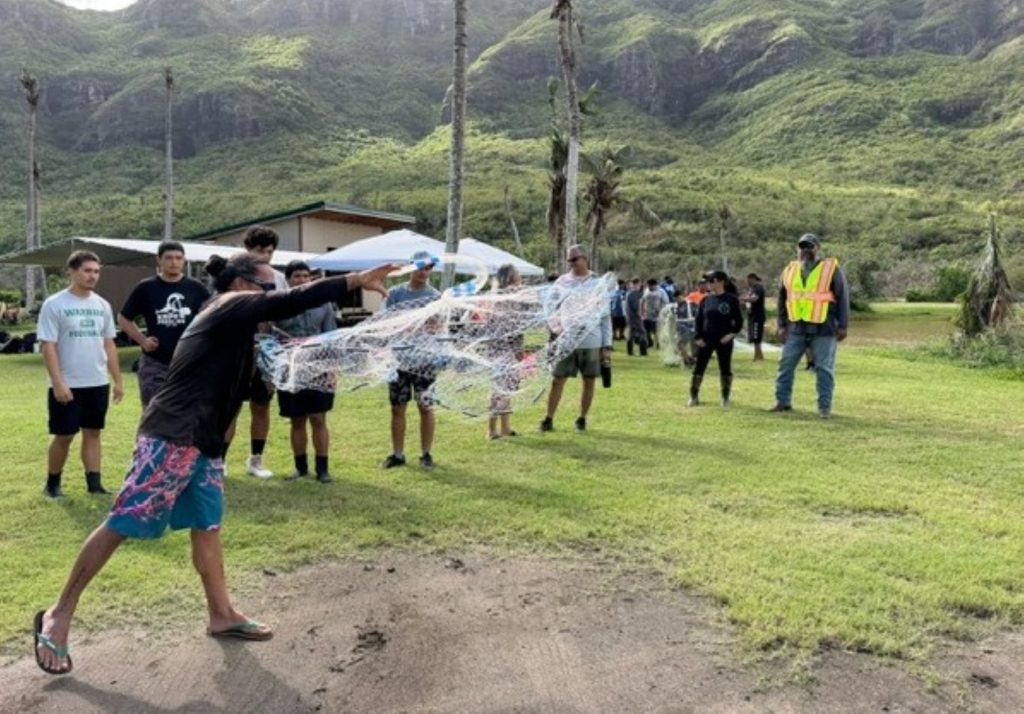
With only one day available, we focused on what the athletes could do at Alakoko: spend time together on the ʻāina, working side-by-side to begin the process of healing and rebuilding relationships. The students removed invasive mangrove, learned a traditional net-fishing technique and planted native pili grass together.
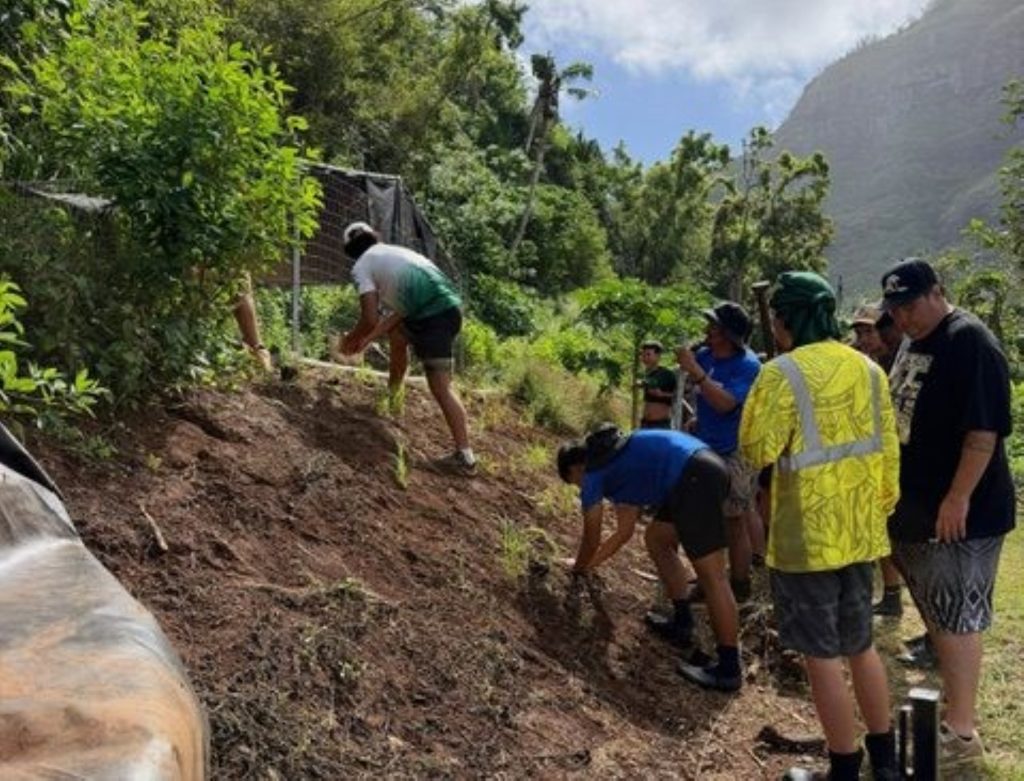
Peleke described this approach as kapili aloha, a way of rekindling aloha and strengthening the connections between people. The planting of pili grass was especially fitting. Traditionally used to thatch Hawaiian hale, pili is also a word associated with joining, clinging and holding together.
It is reflected in pilina, the relationships and connections that bind us to one another.
Just as strands of pili come together to provide shelter, the students had an opportunity to come together through shared work and begin strengthening their relationships.
The day wasn’t about resolving every difference, but creating space to reconnect, work together and take a meaningful first step toward restoring aloha.
At Mālama Hulēʻia, we often talk about restoring the health of our ʻāina. Experiences like this remind us that Alakoko is also a place where relationships can be nurtured, lessons can be learned and community can grow stronger.
We are grateful to the coaches, school leadership and students for trusting us to be part of that process.
This column is from Kauaʻi-based nonprofit Mālama Hulē’ia, which is dedicated to restoring the Hulēʻia Watershed. Its mission is to advocate, educate and lead community efforts to remove mangrove along the Hulēʻia River, re-establish native wetland ecosystems, manage Alakoko fishpond and create environmental stewardship programs honoring Hawaiian values. Visit the Mālama Hulē’ia website for additional information.