


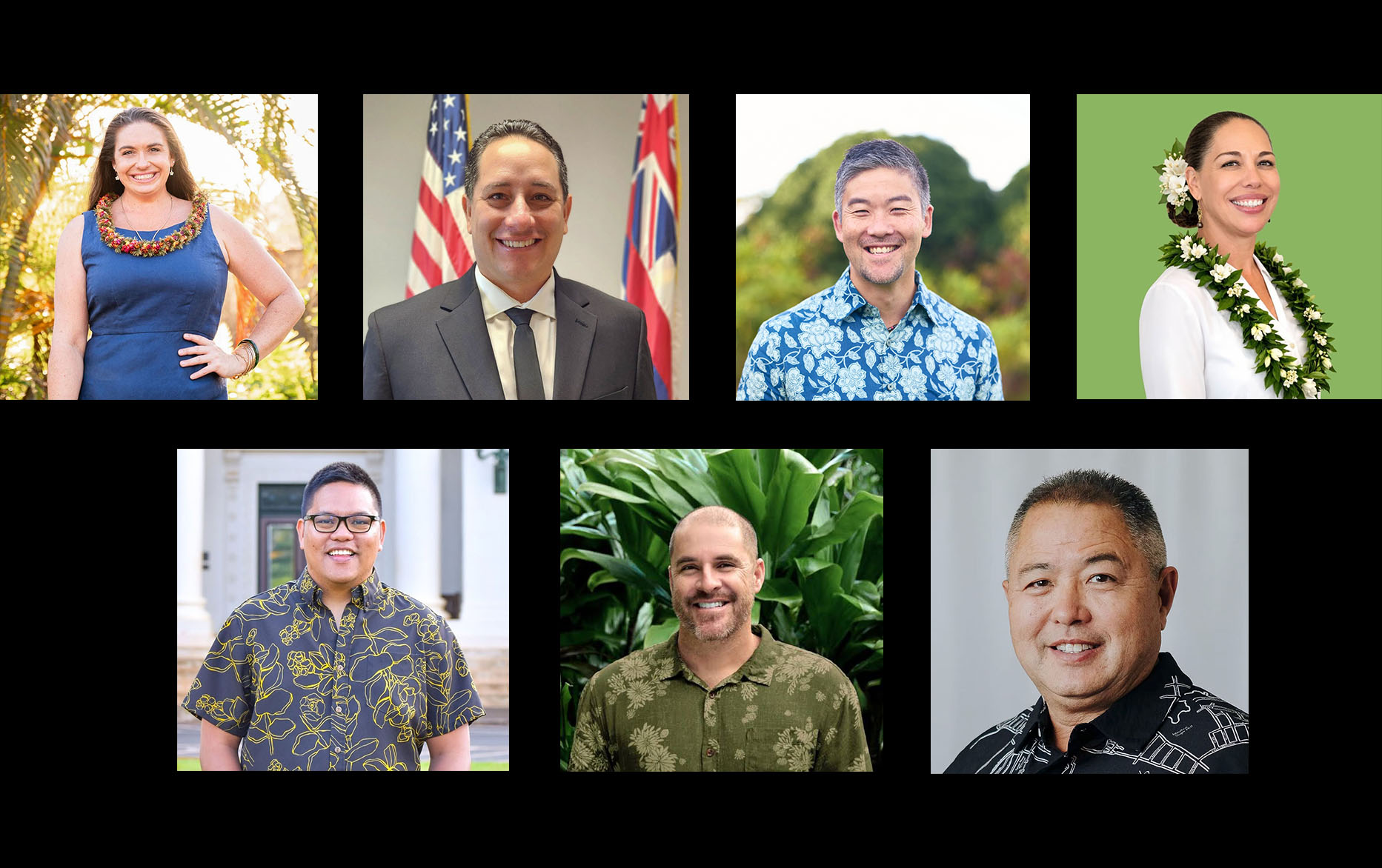
Kauaʻi has voted for the 7 open seats on Kauaʻi County Council.
The race began with a crowded field of 26 candidates, which was one of the largest fields in decades for the council. After the primary election, the race was narrowed down to the top 14 candidates.
Of those 14, only half will be elected as Kauaʻi County Council members.
As of 9:30 p.m., Fern Anuenue Holland has received 9.570 votes (7.1%), followed by Arryl J. Kaneshiro with 9.326 votes (6.9%), Todd R. Ozaki with 9,238 votes (6.8%), Michelle Kaleiohi Correa with 8,998 votes (6.7%), Addison Bulosan with 7,617 votes (5.6%), Dane Smith with 7,058 votes (5.2%) and Paul Noboru Applegate with 6,760 votes (5.0%).
Applegate has 50 more votes than the next council candidate, Taylor Shigemoto. They each hold 5% of the votes, so the final seat may be a toss up.
After the first election print outs, Holland expressed her gratitude for supporters and to every person who cast a vote for her, volunteered on the campaign and encouraged her through the process.
This campaign has always been about so much more than an election. It’s about our home, our people, our ʻāina, and the future we are building together,” Holland said. “I ran because I believe deeply in Kauaʻi and in our ability to protect what makes this island so special while fighting for a better future for our families and generations to come.”
Holland, Kaneshiro, and Bulosan are the only incumbents running for council seats. All three stated the biggest issues for Kauaʻi are the cost of living and housing.
Holland plans to support funding for the Kauaʻi County Housing Agency, streamline permitting and remove barriers to developing workforce housing and drop taxes for generational families who owned their home since statehood.
Kaneshiro will support housing for local working-class residents, allow businesses to grow and thrive without barriers to develop good-paying jobs and work with private partners to develop more middle-income housing for local families who earn too much to qualify for low-income housing but cannot afford a $1 million home.
Bulosan aims to prioritize local workforce housing, move affordable housing projects forward and ask for more taxes from properties not serving local housing needs.
Ozaki is currently serving in the Kauaʻi County Office of the Mayor. If elected, he plans to focus on the fundamentals that affect people’s daily lives. His priorities include putting local families first, roads and infrastructure, leading with judgment and creating trust with residents.
Correa has 17 years of experience in Kauaʻi County Department of Parks and Recreation, and if elected, she plans to strengthen the fight against drugs, expand diversified agriculture, create practical housing solutions, improve traffic and transportation, ensure fair and responsible land access and address homelessness with compassion.
Smith has promised utilize his 25 years of experience in public safety as a fire captain to deliver solutions to the issues facing Kaua’i. He currently manages a workforce housing project, and at the Hanalei Initiative, he works alongside a team tackling visitor management, transportation and wastewater issues.
Applegate has led teams, managed budgets, solved problems and help the community through difficults times for 25 yeras with the Kaua’i Police Department. As a retired police captain, Applegate wants to continue to serve because he cares about the islad and wants to help local families live, work and thrive.
Shigemoto was a banker for more than 25 years and a member of Kauaʻi United Way Board of Directors. With the motto “Kauaʻi First,” he thinks the key issues facing the county are housing, waste management, infrastructure, economic development and job creation.
The council will be expected to handle housing as well as many other familiar challenges, including aging public infrastructure, tourism’s role in the local economy, coastal resilience, wildfire preparedness and the balance between growth and the preservation of the island’s rural character.