


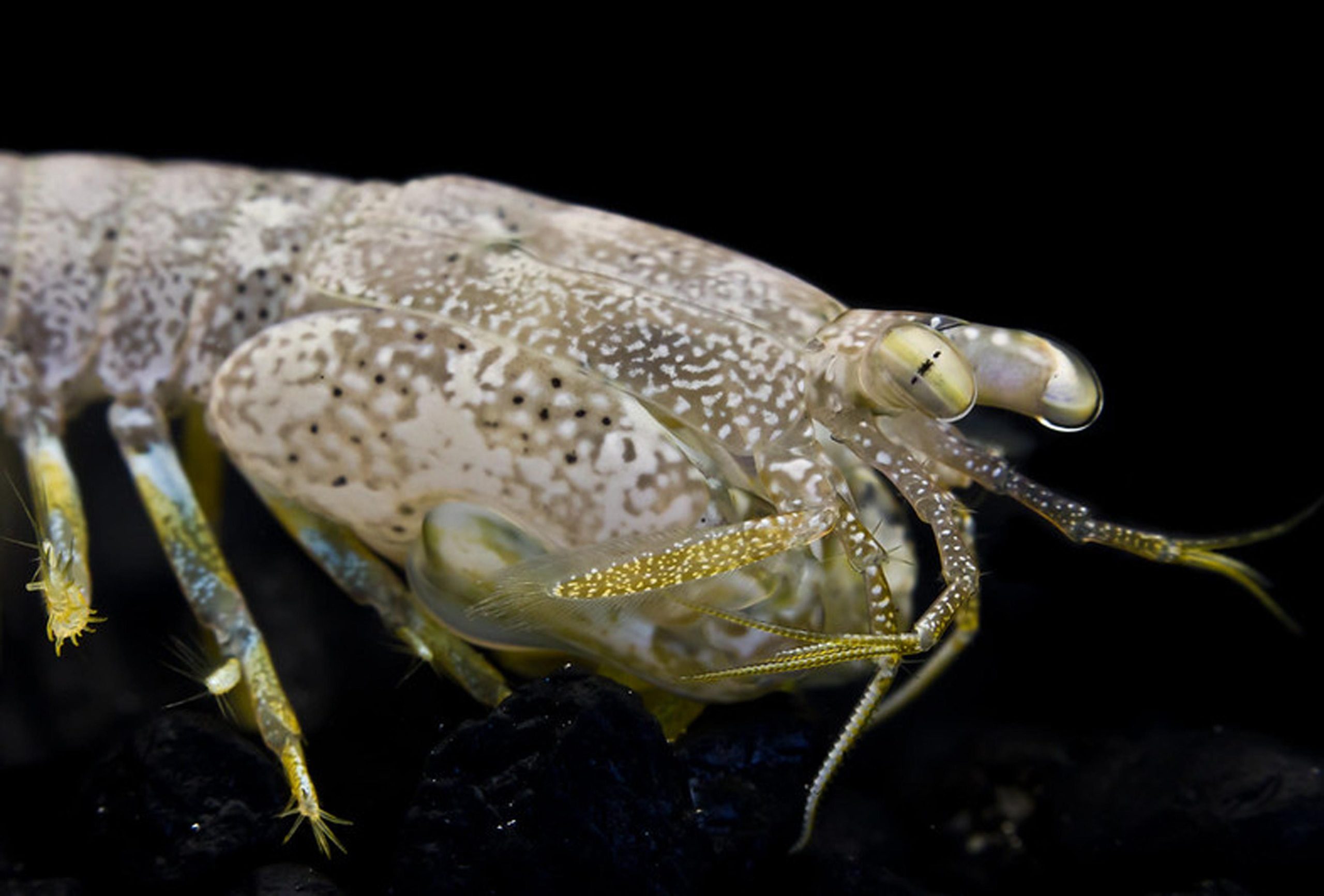
A University of Hawaiʻi at Mānoa researcher is helping to explain how mantis shrimp see colors and detect types of light that humans cannot.
A study published in the October issue of “Science Advances” explores how mantis shrimp eyes detect light, a news release said.
The study is co-authored by Megan Porter, a professor in the UH Mānoa School of Life Sciences.
Researchers found that special proteins and natural pigments work together to help the ocean animals sense a wider range of light, including far-red light, which is beyond the range of human vision.
“Animals have all sorts of sensory abilities that we don’t think of and oftentimes can’t imagine and understanding that really opens up our own world,” Porter said.
Mantis shrimp have some of the most unusual eyes in the animal world. They have at least 12 types of light receptors that respond to different parts of the light spectrum.
Researchers studied 17 types of proteins called rhodopsins that enable mantis shrimp to detect a broader range of light than most other animals, including humans.
“By understanding how these proteins respond to different wavelengths of light and how they work together within a mantis shrimp eye, we can better understand the biological mechanisms that make this remarkable visual system possible,” Porter said.
The findings improve the understanding of how eyes detect different types of light and turn that information into signals. This knowledge could inspire scientists to develop new ways to detect light using technology.