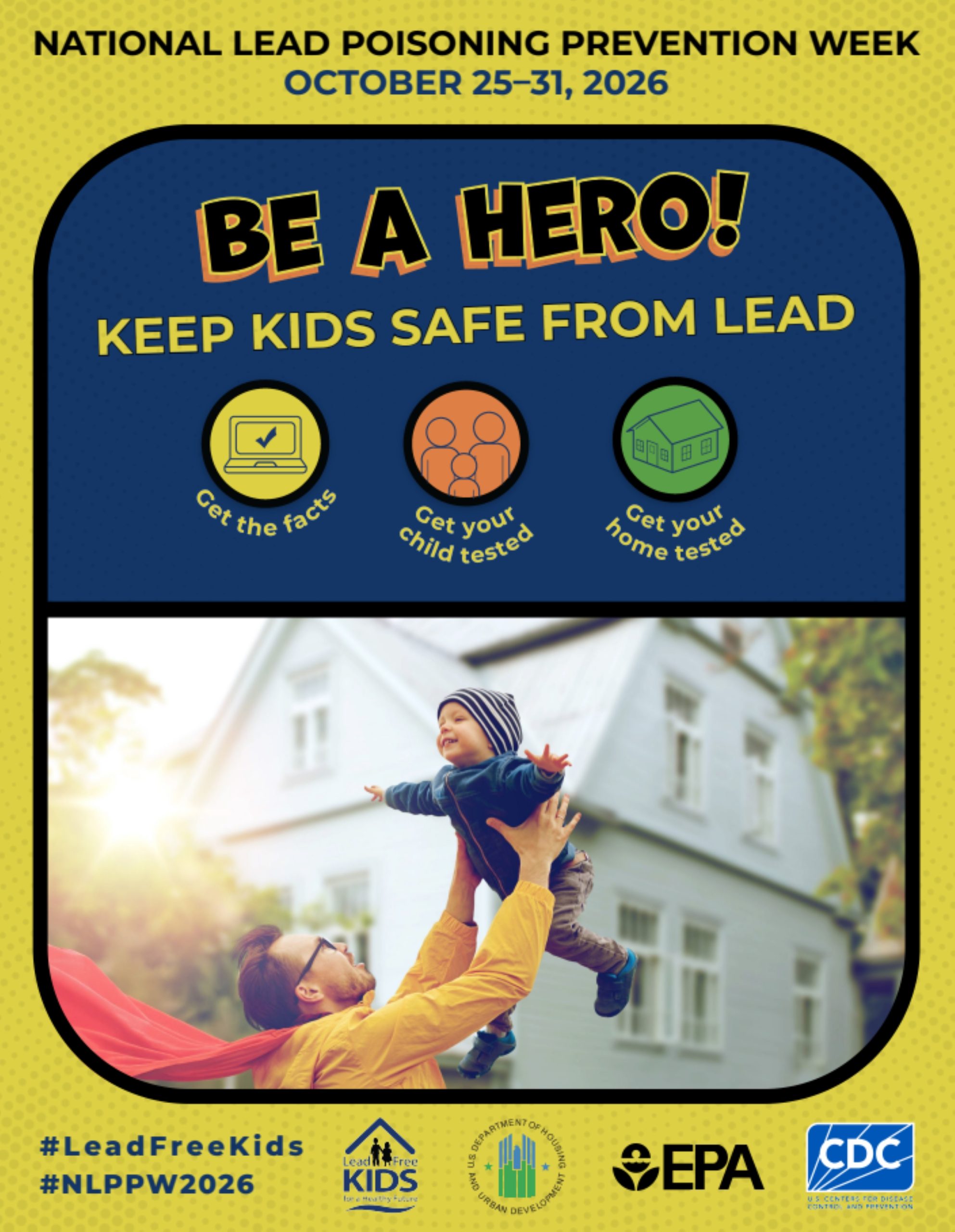


Hawaiʻi Department of Health — in observance of National Lead Poisoning Prevention Week from Oct. 25-31 — launched a statewide awareness campaign to protect the state’s youngest residents from environmental lead hazards.
This year’s National Lead Poisoning Prevention Week theme is “Keep Kids Safe from Lead.”

Hawai‘i’s awareness initiative features public service announcements starring local comedian and content creator Zavier “HowsDisGuy” Cummings alongside a free educational webinar featuring internationally recognized lead researcher Bruce Lanphear.
This year’s observance encourages Hawaiʻi families to “Get the Facts. Test Your Keiki. Check Your Home.”
“Keiki are most vulnerable during their first few years as they begin crawling, touching everything and putting objects in their mouths,” said Hawaiʻi Department of Health Hawaiʻi Childhood Lead Poisoning Prevention Program Coordinator Derek Priddy. “This stage passes quickly; taking simple steps now to get the facts, test your keiki and check your home can help your child succeed in school and beyond.”
Webinar featuring global lead expert
The best time to prevent lead poisoning is before exposure.
Pregnancy and the first few months of a child’s life represent a critical window for identifying household hazards before the child becomes mobile.
Hawaiʻi Childhood Lead Poisoning Prevention Program and Hawaiʻi Children’s Action Network are hosting “The Lingering Legacy of Lead Poisoning,” a free public webinar, from 10 to 11 a.m. today (Oct. 28).
Lanphear has conducted 30-plus years of foundational research establishing there is no safe level of lead exposure in human development, which directly informed federal standards for lead levels in air, water and household dust.
The webinar is designed for midwives, healthcare professionals, early childhood educators, parents, caregivers and anyone interested in learning about lead exposure and protecting children.
Those who want to attend can register online.
Statewide lead poisoning prevention campaign
Hawaiʻi Department of Health continues to broadcast its prevention messaging on television, digital and social media platforms.
The public awareness campaign developed with Hawaiʻi Childhood Lead Poisoning Prevention Program features Cummings using humorous characters in three Hawaiʻi-focused videos to help families easily identify hidden hazards in fishing gear, everyday habits and older homes.
Hawaiʻi Childhood Lead Poisoning Prevention Program also updated its official website, giving families easy access to prevention resources, educational materials, community support services and direct Hawaiʻi Department of Health program assistance.
Lead hazards are frequently invisible.
The federal government in 1978 banned lead from residential paint; however, many older Hawaiʻi homes might still contain lead-based paint.
Decades of leaded gasoline use also caused residual contamination in some local soils.
Children are most commonly exposed to lead through deteriorating paint, contaminated dust, soil, water, fishing tackle and work clothing.
Protecting Hawaiʻi children and families
Lead exposure can affect children’s learning, behavior, growth and development. Research shows even low levels of exposure can cause lifelong health impacts.
That makes prevention the single most effective defense.
State health officials are taking extra time during National Lead Poisoning Prevention Week to encourage families to take three specific actions:
- Get the facts about lead exposure and how to prevent it; click here.
- Test your keiki at ages 1 and 2 years old with a blood test from their doctor or healthcare provider (covered by insurance and free with Med-QUEST).
- Check your home for lead hazards, including chipping paint, bare dirt, work or hobby supplies and have your drinking water tested to check for lead leaching from older plumbing fixtures.