


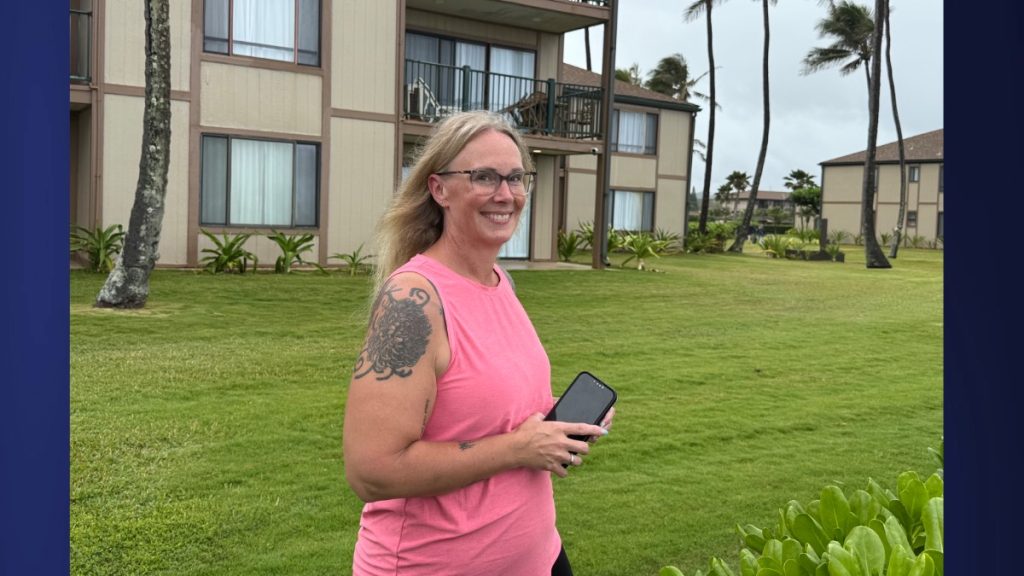
Rheannon Cochrane from South Dakota is staying on the ground floor of Hotel Coral Reef Resort, a small boutique hotel right across from the ocean in Kapaʻa.
She said she felt a bit scared because “it’s so quiet.”
“I lived in Louisiana for a while, so I know what hurricanes are like,” Cochraine said. “We are prepared; if things change, we know to go to Kapaʻa school and seek shelter.”
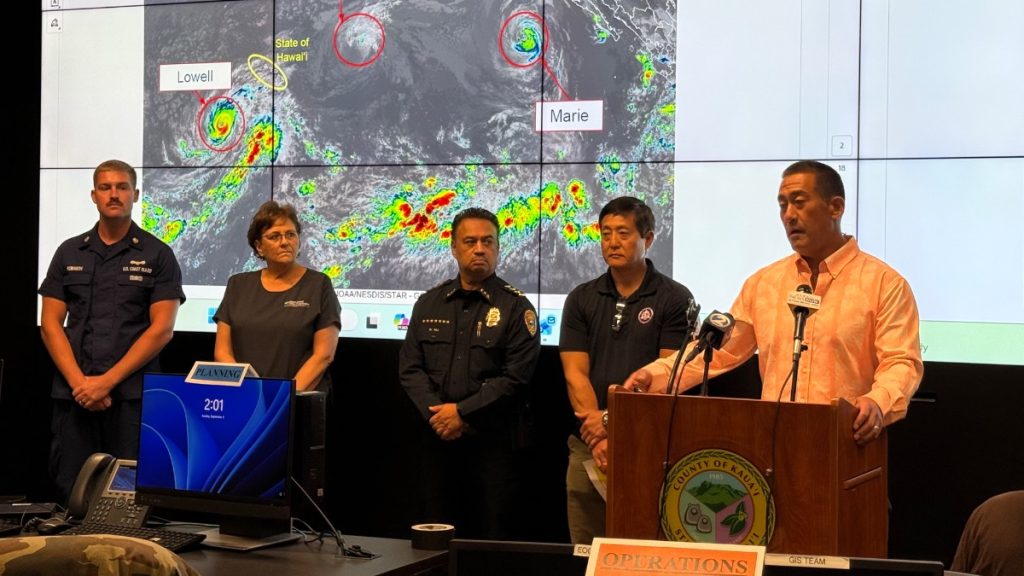
On Sunday, a beautiful postcard day on Kauaʻi, it was the calm before the storm. But during a press conference, Kauaʻi County officials urged residents and visitors not to wait for the worst of the weather to begin preparing for Category 3 Hurricane Lowell, whose impacts were expected to start arriving Monday.
 South Dakotian Rheannon Cochrane will stay on Kauaʻi until the end of the work week and is ready for anything Lowell might bring. (Xiomara Yamileth/ Kauaʻi Now)
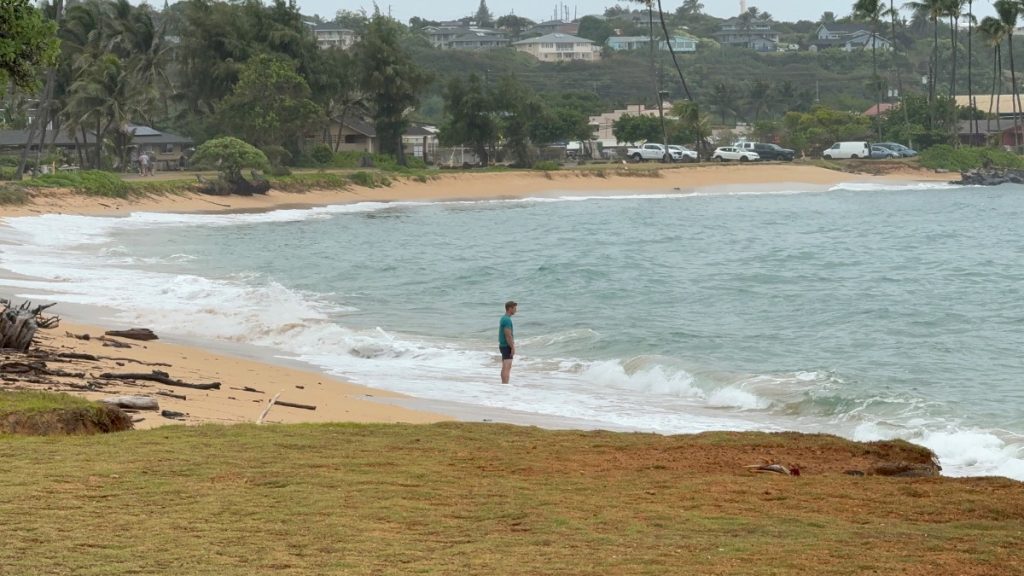
- A man briefly dips his feet in the water and gazes at the waves as Hurricane Lowell nears Kauaʻi on Sunday, September 6, 2026. (Xiomara Yamileth/ Kauaʻi Now)

For residents with a sound home outside flood and storm-surge zones, officials said sheltering in place may be the safer option.
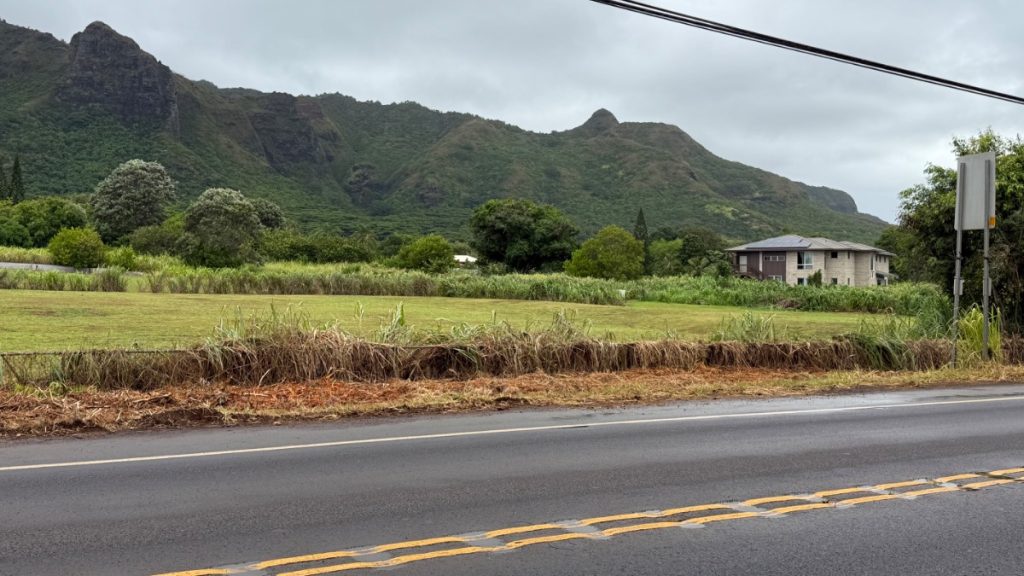
Kauaʻi County crews had been working for days to clear brush and mowing grass to keep water flowing in advance of Tropical Storm Lala, which passed far to the south in mid August, and throughout the past few days into the weekend as Hurricane Lowell nears.
For the last several days, most of Kauaʻi has shifted into storm-preparation mode. Residents were urged to secure homes, stock enough food and water, charge devices, fuel vehicles, and check on family, friends and neighbors.
Forecasters expect the storm to bring periods of heavy rain, strong winds, and hazardous coastal conditions, with the potential for flooding, landslides and tornadoes.
The county announced that five refuge areas would open at 5 p.m. on Sunday in anticipation of Lowell’s impacts. County officials stressed that the refuge areas are an evacuation option of last resort.
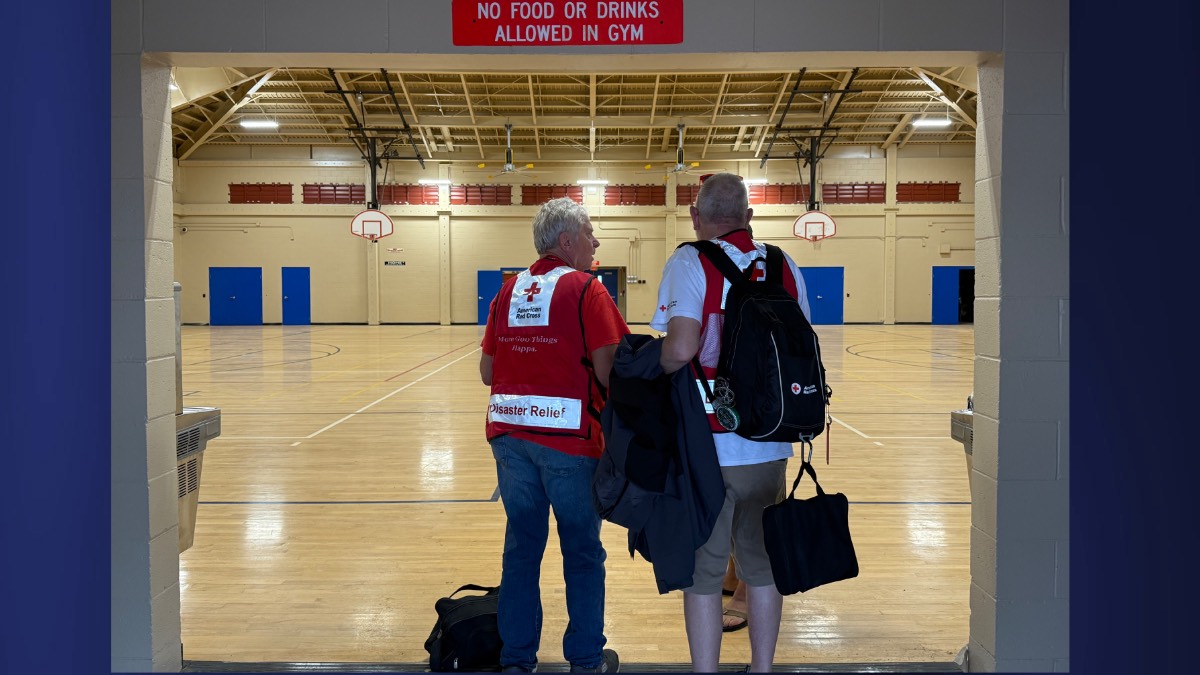
Individuals are reminded to bring their own food, water, medications, bedding, and other emergency supplies because the facilities are not fully stocked. The Kīlauea Neighborhood Center refuge opened at 5 p.m. and offers 10 cots along with 6 dog crates, according to Hawaiʻi Red Cross officials.
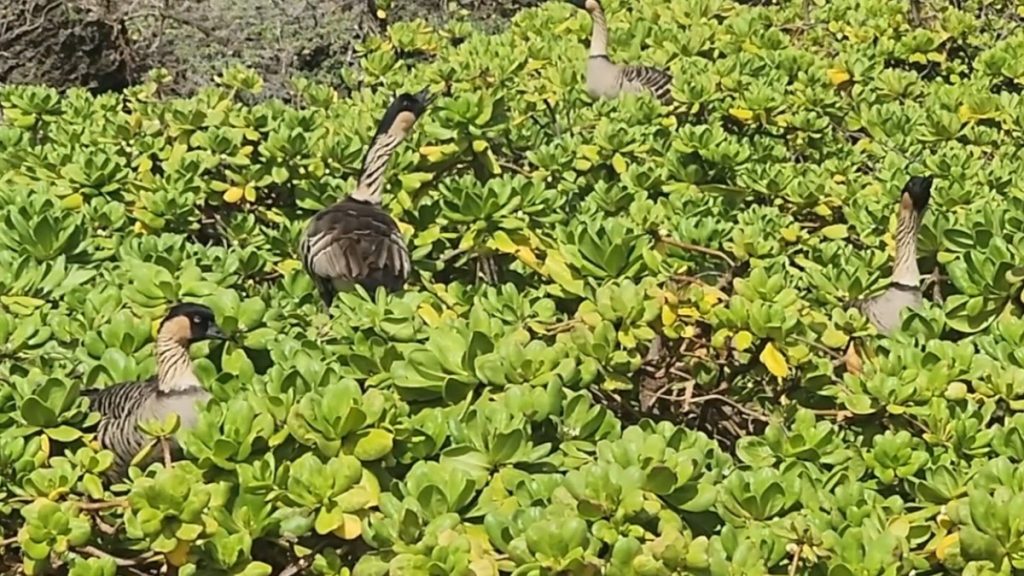
Kauaʻi’s wildlife in Naupaka near Poʻipū also was seen preparing for Hurricane Lowell.
Dan Dennison of Conservation Communications told Kauaʻi Now that before a storm, geese often engage in a feeding frenzy and actively seek out sheltered locations.
He shared a video of a group of nēnē seeking shelter among dense vegetation to protect themselves from the wind and rain.
- Dozens of nenes were observed seeking shelter in Naupaka near Poʻipū on Sunday, September 6, 2026. (Photo Credit: Dan Dennison)
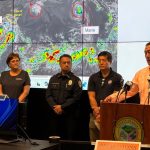
- During a press conference in Līhuʻe on September 6, 2026, Mayor Derek Kawakami shared weather updates about Lowell. (Xiomara Yamileth/Kaua‘i Now)
“This behavior is driven by the need to build up energy reserves to withstand the harsh conditions and potential food scarcity during the storm,” Dennison said. “Before a storm, geese tend to huddle together more closely, forming tighter flocks.”
Meanwhile, conditions along Kauaʻi’s coastline are expected to become increasingly dangerous.
The National Weather Service issued a high surf warning for the south-facing shores of Kauaʻi and Niʻihau. Surf of 7 to 10 feet was expected through Monday morning before rapidly building to 20 to 30 feet Monday afternoon and evening.
Forecasters warned that ocean water could surge over beaches, coastal benches, and roadways, with the potential for significant damage to coastal property and infrastructure. Vulnerable coastal roads on the south side of the island between Poʻipū and Kekaha, including Lāwaʻi Road, are particularly susceptible to overwash.
The storm also forced the cancellation of the 2026 Kauaʻi Marathon and Half Marathon, which had been scheduled for Sunday morning. The decision was based on both community preparedness and the safety of runners, volunteers and emergency personnel.
Even with the official event canceled, some runners still took to the roads Sunday morning to complete their own runs, turning what would have been race day into an unofficial show of determination.Maylette Garces, Executive Director of North Shore Give, told Kauaʻi Now that after the storm, the Kauaʻi Emergency Management Agency might request CERT volunteers to support damage assessment teams.
Residents willing and available to assist with post-storm damage assessment can contact Garces at maylette@northshoregive.org.