


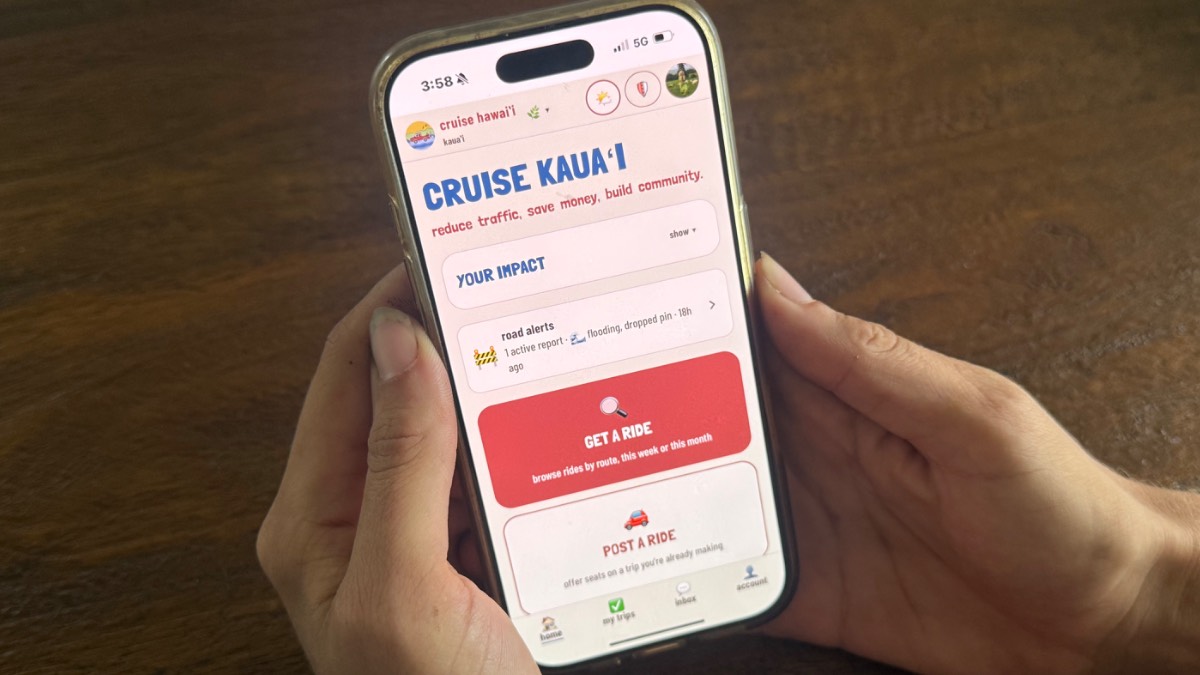
A new community-based transportation app is preparing to launch on Kauaʻi, offering residents an alternative to traditional ride-hailing services with a goal to reduce transportation costs, ease traffic and strengthen connections among island communities.
Cruise Kauaʻi, founded by North Shore resident Willow Volkert, is scheduled to officially launch on Dec. 1, following a beta testing period.
The platform enables drivers to post trips they are already planning to make and offer available seats to passengers traveling in the same direction.
Unlike Uber or Lyft, Cruise Kauaʻi does not employ drivers or operate as an on-demand transportation service. Instead, it functions as a cost-sharing platform, allowing drivers to set their own prices within mileage-based limits.
“We are kind of like a community Uber,” Willow Volkert said.
For example, a driver traveling from Hanapēpē to Hāena could list the trip, specify the departure time, and set a price. A passenger can browse available rides, request a seat, and coordinate pickup and drop-off locations directly with the driver after the driver accepts the booking.
Willow Volkert said the idea grew out of her own transportation challenges while commuting from the West to the North Shore, where she worked three days a week. The drive could take about two hours each way, making gas and vehicle expenses a significant burden.
“I would love to drive someone,” she recalled thinking during those commutes. “I’m literally going as far as you can go. Please, I would love to give someone a ride, have someone to talk to.”
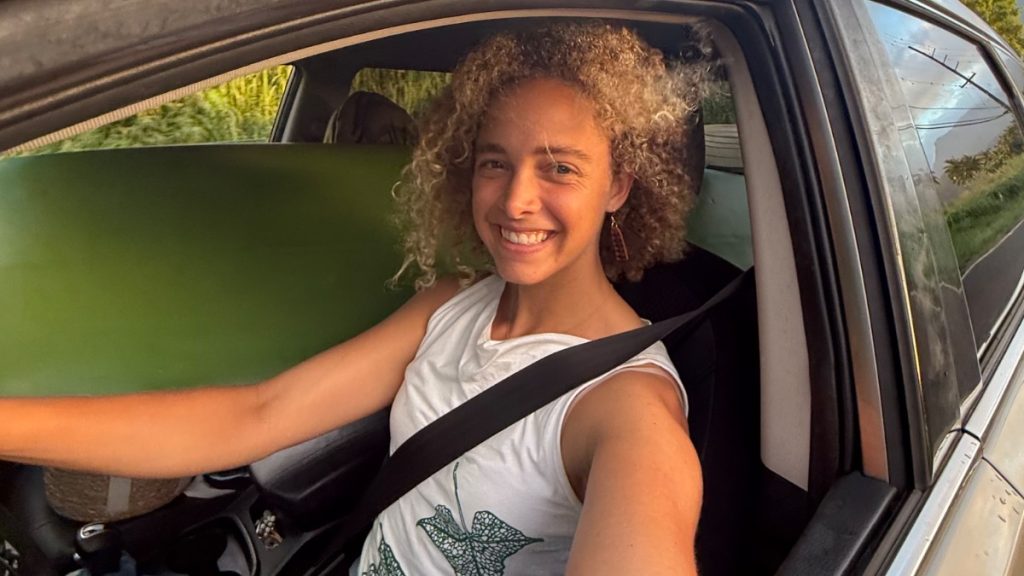
Her interest in carpooling was also shaped by an experience in Vancouver, Canada, where she used a ride-sharing platform called Poparide while attending college. Initially, she relied on the service to travel outside the city.
That experience also helped her form new friendships, something she hopes to foster in the Garden Island’s tight-knit community.
“I think it could do so much for Kauaʻi for us to get outside of our own bubbles, get in the car with different types of people, have interesting conversations, learn from each other,” Willow Volkert said.
She grew up in Chicago and moved to Kauaʻi at 17. She said her connection to the island and its relationship with the land influenced her interest in developing community-centered solutions.
Now at 24, she works as an environmental educator at Hāena State Park.
Cruise Kauaʻi launched its first version as a pilot program in June. Eight weeks later, “We had 530 people sign up on the app,” Willow Volkert told Kauaʻi Now.
However, the initial version began experiencing technical problems as registrations increased.
Willow Volkert temporarily took the platform offline and hired a developer: “I took it down because I needed to do this right.” The app was rebuilt to be more reliable, with support from the Hanalei Initiative and other community partners.
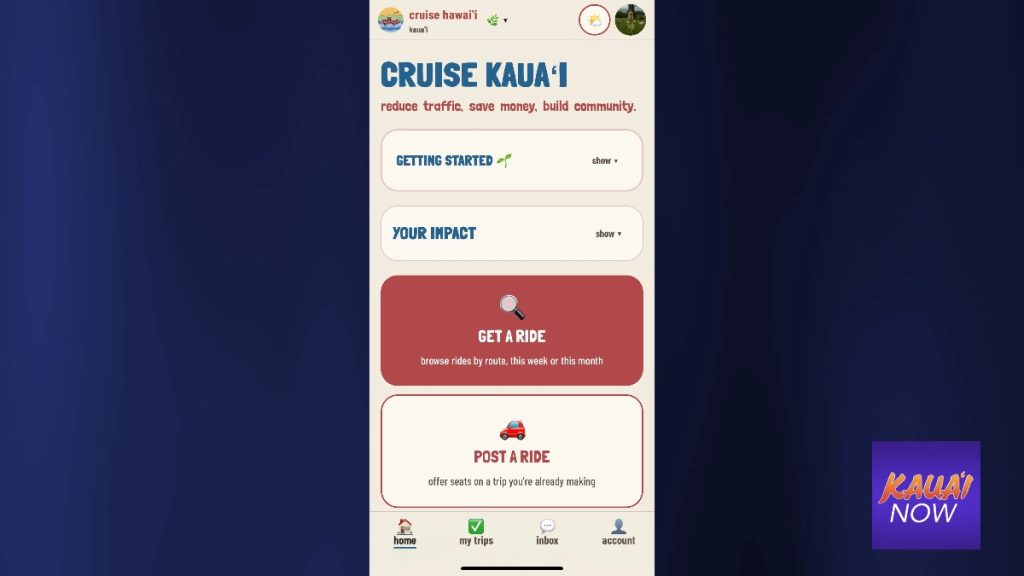
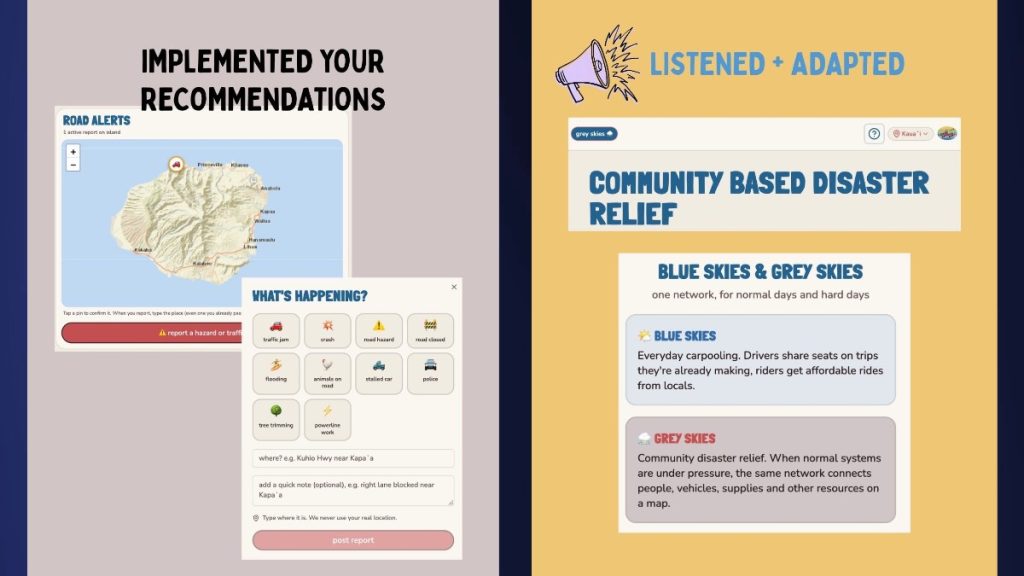
The new app includes several features beyond traditional carpooling. “As I got into the community and did listening sessions with everyone, I got a lot of great feedback, and we added a lot of new features,” she added.
Users can access road alerts to report hazards, flooding, traffic congestion, and other conditions. The reports appear on an islandwide map in the app, where other users can confirm whether an alert is still active.
Passengers can also request rides when no existing trip matches their schedule. The request goes to participating drivers, who can choose whether to accept it.
Safety measures include identity verification and criminal background checks for all users. Drivers must provide a valid driver’s license, vehicle information, and proof of insurance.
Users also have profiles containing information such as their name, photograph, home base, age, and biography. They can optionally link their Instagram accounts. Following a ride, both parties are required to leave public reviews.
“Every time you ride with each other, you have to leave a review for the other person in order to continue to leave the app, and those reviews are public,” she explained with a smile.
“Weʻre like a dating app platform,” she said. “We connect people, we give you all the information you need to make a safe decision, but ultimately you are two independent parties getting in the car together.”
Willow Volkert said the platform is designed primarily for scheduled transportation rather than immediate pickups.
“Passengers generally should plan rides at least 24 hours in advance,” she said.
Cruise Kauaʻi also encourages drivers and passengers to coordinate pickups and drop-offs at mutually convenient public locations, such as grocery stores, libraries, and bus stops.
Drivers receive the price they set, while Cruise Kauaʻi collects a connection fee.
Willow Volkert gave an example of a $20 ride from the west side to the north side: the driver sets the fare at $20 on the platform, and the passenger pays $23.33. The app collects $3, while an additional 33 cents covers tax-related fees.
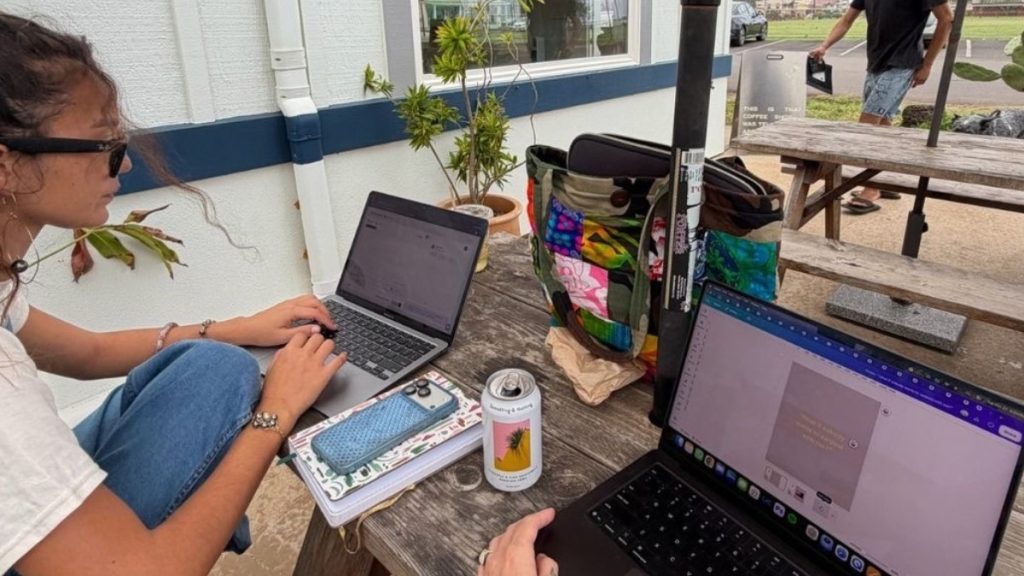
The pricing structure is intended to keep rides affordable while helping drivers recover some of their vehicle expenses.
Willow Volkert said she personally spends approximately $400 to $500 a month on her vehicle because of her commute. “Even earning an additional $100 monthly through the platform could make a meaningful difference.”
“Everyone on Kauai is struggling with the rising cost of living,” she said. “This is an app that is basically a means to share abundance with each other, and abundance can look like empty seats.”
Beyond transportation, Cruise Kauaʻi is developing additional services designed to address community needs.
One feature, called Gray Skies, is a community-based disaster relief network where residents can post available resources or request assistance. Users can list equipment, such as wood chippers and excavators, or request help with tasks such as hauling green waste.
Resources and needs also appear on a shared map in the app.
Willow Volkert said the feature became particularly relevant following Hurricane Lowell, when residents wanted to help affected communities but sometimes struggled to find out where assistance was needed.
Other planned features include School Pool, Party Pool, and even a Food Pool.
School Pool will allow parents to coordinate rides for students, including transportation to and from school and for field trips. Families will access the platform through a school-issued join code.
Party Pool is designed as a designated-driver service, allowing participating venues to post events and connect attendees with drivers willing to provide rides home.
Food Pool will connect businesses needing occasional deliveries with drivers who have opted into the service. Restaurants and other food businesses could post delivery requests, specify a payment amount, and notify available drivers.
Willow Volkert also envisions eventually developing specialized transportation options for kūpuna and people with disabilities, including additional verification and vehicle accessibility requirements.
Despite the potential for growth, she wants to expand carefully and keep the platform focused on Kauaʻi residents’ needs.
She also acknowledged that improving transportation access can make remote areas more accessible, raising questions about the impact of increased visitor traffic on the island’s communities and natural resources.
Cruise Kauaʻi is therefore focusing its initial outreach on residents and everyday transportation needs, including commuting to work, running errands, and getting to the airport.
Willow Volkert said the long-term goal is to expand Cruise Kauaʻi to other Hawaiian islands, but her immediate priority is ensuring the Kauaʻi service operates effectively.
Interested residents can access the web-based version at app.cruisehi.org and submit feedback through the platform’s form.
Users should expect occasional glitches and sample information while testing continues.
She hopes the service will help residents from different parts of the island connect, share resources and build relationships through everyday interactions.
“Most likely it’ll be your neighbor, your clerk, your pharmacist,” she said. “So it just brings the community even more tightly knit.”
Residents interested in downloading or browsing the app can click here. Residents who want to learn more can contact the organization at cruiskauai@gmail.com.