


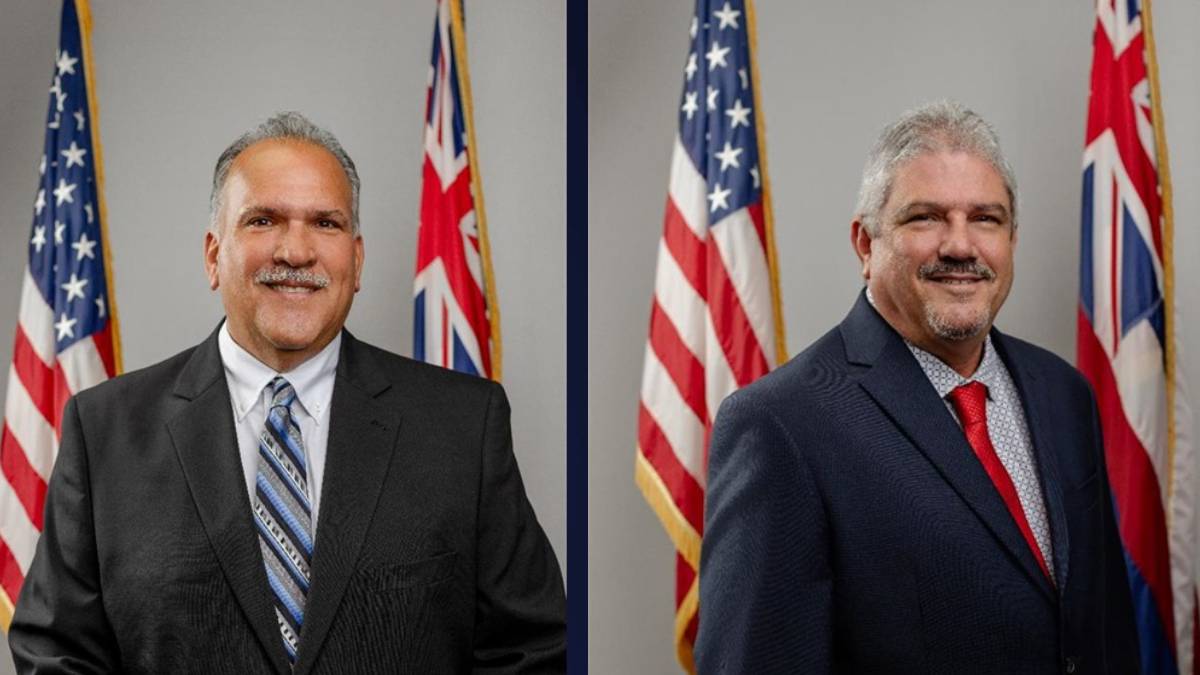
With just four days remaining before Election Day on Nov. 3, Mel Rapozo and Bernard Carvalho Jr. are making their final cases to become Kauaʻi County’s next mayor.
Voters have the choice between the two familiar government figures — both are current members of the Kauaʻi County Council. They are running for the seat being vacated by Derek S.K.Kawakami, who is term-limited and on the ballot for Hawaiʻi’s No. 2 job, lieutenant governor.
Rapozo was the top vote-getter in the six-candidate field in the Aug. 8 Primary Election, with 7,618 votes (40.6%). Carvalho was second with 5,744 (30.6%), a difference of 1,844 votes.
The pair will be going after the 4,139 votes that went to the other four candidates. There also were 1,016 ballots blank for mayor in the primary. And, traditionally, more people vote in a general election than a primary.
Kauaʻi Now asked both Kapaʻa residents, 61-year-old Rapozo and 65-year-old Carvalho, about their priorities, and what distinguishes them from one another.
Housing affordability, the rising cost of living, and infrastructure have emerged as key issues in the mayoral race. Rapozo, the County Council chair, also has highlighted traffic and road access as priorities, while Carvalho, who previously served as mayor from 2008 to 2018, has emphasized his county government experience and his ability to work across local, state and federal levels.
Their responses will provide further insight into how each candidate intends to lead Kauaʻi during their first 100 days as the county’s leader — and beyond.
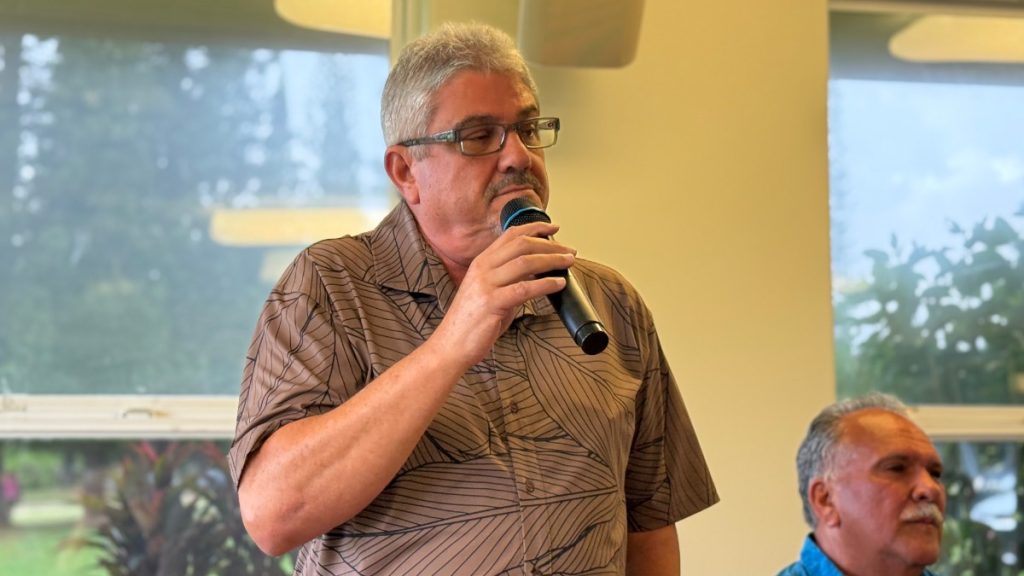
Early priorities for first 100 days
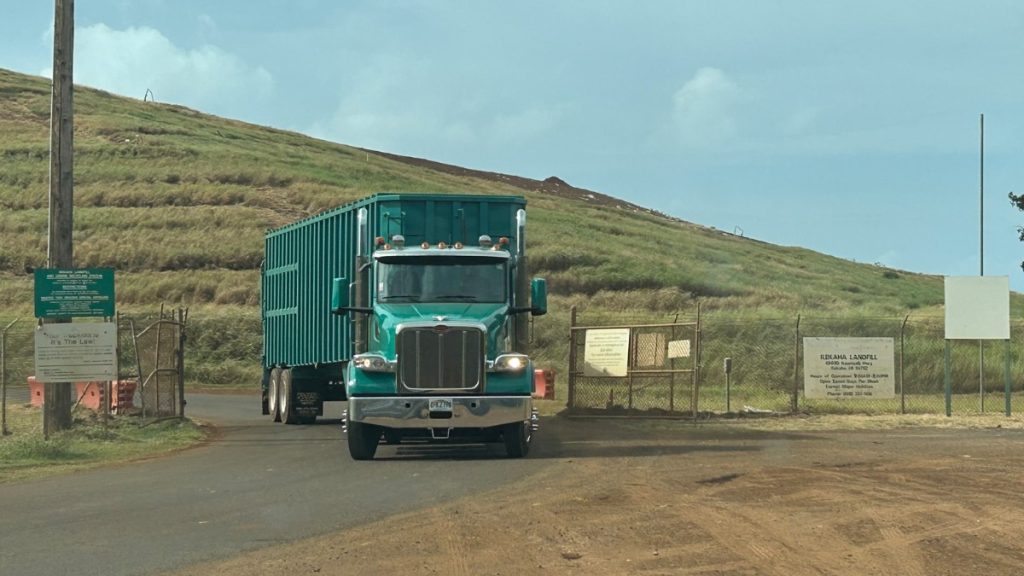
Rapozo said his first priority would be addressing Kauaʻi County’s infrastructure challenges, particularly its solid waste crisis.
“Our landfill is running out of space, and we cannot continue kicking this problem down the road,” Rapozo said, adding that the issue should have been addressed years ago.
Within his first 100 days, Rapozo said he would convene Public Works leadership, solid waste professionals and community stakeholders to develop an actionable plan with defined deadlines.
Potential solutions would include waste diversion, curbside recycling and emerging technologies.
He also identified aging wastewater systems, deteriorating roads and emergency access routes as areas requiring attention, pointing to Hurricane Lowell as a reminder of the island’s vulnerabilities.
“My commitment is simple: no more studies that sit on shelves collecting dust,” Rapozo said. “We need decisions, timelines, accountability and action.”
He also described the cost of living as one of the most significant challenges facing local families, citing the struggles of working parents, young adults seeking independent housing and older residents trying to remain on Kauaʻi.
He said he would direct the county’s housing and planning departments to identify county-owned land and existing housing projects that could be accelerated. He also proposed reducing unnecessary permitting delays, encouraging partnerships with private developers, and prioritizing housing that working families can afford.
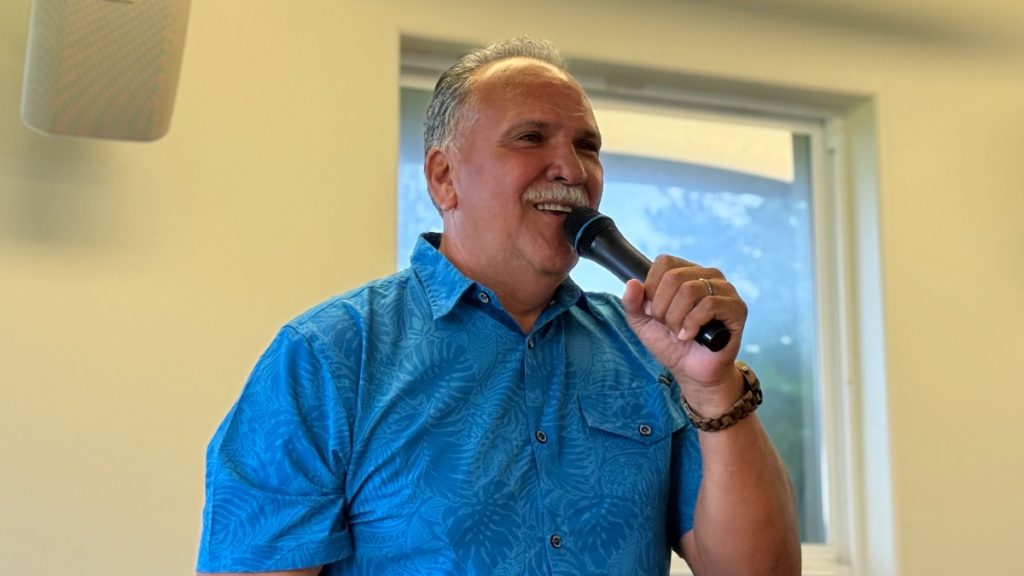
Carvalho told Kauaʻi Now that his first priority as mayor would be bringing people together and getting county government moving in the right direction.
He acknowledged the county faces significant challenges involving housing, solid waste, wastewater, infrastructure, and the rising cost of living, but said those issues cannot be resolved overnight.
“I will never promise something I cannot realistically deliver,” Carvalho said.
Within his first 100 days, Carvalho said he would meet directly with every department head, review major county projects, identify obstacles and establish clear priorities, responsibilities and timelines.
He pointed to his previous experience as mayor, saying he understands how county government operates, how budgets work, and the importance of relationships with state, federal, and community partners.
“Leadership isn’t about one person having all the answers,” Carvalho said. “It’s about bringing the right people together, removing barriers, and turning good ideas into action.”
He said he would not need time to learn the job. He would be ready to begin work on his first day in office.
Affordability
Rapozo said he would review real property tax policies to identify potential relief for local resident homeowners without compromising essential county services.
On food costs, he said he would work with farmers to address barriers involving water, infrastructure and access to markets, with the goal of strengthening local agriculture and increasing the amount of food produced on the island.
He also pledged to review county fees, operations and spending to identify efficiencies that could reduce residents’ financial burdens.
“Government cannot control every price, but it can stop making life more expensive through unnecessary delays, inefficiencies and poor decisions,” he said.
On affordability, Carvalho said his goal would be to ensure local families have opportunities to remain on Kauaʻi and that future generations can live, work and raise families on the island.
He said government cannot simply promise to lower everyone’s bills but can take meaningful steps to reduce barriers and create opportunities.
For housing, Carvalho said he would immediately review affordable and workforce housing projects already in development, identify permitting and infrastructure delays, and work with partners to move those projects forward.
He also said he would support responsible expansion of accessory dwelling units, or ADUs, and gap housing opportunities for working families.
On food security, Carvalho proposed bringing farmers, ranchers, schools, businesses and community organizations together to strengthen local food production, processing and distribution.
“The more we can produce and purchase locally, the more resilient our island becomes,” he said.
To help address everyday expenses, Carvalho said he would focus on making government more efficient, pursuing outside funding and avoiding unnecessary costs that ultimately are passed on to taxpayers.
“I won’t promise that everything will become affordable in 100 days,” Carvalho said. “I will promise a clear plan, immediate action and honest accountability. Our people deserve real solutions, not election-year promises.”
Accountability
Rapozo also told Kauaʻi Now that he would establish baseline measurements early in his administration and identify three primary accomplishments to pursue during his first year: a funded, time-bound plan to address the solid waste crisis; measurable improvements in housing and building permit processing times; and progress in moving county housing projects toward construction.
He said his administration would issue quarterly public progress reports detailing completed work, outstanding tasks, expenditures and obstacles. The reports would be posted online, he said, with additional updates provided through community meetings and public discussions.
“I am not afraid of accountability,” Rapozo said. “I’ve spent many years in public service, and I understand that not every decision will be popular or every project will go as planned.”
He said leadership requires transparency, a willingness to accept responsibility when problems arise and a commitment to correcting mistakes.
Rapozo said county government needs to move away from reacting to problems and toward anticipating and resolving them before they escalate.
He said he would establish clear performance expectations for department heads, improve coordination among departments and require regular updates on priority projects.
Rapozo also said he would meet personally with department leadership to identify unnecessary obstacles and encourage employees to recommend practical solutions.
“Our county employees are not the problem,” he said, adding that employees need leadership that provides support, resources and accountability.
Rapozo said residents should begin seeing improvements in communication, responsiveness and transparency within the first 100 days, although larger infrastructure and housing projects would take longer.

Carvalho said his first-year goal would be measurable progress on the county’s most important projects, particularly housing, solid waste, wastewater and infrastructure.
Within his first 100 days, he said his administration would establish a public action plan identifying priority projects, the departments responsible for them, realistic timelines, funding needs, and measurable milestones.
By the end of the first year, Carvalho said residents should be able to see which projects had advanced, which obstacles had been removed, what funding had been secured, and what work remained.
He pledged to provide quarterly public progress reports and said delays or unsuccessful approaches would be addressed openly.
“If something is delayed, we will explain why,” he said. “If something isn’t working, we will make adjustments.”
Carvalho said character and integrity are demonstrated through actions, particularly when challenges arise, and emphasized that county government must remain accountable to the people it serves.
“Don’t measure my leadership by how many promises I make,” Carvalho said. “Measure it by the progress we deliver and the honesty with which we report it.”
He said that would be the standard he intended to hold himself and his administration to.
Carvalho also identified communication, collaboration and coordination as areas where county government needs to improve. He said residents too often become frustrated because they do not know the status of projects or who is responsible for helping them.
As mayor, Carvalho said he would personally establish regular coordination meetings with department leaders, strengthen communication among departments and ensure residents receive clearer information about important county projects and services.
Why each candidate thinks voters should choose them
Rapozo said the goal is to establish a county government that works to find solutions rather than simply explaining why something cannot be done.
With Election Day approaching, Rapozo thanked residents of Kauaʻi and Niʻihau for their support throughout the campaign and said conversations with families, business owners, farmers, young people and older residents had reinforced the need for progress.
He said his experience in law enforcement, the military, the private sector and nearly two decades on the County Council had prepared him to make difficult decisions and manage public resources.
“I respect my opponent and his years of public service,” Rapozo said. “But we offer different approaches to leadership.”
Rapozo said he believes the county needs experienced, decisive and compassionate leadership to address infrastructure deterioration, housing costs and the financial pressures facing local families.
“I’m not asking for your vote because I deserve to be mayor,” he said. “I’m asking for the opportunity to earn your trust through hard work, honest communication and results.”
Carvalho also emphasized the importance of being present in the community, saying effective leadership requires more than working from an office. Throughout his years in public service, he said, he has believed in visiting communities, listening directly to residents and seeing challenges firsthand.
“My leadership has always been about relationships, respect, collaboration and action,” Carvalho said. “We may not always agree, but everyone deserves to be heard and treated with dignity.”
Carvalho urged voters to consider the candidates’ experience, records and character when deciding who should lead the county. He said voters should examine how each candidate has treated people, particularly during difficult times, as well as their integrity and ability to bring people together.
Carvalho pointed to his previous tenure as mayor and his experience working with county employees, community organizations, state and federal partners, and residents throughout the island.
He said he has faced difficult decisions, learned from challenges and tried to lead with humility, honesty, faith and respect.
“I am not perfect, and I will never claim to have all the answers,” Carvalho said. “There is always room for improvement.”
He said he would offer voters his experience, record of public service and a practical approach to the challenges ahead.
“My commitment has always been to serve our island and our people with dignity and respect,” he said.

Messages to each other
Both candidates also shared their messages with one another with Kauaʻi Now.
In a message to his opponent, Carvalho acknowledged Rapozo’s decision to seek the mayor’s office and the responsibilities that come with public service.
“Serving in county government is not an easy responsibility,” Carvalho said. “It takes tremendous dedication, commitment, sacrifice and a genuine willingness to serve the people. I respect anyone who is willing to take on that responsibility.”
He said the candidates may have different approaches, opinions and leadership styles, but share a connection to the island.
Carvalho added that disagreements should not prevent candidates from treating one another with dignity, humility and respect.
“At the end of this election, the people will decide who they believe is best prepared to lead,” he said. “But regardless of who is elected, one thing must never change: our responsibility to the people of Kauaʻi and Niʻihau.”
In his message directed to Carvalho, Rapozo acknowledged his opponent’s years of public service and said the two candidates could disagree on policy while maintaining mutual respect.
“Elections can sometimes become divisive, but I have always believed that we can disagree without being disrespectful,” Rapozo said.
He said the community’s size and shared challenges make it important to avoid allowing politics to divide residents.
Rapozo also noted that after the election, one candidate would lead the county while the other would continue to have a role in the community.
“Regardless of the outcome, I hope we can continue treating each other with respect and working toward what is best for Kauaʻi,” he said.
Rapozo closed his message by saying the election should be about more than the candidates themselves.
“At the end of the day, this election isn’t about Mel Rapozo or Bernard Carvalho. It’s about the people of Kauaʻi and the future we leave for our children and grandchildren,” he said. “And that should always come first.”