


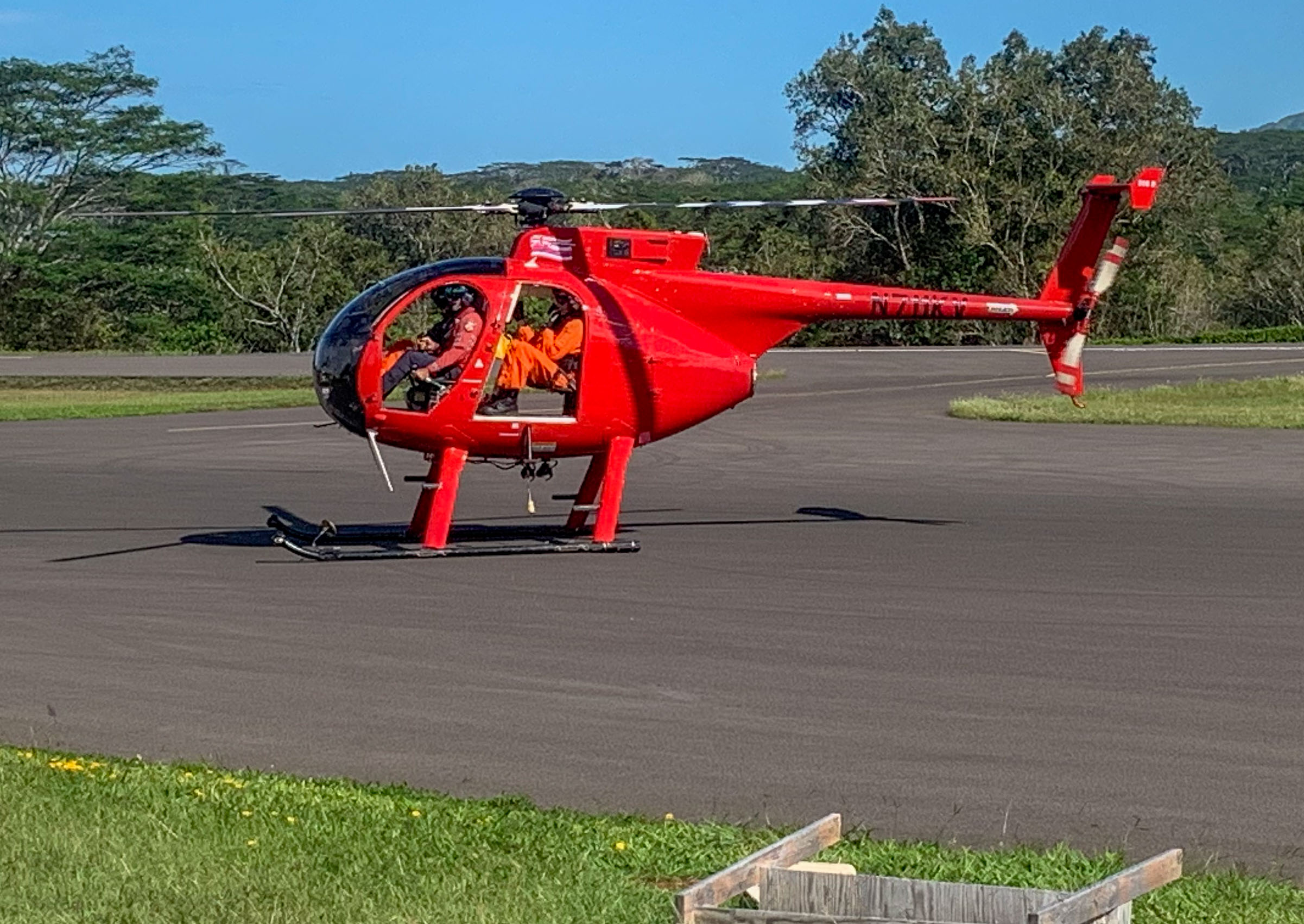
The Kauaʻi County Council has advanced a proposal to establish three permanent helicopter pilot positions within the Kauaʻi Fire Department, a move intended to preserve experienced aviation personnel who know the island’s unique terrain and to strengthen the county’s emergency response.
The proposal, introduced by Fire Chief Michael Gibson, would transition the department from contracted pilot services to county-employed pilots following the end in September of its long-standing contract with Airborne Aviation.
According to the proposed ordinance, the county’s fiscal 2027 operating budget would be amended to appropriate $383,398 from the General Fund for the three positions and associated employee benefits.
The funding would cover an estimated seven months of salaries and benefits during the fiscal year, which ends June 30, 2027.
Gibson told council members the department has relied on Airborne Aviation for pilot services since the county acquired its first Fire Department helicopter in 2010.
He thanked the company for its years of service and said its decision to discontinue operations prompted the county to move forward with a transition that officials had been evaluating for several years.
“This isn’t simply about replacing the contractor,” Gibson said. “It’s about taking the next important step in the evolution of our aviation program.”
The Kauaʻi Fire Departmentʻs current helicopter provides critical support for search-and-rescue missions, remote-area emergencies, ocean and wilderness incidents, firefighter and rescuer transport, and wildland firefighting.
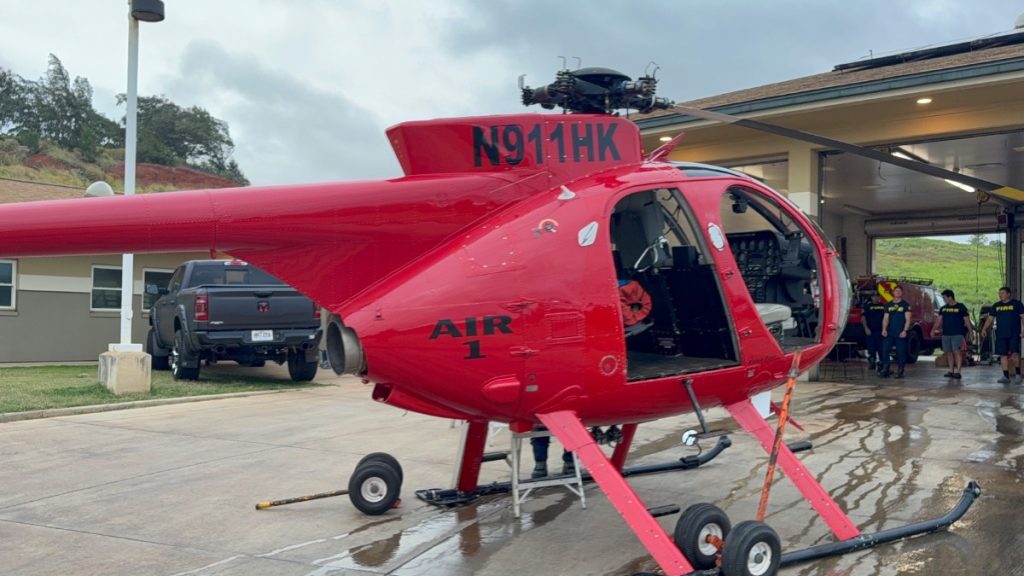
Kauaʻi’s mountainous terrain, extensive coastline and limited road access to some areas make aviation an important component of emergency response.
Gibson also added that retaining the department’s current pilots was a key consideration in developing the proposal.
Their familiarity with the island’s terrain, established working relationships with firefighters and rescuers, and operational experience would help preserve institutional knowledge and maintain safety during the transition.
He also pointed to succession planning and a structured training program as important elements of the county’s long-term aviation strategy.
The change comes as the department prepares to receive a new twin-engine helicopter.
In January, the County Council approved contract provisions to proceed with purchasing a new Airbus H145D twin-engine helicopter, which fire department officials say will improve emergency response.
Gibson said establishing county-employed pilots would help ensure the staffing, training, oversight and accountability needed to support the aircraft and the department’s broader aviation program.
The proposed positions would be funded using money previously budgeted for contracted aviation services. According to Gibson, the county had been paying about $854,000 annually under its previous contract, including approximately $687,000 for helicopter pilot services and $165,000 for maintenance.
The $383,398 requested in the proposed ordinance represents the estimated cost of the three positions for the remainder of the current fiscal year, rather than their full annual cost.
Gibson said the department calculated the staffing costs using the previous annual pilot-services allocation, with employee benefits included.
“Moving to county employment also could offer greater stability for the pilots while helping the department retain their expertise over the long term,” he said.
Gibson cited Honolulu’s established county-operated helicopter program and Hawaiʻi County’s ongoing transition toward employing its own pilots as examples of similar approaches.
Council members expressed support for retaining the experienced pilots and improving stability for personnel involved in dangerous rescue operations.
The ordinance also would establish how the county would directly manage its aviation personnel, with the Fire Department seeking to develop a sustainable program that includes professional qualifications, training, operational supervision and safety standards.
A public hearing is scheduled for Nov. 25.