


Hawaiian Airlines recently hosted a practice flight for more than 250 travelers with disabilities and their families to help them become more comfortable with air travel.
The simulation took place Sunday at Honolulu’s Daniel K. Inouye International Airport, allowing people with disabilities to practice every step of a journey, from check-in to taxiing, according to Alaska Air Group News.
Families checked in at the ticket counter, passed through security, found their departure gate and boarded an Airbus A330 that later taxied around the airport.
The event was organized in partnership with Never Quit Dreaming, the Hawaiʻi Autism Foundation and the Autism Society of Hawaiʻi.
For people with autism, sensory sensitivities and other disabilities, the flight experience can be challenging with its unfamiliar procedures, crowded terminals and extended periods of sitting, said Kristopher Dung, director and founder of Never Quit Dreaming, a nonprofit that provides activities for island residents with special needs.
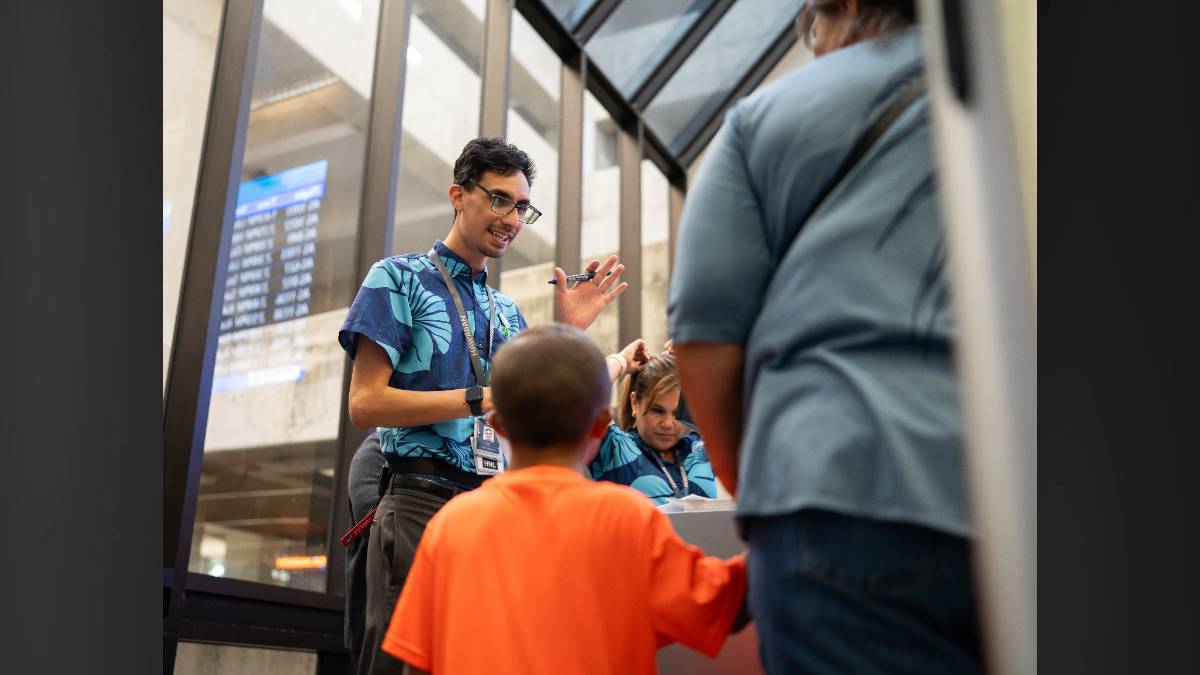
“Practice flights offer an opportunity to experience these situations in advance and better understand how their children or family members may respond,” Dung said. “These practice flights are really important for our families because it exposes them to the unknown.”
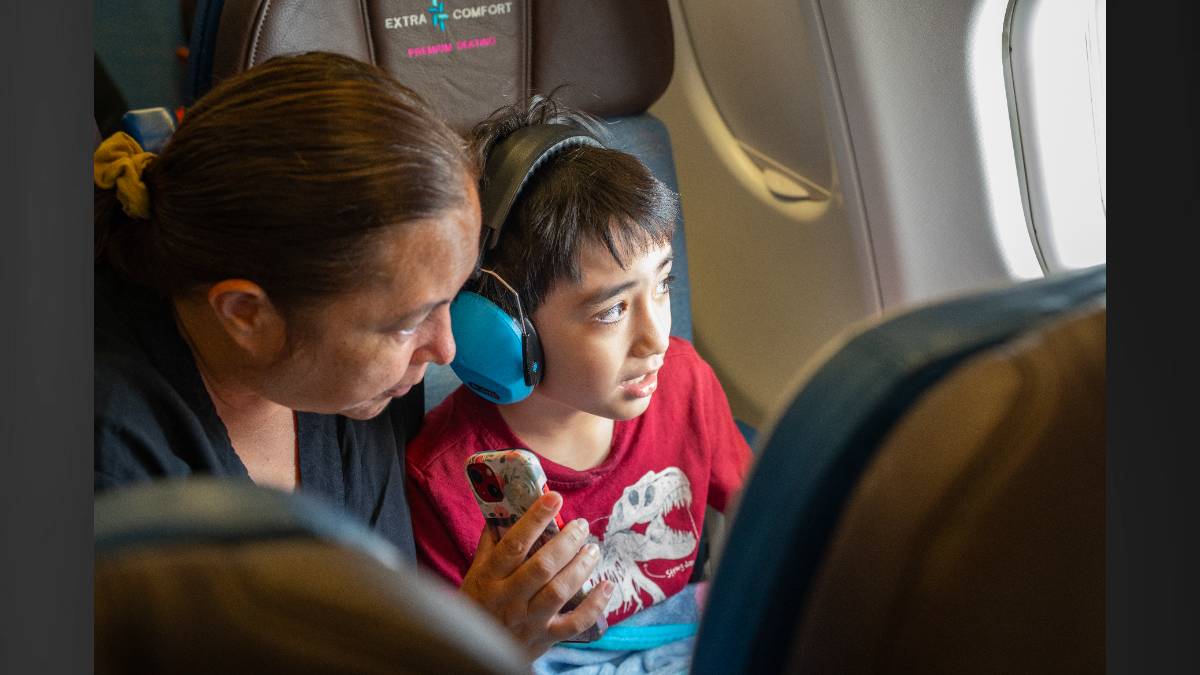
Reid and Sandra Moriyama, who have never flown as a family, were among the participants. The couple has hesitated to plan a trip without knowing how their two sons would react to the unfamiliar environment.
To their surprise, their younger son eagerly entered the airport, walked down the jet bridge and was among the first to board the plane. The experience was so positive, the Moriyamas are hoping to fly to Disneyland in the future.
Practicing in a comfortable environment is especially important for people with disabilities who live in Hawaiʻi, where air travel is necessary to reach destinations beyond the islands, said Julia Wilson, a board-certified behavior analyst representing Hawaiʻi Autism Foundation.
Once everyone had boarded, Wilson said one moment stood out to her. “As soon as the safety briefing came on the screen, every child in that plane immediately had their eyes locked right on that safety screen,” she said.
The event marked Hawaiian Airlines’ return to hosting practice flights in Honolulu following a similar program in 2016. Alaska Airlines also organizes similar flights for travelers with disabilities, typically hosting several events annually.
This was the first time the practice flight was held on a widebody aircraft, allowing more people to participate.
“Hosting the largest-ever disability practice flight allows us to give more individuals and families the opportunity to experience air travel in a supportive environment,” said Shelly Parker, head of Hawaiʻi guest operations for Hawaiian Airlines.
“We want every guest to feel welcome and confident when they travel with us,” Parker said.