


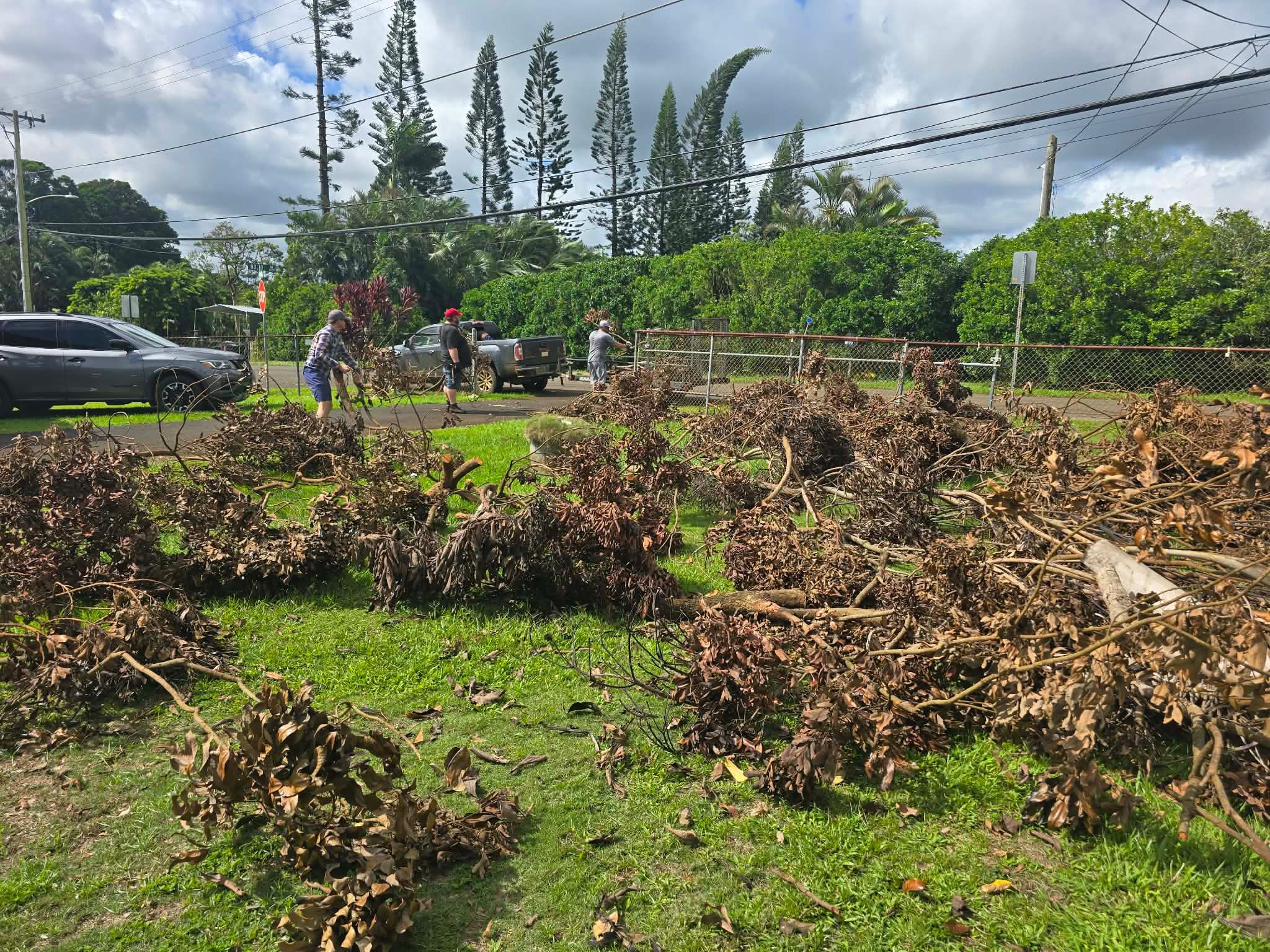
Six weeks after Hurricane Lowell impacted communities across Kauaʻi, local community organizations are working to distribute more than $364,000 in relief.
Through donations from hundreds of individuals, businesses, foundations, and community organizations across Hawaiʻi and beyond, Mālama Kauaʻi has quickly distributed over $350,000 directly to those who experienced significant losses and damages. Their grant program has provided an average of $2,000 in assistance per recipient, helping 161 households, farms, ranches, cultural sites, and fishing businesses heavily impacted by the storm.
Kauaʻi United Way has distributed $14,000 to more than 50 families on Kauaʻi and Niʻihau that have faced major disaster following Hurricane Lowell, $19,000 in roof tarps, and cleaning and first aid supplies.
Aloha United Way has also been managing the 211 hotline to assist residents in inputting their information into the Voluntary Organizations Active in Disaster (VOAD) request for assistance form and providing referrals.
Beyond direct financial assistance, the response has demonstrated how sharing information and coordinating services can reduce duplication, identify unmet needs, and deliver help more quickly.
Through a common VOAD request for assistance form, participating organizations have been able to connect survivors with different types of support without requiring them to repeatedly navigate separate intake processes.
Various community resilience hubs and volunteer groups, such as Anaina Hou Community Park and Kauaʻi Rotary Clubs, also used the results of the intake form to provide direct relief on the ground.
“By having a consolidated list of people in our community who requested assistance, we were able to reach those who didn’t know about our resilience hub, delivering supplies like food, water, ice, and roof tarps, and coordinating wellness checks,” said Anaina Hou CEO Ben Karon.
For other organizations, it allowed them to serve targeted audiences islandwide.
“A single intake form allowed us to quickly identify māmā and pēpē in need and connect them with resources,” said Kāhealani Collins, Program Director at Kalauokekahuli. “Families were already dealing with so much, and this allowed us to bring resources directly to them rather than asking them to navigate another complicated application process.”
“One māmā requested assistance with food and water, and we found out she had lost baby supplies and a refrigerator,” Collins continued. “Through the collective efforts of our community partners, we were able to get all of those needs met within 24 hours.”
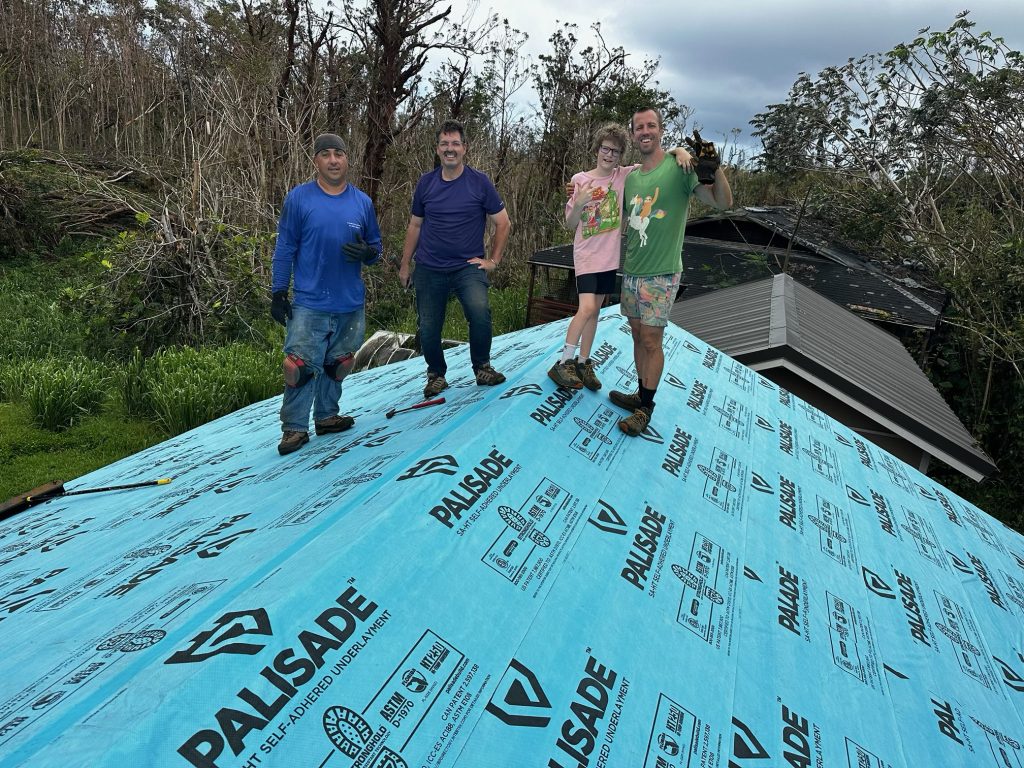
The final day to turn in VOAD emergency relief assistance intake form is Saturday, Oct. 24. Then, groups will transition their efforts toward longer-term recovery, rebuilding, and coordinated community support.
“We might not have FEMA individual assistance, but we have our community,” said Megan Fox, Executive Director of Mālama Kauaʻi. “It’s been amazing to see this funding and support get directly into the hands of our neighbors, but we also recognize that what we’ve been able to provide is painfully small compared to the losses we’re witnessing.”
While immediate disaster response efforts are beginning to wind down, many Kauaʻi residents are only now confronting the full financial toll of Hurricane Lowell. Families are navigating damaged or uninhabitable homes, displacement in an already strained housing market, insurance disputes, high deductibles, and lost income.
“We’re seeing uninsured homeowners struggling with major damage, with some experiencing costs exceeding $100,000. Even residents with insurance are reporting deductibles as high as $50,000 to $60,000,” says Laurie Roberts, a Community Care Manager at Mālama Kauaʻi. “Storm damage is also affecting renters, who are being served eviction notices. The housing crisis has become even more pronounced, and we need to provide long-term support to those who are still navigating major losses.”
To date, the VOAD request for assistance form has received over 600 requests for assistance, highlighting the substantial gap between available emergency funding and the actual cost of recovery.
“A small emergency grant might help someone get through the week, but it won’t rebuild their home,” Fox said. “We can’t confuse the end of the emergency response phase with the end of the emergency for the people living through it. So by closing out this part of our programs, we can see what is left to hopefully help those who are uninsured or most greatly under-resourced a bit more.”
VOAD is encouraging residents who experienced significant Hurricane Lowell damage to their home that have not yet applied for assistance to submit their applications by Saturday, Oct. 24.
Applications can be submitted at tinyurl.com/KauaiVOAD. There will be application help available from 10 a.m. to 2 p.m. at the Hanapēpē Library on Saturday, Oct. 24.
Previous applicants do not need to reapply, but can provide updates on their repair estimates and insurance coverage limits by emailing response@malamakauai.org. Applications are subject to review, an on-site assessment, and funding limitations of various organizations; support cannot be guaranteed.
The close of the emergency relief application period will not be the end of the community’s commitment to disaster recovery. As immediate financial assistance winds down, organizations are shifting their focus toward the more complicated and sustained work of helping Kauaʻi recover.
Priorities include connecting impacted residents with housing, rebuilding, financial assistance, and case management resources; coordinating skilled volunteers and community partners for cleanup and repairs; supporting damaged farms and ranches in restoring production; and strengthening collaboration among organizations providing recovery services.
A key priority is advancing a coordinated, survivor-centered disaster response system built around the principle of “One Family, One Form.”
The initiative calls for nonprofits, government agencies, and community partners to work together over the next six months to develop a shared intake and case management system, reducing the burden on disaster survivors who currently must navigate multiple organizations and repeatedly submit the same information.
The next Kauaʻi VOAD meeting is scheduled for Nov. 6, providing an opportunity for organizations involved in hurricane recovery to connect, coordinate ongoing efforts, identify gaps in services, and discuss priorities for longer-term recovery.
Nonprofits, government agencies, community groups, faith-based organizations, and other partners interested in participating in the VOAD network or collaborating on recovery initiatives are encouraged to contact Mālama Kauaʻi at response@malamakauai.org for more information.
“People who have lost their homes shouldn’t have to spend months telling their story over and over to different agencies just to get help,” said Lori Almarza of Kauaʻi United Way. “We have an opportunity to come out of this disaster with stronger partnerships, better systems, and a more coordinated approach to survivor-centered recovery.”
“The response to Hurricane Lowell has shown the incredible strength and generosity of our Kauaʻi community. Thousands of volunteers, donors, businesses, and organizations have come together to help our neighbors in need,” said Scott Bacon, Kauaʻi VOAD Chair. “But the road to recovery is still long, and no single organization can meet all of the needs ahead. By continuing to work together, sharing resources, and coordinating our efforts, we can help ensure that those still struggling are not forgotten.”
“While we cannot guarantee that every need will be met, this coordinated approach gives each household the best possible opportunity to receive the assistance they need to recover,” he added.
For emergency assistance applications and updated recovery resources, visit MalamaKauai.org/hurricane for a variety of relief programs.
Organizations interested in participating in coordinated long-term recovery efforts or the Nov. 6 VOAD meeting should contact response@malamakauai.org.