


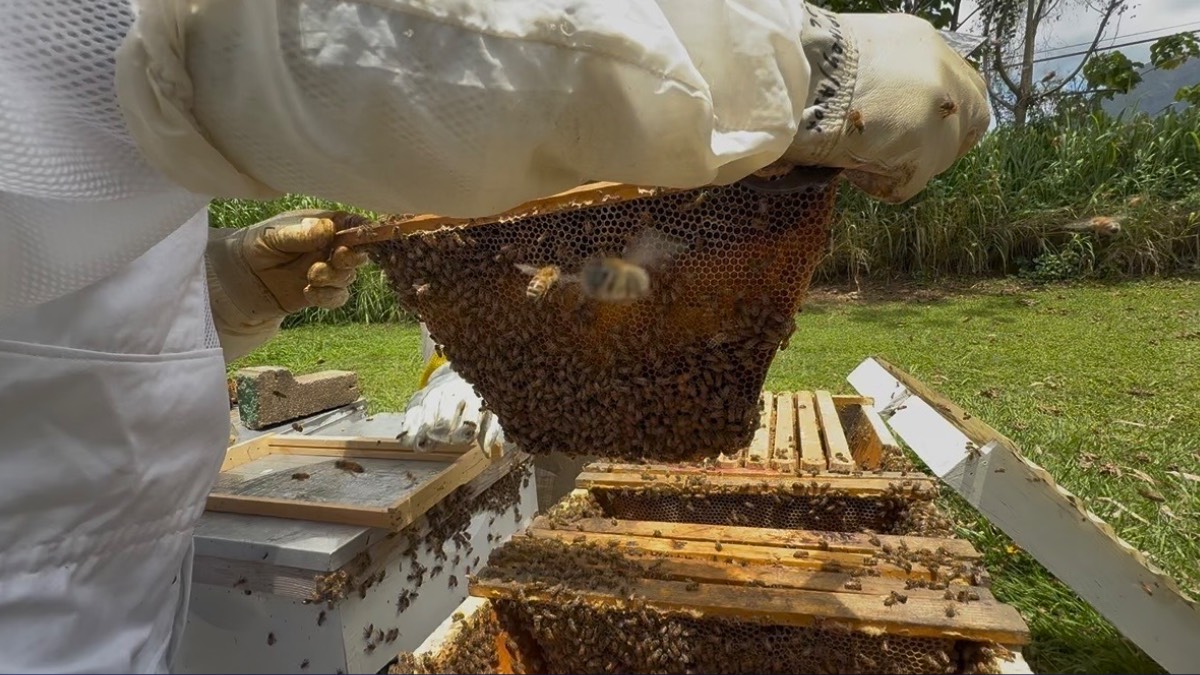
A new honey challenge on Kauaʻi has been created after discussions about a Kaua’i County Council bill involving bees and rezoning.
Ariel Bishop, a beekeeper and educator of bees, said discussions about Bill 2997 — which would allow apiaries in a wide range of zoning districts, including agriculture, and establish rules for beehive replacement, maintenance and public safety across the island — revealed widespread fear and misunderstanding about bees, despite their importance to agriculture and ecosystems.
But honey “offers a more approachable way to start that conversation,” she said. “Not everyone is eager to keep bees, but just about everyone can appreciate good honey. So we thought honey could be a fun, approachable way to bring people into the conversation.”
The Kauaʻi Honey Challenge will take place on Oct. 17 at Kauaʻi Community College, where local beekeepers can showcase their harvests of light, medium and dark liquid honey.
A panel of local chefs, sommeliers, food writers, and honey enthusiasts will evaluate the honey. To help keep the process objective, the judges’ identities will remain confidential until after judging, Bishop said. Beekeepers will receive written feedback about their entries, including suggestions for food and flavor pairings.
Judges will assess every honey based on its aroma, flavor and overall complexity.
Then the honey will be brought to the community at the Rice Street Block Party 2026 for a People’s Choice tasting on Saturday, Oct. 24, from 4 to 8 p.m. in downtown Līhuʻe. Tasting will be free.
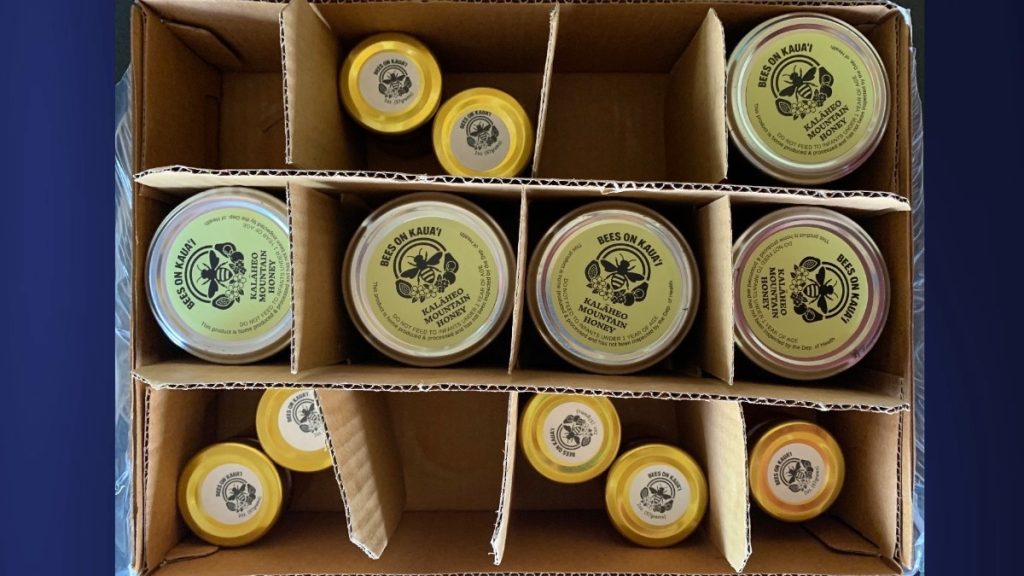
The idea also draws inspiration from the Big Island Beekeepers Association, which has held a statewide honey challenge for about 15 years. Kauaʻi beekeepers have entered the competition over the years, with some winning, and local beekeepers eventually suggested that the island host its own event.
Bishop said she wants the challenge to be an opportunity for beekeepers to learn about different honey harvests and for the public to better understand how the product reflects the environment in which it is made.
Bishop is encouraging as many Kauaʻi beekeepers as possible to enter, saying the variety of entries will help demonstrate how dramatically honey can differ from one part of the island to another.
Kauaʻi’s microclimates, elevations, vegetation and seasonal conditions can influence honey’s color, aroma and flavor. Even beekeepers living close to one another can produce notably different honey.
“There are at least four beekeepers within a mile of their home in Kalaheo, as the bees fly, yet honey harvested in the same month can taste completely different,” Bishop said.
The event aims to create two distinct experiences: one focused on education and feedback for beekeepers, and another that lets the broader community explore locally produced honey.
The event is also an opportunity for the bee community to highlight the importance of bees to Kauaʻi agriculture and the importance of passing Bill 2997.
The bill is not about putting bees everywhere or forcing beekeeping into communities, with some places not appropriate to keep bees, Bishop said. “It’s simply about giving the responsible people the ability to keep bees legally and respectfully, without criminalizing.”
It would also allow apiaries in a wide range of zoning districts and establish rules for hive replacement, maintenance, and public safety.
She also explained why bees are so important to the island, saying, “When the bees disappeared, our gardens and food production changed, too.”
Bees are responsible for approximately 75% of the pollination of fruits, nuts and vegetables across the United States, according to the U.S. Department of Agriculture.
“There’s also something particularly special about doing this on Kauaʻi,” Bishop added. “Our island remains Varroa-free. Varroa mites are one of the most serious threats to managed honeybees, and once they become established, they can have a devastating effect on honeybee colonies and beekeeping.
“Hawaiʻi has already seen the consequences of Varroa on other islands, so maintaining Kauaʻi’s Varroa-free status is something worth protecting.”
In the country, one out of every four bites of food people take is courtesy of bee pollination, which is also responsible for more than $15 billion in increased crop value each year, the USDA said on its website.
This includes Hawaiʻi’s specialized crops, such as avocado, citrus, coffee, cabbage, macadamia nuts, squash, and passion fruit.
Several fruits harvested from the island, impacted by Hurricane Lowell, will pose extra challenges for the future bee population.
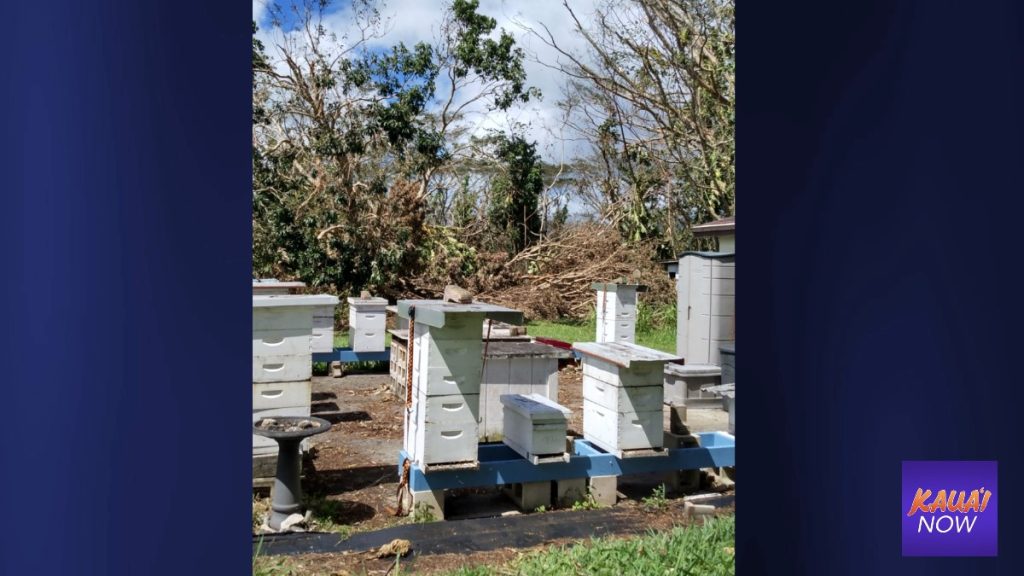
“Many hives appeared to have fared reasonably well, but extensive tree damage has made some apiaries difficult to reach,” Bishop explained.
Some beekeepers were still assessing their hives, while others reported losses associated with rising water. Another concern is the loss of forage — the flowering plants and trees bees rely on for food.
Bishop added that they are leaving “as many of the plants that are currently blooming as I can and will do the trimming later, when there’s more abundance.”
She encourages all Kauaʻi beekeepers to enter their honey. “We’d love to see as many Kauaʻi beekeepers participate as possible.”
The deadline to submit honey harvest entries for judging is Saturday, Oct. 10.
Bishop added: “Honey is not just sweet. Like wine, it can reflect the environment it comes from—the plants, season and location all contribute to its color, aroma and flavor.
“I hope people come away from this event with a greater appreciation for honey, for our local beekeepers, and especially for the bees that make it possible.”