


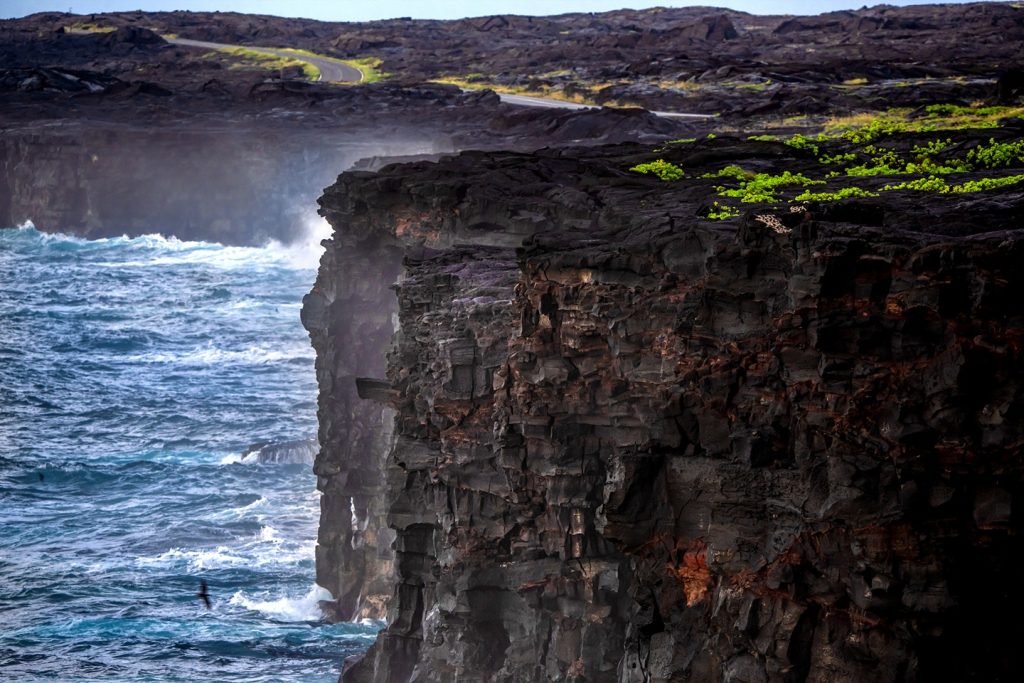
Perhaps one of the most iconic geologic features of Hawaiʻi Volcanoes National Park on the Big Island is gone.
Hōlei Sea Arch toward the end of September collapsed and disappeared into waters of the Pacific Ocean.
The dramatic change marks the latest transformation of the park’s remote and rugged coastline on the southeastern shores of the Big Island, near the end of Chain of Craters Road.
Visitors are urged to stay back from the unstable coastal cliff edges, which drop off vertically into the ocean and present a serious falling hazard.
Photos on social media show people entering the closed area near where the sea arch once stood, putting themselves and first responders at great risk of falling off the rough, wave-swept coast and drowning.
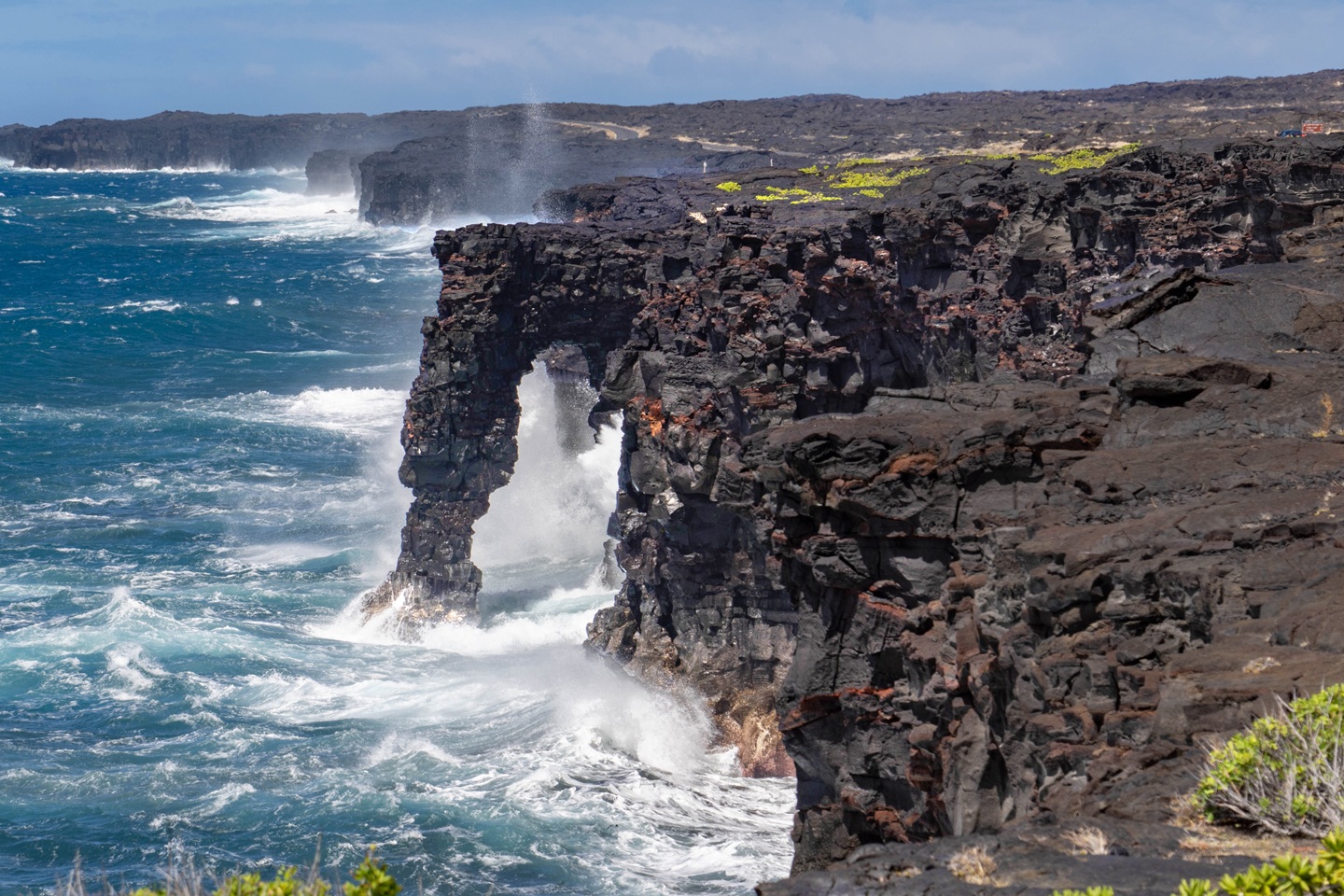
The 90-foot Hōlei Sea Arch was still standing as of Sept. 23 and collapsed by the night of Sept. 27.
Exact time of collapse is unknown; it could have happened when the park was temporarily closed during Hurricane Nolo.
The coastline flanking the sea arch has shown signs of instability for years.
Earthquakes during the 2018 Kīlauea lower East Rift Zone eruption and summit collapse damaged the cliffs near the arch.
New cracks and instability in January 2020 prompted the park to close the original viewing area. A safer viewing area further from the cliff edge opened in March 2020.
Massive surf from Tropical Storm Darby in 2022 broke off a chunk of rock from the lower part of the arch.
Visitors to the national park are required to stay out of closed areas and away from cliff edges, which are unstable and can collapse without warning.