


Update 3:30 p.m., Oct. 1: The water quality advisory for Wai‘ohai Beach on Kaua‘i has been canceled.
Water sample testing results show that the enterococci levels no longer exceed the threshold level, state health officials said.
Original post: State health officials advise the public that a bacteria threshold exceedance advisory is in effect for Wai‘ohai Beach on Kaua‘i.
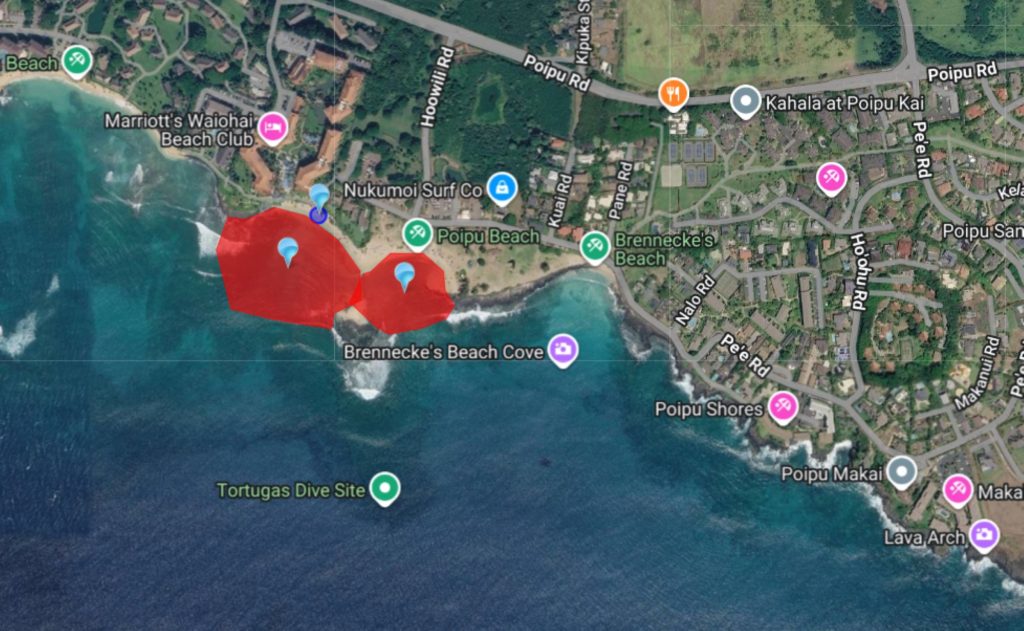
Water quality exceedance of enterococci in the water at the beach of 150 per 100 mL was detected during routine beach monitoring. The advisory is posted because of potentially harmful amounts microorganisms such as bacteria, viruses, protozoa or parasites could be present in the water.
Swimming at beaches with pollution in the water can make you ill.
Children, the elderly and people with weakened immune systems are the most likely to develop illnesses or infections after coming into contact with polluted water, usually while swimming.
The advisory will remain in effect until water sample results no longer exceed the threshold level of 130 enterococci per 100 mL.
Fortunately, while swimming-related illnesses can be unpleasant, they are usually not very serious — they require little or no treatment or get better quickly upon treatment, and they have no long-term health effects.
The most common illness associated with swimming in water polluted by fecal pathogens is gastroenteritis, which occurs in a variety of forms that can have one or more of the following symptoms:
- Nausea.
- Vomiting.
- Stomachache.
- Diarrhea.
- Headache or fever.
Other minor illnesses associated with swimming include ear, eye, nose and throat infections. In highly polluted water, swimmers can occasionally be exposed to more serious diseases.
Not all illnesses from a day at the beach are from swimming.
Food poisoning from improperly refrigerated picnic lunches also can have some of the same symptoms as swimming-related illnesses, including stomachache, nausea, vomiting and diarrhea.
At any given time and place, people are constantly exposed to a variety of microorganisms that have the potential of making them ill.
Visit the Clean Water Branch website and U.S. Environmental Protection Agency website for additional information.