


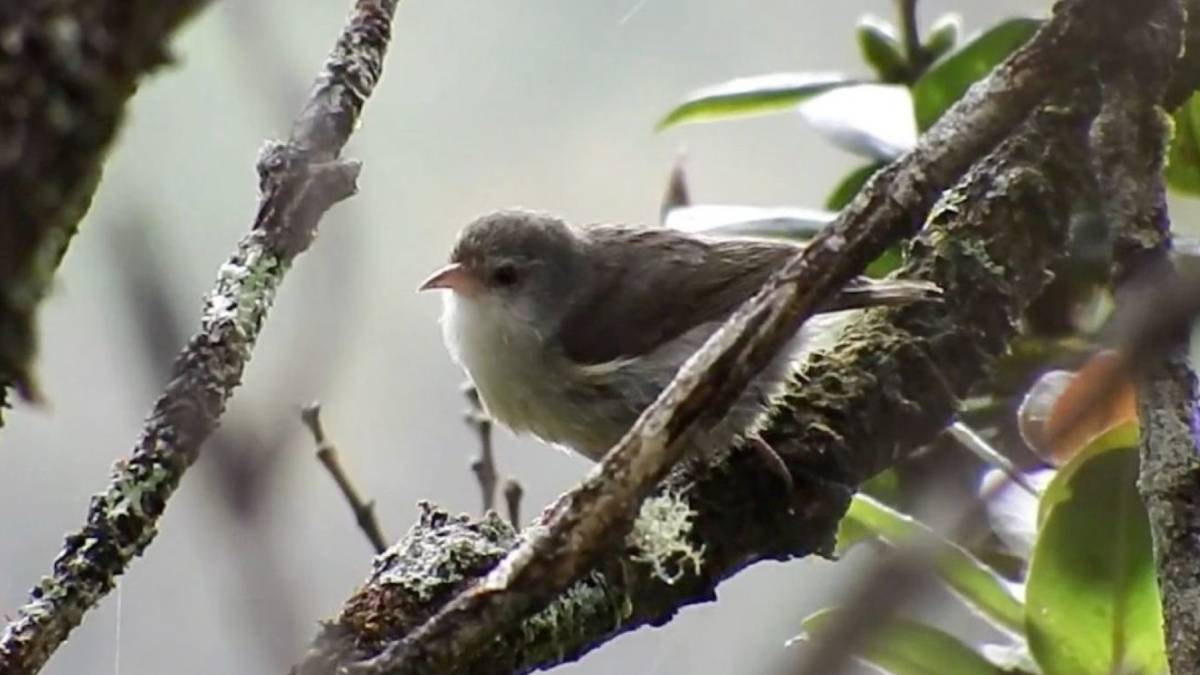
Kaua‘i County Council on Aug. 26 honored the life and legacy of a very special individual.
She did more to try and save ‘akikiki — a critically endangered species of endemic honeycreeper unique to Kaua‘i — than anyone. Her primary contribution was a single-minded determination she carried her entire life: to bring more ‘akikiki into the world.
Her name: Pakele. She was the last known wild ‘akikiki on the Garden Isle.
Pakele was likely born during spring 2019, hatched in a mossy nest high in an ʻōhiʻa lehua tree. Conservation field biologists first met her as a young female sitting quietly on a nest of two eggs in fall 2020.
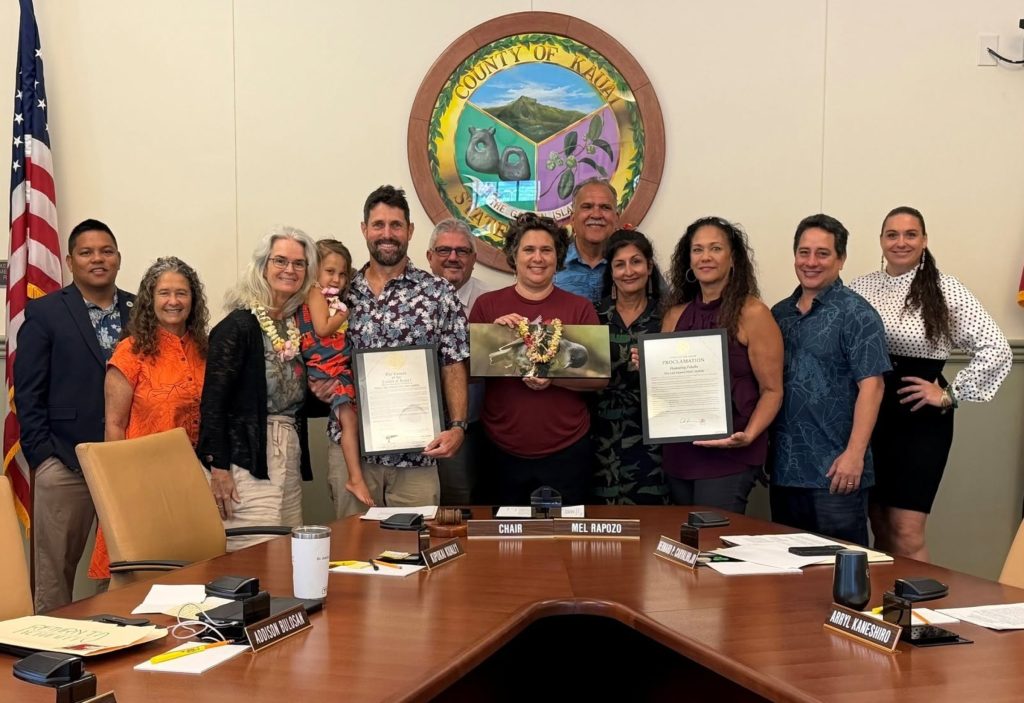
“This was a remarkable moment, as she was the first — and only — ‘akikiki ever observed breeding in the off-season,” says a post on the Kaua‘i County Council Facebook page. “This dedication to raising more young ‘akikiki lasted her whole life. Field biologists observed a total of 13 nesting attempts [throughout] her life, more than any other ‘akikiki.”
Pakele was the only ‘akikiki to ever successfully fledge three nests — hatching 6 young — in a single year.
Her life came at an interesting time for her species.
Invasive mosquitoes were spreading across the Alaka‘i Plateau, spreading avian malaria. She watched as the rest of her species died around her as a result.
There were dozens, if not hundreds, of ‘akikiki remaining in the wild when Pakele was born.
Her older mate — perhaps of many years — disappeared in May 2023. She then took a young male as her new mate, and two of their young are now part of a breeding flock at a bird conservation center operated by San Diego Zoo Wildlife Alliance. Her second mate disappeared in July 2023.
Then she was alone.
Her species is now considered functionally extinct. Its best and only chance for a viable future lies with captive ‘akikiki — including Pakele’s final two fledglings — at the San Diego Zoo bird conservation centers.
Pakele moved in 2024 to a new territory far to the south, where she built her final nest, but she had no mate; she laid no eggs. She soon returned to her original territory.
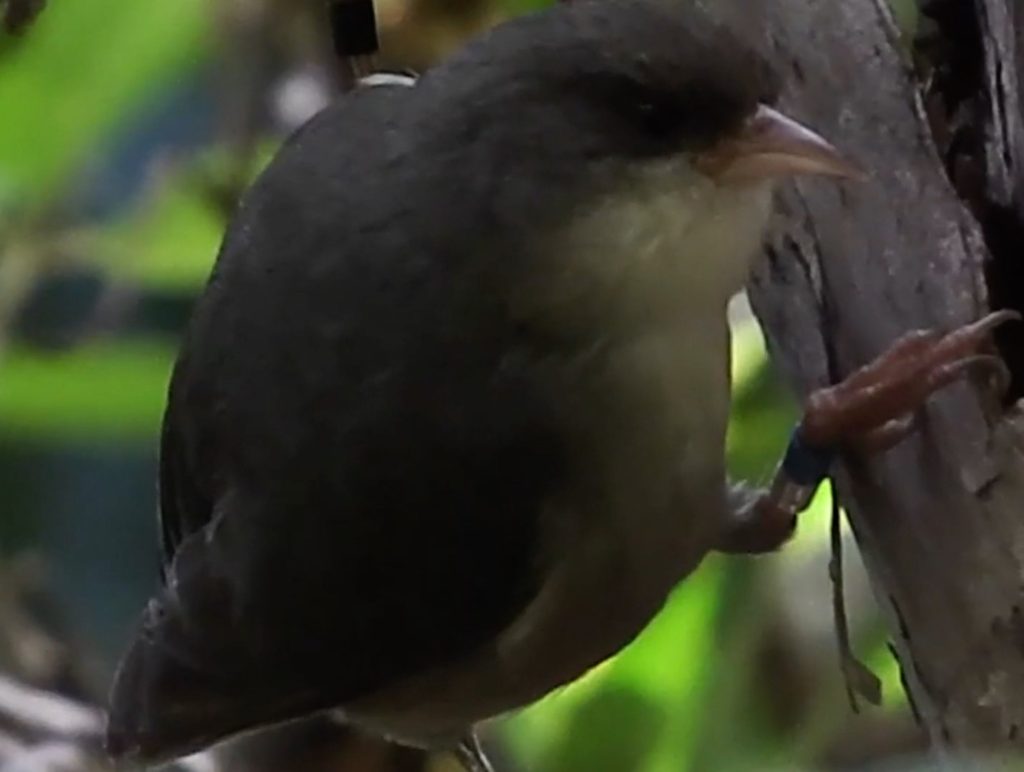
She remained there, visited on and off throughout the months and years by field biologists. Three biologists spent a quiet afternoon with her a year ago on Aug. 29, 2025, as she flew a solitary — and likely lonely — path up and down her valley.
They had no way of knowing it would be the last known sighting of a wild ‘akikiki.
Pakele has four total offspring now part of a larger conservation breeding flock living in protected aviaries, “which is now our source of hope for someday returning this unique species to the mountain forests of Kaua‘i where they belong.”
“Our gratitude also extends to the Kaua‘i Forest Bird Recovery Project, Hawaiʻi Division of Forestry and Wildlife, U.S. Fish and Wildlife Service, The Nature Conservancy, American Bird Conservancy and San Diego Zoo Wildlife Alliance for their hard work ensuring that a future exists for ‘akikiki,” the council’s post says.
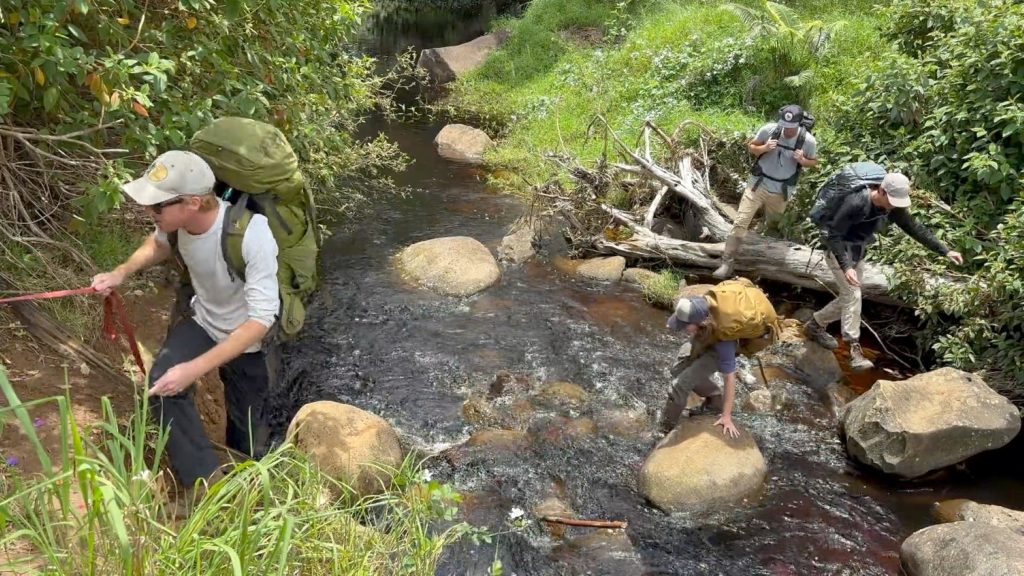
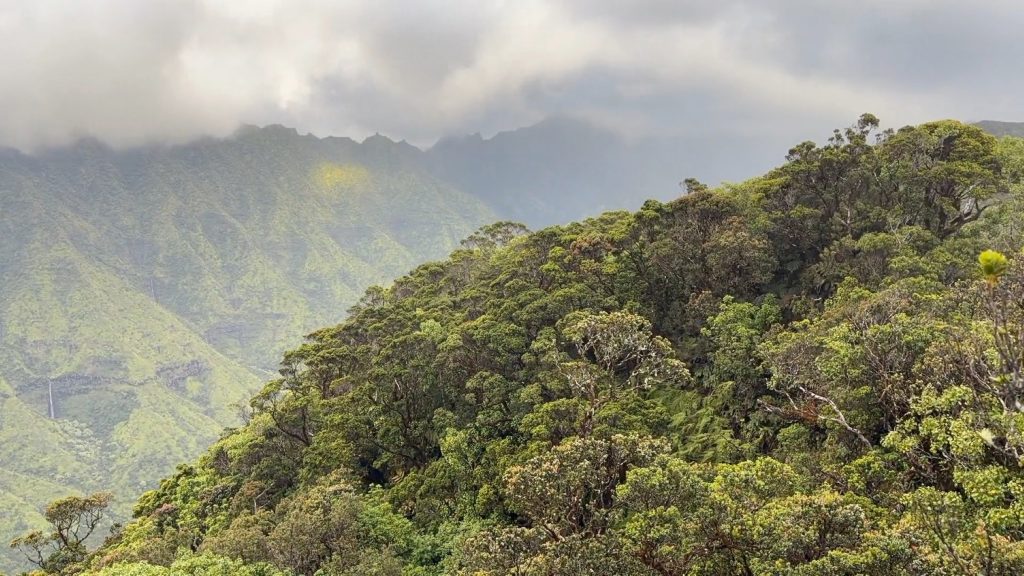
When a group of men hiked into the remote mountain valley in April 2024 on Kaua‘i that Pakele called home, they knew it could be the last time they would ever see an ‘akikiki in the wild.
“This was kind of a trip to say goodbye,” said longtime field supervisor for Kaua‘i Forest Bird Recovery Project Justin Hite in a July 1, 2024, Hawai‘i Department of Land and Natural Resources release.
Hite explained at that time that the ‘akikiki population was already down to, at most, a handful of individuals, “maybe even fewer.”
“What do you do at the end of a species? They don’t take any solace from us coming to visit,” he said. “It was much more about us wanting to be able to say goodbye and to get around them one last time.”
The decline of ‘akikiki during recent years was predicted and precipitous, even despite their population once numbering in the thousands flying throughout Kaua‘i’s valleys and ridges of native forest.
Just when a broad collaboration of government agencies, nonprofits and countless individuals seemed to be making inroads in protecting the critically endangered birds from predators such as cats and rats, the scourge that is avian malaria upset the equation.
Global warming forced disease-carrying mosquitoes to the higher elevation habitats of the ‘akikiki and other Hawaiian honeycreepers.
One by one, the deadly disease has picked them off.
“That is the tragedy, right?” asked Lisa “Cali” Crampton with Kaua‘i Forest Bird Recovery Project in the 2024 state release. “We are seeing this climate disaster, so I apologize [to the ‘akikiki] for what we have done as people. I do want the ‘akikiki to know that we really appreciated getting to know them.”
Crampton added that were it not for the avian malaria crisis, people likely would not have gotten to know the Kaua‘i honeycreepers as well as they have, “and come to love them as well as we have.”
Their plight reaches far and wide — schoolchildren in India named an asteroid after ‘akikiki.
The team kept an eye out for one female particular during their April 2024 trip. It was Pakele.
“We met her in 2020 and she was exceptional from the start,” Hite said.
In Hawaiian, Pakele means “to escape,” and throughout three seasons in a row she had successful nests, possibly while being infected with malaria.
“She’s like, it doesn’t affect me,” Hite added. “She’s kind of this incredible individual.”
Field teams for more than a decade forged personal connections with the birds, naming them and instantly knowing them from their multi-colored leg bands.
“This is much harder to talk about than I thought it was going to be,” Hite said in July 2024. “Just recapturing the emotions that we felt, as we know these birds. In my case I spent 10 breeding seasons up on the [Alaka‘i Plateau].”
A spiritual connection, as Crampton described it 2 years ago, is one layer of the extinction of ‘akikiki.
“That’s represented now by one bird like Pakele still being out in the wild,” she said then, not knowing she was speaking about the bird who eventually would become the last of her kind in the wild.
Pakele represented the hope members of the public as well as cultural practitioners had for the species because she just kept going. The dream she would find another mate — even though they wouldn’t have been able to sustain a wild population — kept people’s hope undiminished.
Sadly, her disappearance last fall was not the hoped for outcome.
But hope springs eternal, and through the efforts of organizations such as San Diego Zoo Wildlife Alliance and their conservation ‘akikiki breeding flocks, perhaps one day — after the threat of avian malaria is stamped out, a goal for which several organizations are taking the lead — ‘akikiki can be released back into the high plateau, mountains and deep valleys of Kaua‘i.
“Kaua‘i County Council proudly honors Pakele’s extraordinary life and enduring legacy as a symbol of hope and resilience for the ‘akikiki,” says the council’s Facebook post. “May her story inspire continued efforts to protect Kaua‘i’s native forests and ensure that her species may one day thrive in the wild once again.”