


The public is encouraged to view the final environmental impact statement for proposed use of the Pacific Missile Range Facility by the U.S. Navy and Kōkeʻe Park Geophysical Observatory by the National Aeronautics and Space Administration (NASA).
The Navy’s proposal involves maintaining the use of 8,172 acres of state lands on Kauaʻi for operational continuity and sustaining military training, testing, and facility operations at the Pacific Missile Range Facility.
NASA’s proposal involves maintaining the use of 23 acres of state lands on Kauaʻi to support continued operations including measurements of the Earth’s rotation and local land motion at Kōkeʻe Park Geophysical Observatory.
Potential environmental consequences were analyzed because the existing real estate agreements for these state lands are set to expire between 2027 and 2030.
The Navy’s use of these state lands is required to maintain technological and safety capabilities supporting Pacific Missile Range Facility training and testing.
The environmental impact statement also ensures the continued conservation management by the Navy and NASA of natural and cultural resources on these lands.
Navy training and testing operations do not occur on these state lands. The environmental effects of Pacific Missile Range Facility training and testing operations are fully analyzed in previous, focused environmental documents referenced in section 1.5 of the final environmental impact statement.
For NASA, these state lands are critical to maintain data collection efforts of global significance.
For the Board of Land and Natural Resources, in addition to its role as the lessor of state lands, the proposed real estate action presents an opportunity to secure a revenue source to support its management of public lands and associated environmental and conservation programs.
Fees from leases and easements would be put into a state fund. Twenty percent of ceded lands revenue (fees from the leases and easements) would go to the Office of Hawaiian Affairs, and the rest to the Special Land Development Fund as required by law.
By ensuring continued Navy and NASA operations on Kauaʻi, the real estate action would preserve local jobs and income for Kauaʻi residents, contribute to the overall economic well-being of Kauaʻi, and maintain continued conservation management of natural and cultural resources on state lands at no cost to the state of Hawaiʻi.
The final environmental impact statement analyzed the potential environmental effects of the proposed action and alternatives, including the no-action alternative.
The final environmental impact statement satisfies both federal and state of Hawaiʻi requirements and provides the necessary analyses to allow the Navy, NASA, and the Board of Land and Natural Resources to consider the environmental effects of the proposed action as part of their decision-making.
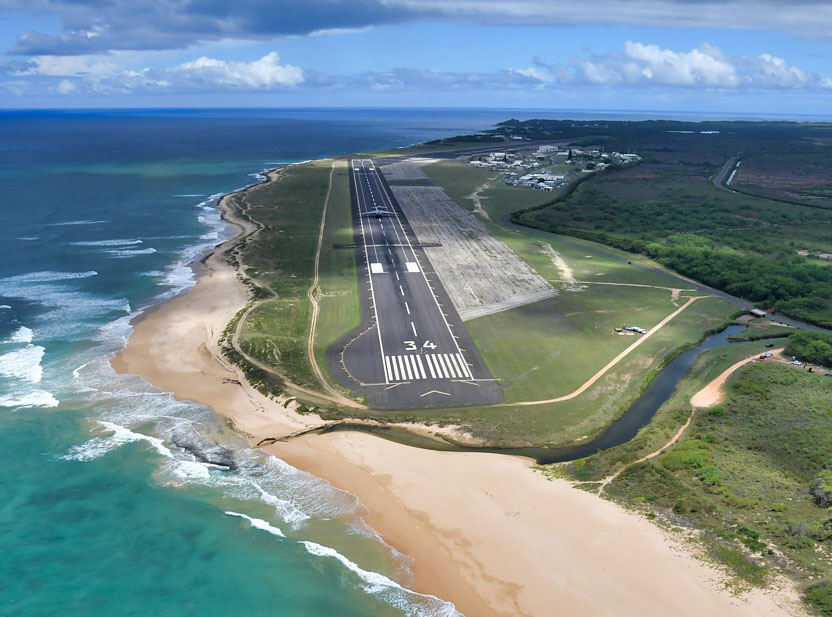
U.S. Navy and the Pacific Missile Range Facility
The U.S. Navy’s Pacific Missile Range Facility is the world’s largest instrumented multi-domain training and testing facility that offers simultaneous capability to support surface, subsurface, air, and space operations.
Located on the southwest coast of Kauaʻi, the facility is essential for Department of Defense training, research, development, testing, and evaluation. It supports operations from single-unit exercises to large-scale multiple-unit training events.
For portions of Pacific Missile Range Facility, the Navy has real estate agreements with the state of Hawaiʻi for 8,172 acres, comprising 684 acres of leaseholds and 7,488 acres of easement lands. Most of the leasehold and easement areas remain undeveloped as they are passively used as encroachment buffers and security for the range’s mission.
On Kauaʻi, the Navy is the largest high-tech employer and third-largest overall employer. Most of the 900 personnel at the Pacific Missile Range Facility are civilians, including many from the local community. It contributes approximately $150 million annually in salary, contract goods, and services to the local economy.
The Navy’s current leases and easements support mission readiness, access, and utilities at five locations: Main Base, Kamokala Ridge, Mānā Water Well, Miloliʻi Ridge, and Mākaha Ridge.
For more information on the Pacific Missile Range Facility, visit the U.S. Navy’s website.
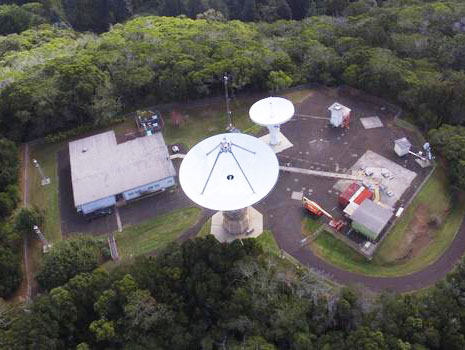
NASA and the Kōkeʻe Park Geophysical Observatory
The Kōkeʻe Park Geophysical Observatory is located on a remote ridge within Kōkeʻe State Park in the western portion of Kauaʻi, allowing NASA to collect geodetic data about the Earth’s shape, orientation in space, and gravity.
This data supports modern navigation technology such as the Global Positioning System that is used daily in a wide variety of devices, from handheld smartphones to satellites. Additionally, the data is used for scientific studies, spacecraft navigation, and the geolocation of Earth observations.
Continued operation of Kōkeʻe Park Geophysical Observatory is needed to ensure these data-related operations of global and local significance can continue, allowing multiple agencies’ missions to persist without interruption.
NASA operates on 23 acres, comprising 16 acres of leaseholds and 7 acres of easement lands, across five parcels along a one-mile stretch of road in Kōkeʻe State Park.
The Navy was issued a use permit in 2016 for portions of Kōkeʻe Park Geophysical Observatory to conduct radar, telemetry, and communications services in support of Pacific Missile Range Facility operations.
More information about Kōkeʻe Park Geophysical Observatory can be found on NASA’s website.
Public Involvement
The Navy and NASA held a public comment period on the draft environmental impact statement from June 20, 2025, to Aug. 7, 2025. During the public comment period, the Navy and NASA held three public meetings in Līhuʻe, Kekaha, and Kapaʻa to provide project information to the public and receive comments.
The meetings were also available online. The final environmental impact statement includes responses to comments received on the draft statement. It also includes updates in response to substantive comments received.
Additionally, the Navy and NASA propose to implement enhanced engagement under the alternatives. These enhancements were developed in response to feedback received from the public during the scoping and public comment periods.
Comments indicated that increased communication with the public and regulatory agencies regarding several ongoing programs could improve mutual understanding and cooperation. Additionally, comments pointed to programs that, moving forward, could bridge the gap between the military and the community.
This enhanced engagement is meant to be this bridge. Enhanced Engagement-4, Pacific Missile Range Facility Kauaʻi, is a quarterly newsletter distributed to over 300 individuals and organizations, created as part of this environmental impact statement process and public feedback.
Next Steps
The notice of availability of the final environmental impact statement will be published in the “Federal Register” on Aug. 21, 2026. Following publication of the final environmental impact statement in “The Environmental Notice” on Aug. 23, the Board of Land and Natural Resources will determine the acceptability of the final statement in accordance with the Hawaiʻi Environmental Policy Act and publish their determination in “The Environmental Notice.”
The Board of Land and Natural Resources meeting will be held on Friday, Sept. 11. A 60-day Hawaiʻi Environmental Policy Act wait period follows the board’s publication of their determination.
The Navy and NASA will publish their own record of decision following a 30-day wait period. The record of decision is a concise public record addressing the Navy’s and NASA’s decisions, respectively.
Final Environmental Impact Statement Availability
The Navy and NASA encourage the public to view the National Environmental Policy Act version of the final environmental impact statement and Hawaiʻi Environmental Policy Act version (showing changes from draft to final) of the final environmental impact statement.
Both the National Environmental Policy Act and Hawaiʻi Environmental Policy Act versions of the final environmental impact statement are available on the project website. A copy of the final environmental impact statement will be available on the Environmental Review Program’s website and at the Waimea Public Library in Kaua‘i and the Hawai‘i Documents Center in the Hawai‘i State Library in O‘ahu.
For more information visit, PMRF-KPGO-EIS.com