


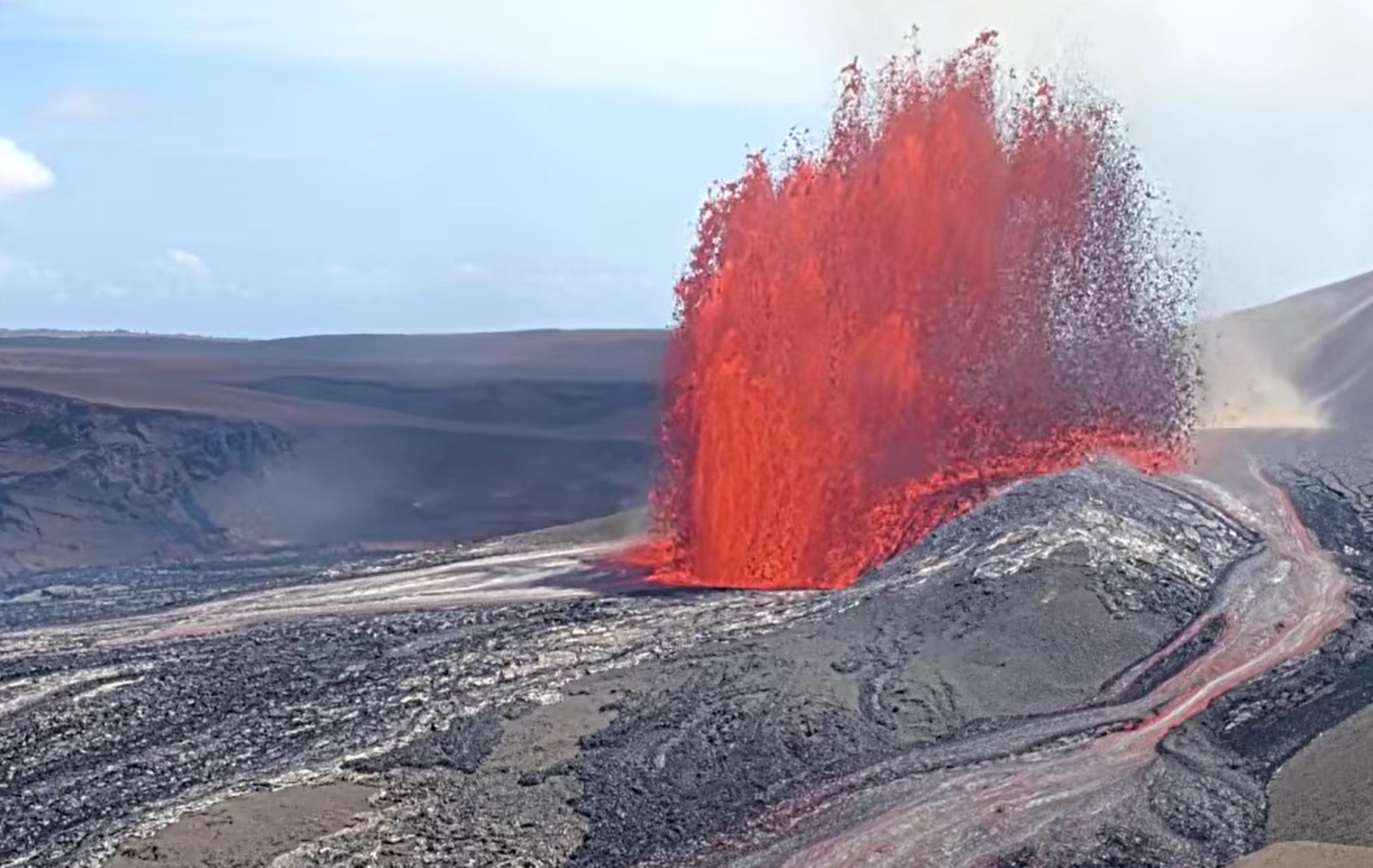
Hawaiian Volcano Observatory reports that Episode 54 lava fountaining of the ongoing episodic summit eruption at Kīlauea volcano on the Big Island ended abruptly at 7:33 p.m. Aug. 25 after 9 hours of continuous lava geysers from the north vent within Halemaʻumaʻu Crater and confined within Hawaiʻi Volcanoes National Park.
Kilauea’s volcano alert level was changed from watch to advisory and its aviation color code from orange to yellow following the end of Episode 54.
Tephra fall from volcanic ash clouds was greatest within 3 miles of the eruptive vents inside Kaluapele, the volcano’s summit caldera. Lighter ash and Pele’s hair also could stay suspended for large distances from the vents.
Hawaiʻi County Civil Defense also continued to advise that people in an area downwind from the summit with sensitivity to ashfall should take necessary precautions to limit their exposure. Those downwind and on water catchment also should disconnect their tank and clean their roof and gutters.
Additional details about Episode 54 will be provided in the next official report from Hawaiian Volcano Observatory, which continues to closely monitor Kīlauea and will issue additional notices as needed based on activity.
Regularly scheduled daily updates for Kīlauea are posted on the observatory website.
Episode 54 lava fountaining began at 10:30 a.m. Tuesday. Fountains were expected to grow to at least 500 feet tall.
Signs of Kīlauea’s latest eruptive episode began just 2 weeks after Episode 53, which lasted nearly 10 hours.
Precursory low-level eruptive activity began at about 6:16 a.m. Tuesday, with lava overflows from the north vent.
That activity was preceded by the onset of weak spattering from the north vent at about 7:30 p.m. Aug. 24. Spattering and glow from the vents were visible during the early morning on the U.S. Geological Survey live webcams watching the caldera.
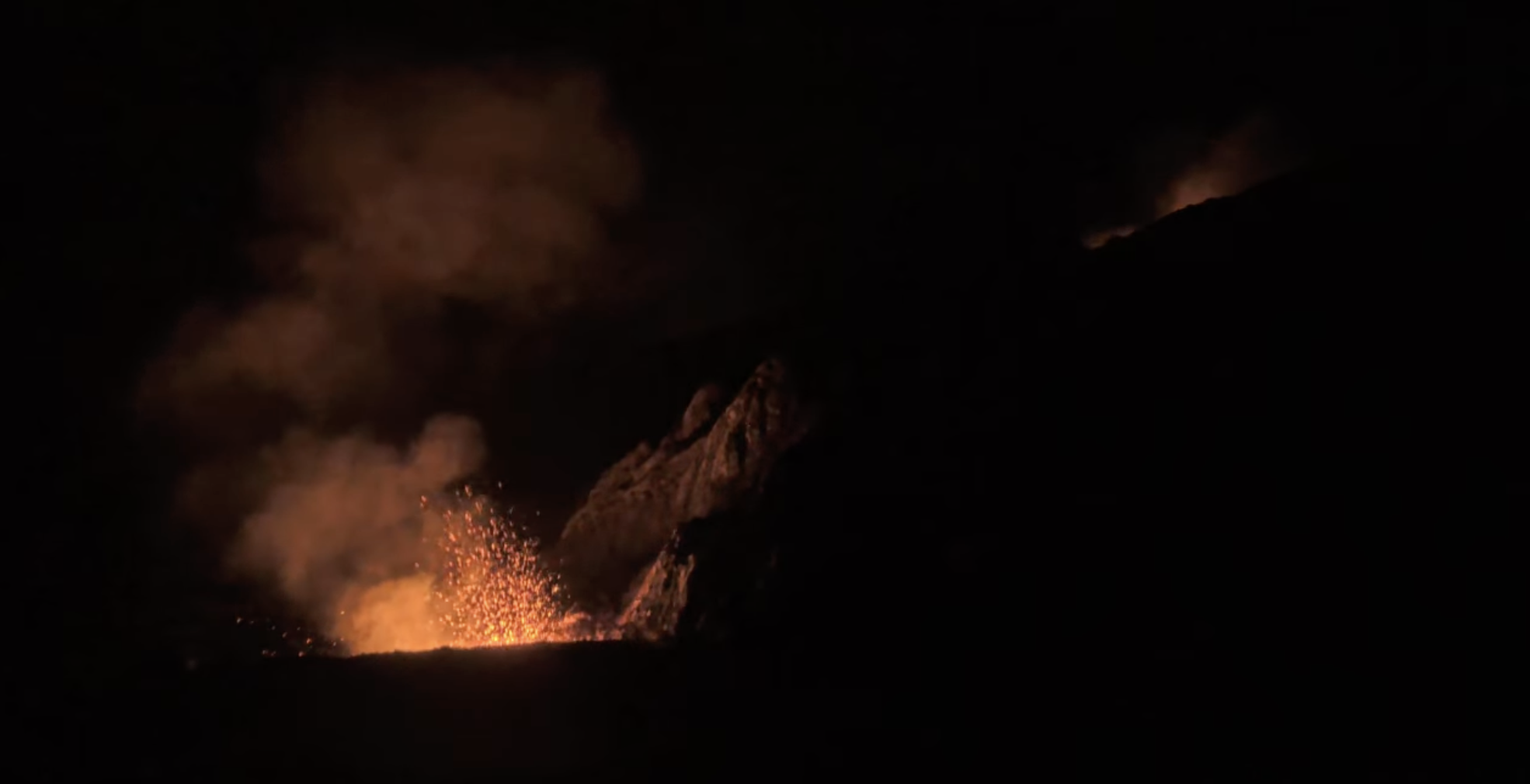
This was marked by the onset of strong, rhythmic gas pistoning and spikes in tremor recorded every 5 to 10 minutes.
Kīlauea has erupted episodically since Dec. 23, 2024, within Halemaʻumaʻu Crater in the volcano’s summit caldera. Continuous lava fountaining episodes typically last several hours before abruptly ending.