


Vaccination rates during the 2025-26 school year among kindergartners in Hawaiʻi were lower than compared with the previous year.
U.S. Centers for Disease Control and Prevention reported that statistic in its recent SchoolVax survey, along with the fact that religious exemptions increased.
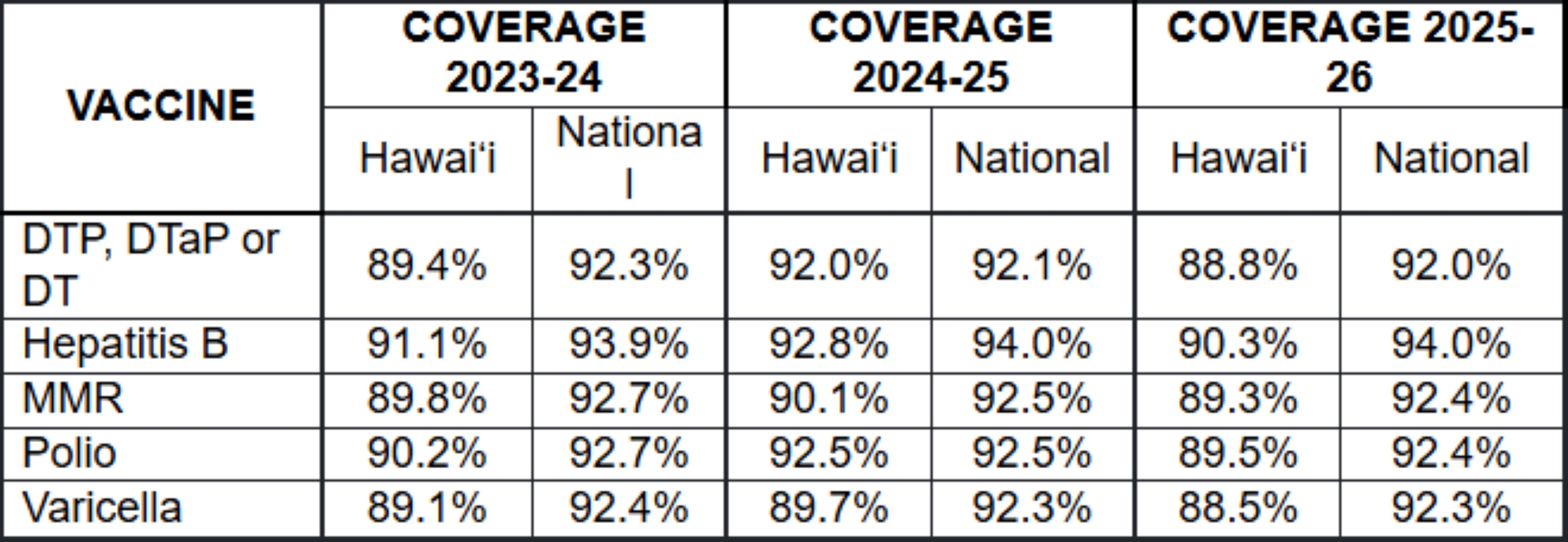
The new data shows a reverse of a previous 3-year trend of improvements. State vaccination rate estimates remained at or below the national average for the past 3 school years throughout all vaccinations.
Meanwhile, the religious exemption rate increased to 6% during the 2025-26 academic year from 5.5% during the 2024-25 year, consistent with a hike in religious exemptions nationwide from 3.4% to 4%.
High vaccination rates are essential to keeping Hawaiʻi healthy, with a goal of 95% coverage.
Improving community immunity is important to prevent or decrease the spread of diseases from person-to-person. This also helps protect people at highest risk of serious disease, such as infants, people with a weakened immune system, kūpuna and those who are pregnant.
“Parents want to protect their keiki. With the increase in conflicting information about vaccines, it’s understandable that parents may be uncertain how best to do so,” said Hawai’i Department of Health Director Dr. Kenneth Fink in a state release. “However, these rates mean too many children are vulnerable to infection and communities are at increased risk for an outbreak of a vaccine preventable disease — like we’re seeing with measles on the mainland.”
Fink said the state strongly recommends routine childhood vaccines to protect the health of loved ones and encourages parents with questions to discuss them with their child’s healthcare provider.
The percentage of kindergarteners vaccinated for measles, mumps and rubella remains below 90% for Hawaiʻi. With record measles cases reported nationally and worldwide, as well as recurring outbreaks of pertussis in Hawai‘i, the state Health Department urges families to check their child’s vaccination records with a healthcare provider to make sure they are up to date.
Childhood immunizations are vital for protection against serious diseases such as pertussis (whooping cough), measles and mumps. Completing the full vaccine series provides the best lifelong defense against these diseases.
“It is worrisome to see an increasing number of our students unprotected against potentially serious diseases like measles and pertussis,” said Hawai’i State Epidemiologist and Pediatrician Dr. Sarah Kemble in the state release. “Staying up to date with all recommended immunizations is the best defense, and we continue to support the American Academy of Pediatrics’ vaccination schedule.”
The Healthy Hawaiʻi Partners Program is in its second year and continues to make it easier for families throughout the state to access vaccines and other essential health services.
Healthy Hawaiʻi Partners strengthens community health by bringing schools, healthcare providers and local organizations together to offer convenient, culturally responsive care close to home.
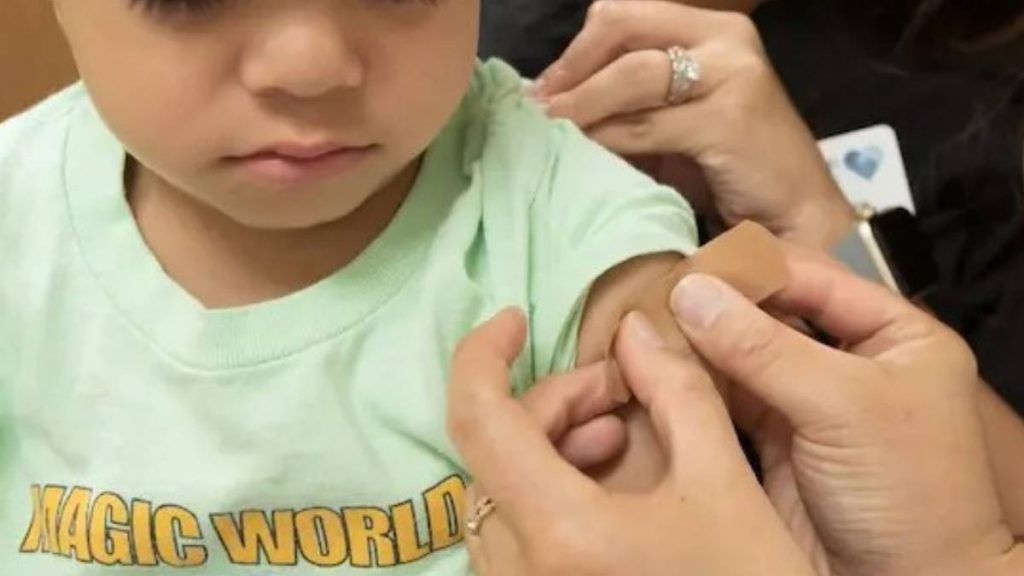
Families can receive school-required immunizations, flu and COVID-19 vaccines, physical exams, tuberculosis screenings and wellness checks in settings they trust — right on campus or within their community — through those partnerships.
In its first year, the 2024-2025 school year,
Healthy Hawaiʻi Partners facilitated 47 clinics during the 2024-25 school year, its first, and increased access to services during the 2025-26 academic year by supporting 500-plus clinics.
Planning for the 2026-27 school year is underway. A few early clinics have been completed, and most schools are still finalizing their calendars and clinic dates.
Centers for Disease Control and Prevention estimates of statewide vaccination rates are based on data from a small random sample of Hawaiʻi schools.
Hawaiʻi Department of Health continues its independent monitoring of vaccination trends using data from all schools, with the 2025-26 school year numbers to be released soon.