


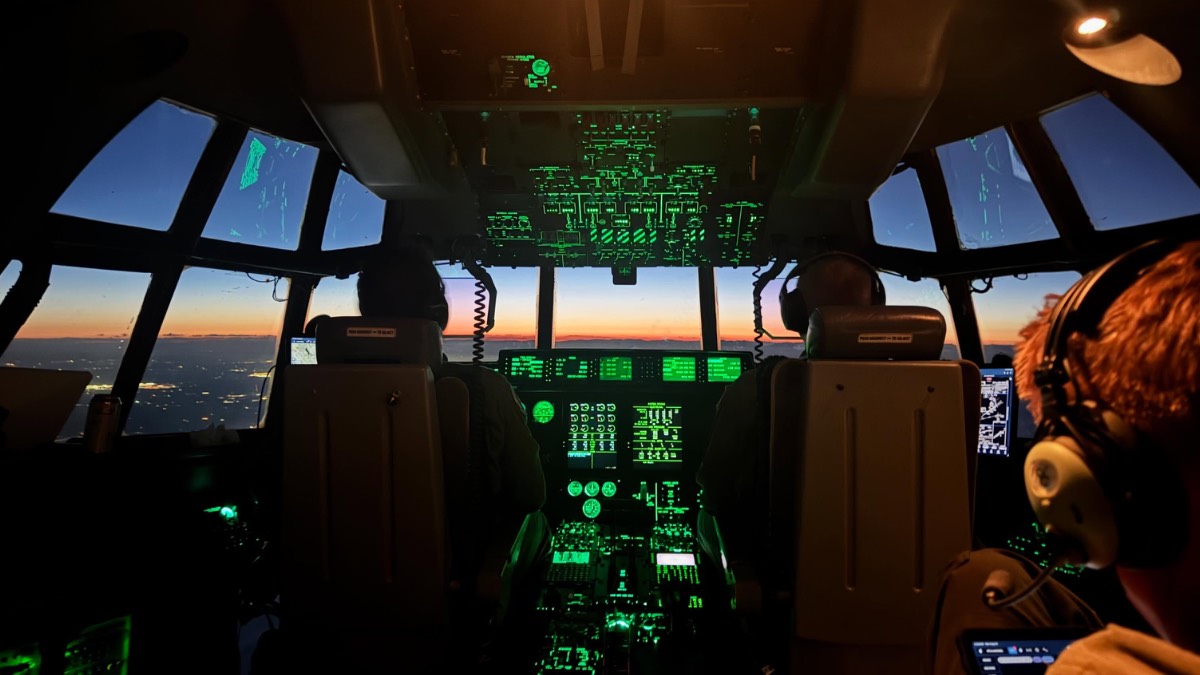
Hurricane Lala strengthened into a Category 1 hurricane Saturday morning as it closed in on Hawaiʻi Island, prompting the hurricane hunters who spent days flying directly into the storm to retreat to California before worsening conditions made it impossible to leave.
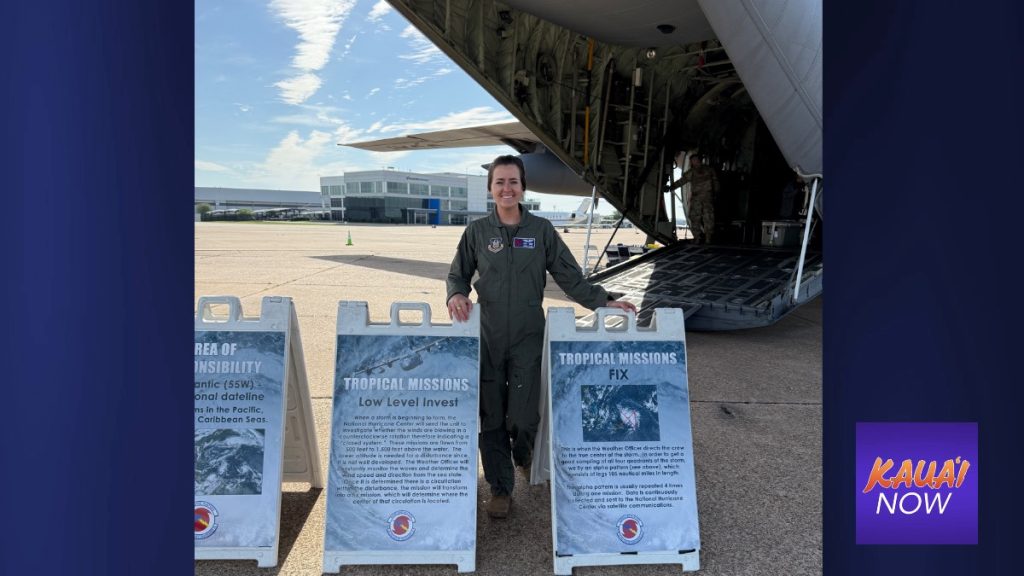
For Major Sarah Olsen, Air Force Hurricane Hunters Aerial Reconnaissance Weather Officer, the mission to Hawaiʻi was not to predict where Lala would go. It was to get inside the storm and collect data that forecasters can’t obtain from satellites alone.
“You can think of us as the eyes on the sky,” Olsen explained to Kauaʻi Now.
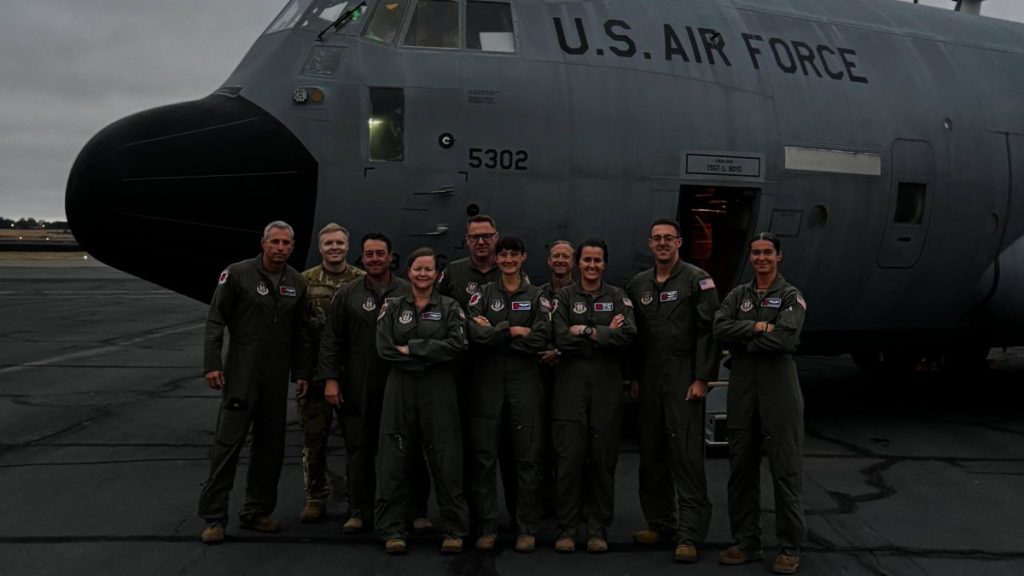
The crew arrived on Tuesday with three WC-130 aircraft, the weather reconnaissance version of the C-130. Their mission began on Wednesday, with rotating crews deployed around the clock, flying into Lala as the storm strengthened.
Olsen explained that her crew was the first in and flew its fourth mission on Friday night before returning to California. The decision to leave was dictated by the storm.
“We had to get out of there before the tropical storm force winds started to arrive because at that point we wouldn’t have been able to take off anymore out of the Big Island,” Olsen said.
“Usually we like to keep flying storms a little bit longer than we did for this one, but with it being an island and the storm coming directly, there’s not really much we can do because we can’t take off and land in this weather.”
The data collected during those flights significantly improve the forecasters’ understanding of the storm that is moving through a vast, data-sparse stretch of the Pacific Ocean.
When the aircraft enters the storm, Olsen and her crew determine the storm’s center by analyzing its winds, then make additional passes to determine how the center is moving. They also release instruments known as dropsondes, which descend through the storm while measuring wind speed, pressure, temperature and humidity.
She said those measurements help forecasters determine both the stormʻs strength and its movement; that information can improve forecast accuracy by as much as 20 percent.
Because the Pacific lacks the network of ground-based radar and weather observations available in many areas closer to North America, “it’s even more important for us to get in the storm and get some of that information,” Olsen said.
The aircraft flew at different altitudes as Lala developed.
During the first mission, when Lala was still a tropical storm, the crew flew at about 5,000 feet. During the final mission, as Lala approached hurricane strength, the aircraft flew at 10,000 feet.
Olsen said the increased altitude gave crews more space to navigate around strong convection and turbulence.
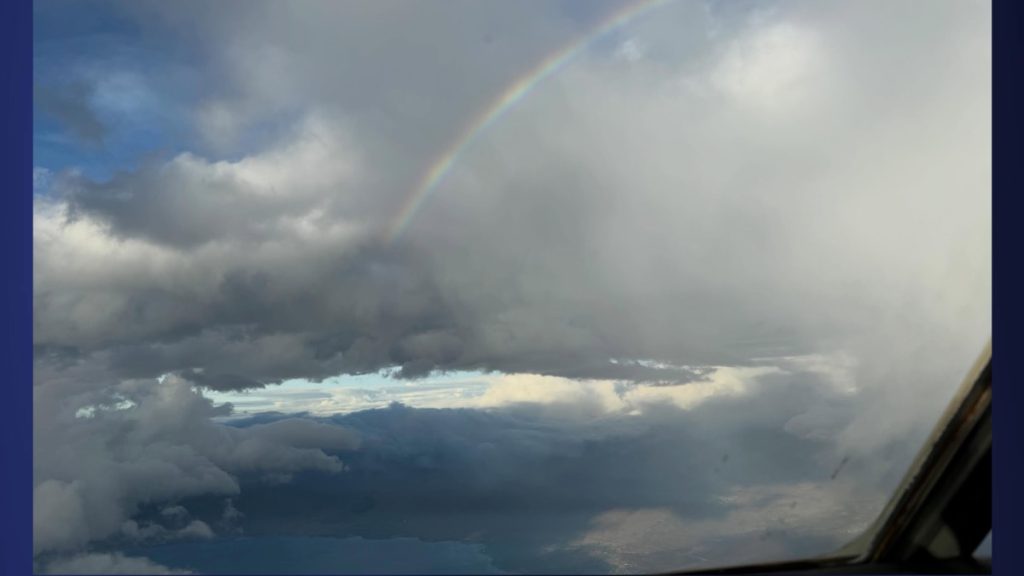
“Every storm is different, and this one wasnʻt terrible,” she explained. “There were definitely a couple of bumps, but it’s kind of like riding a roller coaster in a car wash,” she said while giggling.
The storm’s greatest threat to Hawaiʻi, however, may not be its wind.
Lala can produce widespread heavy rainfall, with 8 to 12 inches expected across portions of Hawaii Island and Maui and isolated totals reaching 25 inches on Hawaii Island.
The rain could trigger life-threatening flooding and mudslides, particularly in steep terrain.
As Lala continues her path, Olsen offered a simple message to Kauaʻi residents: “Don’t ignore the storm simply because the center is forecast to remain south of the island. Continue to pay attention to the hurricane center.”
She also encouraged residents to prepare well before the next storm, particularly during an El Niño year, which can favor increased tropical activity in the Pacific.
Thirty-four years ago, Hurricane Iniki devastated Kauaʻi in 1992.
The comparison has fueled anxiety as Lala’s track has developed, but Olsen cautioned residents to focus on the latest forecast rather than trying to predict the storm’s path themselves.
“The current forecast right now doesn’t even have the cone going over Kauai; it’s well south,” she said. “Forecasters are spending day and night looking at this, combing through all the data and doing everything they can to make sure these are as accurate as possible.”
For the hurricane hunters, the work on Hurricane Lala is now largely complete.
“This is my first storm deployment of the year,” Olsen added. “But obviously, if there are other storms that threaten this year, we are ready to go if the hurricane center asks us to come back and help fly.”
For now, the hurricane hunters are back in California, while the Big Island faces the storm they spent days flying through to better understand.
Her message from thousands of feet above the Pacific applies on the ground as well: “Take the storm seriously, know the forecast, and have a plan before conditions deteriorate.”