


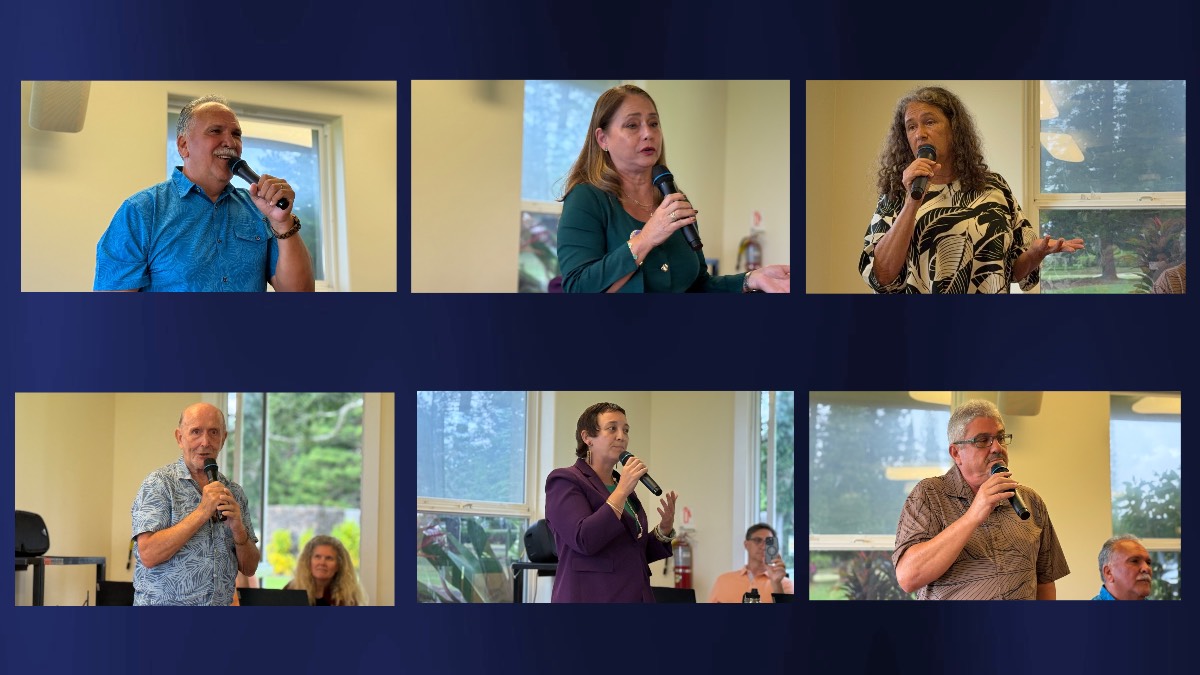
The race for Kauaʻi mayor is wide open, with six candidates battling to replace Derek S.K. Kawakami, who is unable to seek re-election due to term limits, and now is running for Hawaiʻi’s second highest office, lieutenant goverenor.
Three of the candidates are currently county council members: Chair Mel Rapozo, Felicia Cowden, and Bernard Carvalho Jr., who also formerly served as mayor. The other candidates are Laura Andaya-Lindsey, Michaela Widener and Megeso William Denis.
The top two vote-getters in the nonpartisan primary on Aug. 8 advance to the general election on Nov. 3.
The new mayor will inherit leadership of a county facing ongoing challenges, including affordable housing, aging infrastructure, economic diversification, environmental protection and long-term planning for growth.
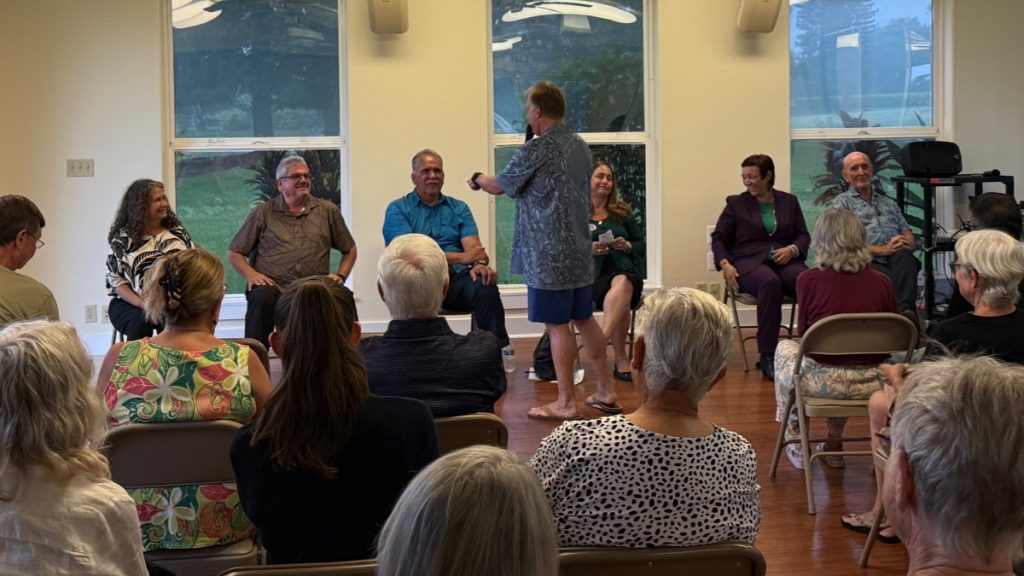
The six candidates in alphabetical order:
Laura Andaya-Lindsey has spent decades working at St. Catherine School. Sheʻs focused on community resilience, emergency preparedness, and strengthening local connections. Her priorities include empowering the people and the systems. The Wailua resident is a mother of 14 children and a grandmother of 18.
Bernard Carvalho Jr., a current councilmember and former mayor, is seeking re-election. He explains that his years of service and connections across federal, state and county governments have given him a “wealth of understanding.” His platform is focused on keeping Kauaʻi families home, responsible management and creating resilient communities.
Felicia Cowden, a current councilmember, is running on a people-first leadership style. She was first elected to the council in 2018 and won a council seat during the next three elections. Her priority is to ensure the island retains its “generational population, our authentic Hawaiian cultural presence and people, along with supporting a livable lifestyle for our working population so all of the island can safely function.”
Megeso William Denis is a former small-business and Fortune 500 executive who says heʻs not a politician, but a servant of the people. He has proposed locally managed systems for waste, water and disaster preparedness, and argues that communities should have more direct control over resources and decision-making.
Mel Rapozo, the current council chair, has served on the council for 18 years during two stints. He mentions he has seven vision points for Kauaʻi. His practical roadmap to moving forward includes a responsive government that works and a renewed commitment to public service, bringing government closer to the community, building infrastructure, lowering the cost of living, strengthening the quality of life, and smarter government through organizations.
Michaela Widener is a millennial whose platform aims to revolutionize island waste systems, expand affordable housing, and build a resilient food system that prioritizes local agriculture and waste reduction. She previously discussed exploring expanded homeschooling options, pursuing housing funding opportunities, working to ease restrictive zoning, and reviewing state laws and short-term rental policies to increase affordable housing for educators.
Polls close at 7 p.m. on Saturday, Aug. 8, for the statewide primary election. For voting information, click here.