


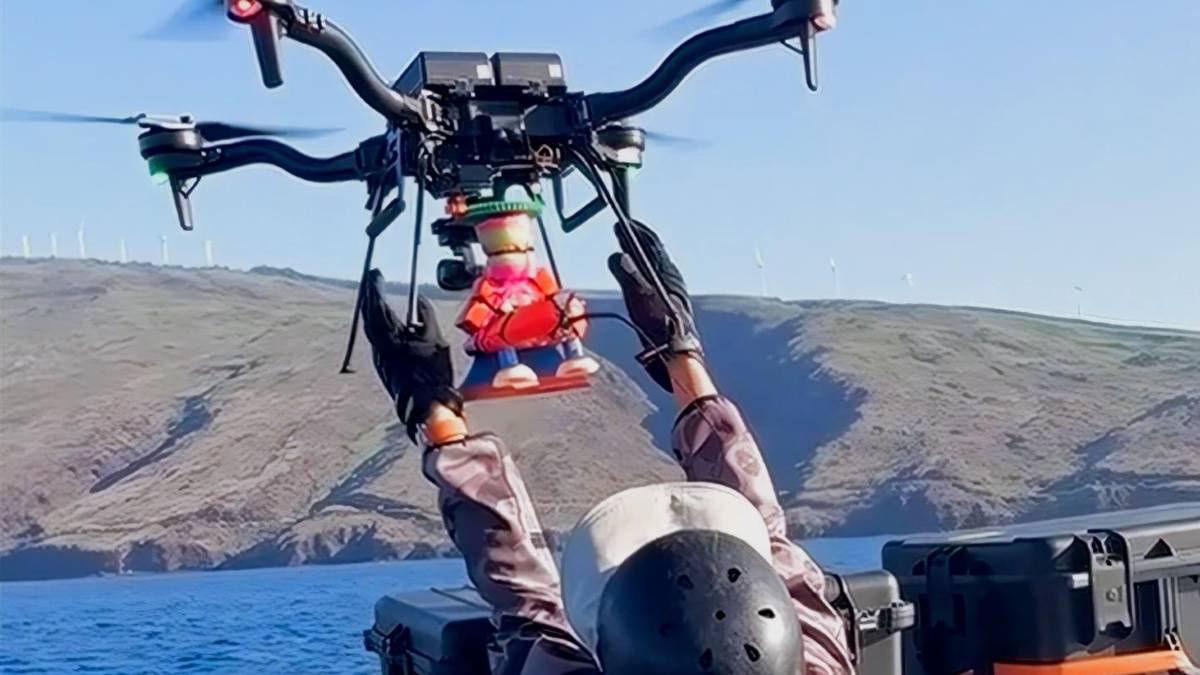
Marine mammal research attained new heights as University of Hawaiʻi at Mānoa scientists deployed noninvasive suction-cup tags onto humpback whales using drones.
Marine Mammal Research Program researchers at Hawaiʻi Institute of Marine Biology traditionally approached the animals closely via boats, deploying tags using an about 23-foot carbon fiber pole.
Technological advances now allow the team to tag whales from the sky, dramatically shifting how marine data is collected.
Research program team members during their February field season off the Maui coast successfully used drones to deploy customized animal tracking solution accelerometer tags. This innovative method provides a safer, less invasive tag deployment for marine mammals and researchers.
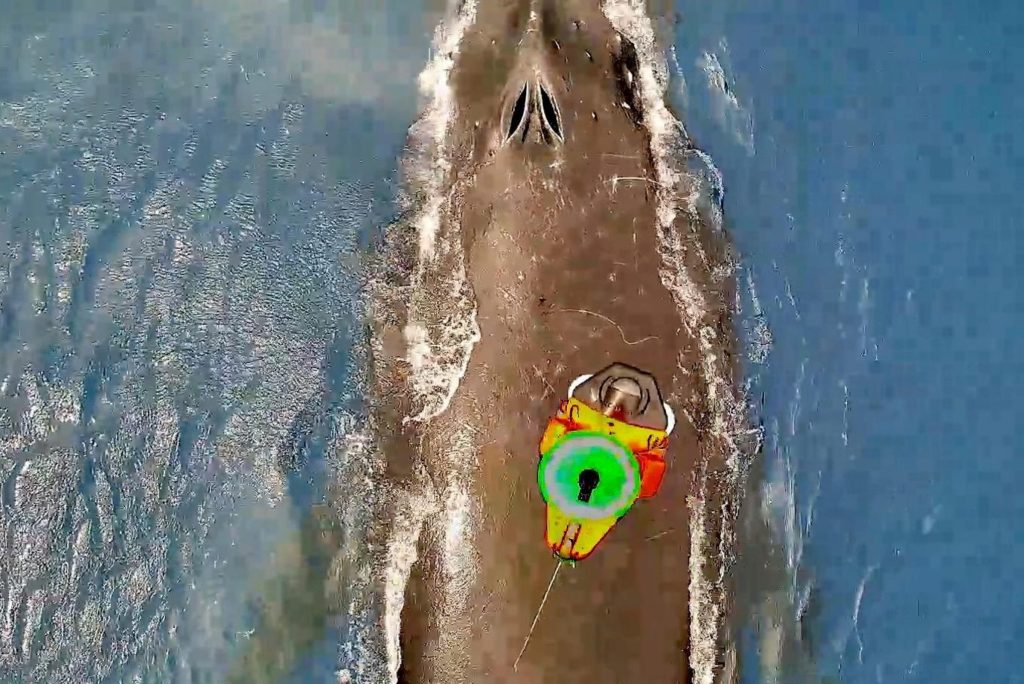
The team can deploy tags from several hundred feet away from their research vessel — greatly minimizing human intrusion.
“We do not need to get close to the whales to tag them, so we don’t disturb them,” said Marine Mammal Research Program researcher Lars Bejder in a release about the new tagging tech. “Additionally, we are able to tag whales that we previously were not able to approach and get close to. This opens up many new opportunities for low-impact research on whales and dolphins to inform on their conservation and management.”
A prime example occurred when the team successfully drone-tagged a skittish, singing male humpback during its final surfacing bout — a feat that would have been impossible using traditional pole-tagging methods.
The expedition deployed a total of 22 tags on lactating females, a calf and adult males.
High-resolution data collected — including fine-scale movements and energy expenditures — is critical for wildlife management.
It allows researchers to quantify the biological consequences of disturbances such as changing climatic events, vessel traffic or military activities, ultimately helping forecast population trajectories and establish vital evidence-based mitigation strategies to protect these marine species.
Read more at the Marine Mammal Research Program website.