


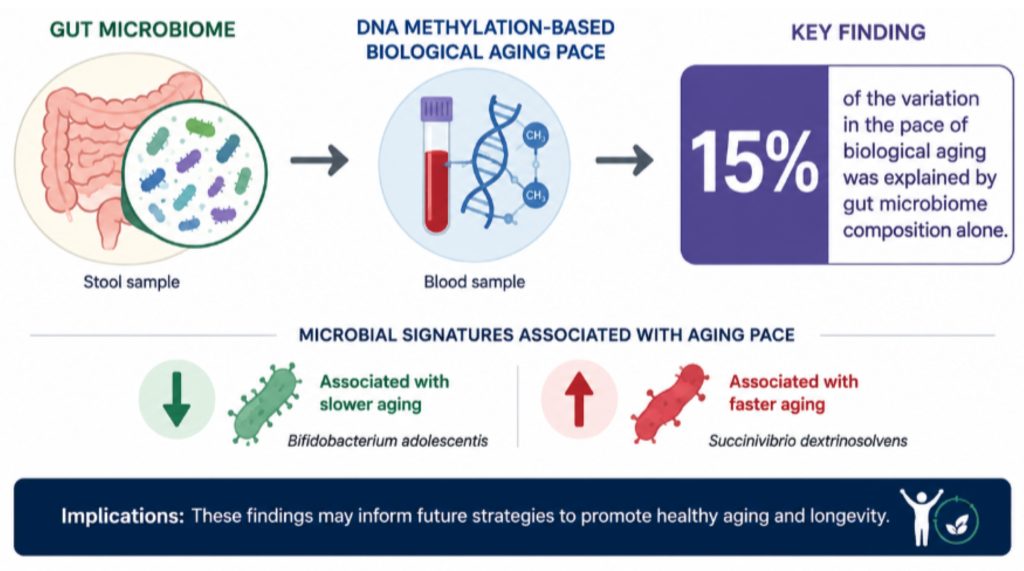
New University of Hawaiʻi at Mānoa research, published July 14 in Scientific Reports, found that differences in gut bacteria explained about 15% of the differences in how quickly participants’ bodies were biologically aging.
The study provides evidence that gut microbiome carries meaningful biological information related to how quickly the body ages at the molecular level.
“This study advances our understanding of the relationship between the gut microbiome and biological aging,” senior study author Alika Maunakea with University of Hawaiʻi at Mānoa John A. Burns School of Medicine in a university release. “We found that microbial patterns in the gut were significantly associated with molecular measures of aging, even independent of chronological age.”
Maunakea added that the findings open important new directions for understanding how modifiable biological systems influence long-term health trajectories and longevity.
The research analyzed stool and blood samples from 123 participants, representing a broad adult age range. Research team members compared types of bacteria found with biological markers in their blood that estimate how quickly their bodies are aging.
Unlike chronological age, which measures the number of years a person lived, biological aging biomarkers attempt to capture how rapidly the body is aging physiologically.
Investigators observed that gut microbial composition was specifically associated with DunedinPACE, a next-generation biomarker that estimates the pace of biological aging.
Several types of bacteria demonstrated particularly strong associations with aging trajectories.
Among the findings, Bifidobacterium adolescentis emerged as one of the strongest microbial signatures associated with slower biological aging, while Succinivibrio dextrinosolvens showed one of the strongest associations with accelerated aging.
Lead author Braden Kunihiro said the findings highlight the growing scientific importance of the gut microbiome in precision health research.
“The gut microbiome is highly responsive to lifestyle, diet, environment and other everyday exposures,” said Kunihiro in the university release. “Our findings suggest that the microbiome may reflect important aspects of biological resilience and aging in ways that could eventually help inform future wellness and healthy aging strategies.”
The study also included a group of Native Hawaiian and Pacific Islander participants, populations historically underrepresented in aging and microbiome research.
Co-author Ruben Juarez noted that the work might help researchers better understand how environmental and social factors become biologically embedded through time.
“The microbiome exists at the intersection of behavior, environment and human biology,” said Juarez in the university release. “Studies like this help illuminate potential pathways through which lived experiences and social factors influence long-term health outcomes.”
Researchers emphasize that the study found a connection between gut bacteria and biological aging, but it does not prove that one causes the other.
More research is needed to determine whether changing the gut microbiome can affect how the body ages.
“This is an important early step toward understanding the gut microbiome’s relationship with healthy aging,” Maunakea said. “Future research will help clarify the mechanisms involved and whether these microbial signatures may eventually contribute to precision approaches for promoting long-term health and wellness.”