



Kula Aupuni Niʻihau A Kahelelani Aloha public charter school, which teaches in English and the Niʻihau dialect ʻŌlelo Kanaka to students on Kauaʻi’s west side, has been operating for at least a decade in a building it leases in Kekaha.
But the start of the school year was in jeopardy because of a dispute with the landlord, Kanaka Aupuni a Niʻihau Inc., over a sharp increase in the rent.
For now, the school, which goes by the acronym KANAKA, will open on time on Aug. 3 after a ruling Wednesday by Fifth Circuit Court Judge Stephanie R.S. Char. She granted a temporary restraining order preventing the termination of the lease while a broader legal dispute moves forward.
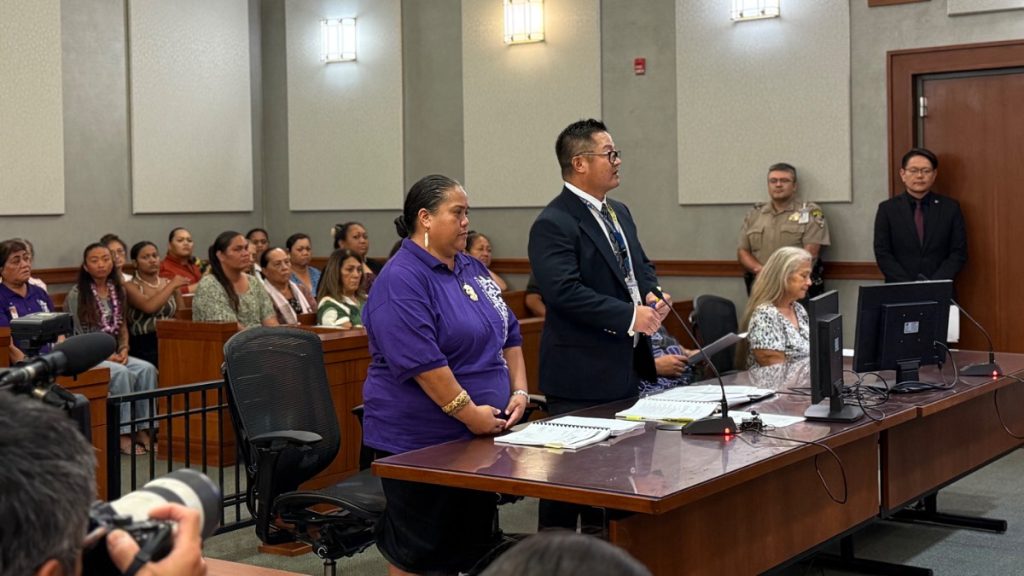
Kula Aupuni Niihau A Kahelelani Aloha had filed a lawsuit against Kanaka Aupuni a Niʻihau its nonprofit landlord, and two of the directors, Katherine Tandal and Steven Sullivan, claiming it unlawfully tried to end its 15-year lease and significantly raise the rent by more than $10,000 a month, relying on an unsigned memorandum of understanding that it asserts was never signed or approved by the state attorney general’s office.
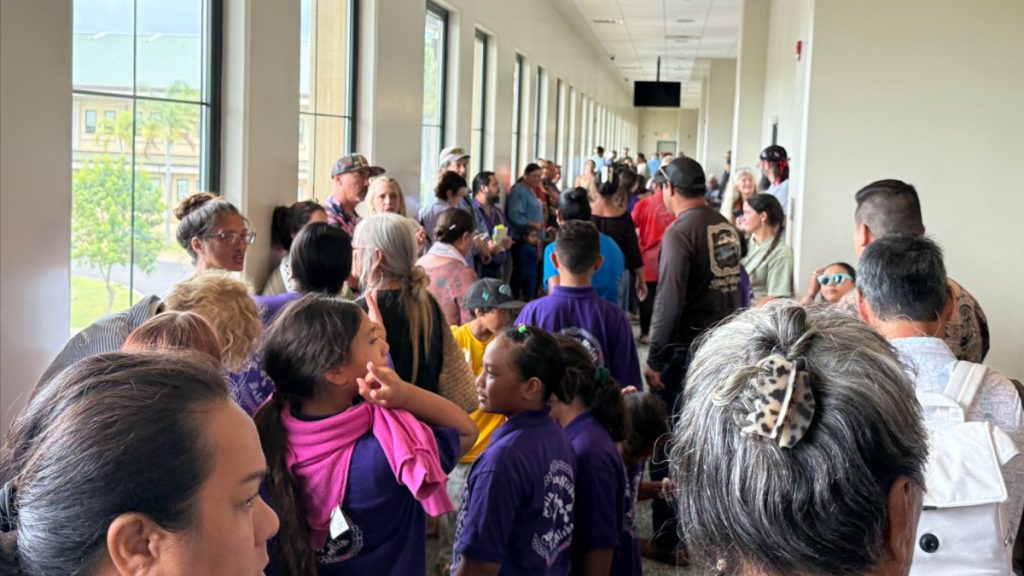
A large crowd of supporters was also present at court on Wednesday.
After the judge’s ruling, supporters of the school, including community members, staff, and students, spilled out of the court and down the courtroom hall in jubilation.
“I’m excited that we have a lot of people supporting our charter schools, especially a charter school that’s devoted to Hawaiian and Hawaiians and Hawaiian history,” said David Dooley, executive director at Kanuikapono Public Charter School, who was at the hearing in support of the school. “It would be a tremendous loss.”

The judge’s order keeps the current situation in place until a hearing on Aug. 13 regarding the school’s request for a preliminary injunction.
The lawsuit seeks declaratory and injunctive relief, along with damages, alleging breach of contract, breach of the covenant of good faith and fair dealing, intentional interference with contractual relations and other claims.
According to court filings, the school signed a 15-year lease in 2016 for a monthly rent of $5,777. A 2023 amendment modified insurance and indemnification provisions but, the school argues, did not alter lease duration, rent or termination provisions.
The dispute escalated this summer after the landlord sent invoices that increased monthly charges from nearly $16,000 in June to more than $17,000 in July and warned that the lease would terminate if the amounts were not paid. A July 8 termination letter gave the school 30 days to vacate the property and stated rent would increase to $20,000 per month if it remained as a holdover tenant, according to the complaint.
 School supporters of all ages were present during the court hearing on Wednesday, July 22, 2026. (Xiomara Yamileth/ Kauaʻi Now)
- Kauaʻis Fifth Circuit second-floor courtroom hall was filled with school supporters during the Wednesday, July 22, 2026, hearing. (Xiomara Yamileth/ Kauaʻi Now)



The school serves students in kindergarten through grade 12. The U.S. National Center for Education Statistics reports that the school had an enrollment of 35 students for the 2024-2025 academic year.
“It would be very sad,” for the school to close, said a student present at court.
According to the school’s website, the school began in 1993 as a home school program by parents from the Niʻihau community living on Kauaʻi. The parents thought it was important that the students, whose primary language was the Niʻihau dialect, should become highly skilled bilingual speakers.
Attorney Carter K. Siu, who represents the charter school, told the court the lease and its signed amendment are the only binding agreements between the parties and argued the nonprofit cannot unilaterally increase rent or terminate the lease.
“I’m here to make sure that the students of Kanaka have school to attend on Aug. 3, 2026,” Siu told the court. “Currently, right now, they’re in limbo. The students don’t know where they’re gonna go to school.”
Siu argued the school would likely prevail on its contract claims and said the case involves significant public interest because the school provides bilingual instruction in English and the Niʻihau dialect, which he described as unavailable elsewhere on Kauaʻi.
He also cited a recently issued notice of concern from the Hawaiʻi State Public Charter School Commission, which warns the lease termination raises questions about the school’s ability to meet charter contract requirements for school facilities.
He added that the school risks irreparable harm because losing its campus could jeopardize its charter and prevent classes from beginning as scheduled.

Defense attorney Rosa Flores opposed immediate relief and requested additional time to respond, saying her clients had only recently retained counsel after learning of the proceedings over the weekend.
Flores argued the defendants needed more time to investigate the allegations before the court ruled on the emergency request and asked that consideration of the temporary restraining order be delayed until the preliminary injunction hearing.
Char denied the request for a continuance, saying she would address the emergency relief immediately while scheduling a later evidentiary hearing on the preliminary injunction.
“The court is going to issue a temporary restraining order at this time in favor of the plaintiffs,” Char said from the bench.
Anahola Village resident and school supporter Bonnie Bator said once she heard about the hearing on social media that it was her kuleana (responsibility) to show up.
“I totally support them in their endeavor to be KANAKA,” she said.
The judge ordered the school to submit a proposed temporary restraining order and scheduled a full-day hearing on the preliminary injunction for Aug. 13 at 9 a.m.