


New populations of two species of endangered native Hawaiian moth and damselfly were discovered on islands where they previously were thought to no longer exist.
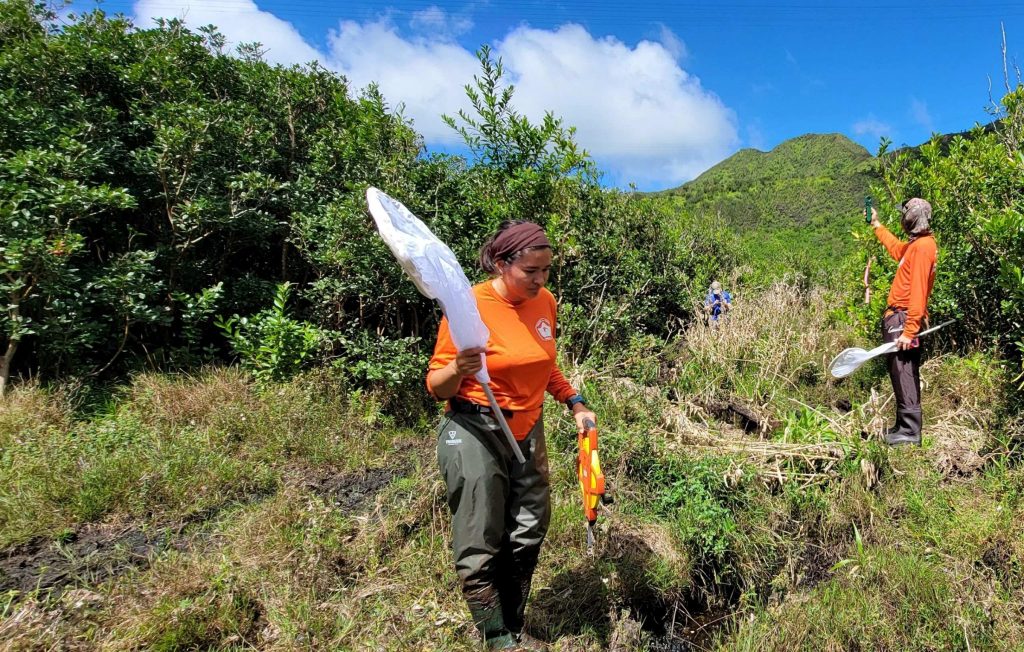
The discovery of by staff members of Hawai‘i Department of Land and Natural Resources Division of Forestry and Wildlife of the Blackburn’s moth (Manduca blackburni) and pinapinao, or Hawaiian damselfly (Megalagrion nesiotes), bring hope for continued existence and recovery of these endangered species.
“Hawaiʻi’s native insect populations are largely declining because of predation, competition with non-native species and habitat loss,” said Division of Forestry and Wildlife entomologist Janis Matsunaga in a state release. “Populations of these insects often quietly blink out, island-by-island, until they become extinct. Rediscovery of these species is unexpected and encouraging.”
Endangered Blackburn’s sphinx moth: Rediscovered on Lāna‛i and Moloka‛i
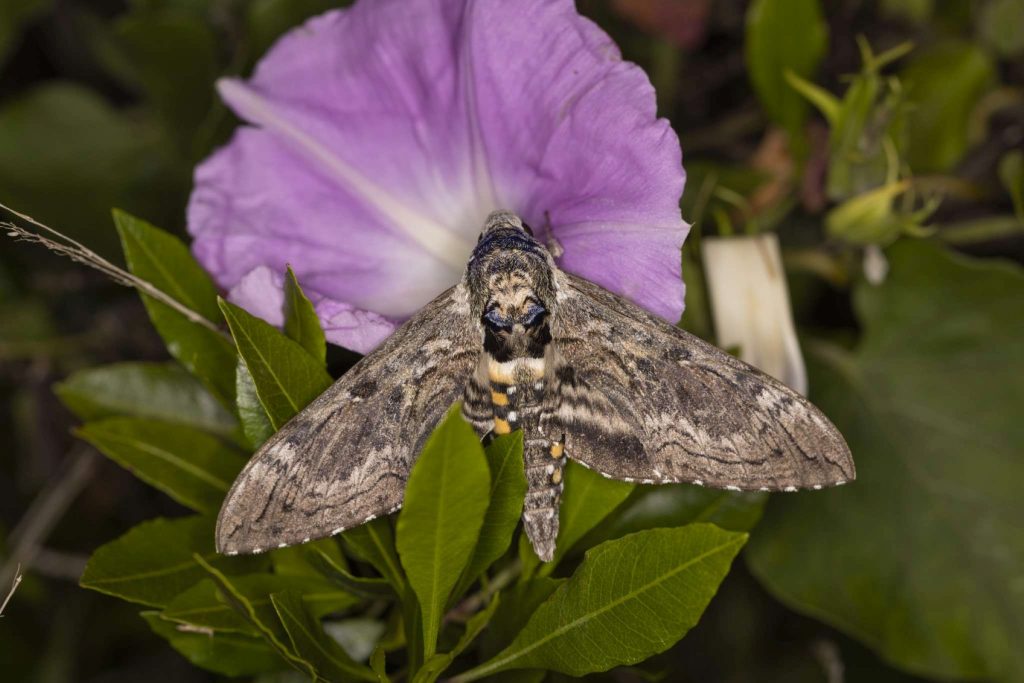
The Blackburn’s sphinx moth, one of Hawai‘i’s largest native insects, was once found throughout all main Hawaiian Islands.
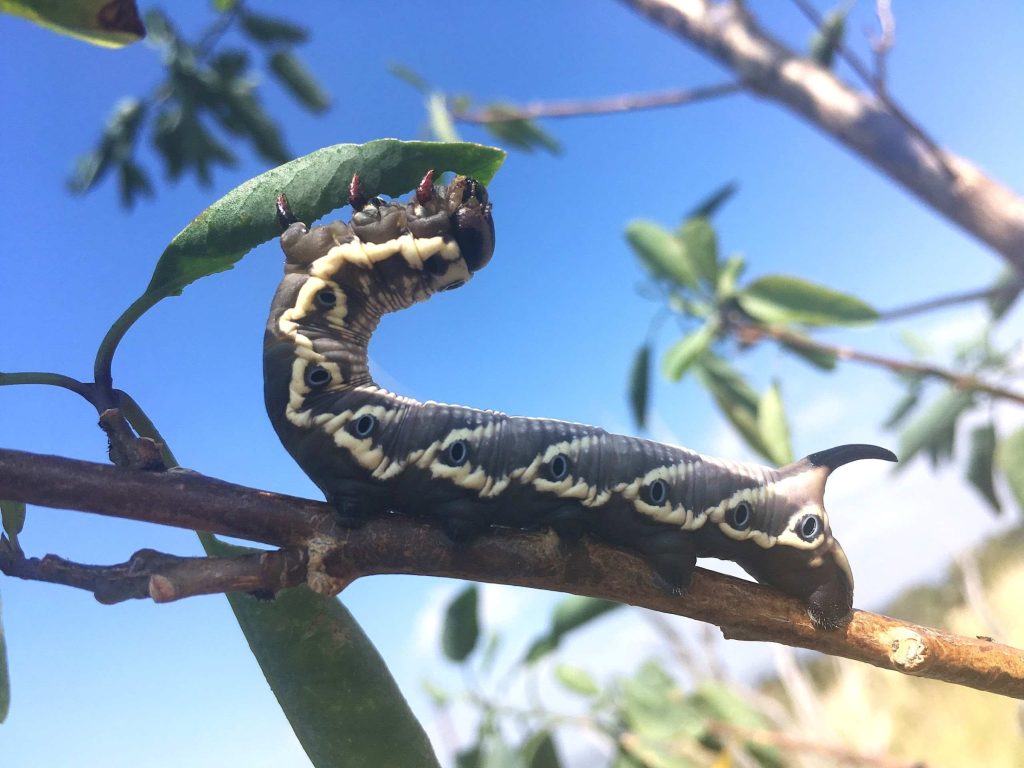
 A Hawaiian Blackburn’s sphinx moth (Manduca blackburni) caterpillar. (Courtesy Photo: Edith Adkins/Hawaiʻi Department of Land and Natural Resources)
- A Hawaiian Blackburn’s sphinx moth (Manduca blackburni). (Courtesy Photo: Zach Pezzillo/Hawaiʻi Department of Land and Natural Resources)
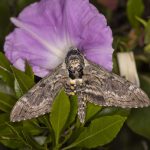
It was thought to be extinct by the late 1970s but was rediscovered in 1984 on East Maui. Since then, additional populations have been found on Kahoʻolawe and Hawai‘i Island.
The moth was thought to be extirpated, or locally extinct, on other islands.
Division of Forestry and Wildlife staff members with the Hawaiʻi Invertebrate Program in May, however, discovered 10 Blackburn’s sphinx moth caterpillars in Lānaʻi City.T
his was the third sighting since 2009, when 22 caterpillars were discovered, and a single caterpillar found in 2025, possibly indicating a sustained population.
Staff also in May and June discovered Blackburn’s sphinx moth caterpillars in Hālawa Valley and Kalaupapa, Molokaʻi. These are the first individuals confirmed on that island since it was thought to be extirpated in the 1940s from the island.
Endangered pinapinao (Hawaiian damselfly): Rediscovered on Hawai‘i Island after 102 years
A Division of Forestry and Wildlife employee captured and photographed a male Hawaiian damselfly in October 2025 during routine training in Waiākea Forest Reserve on the Big Island. It was the first confirmed Hawai‘i Island sighting of the species since 1923.
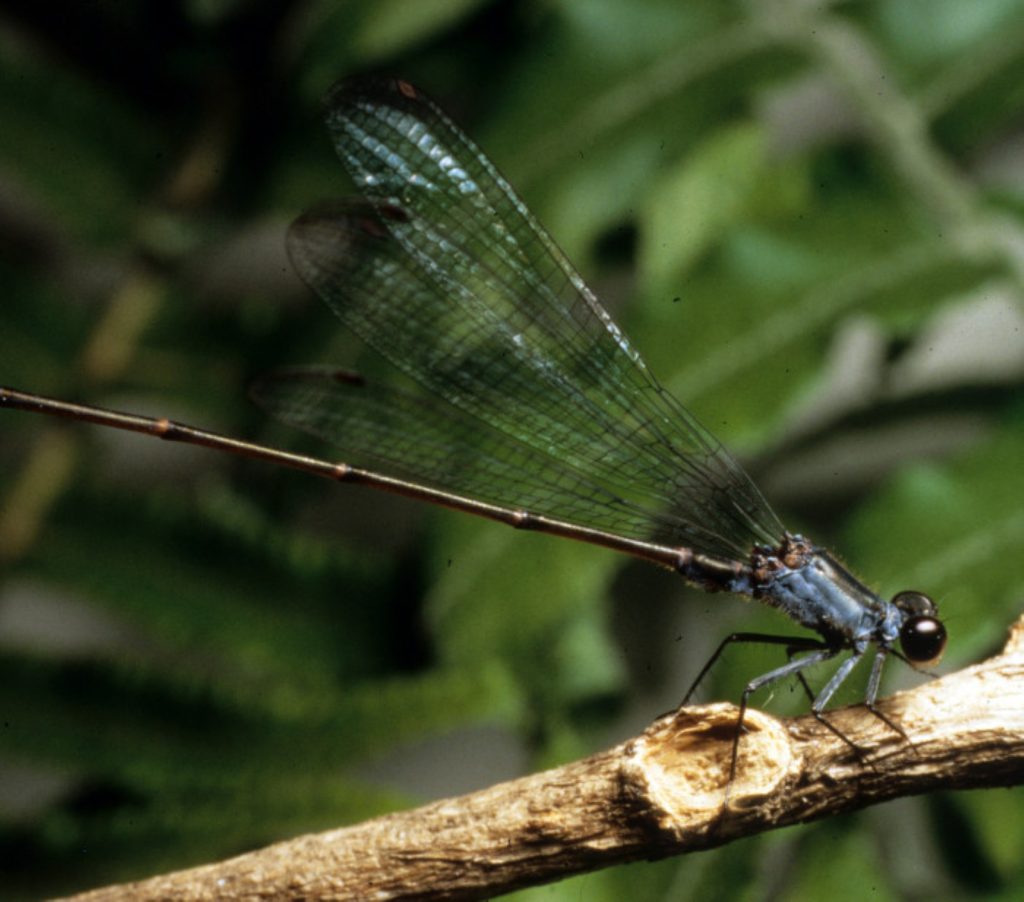
“I would have never guessed that we would find a critically endangered species in a eucalyptus plantation, a habitat previously thought unsuitable for the species,” said Division of Forestry and Wildlife staff member Brendan Wang in the state release. It was he who discovered the pinapinao. “Since there are native plants in the understory, these damselflies have been able to persist.”
New sightings of native invertebrates can be reported to a Division of Forestry and Wildlife office.
“We encourage everyone to learn about native invertebrates and to report sightings of rare species to aid in conservation management,” Wang said.