


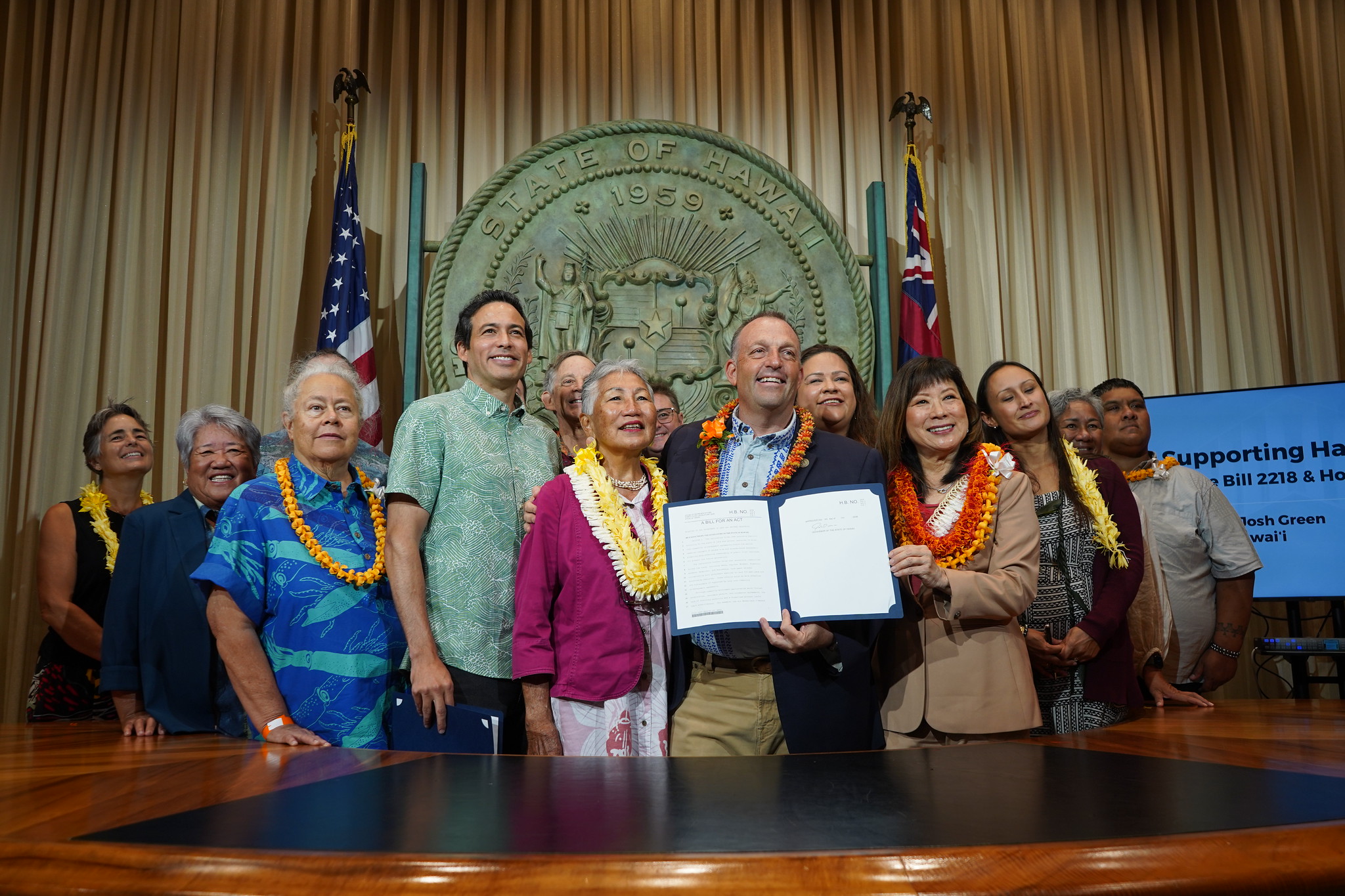
Gov. Josh Green has signed 266 of the 267 measures into law following the 2026 Hawaiʻi State Legislative session.
Of the four bills on the intent-to-veto list, Green issued one veto and signed three into law, issuing a line-item reduction for one of them, which is the fewest vetoes in recent history.
“This legislative session shows what is possible when we stay focused on solving real problems and putting people first,” Green said. “Together, we have enacted laws that will strengthen our communities, expand opportunity and improve the quality of life for people across Hawaiʻi.”
Green issued the veto for Senate Bill 3262, which requires that the Hawaiʻi Teacher Standards Board submit three nominees for its executive director to the Board of Education. The Board of Education must then appoint an executive director from the nominees on the list, subject to the advice and consent of the Senate.
The veto rationale is due to a need for further consideration of the separation of responsibilities and duties between the Board of Education and the Hawaiʻi Teacher Standards Board.
Additional evaluation is needed to assess how the proposed changes may affect the respective roles, authorities, and oversight functions of each entity to ensure that any changes are clearly defined, appropriately structured, and do not create ambiguity regarding governance and accountability.
Three bills previously on the intent-to-veto list have been signed.
Senate Bill 2338 exempts certain employment actions and job descriptions for the Hawaiʻi Housing Finance and Development Corporation and Hawaiʻi Community Development Authority from approval by the Director of Business, Economic Development and Tourism.
It also establishes salary provisions for the executive directors of the Hawaiʻi Housing Finance and Development Corporation and the Hawaiʻi Community Development Authority, with compensation capped at 99% of the governor’s salary and subject to the Director of Business, Economic Development and Tourism approval.
It renames the Hawaiʻi Housing Finance and Development Corporation executive assistant position to deputy executive director and increases its salary cap. It also establishes conditions for the issuance, renewal, and termination of employment contracts for the Hawaiʻi Housing Finance and Development Corporation, the Hawaiʻi Community Development Authority, and the Hawaiʻi Public Housing Authority.
House Bill 2344 establishes a temporary, independent Public School Realignment and Closure Commission to develop and recommend a comprehensive package of school consolidations, realignments, and closures based on the federal Base Realignment and Closure model. It requires reports to the Legislature and an expedited approval process for the recommended school consolidations, realignments, and closures.
However, Green line-item reduced the bill and stated that it would be financially imprudent to transfer general funds to the emergency and budget reserve fund given disaster recovery efforts, federal funding disruptions, and addressing the cost-of-living for residents.
Senate Bill 2600 makes a deposit into the emergency and budget reserve fund, which increases the current balance of the Rainy Day Fund to more than $1.6 billion. The annual interest accrual is forecasted to add more than $50 million in fiscal year 2027, making the fund the largest it has ever been.
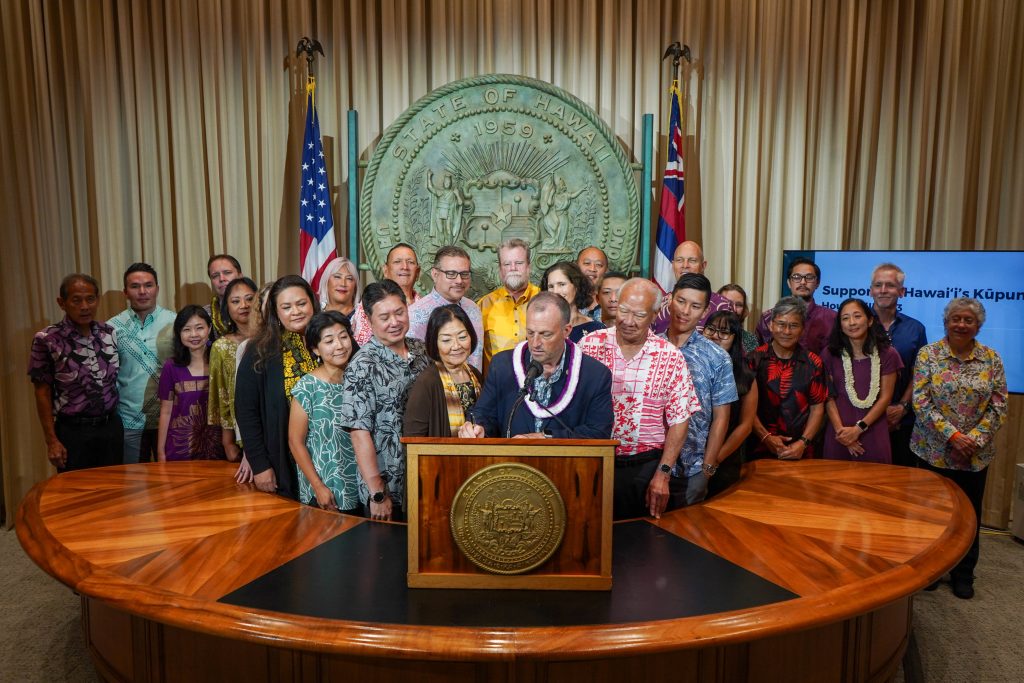
The Office of the Governor hosted 18 bill-signing ceremonies this season, bringing together stakeholders, legislators, and media for meaningful conversations about Hawaiʻi’s future. New laws include support for health care initiatives, kūpuna, conservation, good governance, education, and strengthening Hawaiʻi’s economy.
Hawaiʻi advanced critical health care initiatives to ensure residents can receive the screenings, treatment, and support they need without risking their financial stability.
- House Bill 1864, Act 218, requires insurers to cover fertility preservation for patients whose medical treatments may cause infertility, giving young cancer patients hope for future families.
- House Bill 1969, Act 219, expands access to lifesaving colorectal cancer screenings and follow-up care for uninsured and underinsured residents, aiming to reduce preventable losses.
- Senate Bill 3025, Act 220, establishes a statewide program to purchase and forgive medical debt for up to 50,000 residents, easing financial strain and helping families avoid housing, employment, and credit barriers caused by medical bills.
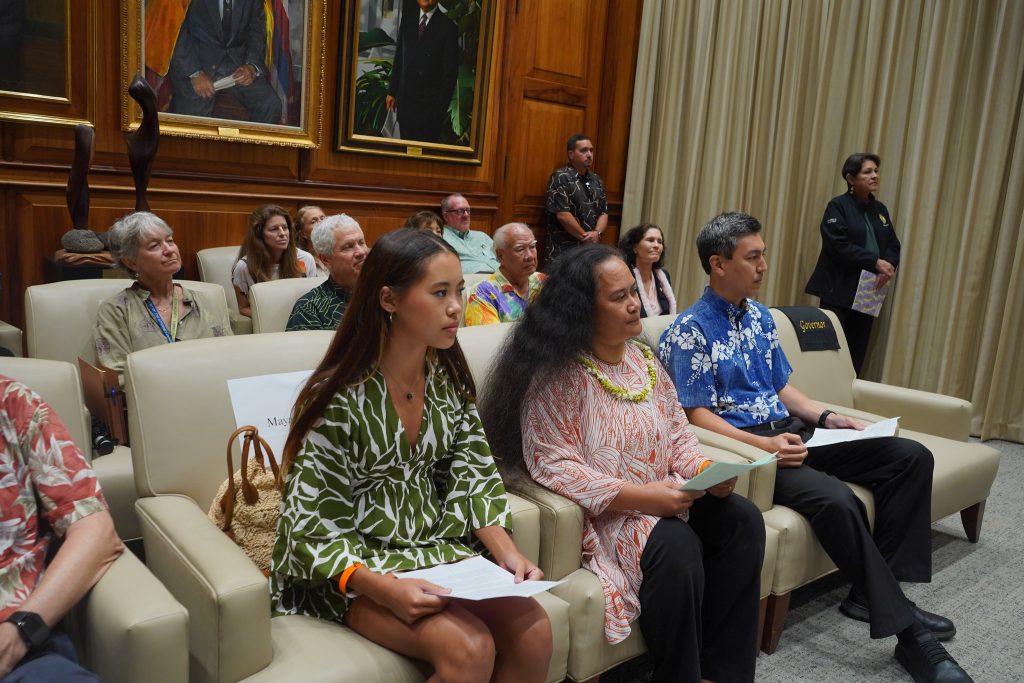
Green signed policies that center Hawaiʻi’s climate and conservation goals, reflecting a commitment to nurturing an environmental future where attentive management allows nature to rise, recover, and flourish.
- Senate Bill 3253, Act 226, develops a state-run wildlife sanctuary to protect endangered native species.
- House Bill 1618, Act 204, modernizes the wastewater system, reduces water pollution, and protects vulnerable ecosystems.
- Senate Bill 2175, Act 189, ratifies a ban on disposable electronic smoking devices to mitigate landfill fires and hazardous litter.
- Act 150 in the state budget includes $129 million in Green Fee projects focused on environmental stewardship, sustainable tourism, and hazard mitigation.
Several measures invest in the well-being of future generations by supporting teachers, expanding access to college, improving school meal affordability, and ensuring safer learning environments.
- House Bill 1890, Act 233, establishes a clear framework for annual salary step increases and longevity raises for Hawaiʻi’s educators.
- House Bill 1888, Act 234, ensures educators feel safe and supported while on the job, providing legal safeguards and plans of action.
- House Bill 2338, Act 235, champions student success by strengthening the Hawaiʻi Promise Scholarship, providing eligible University of Hawaiʻi community college students with coverage for 95% of their unmet direct educational costs.
- House Bill 2296, Act 236, lowers the minimum price that schools must recover from student meals, thereby expanding access to free or reduced-price meals for children and their families.
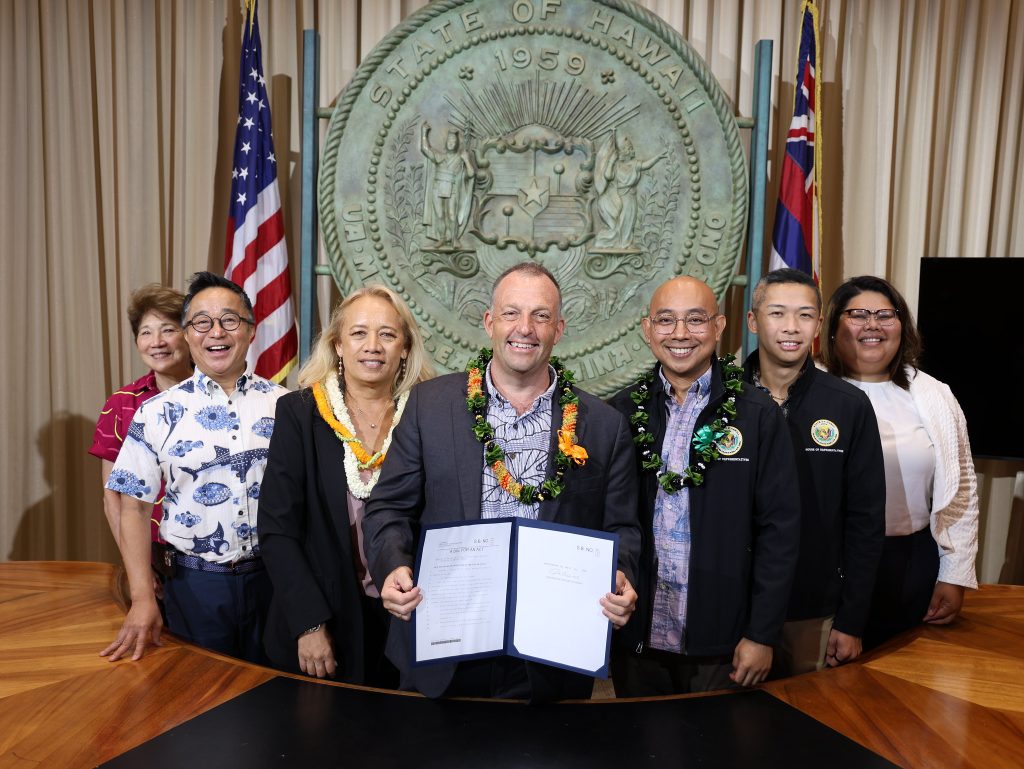
Economic development initiatives continue to create jobs, attract investment, and strengthen communities across Hawaiʻi.
- Senate Bill 2580, Act 185, creates stronger incentives to hire local talent, increases the per-production cap, and reinforces Hawaiʻi’s position as a premier destination for film and television production.
- Senate Bill 2001, Act 206, establishes the Banyan Drive Community Development District to foster a reimagining of the historic space, invest in local businesses and workforce development, and reestablish lasting economic vitality.
As artificial intelligence (AI) continues to advance, Hawaiʻi is modernizing its laws to keep pace with emerging technologies by providing stronger protections, greater accountability, and meaningful remedies for individuals harmed by the misuse of AI.
- House Bill 2137, Act 247, prohibits the harmful, unauthorized use of AI-generated realistic digital imitations of individuals and allows victims to seek punitive and monetary damages.
- Senate Bill 3001, Act 248, requires AI companions to disclose AI interactions, provide crisis resources, and implement additional safeguards for minors. It also prohibits AI companions from posing as licensed mental health professionals or encouraging harmful behavior.
To address Hawaiʻi’s housing affordability crisis, a measure reinforces the state’s commitment to increasing housing opportunities and ensuring more Hawaiʻi residents can afford to live in the communities they call home.
- House Bill 1920, Act 205, extends the sunset date to 2032 for the existing low-income housing tax credit established by Act 226 to continue leveraging hundreds of millions of dollars in private equity for Hawaiʻi’s housing market while complementing existing financing programs.
According to the Office of the Governor, the bill-signing gatherings provided a platform to highlight select measures, explore why they matter, and discuss how they will create a healthier, more resilient, and prosperous future for communities across the state.