


Hawaiʻi Gov. Josh Green earlier this week signed into law two bills aimed at supporting the state’s film industry and strengthening its blue economy.
“The legislative measures signed into law today demonstrate the future of Hawai‘i, helping to diversify our local economy, protect our environment and put our people on an international stage,” said Green in a state release following the signing ceremony at the state Capitol in Honolulu.
Film tax credit
Hawaiʻi Senate Bill 2580, now Act 185, moves to modernize and elevate Hawai‘i’s film industry by broadening access to the state’s film tax credit and expanding resources for production.
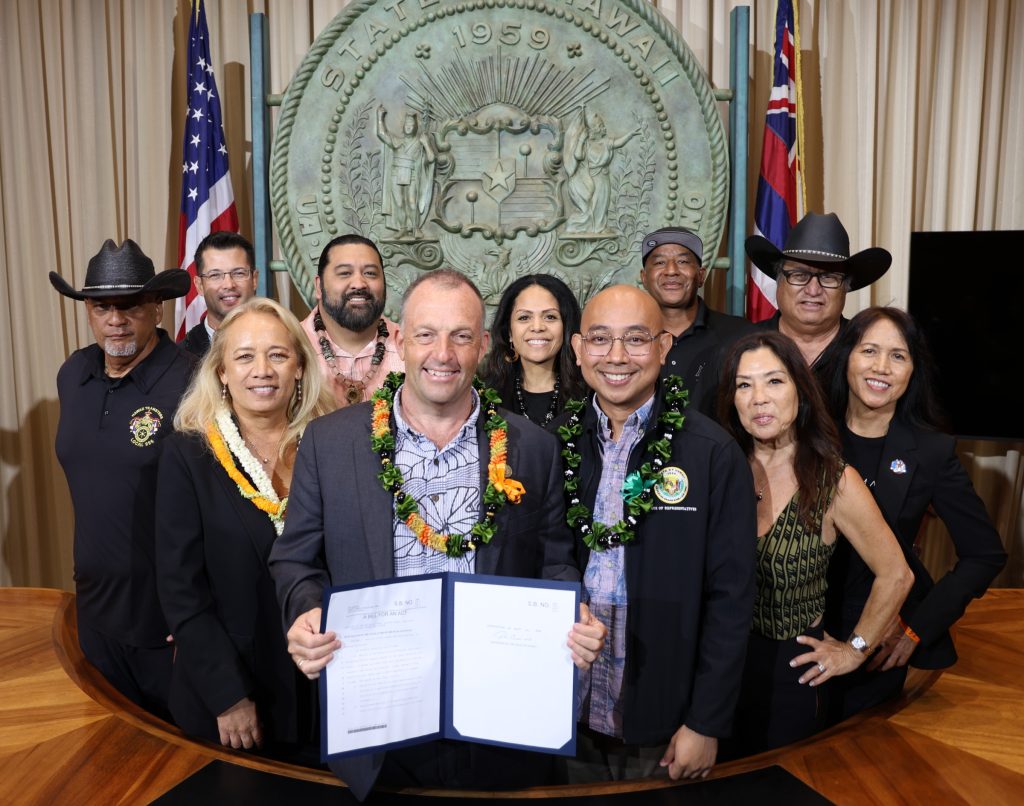
The legislation elevates the state’s film industry through higher base credits, increased program caps and new incentives for local hiring, long‑term productions and streaming platforms — aligning Hawai‘i with modern production standards.
“I’ve seen firsthand how film brings people together and creates unique avenues for our community,” Green said. “These measures are key to Hawaiʻi’s long‑standing vision of diversifying our economy by strengthening the film industry. These amendments will expand opportunities for local talent while sharing our stories with audiences across the globe.”
The Motion Picture, Digital Media and Film Production Income Tax Credit in Hawaiʻi was established nearly 30 years ago in 1997 and was meant to incentivize local production.
It has since undergone numerous changes, most notably in 2022 when base credits were increased, minimum spending requirements lowered and a per-project cap was implemented, among other revisions.
Act 185 further amends the tax credit by creating new incentives and developing administrative protections. It provides an additional 5% credit for qualified productions that employ a workforce composed of at least 80% local hires.
It also increases the per‑production cap to $20 million, exempts from that cap productions with at least $60 million in qualified costs and sets the aggregate annual cap at $60 million. Any unused portion of the aggregate cap carries over to increase the next year’s cap.
“I was excited to introduce [Senate Bill] 2580, a crucial initiative designed to enhance our film tax credit in Hawaiʻi,” said Senate Committee on Economic Development and Tourism Chairperson Maui County state Sen. Lynne DeCoite in the state release. “This legislation not only supports our vibrant film industry but also creates local jobs and stimulates economic growth.”
DeCoite added that by attracting filmmakers to the islands, Hawaiʻi’s unique culture and landscapes are showcased to the world. The new law continues building a sustainable future for island communities while promoting the state as a premier filming destination.
“When productions choose Hawaiʻi, the benefits extend far beyond the screen. They support local vendors, restaurants, hotels, transportation companies and countless small businesses while creating good-paying jobs for local residents,” said state House Committee on Economic Development Chairperson Big Island state Rep. Greggor Ilagan in the state release. “This bill strengthens an industry that invests directly in our communities and our workforce.”
Recognizing the evolution of the entertainment industry and growing role of streaming services, the measure also defines “streaming platform” and expands “qualified production” to include certain streaming projects, as well as extends the credit’s sunset date to Jan. 1, 2038.
Furthermore, Act 185 exempts from general excise tax certain reimbursements motion picture project employers receive from client companies for reasonable employment‑related costs for project workers or loan‑out companies.
“Mahalo to Gov. Green; [Hawaiʻi] Department of Business, Economic Development and Tourism; Hawaiʻi Legislature — especially Sen. Lynn DeCoite — and everyone in Hawaiʻi’s film community who helped make this possible,” said actor and filmmaker Jason Momoa in a video message to the state. “We’ve always had the talent, the culture and the stories. What we’ve needed is the opportunity to tell them here at home. Working on ‘Chief of War’ reminded me what’s possible when we invest in our own people and trust local voices to lead. This is an investment in Hawaiʻi’s future, our creative community and the next generation of storytellers who will share our islands with the world through an authentic lens.”

Hawaiʻi offers unique assets — remarkable landscapes, blended cultures and untold stories — and now structured financial and technical support.
As national competition places increasing pressure on the state’s production industry, this measure reflects the leadership and vision necessary to ensure Hawai‘i remains a premier destination for film and television production.
Economic development
Senate Bill 2907, which now is Act 186, strengthens Hawai‘i’s blue economy by establishing a centralized office within Hawai‘i Technology Development Corporation.
It lays the groundwork for cohesive management under consolidating oversight of marine affairs and formally designates the state as a hub for ocean innovation and stewardship.
Hawai‘i’s “blue economy” is defined by the sustainable use of ocean and aquatic resources to support economic growth and job creation, in turn ensuring the preservation of essential marine ecosystems.
The islands stand as a national leader, driven by their unique position as the only island state of the United States in the Pacific Ocean and its long-standing cultural, economic and scientific ties to the ocean.
Act 186 declares the state an ocean cluster and creates a new organizational framework for marine‑related policy and coordination. It establishes the Office of Marine Affairs and a Marine Affairs Governing Board within Hawaiʻi Technology Development Corporation, along with a marine affairs coordinator position.
“It’s difficult to articulate just how important the ocean is to our people,” Green said. “That relationship is at the heart of Hawai‘i’s identity, shaping our communities in every way. Protecting marine health and utilizing resources sustainably and with intention is a necessary commitment to our past and our future.”
A centralized office allows the state to focus efforts on advancing its blue economy while eliminating the fragmented approach of the previous system. By consolidating expertise, resources and strategic planning under a single entity, Hawaiʻi will be better positioned to support innovation, strengthen partnerships and capitalize on emerging opportunities in ocean-related industries.
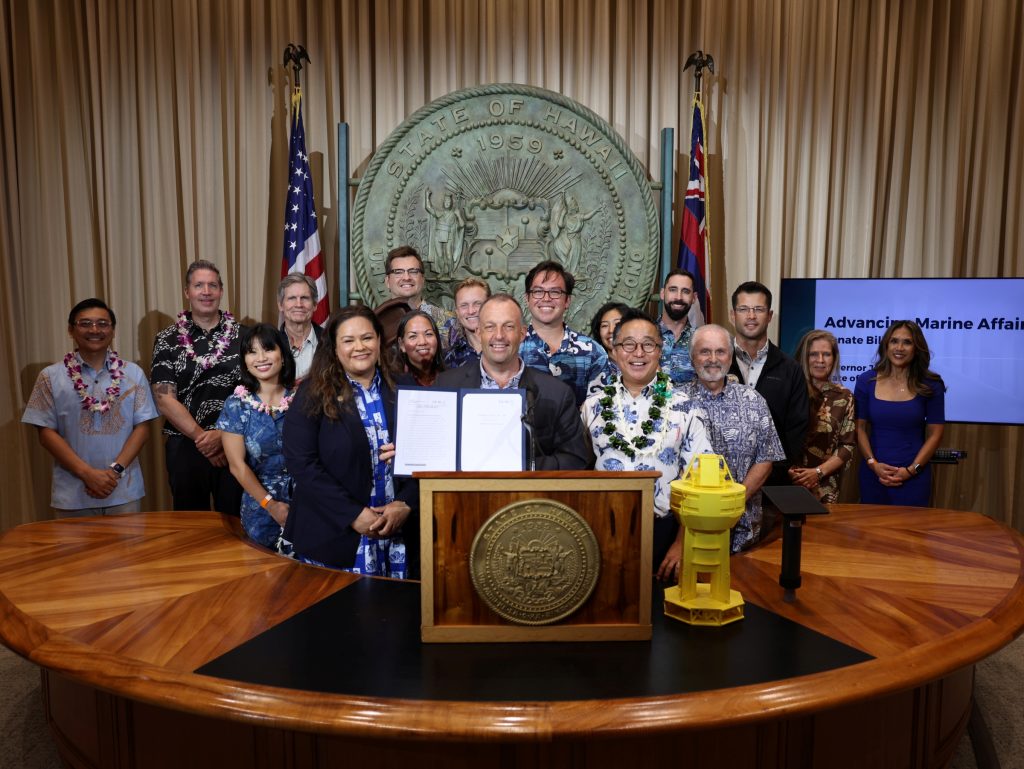
“For generations, Native Hawaiians have understood that the health of our ocean and the well-being of our communities are deeply connected,” said House Majority Caucus Leader Big Island state Rep. Kirstin Kahaloa in the state release. “[Senate Bill] 2907 strengthens Hawaiʻi’s blue economy by bringing together government, industry, research and Native Hawaiian knowledge to create good local jobs while protecting the ocean that sustains us.”
Additional bills Green signed and enacted into law
- Senate Bill 2360 (Act 182): Relating to state enterprise zones
- House Bill 2583 (Act 183): Relating to economic development
- Senate Bill 2599 (Act 184): Relating to development
- Senate Bill 3320 (Act 187): Relating to the Food and Product Innovation Network
- House Bill 1576 (Act 188): Relating to filming