


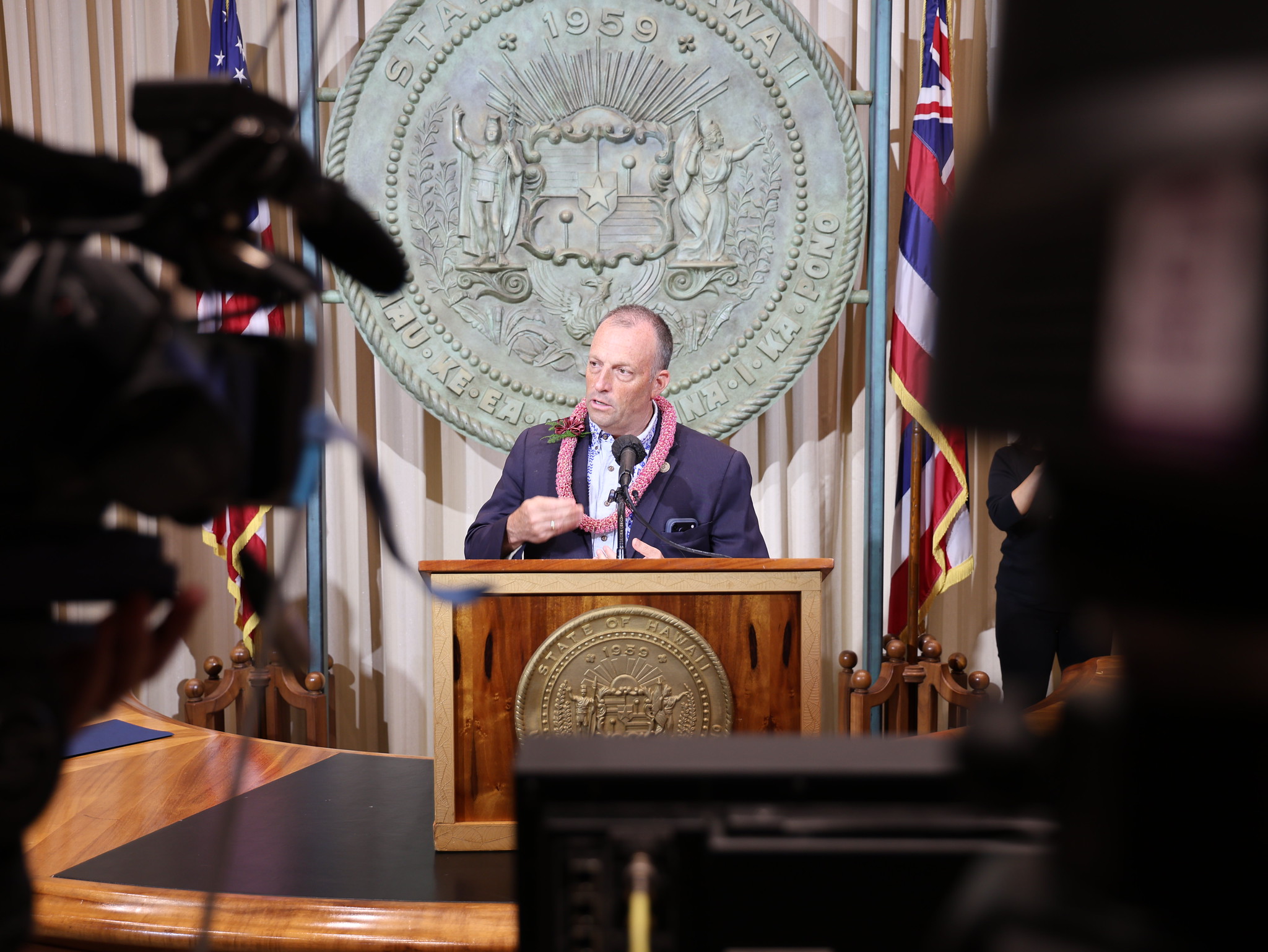
Gov. Josh Green signed four measures into law that reinforce Hawaiʻi’s long-term investments in environmental stewardship, housing, and community infrastructure.
By expanding support for conservation efforts, modernizing wastewater systems, and enhancing resources for housing and economic development, these bills underscore a shared goal of building a stronger and more resilient Hawaiʻi for future generations.
During the first ceremony, Gov. Green signed into law House Bill 2218 (Act 203) and House Bill 1618 (Act 204). These measures reflect Hawaiʻi’s commitment to caring for its natural resources through collaboration and innovative resource management.
Pairing community-driven stewardship with strategic infrastructure improvements, HB 2218 establishes a framework for conservation partnerships. HB 1618 broadens financing options to help homeowners convert or upgrade cesspools, protecting Hawaiʻi’s waters and safeguarding public health.
“Protecting Hawaiʻi’s natural resources requires strong community partnerships and practical investments,” Green said. “When we invest in sustainable resources, everyone benefits. Lasting progress is made when we tackle today’s challenges together and uplift one another through thoughtful policy and genuine collaboration.”
HB 2218 authorizes the Department of Land and Natural Resources to enter into co-management agreements with community-based organizations. These partnerships aim to support conservation, cultural practices, watershed protection, and restoration of native ecosystems.
“This measure is the product of broad community collaboration and the support of more than 50 organizations committed to protecting Hawaiʻi’s natural and cultural resources,” said House Speaker Nadine K. Nakamura. “Community partners have long been doing the vital work of stewarding our lands, and this law recognizes them as valued partners, reinforcing that caring for our natural and cultural resources is a shared responsibility.”
Participating organizations must demonstrate experience in land stewardship and may be responsible for activities such as invasive species removal, habitat restoration, and environmental education. The measure establishes requirements to ensure compliance and effective management.
“We were so humbled to support this effort and assist with the bill creation and advocacy, including extensive community outreach that resulted in many meaningful changes to the final introduced version of the measure,” said Olan Leimomi Fisher, Kuaʻāina Ulu ʻAuamo advocate. “It is exciting to see that several groups are already crafting their community co-management agreements based on this bill.”
Outdated cesspool systems contribute to water pollution and pose risks to Hawaiʻi’s public health and environment. In 2017, the state enacted legislation requiring all cesspools to be upgraded or converted to code-compliant wastewater systems by 2050, unless exempted. However, the Legislature recognizes that the high cost of these conversions can be a barrier for homeowners.
HB 1618 establishes a Cesspool Conversion Revolving Loan Fund, administered by the Hawaiʻi Green Infrastructure Authority, to provide financial assistance, including low-interest or forgivable loans, to eligible homeowners. This program is funded through the Water Pollution Control Revolving Fund, administered by the Department of Health. The measure also establishes a management position to oversee the loan program and guidelines.
“Adding cesspool conversions to the Green Infrastructure Authority’s innovative financing tools will make it possible for families who need help the most to install cheaper, cleaner solutions to stop cesspool pollution,” said Senator Chris Lee, chair of the Senate Committee on Water, Land, Culture, and the Arts.
HB 2218 and HB 1618 foster a united approach to caring for Hawaiʻi’s natural resources and expanding tools available to the public. By empowering partners at every level, these measures advance the effort to care for our ʻāina and safeguard public health.
Green also led a signing ceremony for House Bill 1920 (Act 205) and Senate Bill 2001 (Act 206). These measures reflect Hawaiʻi’s efforts to address housing affordability and job creation through sustainable infrastructure.
“I often say that housing is healthcare,” Green said. “Community is also healthcare. Thriving businesses and partnerships, robust and diverse economies — these measures reflect this collective goal — fostering a Hawaiʻi in which everyone can reach their full potential.”
HB 1920 extends the sunset date to 2032 for the Low-Income Housing Tax Credit program established by Act 226 in 2021. This measure is expected to leverage millions of dollars in private equity to support affordable housing development in Hawaiʻi.
The program complements state financing mechanisms, such as the Dwelling Unit Revolving Fund and the Rental Housing Revolving Fund, helping to expand housing opportunities and strengthen Hawaiʻi’s housing pipeline.
Additionally, the measure amends the Low-Income Housing Tax Credit program, improving the way credits can be transferred to bring more affordable housing projects to completion.
For tax credits issued after July 1, 2026, partnerships or limited liability companies allocated the credit may further allocate, transfer, sell, or assign all or a portion of the credit. The sunset date of Act 129, SLH 2016, is extended to December 31, 2032.
“The passage of HB 1920 reaffirms the state’s commitment to fund affordable housing,” said Representative Luke Evslin, chair of the House Committee on Housing. “This measure makes affordable housing projects easier to finance and move forward.”
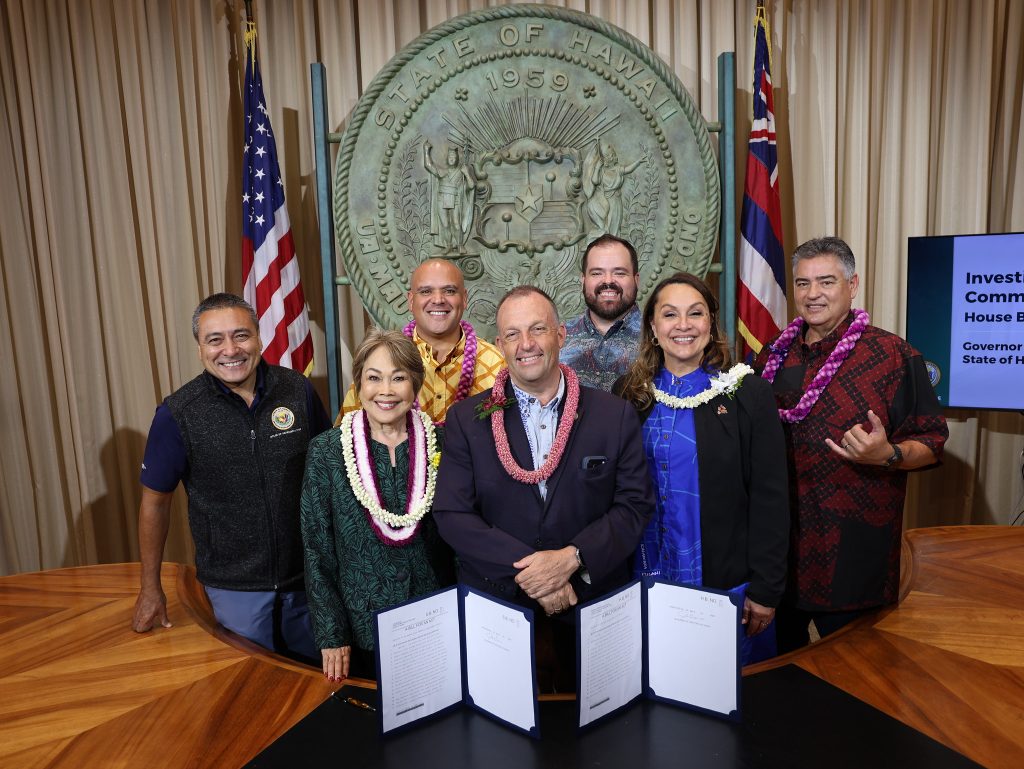
SB 2001 establishes the Banyan Drive Community Development District within the Hawaiʻi Community Development Authority and launches the Banyan Drive Community Development District Special Fund. The Authority will include representatives of the district, the chairperson of the Banyan Drive Hawaiʻi Redevelopment Agency, and a lineal descendant of the Waiākea Ahupuaʻa.
The project aims to revitalize the historic space with new cultural and public facilities, enriching opportunities for engagement in the community.
HB 1920 and SB 2001 share a goal: to support the people of Hawaiʻi by providing opportunities in housing and connection. These measures reflect a sustained commitment to ask, listen, and respond effectively.
“Today is more than the signing of a bill,” said Senator Lorraine Inouye, chair of the Senate Committee on Transportation and introducer of SB 2001. “It heralds a new chapter for the district built on partnership, stewardship, and commitment for future generations.”
The complete list of bills signed includes:
- HB 2218, Act 203, Relating to the Department of Land and Natural Resources
- HB 1618, Act 204, Relating to Cesspool Conversions
- HB 1920, Act 205, Relating to the Low-Income Housing Tax Credit
- SB 2001, Act 206, Relating to the Banyan Drive Community Development District
- SB 2401, Act 207, Relating to Regional Shoreline Mitigation Districts
- HB 1802, Act 208, Relating to Conservation Mitigation Banks
- HB 1728, Act 209, Relating to Rainwater Catchment Systems
- HB 1740, Act 210, Relating to the Hawaiʻi Housing Finance and Development Corporation
- HB 1741, Act 211, Relating to Housing
- SB 2060, Act 212, Relating to the Rental Housing Revolving Fund
- SB 2069, Act 213, Relating to the Dwelling Unit Revolving Fund
- HB 2270, Act 214, Relating to the Downpayment Loan Assistance Program
- HB 2385, Act 215, Relating to Housing
- SB 2544, Act 216, Relating to Housing
- SB 2552, Act 217, Relating to the Individual Housing Account Program