


The state’s five largest airports reached Level 3 under the Airport Carbon Accreditation Program, a milestone that reinforces the commitment of Hawai‘i Department of Transportation to sustainable aviation.
Level 3 accreditation recognizes airports around the globe that successfully mapped airport-wide carbon emissions, established a net-zero target, reduced emissions below a 3-year rolling average and actively engaged with operational partners to tackle third-party emissions.
Accredited Hawai‘i hubs include:
- Daniel K. Inouye International Airport in Honolulu.
- Kahului Airport on Maui.
- Ellison Onizuka Kona International Airport and Hilo International Airport on the Big Island.
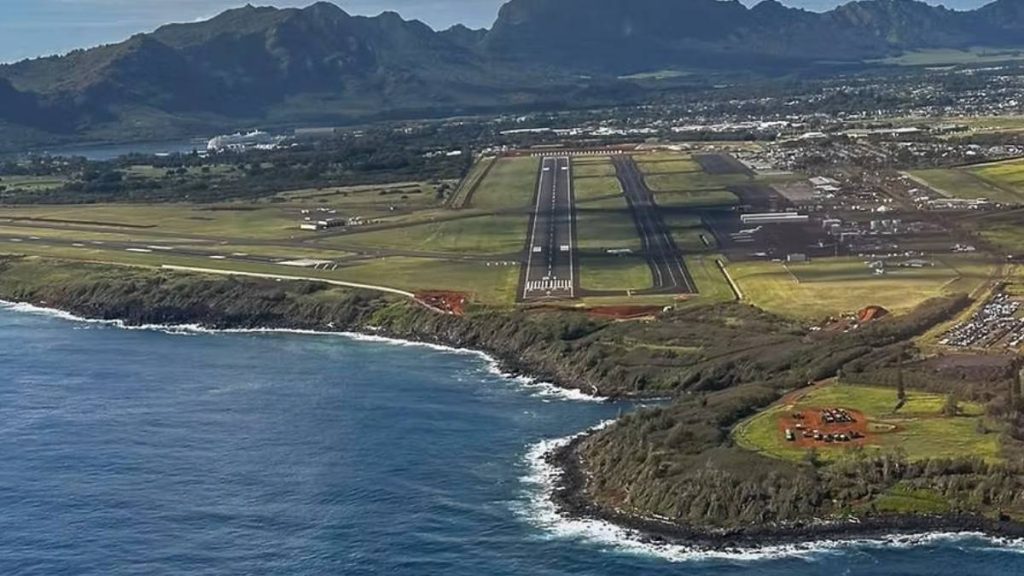
- Līhuʻe Airport on Kauaʻi.
“We are working together with our federal, state and private-sector partners to build a resilient future for Hawaiʻi aviation,” said Hawai‘i Department of Transportation Director Ed Sniffen in a state release. “This milestone demonstrates that we stand by our words. By steadily expanding our clean transportation infrastructure, we are not only increasing the energy security of our airports, but also empowering our operational partners to do the same.”
The Airport Carbon Accreditation Program — owned and governed by Airports Council International Europe — is the global standard for carbon management in the airport industry.
Level 3 status marks the state Transportation Department’s commitment to net-zero carbon, reporting annual progress and investing in low-emissions strategies, including:
- Targeting net-zero: Establishing a goal to reduce airport-controlled carbon emissions by 50% by 2030 and achieve net-zero airport-controlled emissions by 2045, aligning with Hawai‘i statutes.
- Stakeholder engagement: Collaborating with airlines, concessionaires and many others on their plans and identifying opportunities for support.
- Expanded inventory: Mapping emissions for airport-controlled and non-airport-controlled sources, including aircraft operations and ground transportation.
- Actionable roadmap: The Hawai‘i Department of Transportation Energy Security and Waste Reduction Plan (2025) prioritized strategies for clean transportation based on ease of implementation.
- Vehicle electrification: Transitioning from fossil fuel-powered vehicles to zero-emission alternatives.
Hawai‘i Department of Transportation acknowledges, looking forward, that achieving net-zero emissions by 2045 relies on funding and leadership at the state and federal levels to implement key infrastructure projects.
The department appreciates the strong collective effort toward third-party emissions reduction shown by airport tenants, airlines and stakeholders.