

An exhibit of nearly 30 photos of moments during a historic mid-1960s civil rights march led by Martin Luther King Jr. in the Deep South of the United States — which was attended by a small Hawaiʻi delegation — has more time to display the courage and commitment of the thousands who participated.
The collection of 28 donated photographs offers a rare visual account of the Aloha State’s participation in the 1965 Selma to Montgomery, Ala., march and will remain available for public viewing through July 31.
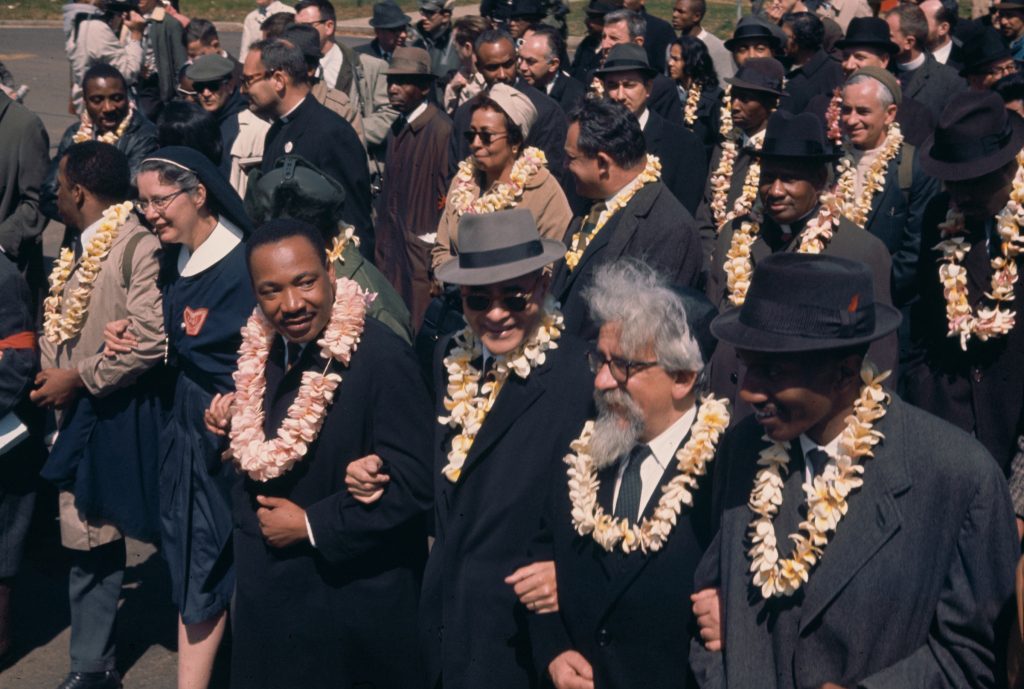
It was unveiled at the end of June by Hawaiʻi State Archives, a division of Hawaiʻi Department of Accounting and General Services.
Acting Hawaiʻi Lt. Gov. Keith Regan decided the afternoon of July 4 — the day the United States celebrated the 250th anniversary of the signing of the Declaration of Independence — to extend the exhibit because of overwhelming interest from the public.
It was originally set to close July 7.
Members of the public can view the exhibit during regular business hours at the state Capitol. It is located in the Lieutenant Governor’s Ceremonial Room on the fifth floor.
“These photographs honor those who marched for civil rights and reaffirm that their courage continues to inspire the work of building a more just and inclusive society,” said Regan in a state release.
The collection donated by Jeannine Herron preserves a powerful chapter in the histories of the United States and Hawaiʻi, documenting the state’s connection to one of the most significant events of the civil rights era.
It highlights the journey of five people representing Hawaiʻi and one Honolulu Star-Bulletin reporter who traveled to Alabama for the march, joining a legion of Americans advocating for voting rights and racial equality.
More than half of the 28 photographs had never been seen before.
Jeannine Herron is the widow of Matt Herron, the photographer who captured the images during the historic march.
“From the shores of Hawaiʻi to the streets of Selma, the message was clear,” Hawaiʻi state Archivist Adam Jansen, who has a doctorate in archival studies, said in the state release, “justice knows no distance, and unity has the power to change history.”
Hawaiʻi participants in the 1965 Selma to Montgomery civil rights march were:
- Nona (Springel) Ferdon.
- Glenn Izutsu.
- Robert Browne.
- Charles Campbell.
- Linus Pauling, Jr.
- Tomi (Kaizawa) Knaefler, Honolulu Star-Bulletin reporter on assignment. (Knaefler is the only surviving member of the group.)
Family members of some of the Hawaiʻi delegates attended the exhibit’s unveiling ceremony June 30.
Ferdon’s son Steven Springel and Knaefler’s daughter Pamela McDonald gathered with community leaders, historians, civil rights advocates, public officials and members of the public to commemorate the donation and reflect on the enduring legacy of the civil rights movement.
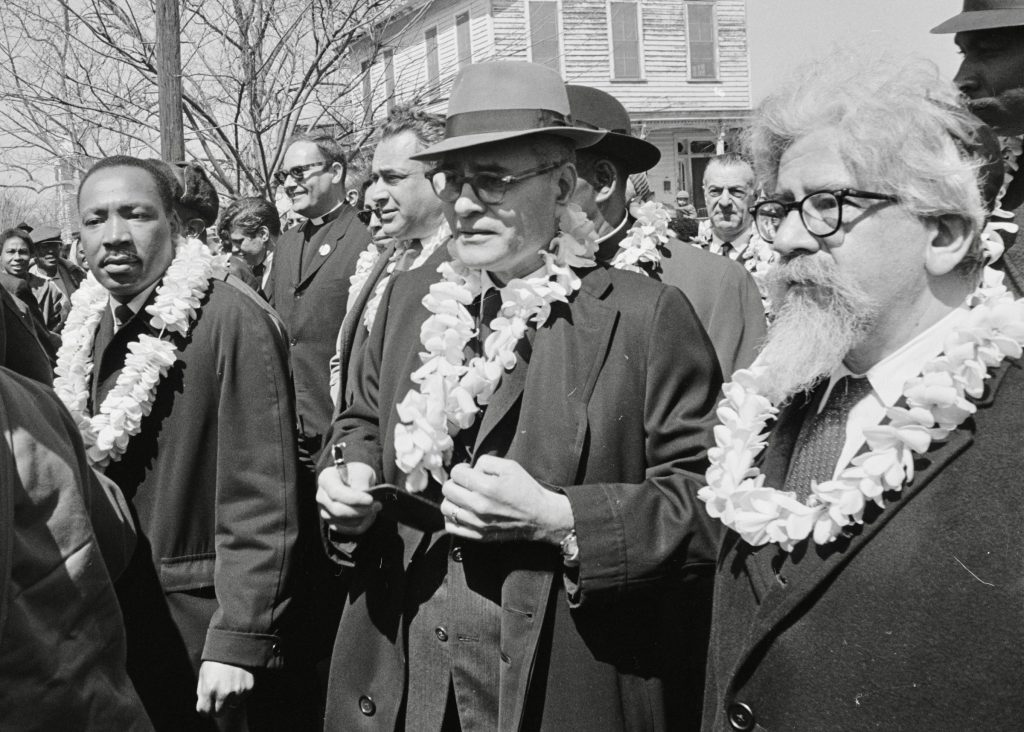
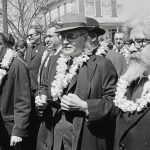
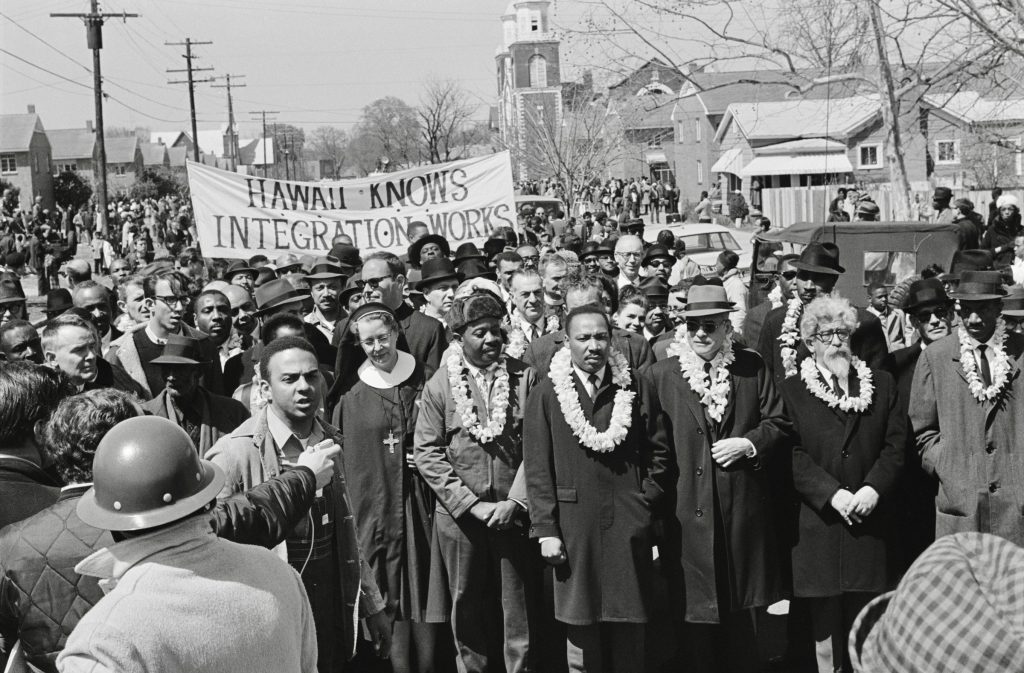
Members of the Hawaiʻi delegation to the 1965 march also shared 48 lei with fellow marchers, who are shown wearing them in several of the photos, including King himself.
“The lei carried from Hawaiʻi to Selma symbolized solidarity, hope and a shared commitment to human dignity,” said Regan, who also is director of Hawaiʻi Department of Accounting and General Services and state comptroller.
They were donated by the Rev. Abraham Akaka, pastor at the time of Kawaiahaʻo Church — Hawaiʻi’s oldest standing Christian church — in downtown Honolulu and nicknamed the Westminster Abbey of the Pacific.
The renowned Native Hawaiian spiritual leader and Hawaiʻi’s most widely known clergyman met Martin Luther King Jr. in 1964.
The civil rights leader was participating in a Civil Rights Week symposium at University of Hawaiʻi when he and the brother of Daniel Akaka, who later would become the first Native Hawaiian U.S. senator, crossed paths for the first time.
It was the beginning of a close friendship between the two men.
Pastor Akaka sent the Hawaiian flower necklaces to Alabama with the aloha spirit and in show of solidarity with the pursuit of justice connecting communities throughout the nation. He wanted to protect, honor and lend his support to the courageous marchers by adorning them with white flowers.
The Reverend Abraham “Kahu” Akaka Ministries Foundation website says there is a famous picture of King leading marchers into Montgomery with the caption: “During part of the famous Selma to Montgomery Freedom March in 1965, Martin Luther King and fellow civil rights leaders wore the Hawaiian necklace of flowers — the lei — to symbolize their peaceful intentions.”
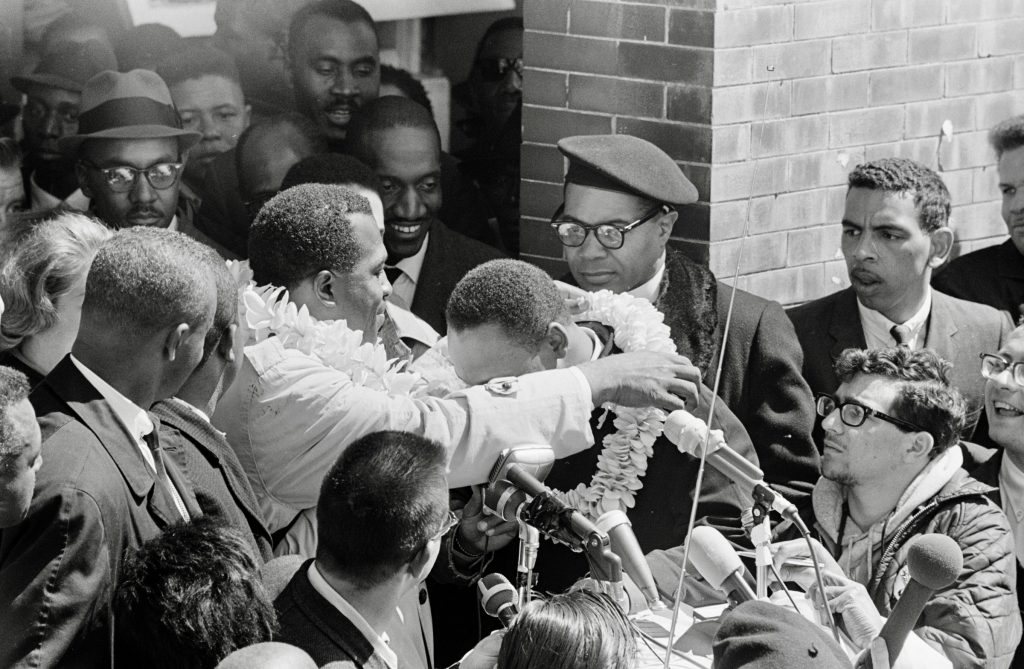
“That was such a thoughtful thing for the people of Hawaiʻi to send those to the leaders of the march, and I’m glad they had signs that said ʻWe’re from Hawaiʻi.’ It was remarkable they came so far to walk in a 50-mile walk,” said Jeannine Herron in the state release. “I’m not sure if people realize there are the same kind of diversity and prejudice problems in every state in this union, and Martin Luther King Jr. invited everybody to come from all across America.”
Family members of the late Rev. Akaka also attended the unveiling ceremony.
Regretfully, the 89-year-old Herron could not travel to attend the unveiling of the exhibit putting her late husband’s photos on display. She was represented, however, by family friend Michael DiMaggio.
Hawaiʻi State Archives serves as official repository for records of enduring historical value. It is committed to preserving and providing access to Hawaiʻi’s documentary heritage.
Officials said in the release that the addition of these photographs ensures this important story of unity, civic engagement and ongoing pursuit of equal rights will remain accessible for generations.
The exhibition is also an official event of Hawaiʻi America250, established by Hawaiʻi Gov. Josh Green to oversee the state’s commemoration of the United States semiquincentennial.
Hawaiʻi State Archives is a Hawaiʻi America250 Commemoration Partner, and the Selma march photo exhibit is also an official of America250 — the national bipartisan initiative leading commemoration of the 250th anniversary of the Declaration of Independence signing July 4, 1776.
Selected pieces from the collection can be featured in America250 educational programs, exhibits and digital initiatives throughout the nation to provide access to authentic historical perspectives for students, researchers and the public.
 An image from the famous 1965 Selma to Montgomery March in Alabama led by Dr. Martin Luther King Jr. (Matt Herron photography archive [M2866]. Dept. of Special Collections and University Archives, Stanford University Libraries, Stanford, Calif.)
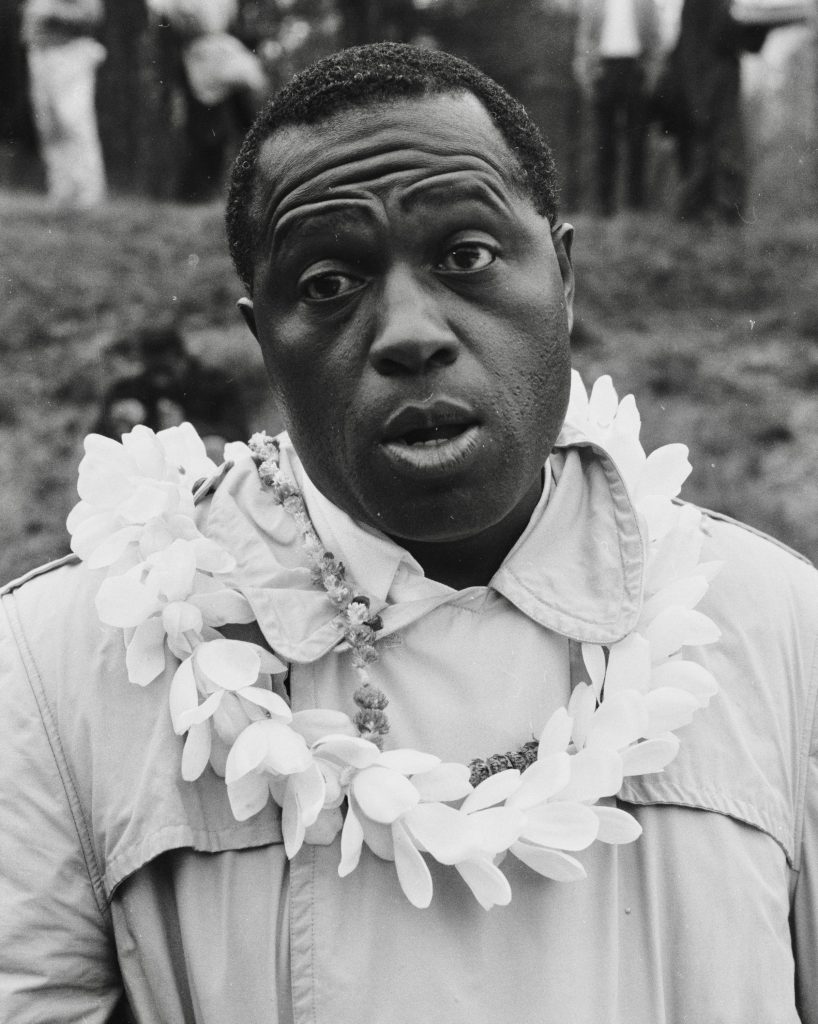
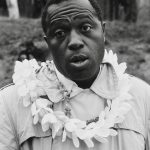
- Charles Campbell, one of five people from Hawaiʻi to attend the 1965 Selma to Montgomery March led by Dr. Martin Luther King Jr. (Matt Herron photography archive [M2866]. Dept. of Special Collections and University Archives, Stanford University Libraries, Stanford, Calif.)
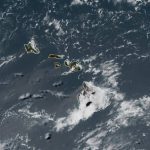
- National Oceanic and Atmospheric Administration GOES-17 Hawai’i satellite image from 2:10 p.m. July 4, 2026. (Courtesy Image: National Weather Service website)