


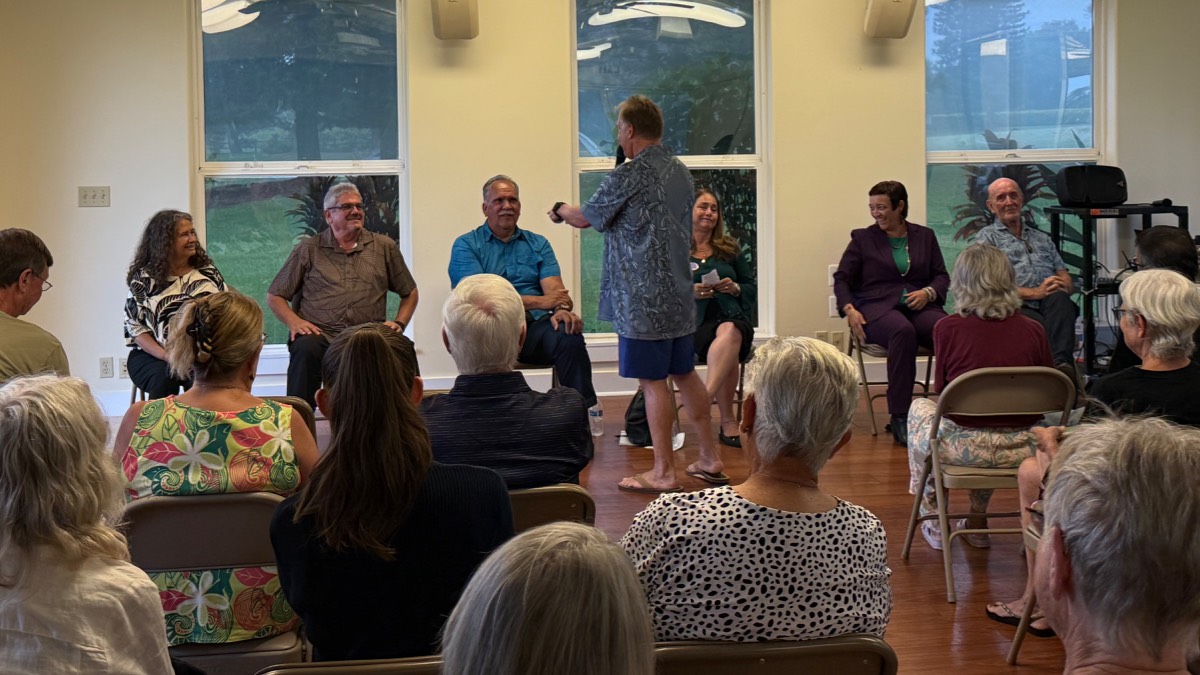
Six candidates vying to become Kauaʻi’s next mayor gathered at the Princeville Community Center on the North Shore on Tuesday to answer community questions during the mayor candidate forum hosted by the nonprofit North Shore Give.
The candidates included current council members Felicia Cowden, Mel Rapozo and Bernard Carvalho Jr., who also previously served as mayor, as well as political newcomers Laura Andaya-Lindsey, Megreso William Denis and Michaela Widener.
The candidates were asked various questions during a three-round session.
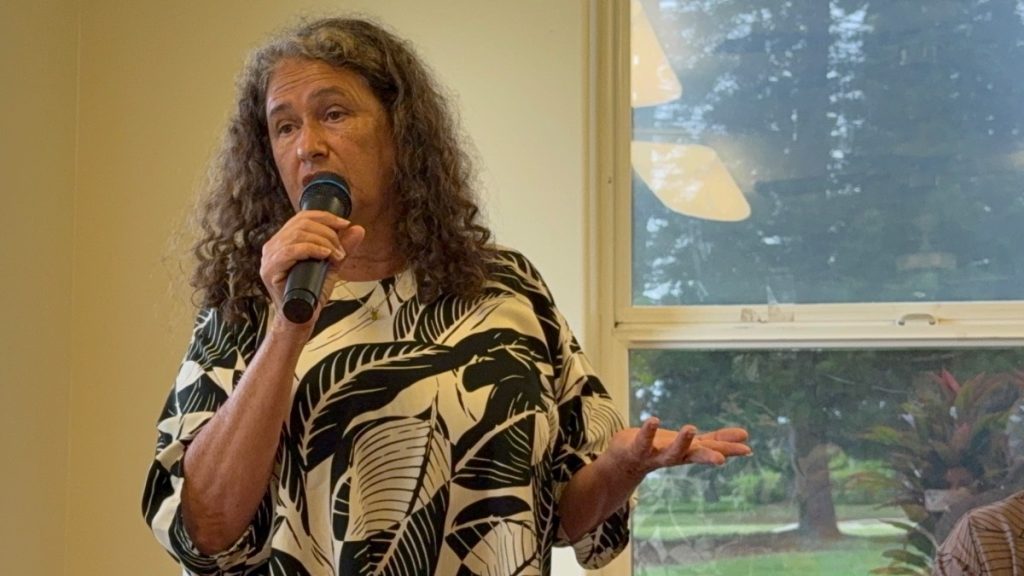
Cowden, who emphasized that she has lived on the North Shore for 42 years, said: “I feel like I understand a lot of the challenges.”
She highlighted her housing efforts and repeatedly returned to concerns about community displacement and affordability. She described her leadership approach as one focused on working with residents.
“What youʻre going to find from me in my mayoralship will be a sense of abundance and grace,” she said. “It’s less about controlling your behavior and more about how we are really going to solve the problems together.”
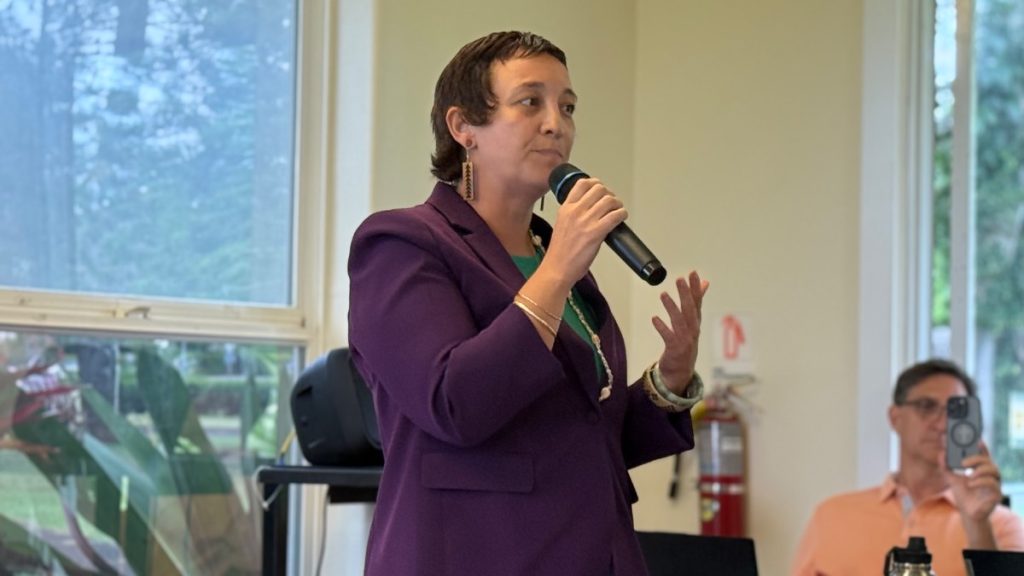
Widener said, “I showed leadership in the moments where I needed to,” as she shared a story from her time in school.
She said she chose to run for mayor after talking with council members and repeatedly hearing about various crises, which motivated her to enter the race.
She explained, “I felt like I didn’t have a candidate I wanted to vote for, so that’s why I’m running.” Additionally, she mentioned that she often hears about what she can’t do, such as running for mayor.
“You canʻt run for mayor,” she recalls being told. Her response: “Watch me.”
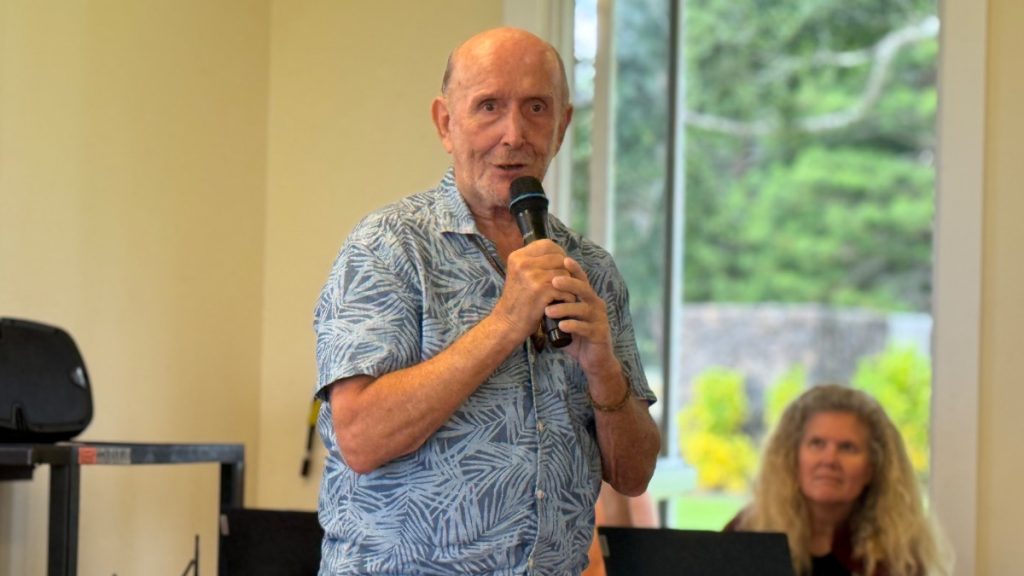
Denis described himself as a businessman, rather than a politician, centering his campaign on decentralizing and increasing local self-sufficiency.
“My platform is people first, and Kauaʻi first,” he said. He added that what he has seen in the past 14 years is that “we keep repeating the same mistakes. We throw money at the problem.
“Money is not the solution. The people are the solution. So I listened to the people.”
Drawing on his background in business management and operations, Denis proposed locally managed systems for waste, water, and disaster preparedness. He argued that communities should have more direct control over resources and decision-making.
“We have all the resources, the talent, and the people here to move forward,” said Denis.
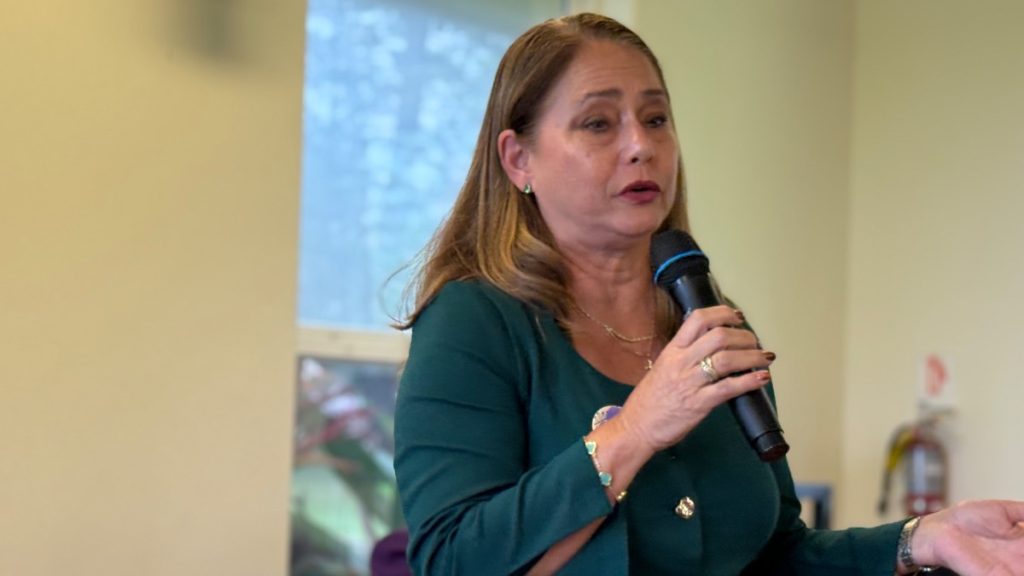
Andaya-Lindsey, who introduced herself as a resident of Wailua, mother of 14 children, grandmother of 18, and highlighted her decades of work with St. Catherineʻs School.
She focused much of her remarks on community resilience, emergency preparedness, and strengthening local connections.
“One of the biggest challenges I see in this community is that a lot of people are not actually from the community,” Andaya-Lindsey said, describing the burden she believes falls on a small number of residents who maintain community organizations and volunteer efforts.
“There’s a handful of you that are carrying the load for the community,” said Andaya-Lindsey.
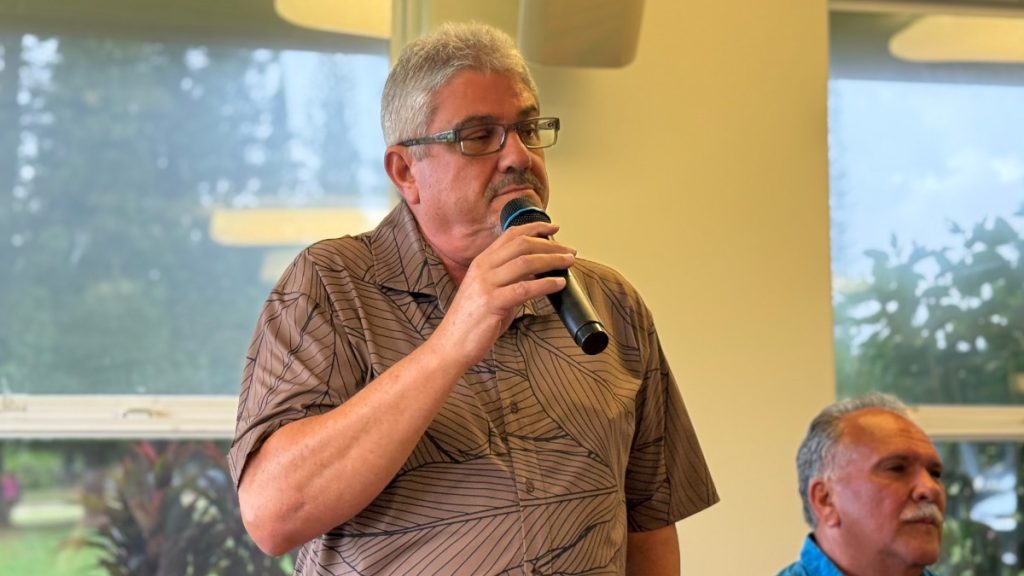
Rapozo, the current County Council Chair, called wastewater management a primary reason he entered the race.
“For 18 years, I’ve been pounding the drum on our wastewater issues, our solid waste issues, our water issues, and as you know, today we are struggling with those crises. I cannot do any more as a council member.
“I have hit the ceiling, and the only way we can create the change that is needed on this island for me is to become the mayor.”
He added that his “style of government” is to hold people accountable and be responsive to the community, which he said is “lacking right now, and that is what I plan to restore to this county.”
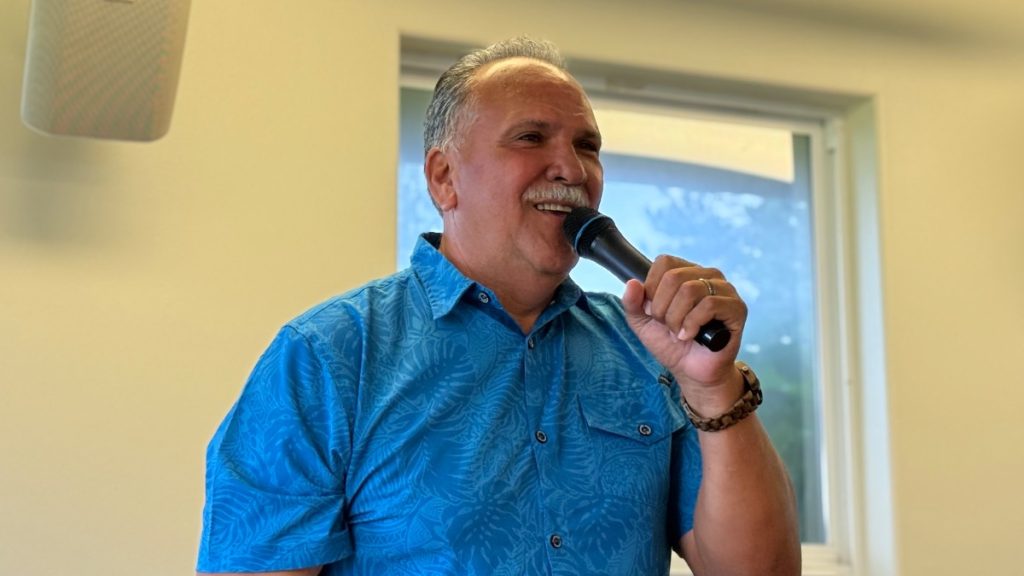
Carvalho outlined his resume, explaining that his years of service and connections across federal, state, and county governments have given him a “wealth of understanding.”
“I spent 17 years as a civil servant within our county government,” he said.
He also explained that his leadership style is both open and collaborative.
“I’m really ready to serve once again with my understanding, with knowing the differences of today than yesterday, but know that I have the experience, the understanding, the background to connect everything and come back with results,” said Carvalho.
The six candidates also addressed disaster preparedness, healthcare access, mental health services, environmental stewardship and park improvements.
Widener was asked how she would help retain teachers and school staff, who are facing North Shore’s housing and cost-of-living issues, while waiting for long-term housing solutions that are still years away.
Widener explained that there is no single solution but suggested exploring expanded homeschooling options, pursuing housing funding opportunities, working to ease restrictive zoning, and reviewing state laws and short-term rental policies to increase affordable housing for educators.
Andaya-Lindsey was asked what the mayor’s role is in the executive process.
She explained that the mayor’s responsibility is to provide leadership, connect community organizations and resources, ensure county services function effectively, and empower residents and local communities to succeed.
Cowden was asked what her key strengths as a candidate are.
She responded by highlighting her key strengths for the mayor’s office: her experience in both private and public sectors, a background in engineering, business ownership, teaching, and holding elected office.
She also emphasized her dedication to supporting small businesses, her understanding of residents’ and entrepreneurs’ challenges, and her commitment to a people-first leadership style.
During the discussion of emergency management, Carvalho pointed to his administration’s response to past disasters on Kauaʻi, including outreach efforts following major flooding events on the North Shore.
“We walked the pathways and all the houses just to connect with the community and as leaders, as a team, as a mayoral team, this is what we do and this is what I will continue to do.
“Disasters will hit. It’s not if, it’s when. It’s how well we prepare and how well we react to each disaster,” he added.
Also in attendance were father and daughter Bill Olson, 70, and Emily Olson, 42, who were both glad to see the candidates speak in person at Princeville.
“My biggest thing is waste management and emergency preparedness here on the island and schools for my grandchildren,” Bill Olson said. “It was really good for all the candidates to get here”
Emily Olson brought her young daughter to the forum and said she just “appreciates these opportunities.”
“The more that we get to speak, you know, see the candidates, have this engagement, have the questions, and getting to hear the questions was really helpful.”
Both were still undecided about which candidate they would vote for.
The forum concluded with a lighthearted exchange as moderators announced a “lightning round” question tied to the upcoming Ohana Fitfest, drawing laughter from both candidates and audience members after nearly 40 minutes of policy discussion.