


Researchers at the University of Hawaiʻi Cancer Center and UH Mānoa John A. Burns School of Medicine were awarded more than $12 million to fund a new research center that will advance artificial intelligence and data science in medicine.
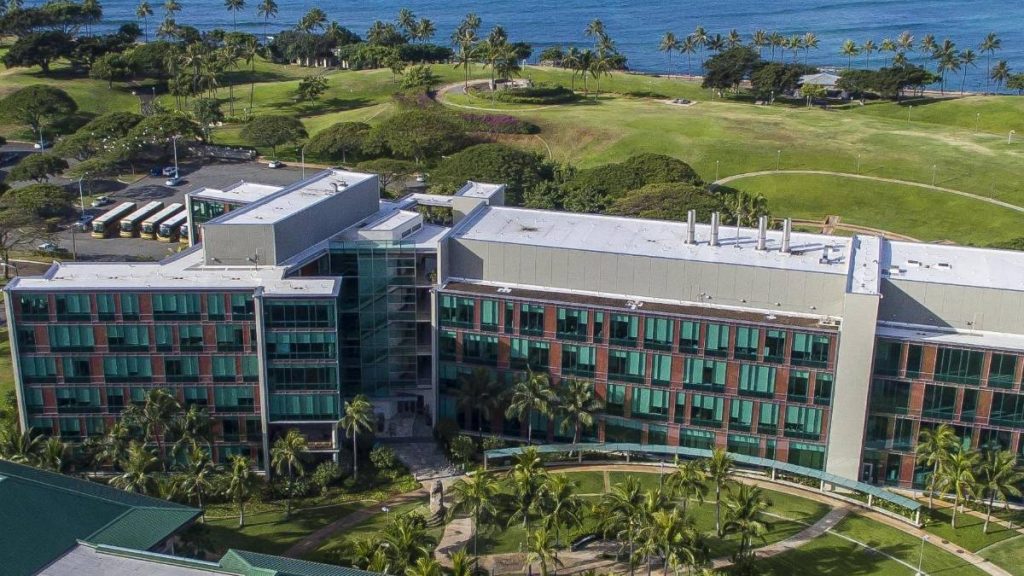
The grant awarded by the National Institutes of Health will establish the Pacific Center for Artificial Intelligence and Data Science in Medicine (PAC-AID) dedicated to accelerating biomedical discoveries through AI and data science to benefit people in Hawaiʻi and the Pacific region, and worldwide, according to a news release from the University of Hawai‘i.
PAC-AID will serve as a central hub integrating AI into biomedical research to improve health outcomes in Hawaiʻi.
Funded through the NIH’s Centers of Biomedical Research Excellence (COBRE) program, the funding was awarded on June 4 and will continue for the next five years through February 2031. During that timeframe, the project will renovate the UH Cancer Center Data Center to establish a new Medical AI Core (MedAI Core), providing advanced, high-performance computing resources and AI expertise.
“AI has the potential to unlock major medical breakthroughs and help people live healthier lives, and we need to take advantage of it,” said U.S. Sen. Brian Schatz, who played a pivotal role in securing the grant. “This new funding will help Hawai’i continue to attract top-tier talent and develop treatments and cures that will benefit people across the state.”
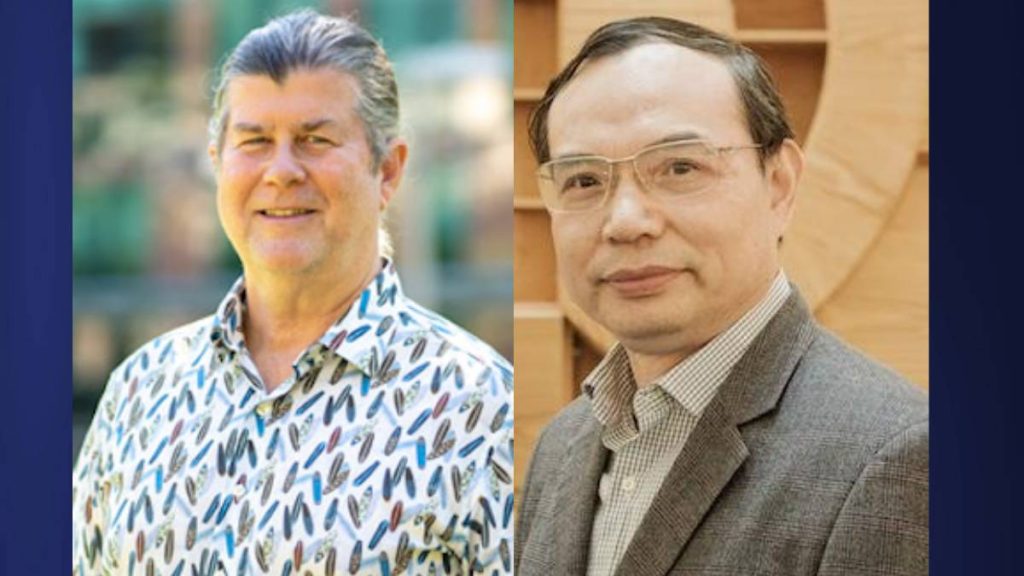
The center will be led by Principal Investigators John Shepherd and Youping Deng. Shepherd is chief scientific officer at the UH Cancer Center and B.H. and Alice C. Beams Endowed Professor in Cancer Research at JABSOM. Deng is co-director, Genomics and Bioinformatics Shared Resource, at the UH Cancer Center; and professor and director, Bioinformatics Core Facility, at JABSOM.
“The $12 million over five years will substantially strengthen AI and data science capabilities and support the development of the next generation of investigators,” said UH Cancer Center Director Naoto T. Ueno. “The research advances made possible by PAC-AID will further the UH Cancer Center’s work toward new understandings and treatments for cancer, to save lives in Hawai’i and the Pacific, and across the globe. In addition, high-paying jobs generated by this project will have a strong economic benefit for our local communities.”
Physically located within both the UH Cancer Center and JABSOM on the shared Kakaʻako campus, PAC-AID will directly fund four major inaugural research projects and establish a Pilot Projects Program to support more than 8 new, locally relevant pilot studies.
“At the heart of our mission as a flagship research university is the drive to translate innovation into meaningful impact,” said Vassilis Syrmos, incoming chancellor of UH Mānoa. “PAC-AID is a vital expansion of that mission, enabling our faculty to harness the power of artificial intelligence to pioneer new avenues of biomedical inquiry that were previously unreachable, solidifying the University of Hawaiʻi at Mānoa’s role as a global leader in health innovation.”
Shepherd and Deng will oversee efforts to build research capacity, as well as foster the next generation of independent investigators using artificial intelligence and advanced data science approaches to address critical medical and public health challenges. Beyond funding research, this award establishes a workforce development mechanism to support the next generation of faculty investigators.
“This COBRE award provides the critical infrastructure to bridge advanced AI computational methods with our specific clinical and community health challenges,” Shepherd said. “By fostering a collaborative environment for our investigators, we are equipping them with the technical capabilities to tackle the most persistent health disparities in our islands and turn complex data into actionable health solutions.”
Artificial intelligence is increasingly transforming healthcare and biomedical research by helping scientists analyze large and complex datasets, identify patterns that may otherwise go undetected, and accelerate the development of new approaches to disease prevention, diagnosis, and treatment.
Shepherd, who leads the Hawaiʻi and Pacific Islands Mammography Registry, is using a massive breast imaging database to develop AI biomarkers that predict cancer risk specifically for Asian and Pacific Islander populations.
The new PAC-AID will support similar faculty-led research projects, provide funding for pilot studies, and establish shared research resources that can be used by investigators across disciplines.
“At JABSOM, our mission is to improve the health of Hawaiʻi through education and research,” said Sam Shomaker, JABSOM dean. “This investment will help accelerate discoveries that address the real health challenges facing our communities and ensure that advances in AI translate into better outcomes for patients.”
Initial funded projects include AI-driven research by UH Cancer Center researchers Kevin Cassel (using full-body imaging to triage skin lesions) and Elizabeth Nakasone (studying pancreatic cancer in Native Hawaiian and Japanese populations); UH Mānoa public health researcher Jonathan Huang (modeling environmental toxicant effects on fetal development); and JABSOM researcher Yiqiang Zhang (identifying genetic traits in congenital heart disease).
COBRE Phase 1 grants focus on the development of independent biomedical researchers and research centers, and are designed to have a 15-year cycle.
“PAC-AID is specifically designed to develop six to eight early-stage faculty members at the University of Hawaiʻi and across Pacific Island institutions who will use artificial intelligence and data science to address cancer and chronic disease outcomes in one of the nation’s most medically underserved and understudied regions,” Shepherd said.
He added that the expected impact to Hawaiʻi is substantial. “Our benchmark for success is that the funded faculty projects, 4 initially and 2-4 more when those graduate in year 3, and will later achieve independent NIH R01 (Research 01 level university) funding at an estimated $3.25 million per award. That represents a projected $19.5 million in additional federal research funding returned to the State of Hawaiʻi (6 funded R01s) on top of the initial $12 million COBRE award itself — a combined potential economic and research impact of more than $31 million for Hawaiʻi’s research and healthcare workforce. These estimates are for the first 5-year period.”
PAC-AID joins a growing portfolio of NIH-funded Centers of Biomedical Research Excellence at UH Mānoa, including the Diabetes Research Center, Integrative Center for Precision Nutrition and Human Health and the Integrative Center for Environmental Microbiomes and Human Health.
“By the end of this project, we expect to have a nationally competitive Medical AI Core, four independently funded research leaders, and more than 10 pilot projects,” said Deng. “Through these efforts, alongside workshops and collaborative research opportunities, we will significantly strengthen Hawaiʻi’s capacity for AI-enabled biomedical research and innovation to address important health challenges in our region and beyond.”