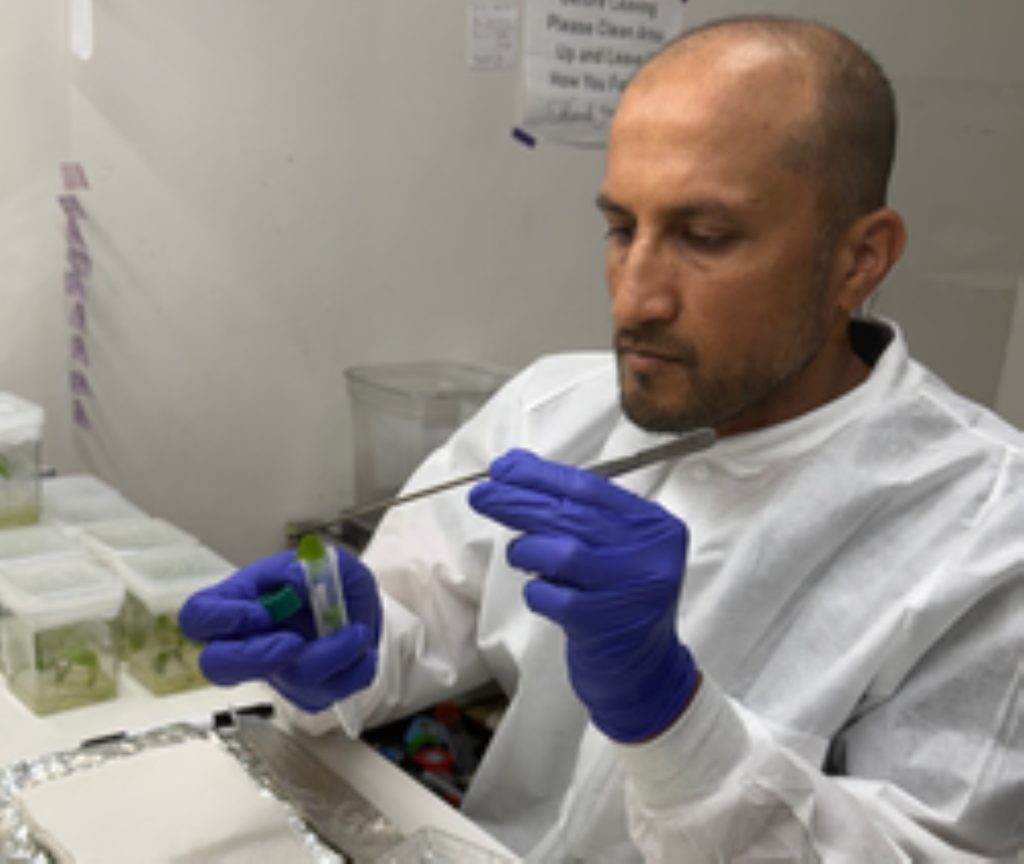


A small team of researchers from University of Hawaiʻi at Mānoa College of Tropical Agriculture and Human Resilience tucked away at University of Hawaiʻi Komohana Research and Extension Center in Hilo on the Big Island is building a pipeline of clean seeds — vine cuttings that free from harmful viruses — that could help secure the future of the state’s sweet potato industry.
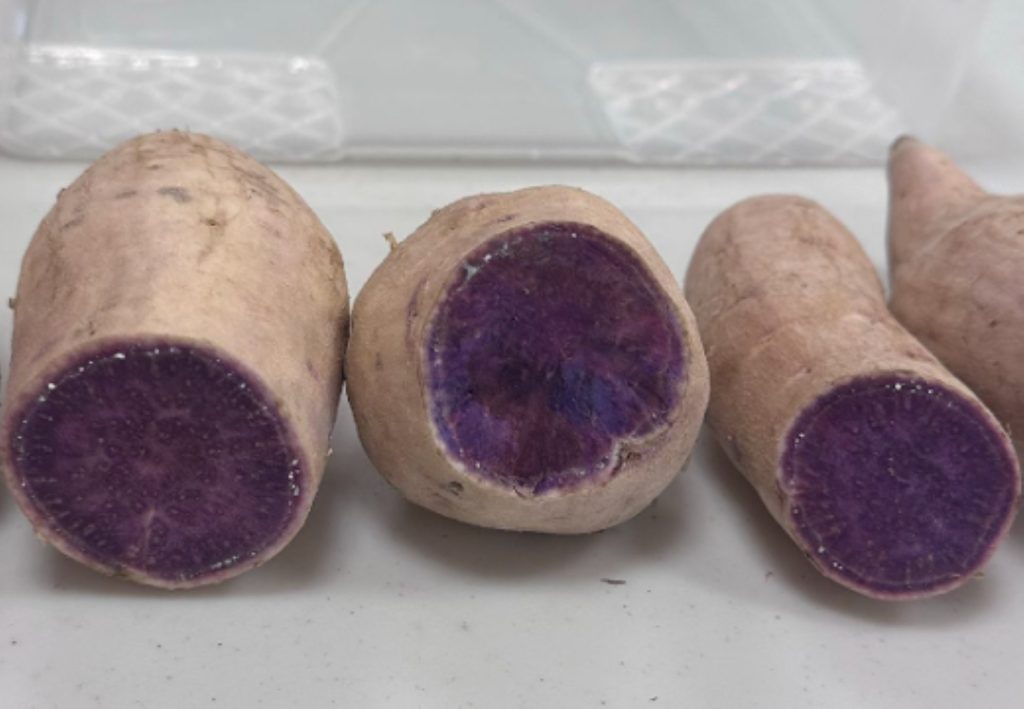
U.S. Department of Agriculture‑supported National Clean Plant Network Sweetpotato‑Hawaiʻi Center is part of a national network of clean plant centers, scientists, regulators and growers. It is the only center in the network dedicated to Okinawan and Hawaiian heritage ʻuala (sweet potatoes).
The center combines advanced tissue culture and diagnostics with strong partnerships among farmers, researchers and cultural practitioners. Together, they are laying the groundwork for a reliable, local system for ʻuala and Okinawan sweet potato health.
While programs on the mainland work with orange‑fleshed varieties, the Hawaiʻi center, led by College of Tropical Agriculture and Human Resilience Extension Agent Sharon Wages, prioritizes purple‑fleshed Okinawan types and traditional ʻuala that are central to local diets and markets.
“Hawaiʻi has the corner on Okinawan sweet potato in the [United States],” said Wages in a university release, noting that mainland climates often cannot match the crop’s performance in Hawaiʻi’s tropical weather.
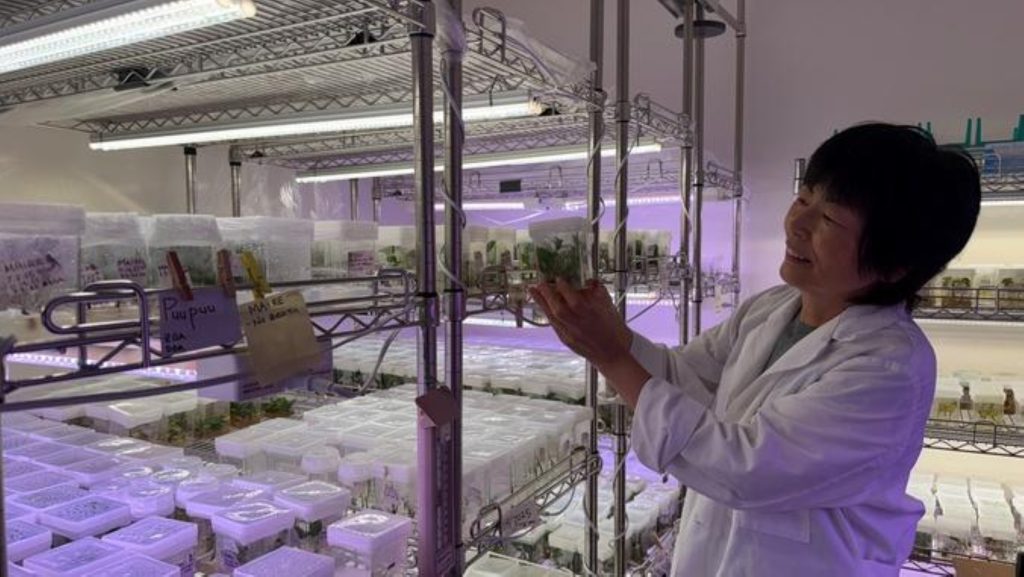
Sweet potato is a major crop in Hawaiʻi, with 6.2 million pounds grown in 2025 throughout the islands, according to the U.S. Department of Agriculture. Nine out of 10 ʻuala are produced on Hawaiʻi Island, particularly along the Hāmākua Coast.
Supported by researchers Achyut Adhikari and tissue culture specialist Elisa Urano Mow, the Hawaiʻi sweet potato center uses meristem‑tip tissue culture to clean infected plant lines for each kind of ʻulua and establish virus‑free foundation material for growers.
This clean stock can then be multiplied and distributed, giving farmers a healthier starting point for new plantings.
While all National Clean Plant Network centers follow a standard virus testing protocol, College of Tropical Agriculture and Human Resilience researcher Anna Halpin‑McCormick documented additional viruses in the state.
The Hawaiʻi center — which has 11 unique sweet potato varieties — is now incorporating two of these locally significant viruses into its regular diagnostics, strengthening protection against region-specific threats.
Its staff works closely with local growers to advance lines that are nutritious and marketable, including several Okinawan‑type selections and important heritage ʻuala.