


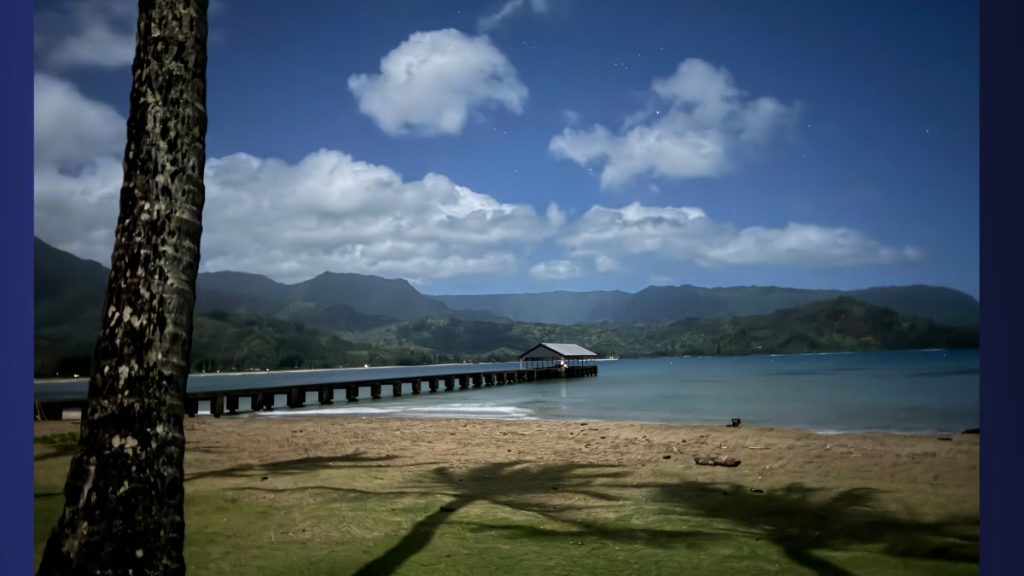
A group of community organizations successfully petitioned the Kauaʻi Planning Commission to grant a petition they sought to intervene in a proposed luxury coastal housing development by Miami-based Starwood Capital Group’s 1 Hotel Hanalei Bay.

Mālama Kua‘āina, Hanalei-Wainiha-Hā‘ena Community Association, Hui Ho‘omalu i Ka ‘Āina and Conservation Council for Hawai‘i, whose members include longtime kamaʻāina of Kauaʻi’s North Shore, raised concerns that the proposed multi-million-dollar development:
- Fails to comply with laws for environmental and cultural protection.
- Could significantly harm sensitive coastal resources, imperiled native seabirds, scenic view planes and Native Hawaiian cultural practices along Hanalei Bay’s iconic coastline.
- Would intensify commercial construction along an actively eroding coastal bluff overlooking Hanalei Bay, with some structures proposed as close as 5 feet from the cliff edge.
The proposed housing development also includes:
- Two-story six-plex housing units ranging from 3,000 to 4,500 square feet.
- A new 4,500-square-foot event pavilion with two ballrooms and ancillary structures.
- Expanded parking and infrastructure.
- Redevelopment of the historic Fort Alexander area.
Existing 1 Hotel Hanalei Bay operations are already associated with excessive seabird kills, with more than 25% of all documented seabird take on Kauaʻi happening at the resort — far exceeding its authorized take quota.
The proposed expanded development, lighting, activity and infrastructure would exacerbate that issue for 1 Hotel Hanalei Bay.
“Hawaiʻi’s native seabirds are already facing severe threats statewide,” said Conservation Council for Hawai‘i Executive Director Jonee Peters in a release about the commission’s decision. “Expanding development in an area with documented excessive seabird impacts without adequate safeguards is unacceptable.”
Planning commissioners recognized the organizations substantial interests that could be affected by the project and that they should be allowed to participate directly in proceedings.
The community groups will now be able to submit evidence, present expert testimony and help inform the commission’s decision on whether the development should move forward.
Attorney Elena Bryant with Earthjustice’s Mid-Pacific Office said commissioners made the correct decision by allowing the affected community groups to participate.
“Hawai‘i law requires agencies to actively protect public trust resources — not simply accept unsupported claims by developers,” said Bryant in the release. “These community groups bring critical cultural knowledge, scientific expertise and decades of experience protecting Hanalei’s coastal resources.”
Community members and environmental advocates oppose the project because of concerns it would further degrade coastal resources, worsen ongoing harms to native seabirds from the resort, impair public scenic views and interfere with Native Hawaiian cultural practices.
“The community has been engaged in this process from the very beginning, yet our concerns continue to go unaddressed,” said Hui Ho‘omalu i Ka ‘Āina Vice Chairperson Maka’ala Ka‘aumoana in the release. “Intervention became necessary to ensure our voices — and the resources we are fighting to protect — are fully considered.”
Hanalei-Wainiha-Hā‘ena Community Association President Carl Imparato added that the North Shore community spent decades working to preserve the character, access and environmental integrity of Hanalei.
“If approved in its current form, this project would set a troubling precedent for future development proposals that threaten the unique environmental and cultural character of the Hanalei region,” said Imparato in the press release.
Coastlines are not “sacrifice zones” for luxury development, said Mālama Kua‘āina Executive Director Caren Diamond.
“Hanalei Bay is a living cultural and ecological treasure, and the community has a responsibility to protect it for future generations,” said Diamond in the release.