


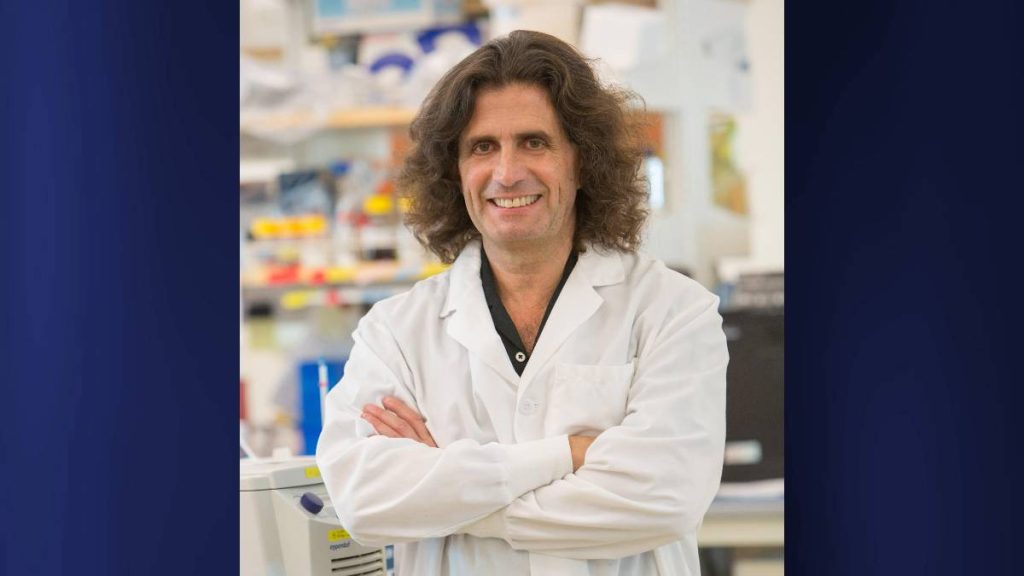
A researcher at the University of Hawaiʻi Cancer Center has been awarded one of the nation’s top honors in cancer research for discoveries that transformed understanding of mesothelioma, a rare and often deadly cancer linked to asbestos exposure.
Dr. Michele Carbone will receive the 2026 Szent-Györgyi Prize, awarded by the National Foundation for Cancer Research.
The award recognizes Carbone’s pioneering work identifying inherited mutations in the BAP1 gene as a major factor in susceptibility to mesothelioma and other cancers.
The discovery changed how scientists and physicians understand the disease, leading to advances in diagnosis, genetic screening, prevention and treatment worldwide, according to the foundation.
Carbone’s research showed that mesothelioma risk could be inherited through families, overturning the long-held belief that environmental exposure alone determined who developed the cancer. His work also identified what is now known as the BAP1 cancer syndrome, which is associated with mesothelioma as well as eye and skin melanoma, kidney, breast and bladder cancers.
“There is nothing as rewarding as saving lives,” Carbone said in a statement, adding that the research has helped patients and families avoid cancers through early monitoring and intervention.
The award committee praised Carbone’s decades-long research, including field studies conducted in rural villages in Cappadocia, Turkey, where exposure to naturally occurring mineral fibers had caused unusually high rates of mesothelioma.
Researchers found that inherited genetic susceptibility played a key role in determining which residents developed the disease.
The findings led to public health actions in both Turkey and the United States.
In Turkey, government officials relocated at-risk communities away from hazardous mineral exposure sites, while in North Dakota, Carbone’s work contributed to efforts to repave roads contaminated with carcinogenic fibers.
Today, BAP1 genetic testing is widely used in cancer care to identify patients at elevated risk and improve early detection strategies. The foundation said patients with inherited BAP1 mutations who receive regular monitoring often survive significantly longer than patients diagnosed with sporadic mesothelioma.
Naoto T. Ueno called the award a historic achievement for the cancer center and Hawaiʻi’s medical research community.
“His work represents the highest standard of cancer research: rigorous science that leads to landmark discovery and ultimately saves lives,” Ueno said in a statement.
Carbone serves as director of thoracic oncology at the UH Cancer Center and is also a professor at the John A. Burns School of Medicine. He additionally serves as a health and science advisor to Gov. Josh Green.
The Szent-Györgyi Prize was established in 2006 and honors scientists whose discoveries have significantly advanced cancer research and public health.
Carbone will receive the award during a ceremony on Oct. 9 at the National Press Club in Washington, D.C.