


May 1 marks a historic day 50 years in the making on the waters of the Pacific Ocean.
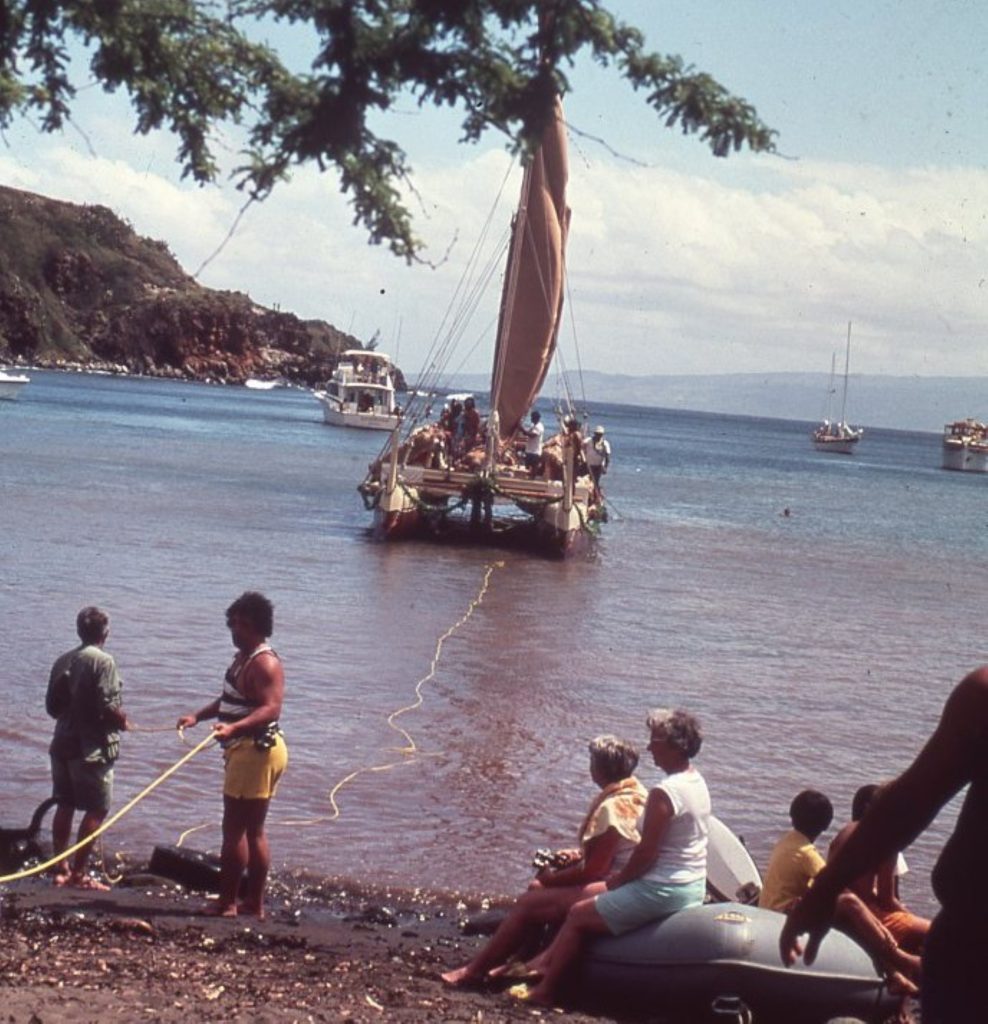
The date will forever be etched in time as when Polynesian voyaging canoe Hōkūleʻa departed Honolua Bay, Maui, on her maiden deep-sea voyage, sailing from Hawaiʻi to Tahiti using traditional, non-instrument navigation.
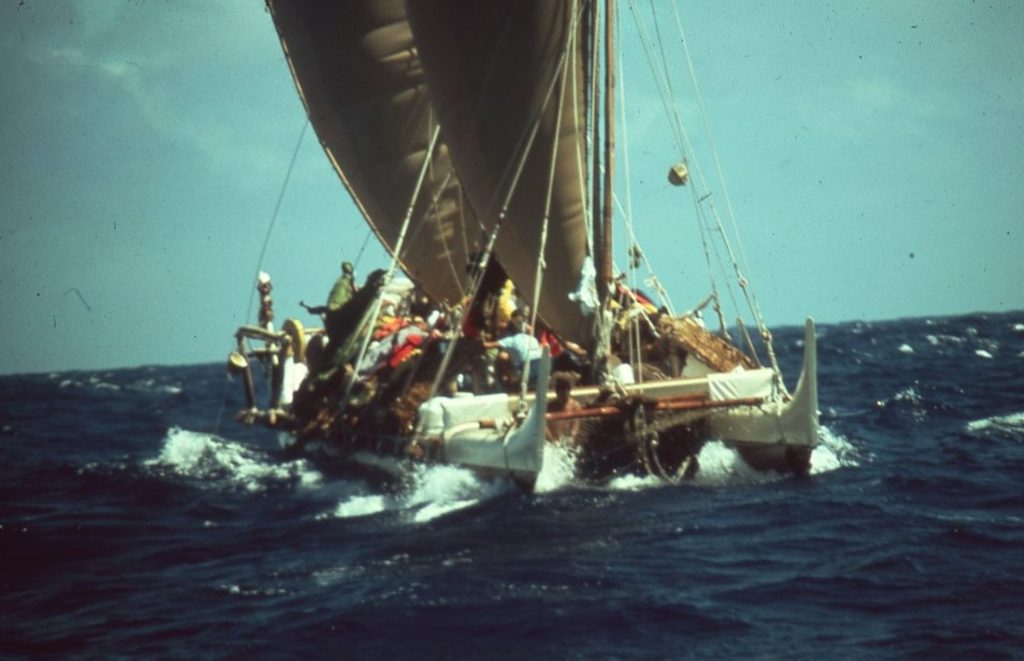
It was the first time in about 600 years a voyaging canoe sailed the ancient sea road of Kealaikahiki and disproved theories of accidental drift.
Polynesian Voyaging Society will reflect and honor the 1976 maiden voyage through a series of photos, videos, newspaper articles and first-hand accounts shared on its Instagram and Facebook pages @hokuleacrew.
Hōkūleʻa’s maiden voyage to Tahiti is an endeavor that changed history.
The canoe departed May 1, 1976, from Hawaiʻi, guided by master navigator Mau Piailug of Satawal, Micronesia, who navigated entirely by traditional wayfinding: reading the stars, winds, waves, clouds and living ocean.
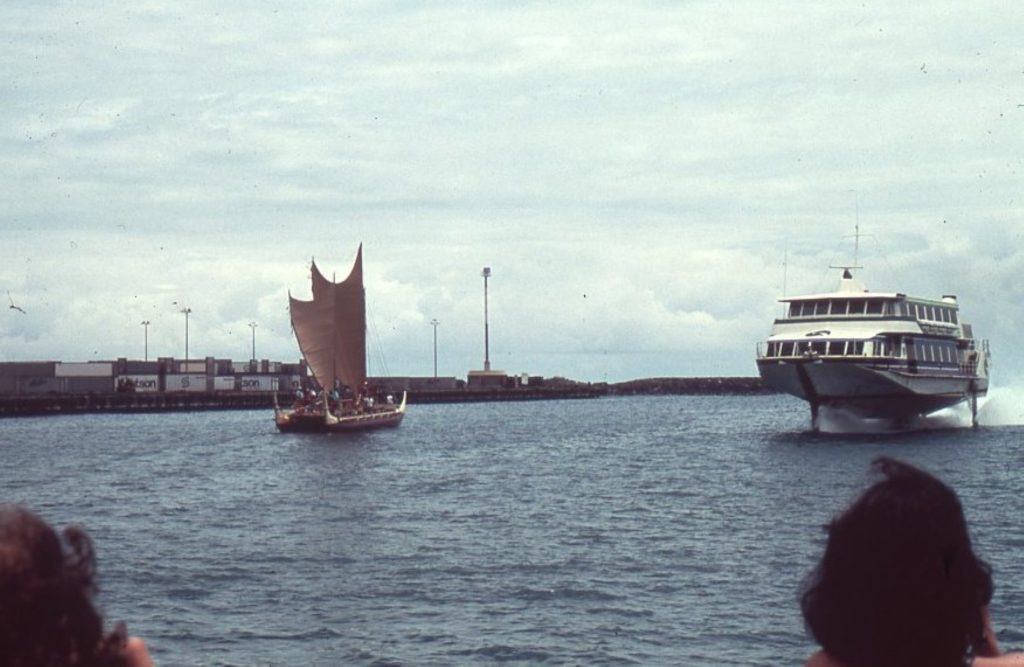
Hōkūleʻa made landfall June 1, 1976, at Mataiva, French Polynesia, after 31 days at sea before arriving June 4 in Papeʻete Harbor, Tahiti, where more than 17,000 people gathered to welcome her.
The voyaging canoe then left in July for her maiden trek from Tahiti to Hawaiʻi, arriving to thousands at Magic Island, Oʻahu.
Hōkūleʻa’s round-trip voyage spanned 52 days at sea.
It was bold and transformational, demonstrating that ancestors of Polynesia were skilled voyagers and navigators who intentionally settled the vast Pacific Ocean and directly challenging long-had theories of accidental drift.
Why this moment matters
The 1976 voyage of Hōkūleʻa was far more than a successful ocean crossing.
It was a cultural awakening at a time when Hawaiian language, traditions and identity were under threat.
Hōkūleʻa’s journey down the ancient pathway Kealaikahiki affirmed the brilliance of indigenous knowledge systems.
It became a cornerstone of the Hawaiian Renaissance, reigniting cultural pride, helping revitalize language and practice as well as restoring a sense of dignity and self-determination among Native Hawaiians and Pacific peoples.
Historic 1976 maiden voyage timeline
May 1: Departure from Honolua Bay, Maui
June 1: Landfall at Mataiva, Tuamotu Archipelago, French Polynesia
June 4: Arrival in Papeʻete Harbor, Tahiti, French Polynesia
July 4: Departure from Tahiti (return voyage to Hawaiʻi)
July 26: Arrival at Magic Island, Oʻahu
1976 crew members, Hawai‘i-Tahiti
- Navigator Mau Piailug
- Clifford Ah Mow
- Shorty Bertelmann
- Ben Finney
- Tommy Holmes
- Sam Kalalau
- Boogie Kalama
- Kawika Kapahulehua
- Buffalo Keaulana
- John Kruse
- Dukie Kuahulu
- David Lewis
- Dave Lyman
- Billy Richards
- Rodo Williams
Also aboard: photographers Nicholas DeVore III of National Geographic and Norris Brock of Pittsburgh TV Public Broadcasting Service station KQED.
1976 Crew Members, Tahiti-Hawaiʻi
- Snake Ah Hee
- Andy Espirito
- Kawika Kapahulehua
- Mel Kinney
- Kainoa Lee
- Kimo Lyman
- Gordon Piʻianaiʻa
- Leonard Puputauiki
- Penny Rawlins
- Keani Reiner
- Nainoa Thompson
- Makaʻala Yates
- Ben Young
Learn more about Polynesian Voyaging Society and Hōkūleʻa online.